Last updated: August 31, 2026
Recruiting neurosurgeons in Oregon comes with a specific problem: the pool of candidates is small, spread across a handful of major health systems, and contact details go stale fast as physicians move between hospitals, academic appointments, and private practice. Recruiters and healthcare marketers who rely on outdated directories often lose time chasing dead phone lines or bounced emails instead of talking to candidates.
This guide covers what makes neurosurgeon contact data hard to maintain in Oregon, what a usable contact list should include, and how Heartbeat’s database can support recruiting, referral, and outreach efforts in this niche specialty.
What’s on this page:
Get a Neurosurgeon Email List for Oregon from Heartbeat
Heartbeat.ai’s database lets you search licensed healthcare professionals across the United States, including Oregon, using filters for specialty, location, and experience level.
Neurosurgery covers several distinct subspecialties, and knowing which one you’re targeting matters for outreach. Pediatric neurosurgeons focus on neurological conditions in infants, children, and adolescents. General neurosurgeons handle a broad caseload across the brain, spinal cord, and peripheral nerves. Neuro-oncologists treat brain tumors and cancer-related neurological complications. Functional neurosurgeons work on conditions like epilepsy, Parkinson’s disease, and chronic pain. Vascular neurosurgeons address blood vessel disorders in the brain and spine, and spine neurosurgeons specialize specifically in spinal procedures.
Matching your outreach to the right subspecialty reduces wasted contacts and improves response rates, since a message pitched to a general neurosurgeon may not land with a pediatric or functional specialist.
Healthcare Landscape for Neurosurgery in Oregon
Oregon’s neurosurgical care is concentrated in a small number of major systems. Academic and tertiary centers such as Oregon Health & Science University Hospital, along with Providence St. Vincent Medical Center, Asante Rogue Regional Medical Center, and Kaiser Permanente Sunnyside Medical Center, anchor much of the state’s neurosurgical capacity.
Because these institutions are relatively few, neurosurgeons in Oregon tend to have visible institutional affiliations, which is useful context when verifying a contact before outreach. It also means the total pool of practicing neurosurgeons in the state is modest compared to larger states, so accuracy per contact matters more than volume.
Why Accurate Contact Information Matters
For recruiters, outdated contact information is a direct cost. A neurosurgeon search is already narrow; losing a candidate to a bounced email or an old phone number can extend a hiring timeline by weeks in a specialty where there simply aren’t many alternatives to move on to.
For patients seeking a second opinion or specialized consultation, current contact details help avoid delays that add stress to an already difficult situation. This is administrative information, not medical guidance, but it still affects how quickly someone connects with the right specialist.
For researchers, students, and other clinicians, accurate contact details support collaboration and referrals that depend on being able to reach the right person the first time, rather than working through several outdated numbers or emails.
Common Obstacles to Finding Neurosurgeons in Oregon
A few recurring challenges show up when searching for neurosurgeons in Oregon:
- Limited rural coverage: most neurosurgical capacity sits in urban and academic centers, making it harder for rural facilities to recruit or refer locally.
- Small candidate pool: with roughly 100 or so practicing neurosurgeons statewide, recruiters have less room to fall back on outdated leads.
- Frequent affiliation changes: physicians move between hospital systems, academic roles, and private practice, which quickly outdates static directories.
- Manual verification costs: confirming licensure, specialty, and current contact details one by one is slow without a maintained database.
Telemedicine and shared electronic health records have helped narrow some of the access gap between urban and rural parts of the state, giving patients in underserved areas a path to specialist input without always requiring travel. That doesn’t eliminate the recruiting challenge, though; health systems still need to find and hire neurosurgeons who are willing to serve those regions, which is where accurate, current contact data does the actual work.
What a Heartbeat Neurosurgeon Contact List Includes
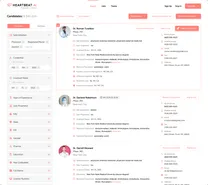
Heartbeat’s database aims to reduce the manual research and data decay that make neurosurgeon outreach slow. Records are checked and refreshed on an ongoing basis rather than compiled once and left static.
- Neurosurgeon’s name
- Location
- Contact numbers (work, cell, mobile)
- Email address
- Specialization
- Years of experience
- Sole proprietor status
- Licensed states
- License number
- Fax
- Address
Available Neurosurgeons in Our Contact List by State
| Neurosurgeons by states |
|---|
| Neurosurgeons in Alabama |
| Neurosurgeons in Alaska |
| Neurosurgeons in Arizona |
| Neurosurgeons in Arkansas |
| Neurosurgeons in California |
| Neurosurgeons in Colorado |
| Neurosurgeons in Connecticut |
| Neurosurgeons in Delaware |
| Neurosurgeons in Florida |
| Neurosurgeons in Georgia |
| Neurosurgeons in Hawaii |
| Neurosurgeons in Idaho |
| Neurosurgeons in Illinois |
| Neurosurgeons in Indiana |
| Neurosurgeons in Iowa |
| Neurosurgeons in Kansas |
| Neurosurgeons in Kentucky |
| Neurosurgeons in Louisiana |
| Neurosurgeons in Maine |
| Neurosurgeons in Maryland |
| Neurosurgeons in Massachusetts |
| Neurosurgeons in Michigan |
| Neurosurgeons in Minnesota |
| Neurosurgeons in Mississippi |
| Neurosurgeons in Missouri |
| Neurosurgeons in Montana |
| Neurosurgeons in Nebraska |
| Neurosurgeons in Nevada |
| Neurosurgeons in New hampshire |
| Neurosurgeons in New jersey |
| Neurosurgeons in New mexico |
| Neurosurgeons in New york |
| Neurosurgeons in North carolina |
| Neurosurgeons in North dakota |
| Neurosurgeons in Ohio |
| Neurosurgeons in Oklahoma |
| Neurosurgeons in Oregon |
| Neurosurgeons in Pennsylvania |
| Neurosurgeons in Rhode island |
| Neurosurgeons in South carolina |
| Neurosurgeons in South dakota |
| Neurosurgeons in Tennessee |
| Neurosurgeons in Texas |
| Neurosurgeons in Utah |
| Neurosurgeons in Vermont |
| Neurosurgeons in Virginia |
| Neurosurgeons in Washington |
| Neurosurgeons in West virginia |
| Neurosurgeons in Wisconsin |
| Neurosurgeons in Wyoming |
How Heartbeat Compiles Contact Data
Heartbeat.ai builds its database by pulling from a wide network of official, private, and public sources, then cross-checking that data to keep records current. The goal is to reduce the manual verification work recruiters would otherwise do one physician at a time.
The platform also applies predictive modeling to estimate likely current contact details when direct confirmation isn’t available, which is one way it addresses the frequent job changes and affiliation shifts common among specialists like neurosurgeons.
A Practical Workflow for Using a Neurosurgeon Contact List
Buying or accessing a list is the easy part. Getting value from it depends on a few habits:
- Segment by subspecialty first. Decide whether you need a pediatric, vascular, functional, or general neurosurgeon before drafting outreach, since a generic message underperforms with specialists.
- Verify institutional affiliation. Cross-check the listed hospital or practice against the physician’s current employer where possible, especially for candidates who may have recently changed roles.
- Lead with something specific. Reference the role, research area, or clinical focus relevant to that neurosurgeon rather than sending a generic template.
- Respect time constraints. Keep initial contact short and let the recipient opt into a longer conversation.
- Refresh contact data periodically. Given how often physicians change affiliations, treat any list older than a few months with some caution and re-verify before a large campaign.
Who Uses Neurosurgeon Contact Lists
These lists tend to serve a few distinct groups: healthcare recruiters filling open positions, hospital marketing teams building referral networks, researchers seeking collaborators, and medical staffing agencies sourcing candidates for client health systems. Regardless of use case, outreach should follow applicable privacy and communication regulations, and messages should be relevant and professional rather than generic mass email blasts.
Limitations to Keep in Mind
No contact database is perfect. Predictive modeling can estimate likely current details, but it isn’t a substitute for direct verification before a formal offer or contract. Oregon’s neurosurgeon pool is also small enough that a handful of inaccurate records can meaningfully affect a search; cross-checking against hospital directories or state licensing records is a reasonable extra step for high-stakes recruiting.
Conclusion
Neurosurgeon recruiting and outreach in Oregon runs into the same core problem as many specialty searches: a small candidate pool combined with contact information that goes stale quickly. A maintained database like Heartbeat’s can cut down on the manual work of chasing down current numbers and emails, but it works best paired with some verification and a workflow that respects how narrow this specialty actually is.
Frequently Asked Questions
What types of surgeries do neurosurgeons in Oregon perform?
Neurosurgeons in Oregon perform a range of procedures, including brain tumor removal, spinal surgery, and treatment of other neurological conditions.
How can I find a reputable neurosurgeon in Oregon?
Start with referrals from a primary care physician, review the neurosurgery programs at major Oregon hospitals and medical centers, and check patient reviews before scheduling a consultation.
Do neurosurgeons in Oregon specialize in specific conditions?
Yes. Subspecialties in Oregon include pediatric neurosurgery, neuro-oncology, functional neurosurgery, and minimally invasive spine surgery. It’s worth asking about a surgeon’s specific focus when scheduling an appointment.