Last updated: August 31, 2026
Recruiters, medical science liaisons, and healthcare marketers targeting oncologists in Utah face a narrow, specialized market. Cancer care in the state runs through a relatively small number of major institutions, which makes accurate, current contact data more valuable than in larger, more fragmented states.
This page covers who oncologists in Utah are, why contact accuracy matters for recruitment and outreach, the practical challenges of building this kind of list yourself, and how a database like Heartbeat.ai’s can shortcut the process.
What’s on this page:
Get an Oncologist Email List for Utah from Heartbeat
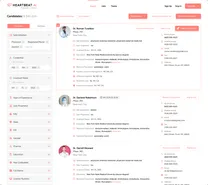
Heartbeat.ai’s platform lets you search and filter licensed healthcare professionals across the United States, including oncologists practicing in Utah. You can narrow results by specialty, location, and other criteria, then export verified contact details.
Oncology covers several distinct sub-specialties, and a useful contact list should let you filter by them rather than lumping every provider together. Common categories include:
- Medical oncologists, who treat cancer primarily through chemotherapy and other systemic medications
- Surgical oncologists, who remove tumors and cancerous tissue
- Radiation oncologists, who use radiation therapy as the primary treatment modality
- Gynecologic oncologists, who treat cancers of the female reproductive system
- Pediatric oncologists, who treat cancer in children
- Hematologist-oncologists, who treat blood cancers and disorders
Filtering by sub-specialty matters most when you’re recruiting for a specific role or running a campaign aimed at a particular treatment category. A general “oncologist” list is less useful than one segmented by how each provider actually practices.
Cancer Care Infrastructure in Utah
Huntsman Cancer Institute is the only NCI-designated Comprehensive Cancer Center in the Mountain West, giving patients across Utah, Idaho, Montana, Nevada, Wyoming, and beyond access to advanced, research-backed care. Comprehensive designation is reserved for centers that demonstrate exceptional strength in cancer research, prevention, and treatment, and fewer than 5% of the roughly 1,500 cancer centers in the country achieve it.
Beyond Huntsman, Intermountain Health and University of Utah Health operate oncology programs that provide diagnosis, treatment, and follow-up care across the state. Because a large share of Utah’s oncology capacity is concentrated in a handful of health systems, contact lists that map cleanly to these institutions tend to be more useful for outreach than lists built from scattered, unverified sources.
Why Accurate Contact Information Matters
Outdated or incorrect contact details create friction at every level of oncology outreach:
- Patient communication: delayed scheduling or missed messages can slow down time-sensitive treatment decisions.
- Recruitment: a wrong number or defunct email address means a wasted outreach attempt and a slower hiring cycle, especially for specialties where the candidate pool is already small.
- Professional networking and referrals: oncology care is often collaborative across disciplines, and stale contact data breaks down referral pathways.
- Research and clinical trial recruitment: reaching the right specialist quickly matters when trial enrollment windows are limited.
Why Finding Oncologists in Utah Can Be Difficult
Utah’s oncology workforce is small relative to states with larger populations, and that creates a few recurring obstacles:
- Limited supply outside major metro areas. Providers are concentrated around Salt Lake City, so rural patients and recruiters targeting other regions have fewer local options to work with.
- Fragmented or outdated public directories. Hospital websites and general directories aren’t always kept current, and provider information can lag behind actual practice changes.
- Team-based treatment models. Cancer care usually involves a multidisciplinary team rather than a single provider, so outreach built around one job title can miss the full picture of who’s involved in a case.
None of these problems are unique to Utah, but they’re more noticeable in a smaller state where there’s less redundancy in the system. A searchable, filterable database reduces the manual work of cross-checking multiple sources, and telehealth-based oncology consults have made it easier for patients in remote parts of the state to connect with specialists without long drives.
What’s Included in Heartbeat’s Oncologist Contact Data
Heartbeat.ai’s database compiles professional contact details for licensed healthcare providers, including oncologists, and organizes them into searchable, exportable records. Typical fields include:
- Oncologist Name
- Location
- Contact Numbers (Work, Cell, Mobile)
- Email Address
- Specialization
- Years of Experience
- Sole Proprietor Status
- Licensed States
- License Number
- Fax
- Address
 Accuracy & coverage of personal contact info were unrivaled by other platforms… this gives any healthcare recruiter a competitive advantage when engaging hard-to-reach healthcare providers.
Senior Growth Strategist




Oncologist Contact Lists by State
Browse comprehensive oncologist contact lists organized by state:
| Oncologist by states |
|---|
| Oncologist in Alabama |
| Oncologist in Alaska |
| Oncologist in Arizona |
| Oncologist in Arkansas |
| Oncologist in California |
| Oncologist in Colorado |
| Oncologist in Connecticut |
| Oncologist in Delaware |
| Oncologist in Florida |
| Oncologist in Georgia |
| Oncologist in Hawaii |
| Oncologist in Idaho |
| Oncologist in Illinois |
| Oncologist in Indiana |
| Oncologist in Iowa |
| Oncologist in Kansas |
| Oncologist in Kentucky |
| Oncologist in Louisiana |
| Oncologist in Maine |
| Oncologist in Maryland |
| Oncologist in Massachusetts |
| Oncologist in Michigan |
| Oncologist in Minnesota |
| Oncologist in Mississippi |
| Oncologist in Missouri |
| Oncologist in Montana |
| Oncologist in Nebraska |
| Oncologist in Nevada |
| Oncologist in New hampshire |
| Oncologist in New jersey |
| Oncologist in New mexico |
| Oncologist in New york |
| Oncologist in North carolina |
| Oncologist in North dakota |
| Oncologist in Ohio |
| Oncologist in Oklahoma |
| Oncologist in Oregon |
| Oncologist in Pennsylvania |
| Oncologist in Rhode island |
| Oncologist in South carolina |
| Oncologist in South dakota |
| Oncologist in Tennessee |
| Oncologist in Texas |
| Oncologist in Utah |
| Oncologist in Vermont |
| Oncologist in Virginia |
| Oncologist in Washington |
| Oncologist in West virginia |
| Oncologist in Wisconsin |
| Oncologist in Wyoming |
How Heartbeat Builds Its Oncologist Contact Data
Heartbeat.ai aggregates provider information from a range of official, public, and private sources, then applies verification and predictive modeling to improve accuracy on cell phone numbers and personal email addresses. The platform’s database spans licensed healthcare providers nationwide, not just oncologists, so Utah-specific records sit within a much larger, continuously refreshed dataset rather than a static, one-time list.
Because provider contact details change over time — new practices, job moves, license updates — the practical value of any list depends on how often it’s refreshed and how it was sourced. Lists pulled once from a single directory tend to degrade quickly; ongoing verification against multiple sources holds up better.
Choosing Between a Manual Search and a Verified Database
| Approach | Strengths | Limitations |
|---|---|---|
| Manual search (hospital sites, NPI registry, directories) | Free, direct from source | Time-consuming, inconsistent formatting, no cell numbers, frequently outdated |
| General web directories | Broad coverage across specialties | Often unverified, mixed accuracy, limited filtering |
| Verified provider database (e.g., Heartbeat.ai) | Filterable by specialty and location, includes direct contact numbers and emails, regularly updated | Requires a subscription; accuracy still varies by field and record |
Who Uses Oncologist Contact Lists
Contact lists like this typically serve a handful of recurring use cases: recruiters filling oncology roles at hospitals or practices, medical device and pharma sales teams targeting relevant specialists, market researchers studying provider distribution, and organizations running fundraising or awareness campaigns tied to cancer care. Usage should always stay within applicable privacy and marketing laws, including rules around unsolicited communication.
Practical Tips for Using the Data
- Segment by sub-specialty before you start outreach — a message aimed at surgical oncologists won’t land the same way with radiation oncologists.
- Cross-reference license status when contacting providers for recruitment purposes, since active licensure changes over time.
- Respect stated contact preferences and keep messaging concise; oncologists are typically working under heavy patient loads.
- Refresh your list periodically rather than treating an export as a permanent asset.
Frequently Asked Questions
What is an oncologist?
An oncologist is a medical doctor who specializes in diagnosing and treating cancer.
How do I find an oncologist in Utah?
You can search provider directories, ask for a referral from a primary care physician, or contact cancer centers directly, including Huntsman Cancer Institute, Intermountain Health, or University of Utah Health.
What services do oncologists in Utah provide?
Oncologists in Utah provide cancer diagnosis, staging, treatment planning, chemotherapy, radiation therapy, and follow-up care, often coordinated through a multidisciplinary team.
Are there specialized oncologists in Utah?
Yes. Utah’s cancer centers include specialists focused on specific cancer types, such as breast, lung, gynecologic, and pediatric cancers, along with hematologist-oncologists treating blood cancers.