Last updated: August 29, 2026
For anyone recruiting or marketing to neurosurgeons in South Carolina, the practical challenge is rarely finding a list of names — it’s finding contact details that are still accurate months from now. Neurosurgeons are a small, high-demand specialty, and outdated emails or disconnected numbers cost recruiters and vendors real time.
This page covers what makes South Carolina’s neurosurgery landscape distinct, why accurate contact data matters for recruitment and outreach, and how Heartbeat’s database can support that work.
What’s on this page:
Get an Email List of Neurosurgeons in South Carolina from Heartbeat
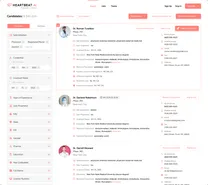
Heartbeat.ai’s platform lets you filter licensed healthcare professionals by specialty, state, and other criteria, then pull verified contact details for outreach.
The neurosurgeon segment includes several subspecialties worth distinguishing when you’re building a list: pediatric neurosurgeons, spine neurosurgeons, functional neurosurgeons, and neuro-oncologists. Filtering by subspecialty matters if you’re marketing a spine implant versus recruiting for a pediatric neuroscience program — the two audiences don’t overlap much.
Healthcare Landscape for Neurosurgery in South Carolina
South Carolina’s neurosurgical care is concentrated around a handful of academic and health-system hubs rather than spread evenly across the state. Two systems anchor most of the specialty referral volume: the Medical University of South Carolina (MUSC), whose Health Neurosciences Center handles complex neurological cases, and Prisma Health, which runs neurological and neurosurgical programs across multiple South Carolina markets.
That concentration has a practical implication for outreach: a meaningful share of the state’s neurosurgeons are affiliated with a small number of academic or multi-hospital systems, while rural counties often have none at all. Anyone building a targeting strategy should expect urban clustering around Charleston, Columbia, and Greenville, with limited coverage elsewhere.
Why Accurate Contact Information Matters
Three groups depend on having current neurosurgeon contact data:
- Patients and referring clinicians, who need a working line to a neurosurgeon’s office for consultations, referrals, or follow-up care coordination.
- Recruiters, who lose candidates to competing offers when outreach is delayed by bad emails or disconnected numbers.
- Industry and networking contacts — device reps, pharma teams, researchers — who rely on direct lines to move projects forward without going through gatekeepers.
Stale contact records are a common failure point in all three cases. A neurosurgeon who changes hospital affiliation, as happens periodically with a specialty this concentrated in a few systems, can render an old email or direct line useless within months.
Why Neurosurgeons Are Hard to Reach in South Carolina
A few structural factors make this specialty harder to reach than most:
- Small specialty, small state population of practitioners — there simply aren’t many neurosurgeons in South Carolina relative to other specialties, so lists go stale faster as any one departure or move has outsized impact on your dataset.
- Urban concentration — most neurosurgeons practice in or near Charleston, Columbia, and Greenville, leaving large rural stretches of the state with thin coverage.
- Institutional gatekeeping — many neurosurgeons work within large health systems where general contact forms and front-desk lines stand between you and a direct connection.
Telemedicine has partially offset the geographic gap by letting rural patients consult with urban-based neurosurgeons remotely, but it doesn’t change the underlying scarcity of practitioners or make it easier for recruiters and vendors to reach them directly. That’s where a maintained contact database, rather than a one-time directory pull, becomes useful.
What’s Included in Heartbeat’s Neurosurgeon Contact Data
Heartbeat’s database is built to reduce the manual research work of tracking down current contact details for licensed neurosurgeons, whether your search is South Carolina-specific or nationwide. Each profile is built to include:
- Neurosurgeon’s name
- Location
- Contact numbers (work, cell, mobile)
- Email address
- Specialization
- Years of experience
- Sole proprietor status
- Licensed states
- License number
- Fax
- Address
Available Neurosurgeons in Our Contact List by States
Explore our contact list of neurosurgeons across other states.
| Neurosurgeons by states |
|---|
| Neurosurgeons in Alabama |
| Neurosurgeons in Alaska |
| Neurosurgeons in Arizona |
| Neurosurgeons in Arkansas |
| Neurosurgeons in California |
| Neurosurgeons in Colorado |
| Neurosurgeons in Connecticut |
| Neurosurgeons in Delaware |
| Neurosurgeons in Florida |
| Neurosurgeons in Georgia |
| Neurosurgeons in Hawaii |
| Neurosurgeons in Idaho |
| Neurosurgeons in Illinois |
| Neurosurgeons in Indiana |
| Neurosurgeons in Iowa |
| Neurosurgeons in Kansas |
| Neurosurgeons in Kentucky |
| Neurosurgeons in Louisiana |
| Neurosurgeons in Maine |
| Neurosurgeons in Maryland |
| Neurosurgeons in Massachusetts |
| Neurosurgeons in Michigan |
| Neurosurgeons in Minnesota |
| Neurosurgeons in Mississippi |
| Neurosurgeons in Missouri |
| Neurosurgeons in Montana |
| Neurosurgeons in Nebraska |
| Neurosurgeons in Nevada |
| Neurosurgeons in New hampshire |
| Neurosurgeons in New jersey |
| Neurosurgeons in New mexico |
| Neurosurgeons in New york |
| Neurosurgeons in North carolina |
| Neurosurgeons in North dakota |
| Neurosurgeons in Ohio |
| Neurosurgeons in Oklahoma |
| Neurosurgeons in Oregon |
| Neurosurgeons in Pennsylvania |
| Neurosurgeons in Rhode island |
| Neurosurgeons in South carolina |
| Neurosurgeons in South dakota |
| Neurosurgeons in Tennessee |
| Neurosurgeons in Texas |
| Neurosurgeons in Utah |
| Neurosurgeons in Vermont |
| Neurosurgeons in Virginia |
| Neurosurgeons in Washington |
| Neurosurgeons in West virginia |
| Neurosurgeons in Wisconsin |
| Neurosurgeons in Wyoming |
How the Data Is Compiled
Heartbeat aggregates provider contact data from roughly 200 public, private, and official sources, then applies predictive modeling to fill in and verify gaps in cell phone and email records. The result is a database covering an estimated 11 million U.S. healthcare professionals, with roughly 8.8 million direct cell numbers, 9.3 million personal emails, and 6 million direct dial lines. On first use, expect around 84% accuracy for cell numbers and 92% for personal emails — high but not perfect, so plan for some bounce-back and build verification into your outreach workflow rather than assuming a 100% hit rate.
Who Uses a Neurosurgeon Contact List
Healthcare recruiters sourcing candidates for hospital systems or private practices are the most common users, but the same data supports medical device and pharmaceutical field teams, research coordinators building study referral networks, and marketing agencies running healthcare-specific campaigns. Nonprofits and continuing-education providers targeting neurosurgery specialists also rely on similarly structured lists.
A Practical Outreach Checklist
- Segment your list by subspecialty before drafting messaging — a pediatric neurosurgeon and a spine surgeon respond to very different pitches.
- Verify affiliation status periodically; academic and health-system neurosurgeons change institutions more often than the contact record updates.
- Keep initial emails short and specific about the ask — recruiters and vendors competing for the same small pool of specialists benefit from being direct rather than generic.
- Follow applicable communication and privacy regulations for any outreach involving personal contact information.
- Track response and bounce rates by source so you can flag segments of the list that need re-verification.
Limitations to Keep in Mind
No contact database, including one built from hundreds of sources with predictive modeling, will be perfectly current for every provider at every moment — affiliation changes, retirements, and license status updates happen continuously. Treat published accuracy rates as an average across the dataset, not a guarantee for any single record, and build a light verification step into your workflow before high-stakes outreach.
Frequently Asked Questions
What services do neurosurgeons in South Carolina provide?
Neurosurgeons in South Carolina handle brain and spine surgery, tumor removal, and treatment for conditions such as epilepsy, in addition to other neurological procedures.
How can I find a neurosurgeon in South Carolina?
Options include online provider directories, referrals from a primary care physician, or contacting hospital systems such as MUSC or Prisma Health directly.
What qualifications should I look for in a neurosurgeon in South Carolina?
Relevant factors include board certification in neurosurgery, procedure-specific experience, and hospital affiliation.
Are there specialized neurosurgeons in South Carolina for specific conditions?
Yes — subspecialties within neurosurgery include pediatric neurosurgery, neuro-oncology, and minimally invasive spine surgery, generally concentrated at the state’s larger academic health systems.