Last updated: August 31, 2026
Surgical specialists are a core part of Georgia’s healthcare workforce, but tracking down current, working contact details for them is a real problem for recruiters, sales teams, and healthcare marketers. Directories go stale fast. Phone numbers get reassigned. Group affiliations change when a surgeon moves practices.
This matters for anyone doing outreach at scale: a stale list wastes time, hurts deliverability, and can undermine trust with the providers you’re trying to reach.
What’s on this page:
Get an Email List of Surgical Specialists in Georgia from Heartbeat
Heartbeat.ai’s provider database covers licensed surgical specialists across the United States, including Georgia. You can filter by specialty, location, and other criteria to build a targeted contact list rather than working from a generic directory.
The database spans a wide range of surgical specialties, including cardiothoracic surgery, trauma surgery, colorectal surgery, general surgery, orthopedic surgery, neurosurgery, plastic and reconstructive surgery, gynecological surgery, and pediatric surgery.
If you need a specialty that isn’t immediately visible in the standard filters, reach out directly. Heartbeat’s team can help build a list matched to a specific outreach goal, whether that’s a recruiting campaign or a product launch targeting a narrow subspecialty.
Georgia’s Healthcare Landscape
Georgia’s surgical workforce is spread across a mix of large academic centers, community hospitals, and independent surgical practices. Major health systems like Emory Healthcare and Grady Health System anchor surgical training and referral networks in the Atlanta area, while smaller hospitals and surgical centers serve more rural parts of the state.
Georgia is also home to national public health institutions, including the CDC, which is headquartered in Atlanta. That concentration of research and clinical infrastructure shapes how surgical knowledge and best practices circulate through the state’s provider networks, even though it doesn’t directly change how you’d locate an individual surgeon’s contact details.
Why Accurate Contact Data Matters
Outdated contact information causes real friction in three common use cases:
- Recruitment: Hiring teams need working numbers and emails to move candidates through screening, credentialing, and offer stages without delay.
- Sales and marketing outreach: Campaigns targeting surgical specialists depend on current emails and direct lines to avoid bounces and wasted ad spend on channels that don’t reach the right person.
- Professional networking: Referral relationships and partnership discussions stall when the person you’re trying to reach has moved practices or changed their contact details.
In each case, bad data doesn’t just slow things down — it can also damage your organization’s credibility with the providers you’re contacting.
Why Georgia Specifically Can Be Hard to Search
A few factors make sourcing accurate surgeon contact data in Georgia harder than it looks:
- Rural counties have fewer specialists, so niche subspecialties (neurosurgery, cardiovascular surgery) may be concentrated in just a handful of metro-area systems.
- Provider directories maintained by hospitals or insurers are often incomplete or lag behind actual staffing changes.
- Public licensing databases confirm credentials but rarely include direct phone numbers or personal emails.
A working approach for outreach teams: start with a licensing or NPI lookup to confirm the provider is active and properly credentialed, then use a dedicated contact database to fill in direct phone and email details, and finally verify with a quick check before a large campaign send. Skipping the verification step is the most common way lists go stale mid-campaign.
What’s Included in Heartbeat’s Surgical Specialists Contact Lists
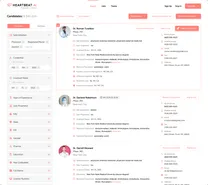
Heartbeat’s database organizes provider information so you’re not stitching together data from multiple disconnected sources. Typical fields include:
- Surgical specialist name
- Location
- Contact numbers (work, cell, mobile)
- Email address
- Specialization
- Years of experience
- Sole proprietor status
- Licensed states
- License number
- Fax
- Address
Available Surgical Specialists in Our Contact List by State
Browse surgical specialist contact lists for other states below.
How Heartbeat Compiles Its Data
Heartbeat.ai aggregates healthcare provider details from roughly 200 official, private, and public sources, then applies predictive modeling to fill gaps and keep records current. The goal is to cut down the manual research time recruiters and marketers otherwise spend chasing down direct numbers and personal emails.
No contact database — Heartbeat’s included — hits 100% accuracy on every record. Match rates vary by specialty, geography, and how recently a provider changed roles, so it’s worth treating any large list as a starting point for verification rather than a finished product, especially for high-stakes recruiting outreach.
Who Uses Surgical Specialist Contact Lists?
These lists get used by sales reps, marketing teams, recruiters, and business development staff at healthcare companies, medical device firms, and pharmaceutical organizations. Independent agents in fields like insurance or real estate sometimes use similar contact data for lead generation, and occasionally nonprofits or advocacy groups use it for outreach tied to health initiatives.
Using the Data Responsibly
A few practical guardrails worth following when contacting surgical specialists directly:
- Keep messages short and specific to why you’re reaching out — busy clinicians skim.
- Segment lists by specialty and role so outreach doesn’t read as generic spam.
- Respect opt-out requests immediately and remove those contacts from future campaigns.
- Understand that HIPAA governs patient health information, not general business contact outreach — but state-level marketing and telemarketing rules (like TCPA for calls/texts) still apply, so check compliance requirements for your specific channel before a mass campaign.
Bottom Line
Finding reliable contact information for Georgia’s surgical specialists takes more than a basic directory search, given how spread out and fast-changing provider staffing can be. A dedicated database like Heartbeat’s can shortcut the manual research, but pairing it with a quick verification step before major campaigns is still good practice.
Frequently Asked Questions
What are surgical specialists?
Surgical specialists are physicians who’ve completed additional training in a specific surgical field, such as orthopedics, neurosurgery, or cardiothoracic surgery, and focus their practice on procedures within that specialty.
How can I find surgical specialists in Georgia?
Referrals from a primary care physician are a common starting point. For business or recruiting purposes, licensing databases confirm credentials, while a dedicated provider contact database like Heartbeat’s fills in direct phone and email details.
What types of surgical specialties are available in Georgia?
Georgia’s healthcare systems cover a broad range of surgical specialties, including general surgery, orthopedic surgery, neurosurgery, cardiovascular surgery, plastic surgery, urology, pediatric surgery, bariatric surgery, and gynecological surgery.