Last updated: August 30, 2026
Building outreach lists for interventional cardiologists in Wisconsin is a narrower, more specialized task than general physician list-building. There are fewer of these specialists per state, they tend to concentrate at a handful of high-volume cardiac centers, and their contact details change less predictably than, say, primary care rosters. That combination makes accuracy and recency more important than sheer list size.
This guide covers what interventional cardiologists do, where they practice in Wisconsin, why contact accuracy matters for recruiters, marketers, and networking professionals, and how to think about data quality when evaluating a contact list provider like Heartbeat.
What’s on this page:
Get an Email List of Interventional Cardiologists in Wisconsin from Heartbeat
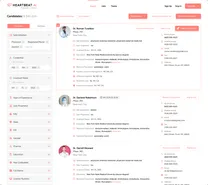
Heartbeat.ai’s database covers licensed healthcare professionals across the United States, including interventional cardiologists. You can apply filters by specialty, state, and other criteria to narrow results to the specific profiles you need, then pull contact details for outreach.
Interventional cardiology itself covers several sub-focus areas, and a well-organized list should let you filter by them rather than treating the specialty as one undifferentiated group. Common categories include:
- Diagnostic interventional cardiology
- Therapeutic interventional cardiology
- Pediatric interventional cardiology
- Coronary interventional cardiology
- Structural heart interventional cardiology
- Endovascular interventional cardiology
Whether the goal is research collaboration, marketing, or recruitment, filtering by sub-specialty before you start outreach saves time later — a structural heart specialist and a pediatric interventional cardiologist have very different practice patterns and referral needs.
Cardiovascular Care in Wisconsin: A Quick Overview
Wisconsin’s cardiovascular care landscape is anchored by a small number of large academic and health-system hospitals rather than a wide spread of independent practices. UW Health University Hospital in Madison is nationally ranked in multiple adult and pediatric specialties, and it draws patients from across the state for complex cardiac cases. In Milwaukee, Aurora St. Luke’s Medical Center has earned a national ranking for cardiology, heart and vascular surgery from U.S. News & World Report, and it functions as a flagship site for the health system’s heart and vascular program. The hospital keeps an interventional cardiologist and full catheterization staff on-site around the clock, and it’s the only hospital in Wisconsin to offer that level of continuous heart care.
Other systems with notable cardiovascular services in the state include Mayo Clinic Health System-Eau Claire, which is nationally ranked in cardiology, and Froedtert Hospital in Milwaukee, affiliated with the Medical College of Wisconsin. For anyone building a Wisconsin-specific outreach list, these health systems are a reasonable starting point for identifying practicing interventional cardiologists, though most physicians will also carry affiliations with smaller regional clinics or satellite offices.
Why Contact Accuracy Matters
Outdated contact information does more than waste a few emails. A recruiter chasing a stale phone number burns time that could go toward candidates who are actually reachable. A marketer sending to a bounced or inactive inbox risks damaging sender reputation for future campaigns. And a researcher trying to reach a specialist for a collaboration may simply give up after one or two failed attempts, losing an opportunity that a working contact detail would have kept alive.
Accuracy also compounds. A list that’s 90% accurate on day one degrades further as physicians change practices, retire, or move between health systems. Interventional cardiologists in particular often move between hospital-employed roles and private cardiology groups, which means static lists have a shorter useful life than they appear to at first glance.
Why Finding an Updated List Is Harder Than It Looks
A few factors make this specialty tougher to track than others:
- Small population, concentrated locations. Interventional cardiologists cluster at major health systems, so a list built from general web directories may miss smaller regional practices entirely.
- Frequent affiliation changes. Physicians move between hospital employment, academic appointments, and private groups more often than the public-facing directories are updated.
- Privacy constraints. Personal contact details, especially direct cell numbers, aren’t published in most professional directories, which limits what you can find through free search alone.
- Sub-specialty ambiguity. A physician’s public listing may say “cardiologist” without specifying the interventional focus, making manual research slower.
Combining a specialty-focused database with periodic manual verification against hospital staff pages is a practical way to keep a Wisconsin-specific list usable over time.
What a Heartbeat Contact Record Typically Includes
A Heartbeat contact list for interventional cardiologists is built to work across every U.S. state, including Wisconsin, and generally includes fields such as:
- Name
- Location (city, state, zip code)
- Contact numbers (work, cell, mobile)
- Email address
- Specialization
- Years of experience
- Sole proprietor status
- Licensed states
- License number
- Fax
- Address
Interventional Cardiologist Lists by State
Below is our full list of state-level interventional cardiologist directories.
| Interventional cardiologists list by states |
|---|
| Interventional cardiologists list in Alabama |
| Interventional cardiologists list in Alaska |
| Interventional cardiologists list in Arizona |
| Interventional cardiologists list in Arkansas |
| Interventional cardiologists list in California |
| Interventional cardiologists list in Colorado |
| Interventional cardiologists list in Connecticut |
| Interventional cardiologists list in Delaware |
| Interventional cardiologists list in Florida |
| Interventional cardiologists list in Georgia |
| Interventional cardiologists list in Hawaii |
| Interventional cardiologists list in Idaho |
| Interventional cardiologists list in Illinois |
| Interventional cardiologists list in Indiana |
| Interventional cardiologists list in Iowa |
| Interventional cardiologists list in Kansas |
| Interventional cardiologists list in Kentucky |
| Interventional cardiologists list in Louisiana |
| Interventional cardiologists list in Maine |
| Interventional cardiologists list in Maryland |
| Interventional cardiologists list in Massachusetts |
| Interventional cardiologists list in Michigan |
| Interventional cardiologists list in Minnesota |
| Interventional cardiologists list in Mississippi |
| Interventional cardiologists list in Missouri |
| Interventional cardiologists list in Montana |
| Interventional cardiologists list in Nebraska |
| Interventional cardiologists list in Nevada |
| Interventional cardiologists list in New hampshire |
| Interventional cardiologists list in New jersey |
| Interventional cardiologists list in New mexico |
| Interventional cardiologists list in New york |
| Interventional cardiologists list in North carolina |
| Interventional cardiologists list in North dakota |
| Interventional cardiologists list in Ohio |
| Interventional cardiologists list in Oklahoma |
| Interventional cardiologists list in Oregon |
| Interventional cardiologists list in Pennsylvania |
| Interventional cardiologists list in Rhode island |
| Interventional cardiologists list in South carolina |
| Interventional cardiologists list in South dakota |
| Interventional cardiologists list in Tennessee |
| Interventional cardiologists list in Texas |
| Interventional cardiologists list in Utah |
| Interventional cardiologists list in Vermont |
| Interventional cardiologists list in Virginia |
| Interventional cardiologists list in Washington |
| Interventional cardiologists list in West virginia |
| Interventional cardiologists list in Wisconsin |
| Interventional cardiologists list in Wyoming |
How Heartbeat Compiles Contact Data
Heartbeat builds its healthcare provider database from a wide range of official, private, and public sources, then applies verification and modeling processes to keep entries current. The aim is a list that reflects where a provider actually practices now, not where they were listed five years ago. No third-party contact database is ever perfectly current — providers change roles constantly — so pairing any purchased list with your own periodic spot-checks (a quick call, a LinkedIn cross-reference) is good practice regardless of the source.
Evaluating a Contact List Provider: What to Check
If you’re comparing Heartbeat against another data source or an in-house research process, a few questions are worth asking before you commit budget:
- How often is the underlying data refreshed, and what’s the process for flagging outdated records?
- Can you filter by sub-specialty (interventional vs. general cardiology) rather than just by broad specialty labels?
- Does the provider offer both direct dial and cell/mobile numbers, or only office switchboard numbers that route through gatekeepers?
- Is there a way to verify or re-check a small sample of records before committing to a larger list purchase?
- What happens to bounced emails or disconnected numbers — is there a replacement or credit policy?
Who Uses Interventional Cardiologist Contact Lists
Recruiters use these lists to reach candidates directly rather than relying solely on job boards. Marketing and sales teams selling medical devices, pharmaceuticals, or clinical services use them for targeted outreach to a narrow specialist audience. Researchers and conference organizers use them to invite collaborators or speakers. Nonprofit and advocacy groups occasionally use them for awareness campaigns tied to cardiovascular health initiatives.
Using These Lists Responsibly
A specialty contact list is a starting point, not a guarantee of engagement. A few practical guidelines:
- Keep outreach concise and state your purpose early — physicians have limited time between clinical duties.
- Segment your list by sub-specialty so messaging is relevant to the recipient’s actual practice focus.
- Verify a sample of contacts before a large campaign to gauge current accuracy.
- Follow applicable communication and privacy regulations for any outreach involving licensed healthcare professionals.
- Avoid framing any contact list as a substitute for medical advice or a direct line to patient care — it’s a professional networking and business tool, not a clinical resource.
The Bottom Line
Wisconsin’s interventional cardiology community is concentrated around a small number of major health systems, which makes it a manageable but detail-sensitive niche for list-building. Accuracy and sub-specialty filtering matter more here than volume. Heartbeat’s database is built to support that kind of targeted, state-specific outreach, but no list should be treated as static — plan for periodic verification as part of your workflow.
Frequently Asked Questions
What is an interventional cardiologist?
Interventional cardiologists are specialized doctors who diagnose and treat heart conditions using minimally invasive procedures such as catheter-based interventions.
Where can I find a list of interventional cardiologists in Wisconsin?
You can search hospital and health system staff directories, professional networking platforms, or use a specialty-focused contact database like Heartbeat that lets you filter by state and specialty.
What are some common procedures performed by interventional cardiologists?
Common procedures include angioplasty, stenting, cardiac catheterization, and structural heart repairs such as valve procedures.