Last updated: August 31, 2026
Interventional cardiology is a small, high-value specialty inside California’s much larger cardiovascular workforce. Anyone trying to build outreach, recruiting, or referral programs around this group runs into the same problem: public directories are incomplete, board rosters lag behind actual practice moves, and hospital staff pages go stale the moment a physician changes affiliations.
This guide covers what an accurate interventional cardiologist contact list actually requires, where the data commonly breaks down, and how a data provider like Heartbeat.ai fits into a broader outreach or recruiting workflow.
What’s on this page:
What Interventional Cardiology Covers in California
Interventional cardiologists perform catheter-based procedures for coronary artery disease, structural heart defects, and related conditions. Within the specialty, physicians often focus on specific sub-areas, including:
- Pediatric interventional cardiology, treating congenital and acquired heart conditions in children
- Structural heart intervention, addressing valve disease and septal defects
- Coronary intervention, focused on angioplasty and stenting for coronary artery disease
- General interventional cardiology surgery and catheter-based treatment
California’s academic medical centers and large health systems, including UCLA Health, Stanford Health Care, Cedars-Sinai, and UCSF Health, employ significant numbers of interventional cardiologists and offer procedures such as angioplasty, valvuloplasty, and coronary thrombectomy. That concentration matters for outreach planning: a large share of the specialty in the state sits inside a relatively small number of institutions, which affects how you segment and prioritize a contact list.
Why Accurate Contact Data Matters Here
Outdated or mismatched contact information causes real friction in a few specific situations:
- Recruiting: A job opportunity sent to a wrong or inactive email simply disappears, and a specialty this narrow doesn’t leave much room for wasted outreach attempts.
- Vendor and device outreach: Sales and medical education teams targeting interventional cardiologists need to reach the physician directly rather than a general practice line that may not route messages to the right person.
- Professional networking and collaboration: Conference organizers, CME programs, and research collaborators rely on current emails and direct numbers to coordinate with a physician who may have recently changed hospital affiliations.
None of these use cases involve patient-facing contact. This is provider-to-provider or business-to-provider data, not a substitute for a patient’s own care coordination with their physician.
Where These Lists Typically Fall Apart
Building a reliable interventional cardiologist list in California runs into a few recurring obstacles:
- Physician mobility. Interventional cardiologists move between hospital systems, private practices, and academic centers more often than directory updates keep pace with.
- State scale. California has one of the largest healthcare workforces in the country, which makes manual verification slow and expensive at any meaningful volume.
- Inconsistent public sources. Hospital “find a doctor” pages, state licensing lookups, and specialty society rosters each capture different, partially overlapping information, and none of them are built for bulk outreach.
- Stale third-party lists. Lists sold or shared without regular refresh cycles tend to include outdated titles, old contact numbers, or physicians who have left the specialty or the state entirely.
A reasonable starting checklist before using any interventional cardiologist contact list for outreach:
- Confirm the data source refreshes on a regular cycle, not a one-time export
- Check whether specialization tagging distinguishes interventional cardiology from general cardiology
- Verify the list includes both direct email and phone, since response channels vary by physician
- Cross-check a small sample against a hospital or licensing directory before a full campaign
What Heartbeat.ai’s Interventional Cardiologist Data Includes
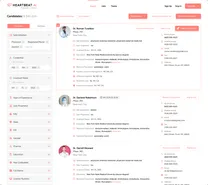
Heartbeat.ai maintains contact records for interventional cardiologists and other healthcare specialists across the U.S., including California. Typical fields include:
- Full name
- Location
- Contact numbers (work, cell, mobile)
- Email address
- Specialization
- Years of experience
- Sole proprietor status
- Licensed states
- License number
- Fax
- Address
These records are aggregated from a mix of public, private, and official sources and are intended to be filtered by specialty, location, and other criteria to build a targeted outreach list rather than a single static file.
Interventional Cardiologist Lists by State
| Interventional cardiologists list by states |
|---|
| Interventional cardiologists list in Alabama |
| Interventional cardiologists list in Alaska |
| Interventional cardiologists list in Arizona |
| Interventional cardiologists list in Arkansas |
| Interventional cardiologists list in California |
| Interventional cardiologists list in Colorado |
| Interventional cardiologists list in Connecticut |
| Interventional cardiologists list in Delaware |
| Interventional cardiologists list in Florida |
| Interventional cardiologists list in Georgia |
| Interventional cardiologists list in Hawaii |
| Interventional cardiologists list in Idaho |
| Interventional cardiologists list in Illinois |
| Interventional cardiologists list in Indiana |
| Interventional cardiologists list in Iowa |
| Interventional cardiologists list in Kansas |
| Interventional cardiologists list in Kentucky |
| Interventional cardiologists list in Louisiana |
| Interventional cardiologists list in Maine |
| Interventional cardiologists list in Maryland |
| Interventional cardiologists list in Massachusetts |
| Interventional cardiologists list in Michigan |
| Interventional cardiologists list in Minnesota |
| Interventional cardiologists list in Mississippi |
| Interventional cardiologists list in Missouri |
| Interventional cardiologists list in Montana |
| Interventional cardiologists list in Nebraska |
| Interventional cardiologists list in Nevada |
| Interventional cardiologists list in New hampshire |
| Interventional cardiologists list in New jersey |
| Interventional cardiologists list in New mexico |
| Interventional cardiologists list in New york |
| Interventional cardiologists list in North carolina |
| Interventional cardiologists list in North dakota |
| Interventional cardiologists list in Ohio |
| Interventional cardiologists list in Oklahoma |
| Interventional cardiologists list in Oregon |
| Interventional cardiologists list in Pennsylvania |
| Interventional cardiologists list in Rhode island |
| Interventional cardiologists list in South carolina |
| Interventional cardiologists list in South dakota |
| Interventional cardiologists list in Tennessee |
| Interventional cardiologists list in Texas |
| Interventional cardiologists list in Utah |
| Interventional cardiologists list in Vermont |
| Interventional cardiologists list in Virginia |
| Interventional cardiologists list in Washington |
| Interventional cardiologists list in West virginia |
| Interventional cardiologists list in Wisconsin |
| Interventional cardiologists list in Wyoming |
Who Actually Uses This Kind of List
In practice, interventional cardiologist contact data gets used by a fairly narrow set of teams: medical device and pharma sales reps targeting cardiology accounts, healthcare recruiters filling interventional cardiology roles at hospitals or practice groups, conference and CME organizers coordinating speakers, and researchers building study or advisory board rosters. It is not intended for patient use, and it should not replace a patient’s direct communication with their own care team.
A Practical Workflow for Using the Data
- Define the segment precisely, for example interventional cardiologists at academic medical centers in Los Angeles County versus community hospital-based physicians statewide
- Pull the filtered list and check specialization tagging against the actual sub-focus you need, since general cardiology and interventional cardiology are often bundled in weaker datasets
- Spot-check a sample of records against a hospital directory or state license lookup before a full send
- Segment messaging by role, since a recruiter’s outreach and a device rep’s outreach require very different framing even to the same physician
- Track bounce and response rates by source list, since this is the clearest signal of whether a data provider’s refresh cycle is keeping up with physician turnover
Limitations to Keep in Mind
No contact database, including one built from hundreds of sources, will be perfectly current for a specialty this mobile. Predictive or modeled contact fields carry some margin of error, and any list should be treated as a strong starting point for outreach rather than a guaranteed-accurate directory. Confirming details for a specific physician before a high-stakes contact, such as a recruiting offer, is still worth the extra step.
Frequently Asked Questions
What is the list of interventional cardiologists in California?
There is no single official public list. Medical associations, hospital directories, and online directories like Healthgrades or Zocdoc each cover part of the picture, and specialty data providers combine and refresh these sources for outreach purposes.
How can I find interventional cardiologists near me in California?
Online directories such as Healthgrades or Zocdoc, an insurance provider’s directory, or a referral from a primary care physician are the standard starting points for locating a specific specialist.
Are there any top-rated interventional cardiologists in California?
Review platforms like Healthgrades or RateMDs list ratings for individual physicians. Board certification in cardiovascular medicine, with additional interventional cardiology certification, is a reasonable baseline credential to check.
What qualifications should I look for in an interventional cardiologist in California?
Board certification in cardiovascular disease along with additional training or certification in interventional cardiology is the standard qualification to verify, alongside relevant procedural experience.