Last updated: August 30, 2026
Florida has one of the largest neurology workforces in the country, spanning academic medical centers, community hospitals, and private practices. For anyone doing outreach in this specialty — recruiters filling clinical roles, medical device or pharma reps, researchers recruiting study sites — the challenge isn’t finding neurologists on paper. It’s finding ones you can actually reach.
Neurologist contact data goes stale fast. Physicians change practices, hospital systems merge, and generic office lines rarely connect you to the person you actually need. This article looks at why accurate contact data matters in this specialty, where the common breakdowns happen, and how a purpose-built healthcare contact database like Heartbeat.ai fits into that workflow.
What’s on this page:
Get an Email List of Neurologists in Florida from Heartbeat
Heartbeat.ai maintains contact records for licensed healthcare professionals across the United States, including neurologists practicing in Florida. You can filter by specialty, location, and other criteria to build a list matched to your outreach goals rather than working from a generic directory.
The Florida neurology field covers several distinct sub-specialties, and it helps to know which one you’re targeting before you build a list:
- Pediatric neurologists — treat neurological conditions in infants, children, and adolescents.
- General/adult neurologists — manage conditions like Alzheimer’s disease, Parkinson’s disease, and general neurological complaints.
- Epilepsy, stroke, and headache specialists — focus on specific acute or chronic neurological conditions.
- Neurosurgeons — perform surgical procedures on the brain, spine, and peripheral nerves.
Segmenting by sub-specialty up front saves time later — a message tailored to a stroke specialist reads very differently than one aimed at a pediatric neurologist, and mismatched outreach is one of the fastest ways to get ignored or flagged as spam.
Neurology in Florida’s Healthcare Landscape
Florida is home to a substantial neurology workforce, with practitioners covering conditions ranging from stroke and epilepsy to Parkinson’s disease and multiple sclerosis. Major health systems in the state, including Mayo Clinic’s Florida campus and academic centers like UF Health, run established neurology and neurosurgery programs that also support clinical research and training.
The state’s large and aging population, combined with several academic medical centers, means demand for neurological care — and interest in neurology recruitment, research partnerships, and vendor outreach — stays consistently high.
Why Accurate Contact Data Matters
Outdated contact information causes real friction, and the cost shows up differently depending on who’s using the list.
- For recruiters: a wrong number or dead email means a missed candidate — and in specialties with tight talent pools like neurology, that gap is hard to close quickly.
- For marketing and sales teams: messages sent to outdated addresses waste budget and can hurt sender reputation if bounce rates climb.
- For researchers and study coordinators: reaching the right specialist directly, rather than routing through a front desk, often determines whether a site participates at all.
- For professional networking: conference invitations, collaboration requests, and referrals depend on messages actually landing in front of the right physician.
None of this is unique to Florida, but the state’s mix of large hospital systems and independent practices makes contact data more likely to fragment across sources — which is exactly the kind of problem a centralized database is meant to solve.
Common Obstacles in Finding the Right Neurologist Contact
A few recurring issues make neurologist outreach harder than it should be:
- Scarcity relative to demand. Specialist supply hasn’t kept pace with need in some regions, which means fewer viable contacts for a given search.
- Geographic gaps. Rural and underserved parts of the state have fewer neurologists, so lists built from a single city or region can miss viable candidates elsewhere.
- Fragmented referral and directory systems. Hospital directories, state licensing boards, and practice websites often list different or outdated information for the same provider.
- Manual research overhead. Piecing together names, specialties, and working contact details from public sources is slow and produces inconsistent results.
Centralized, regularly refreshed databases address most of these by consolidating specialty, location, and contact detail into one record — and by design, they reduce the manual cross-checking that eats up recruiter and marketer time.
What’s Included in Heartbeat’s Neurologist Contact Records
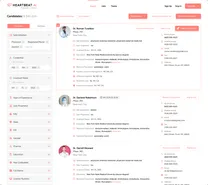
Heartbeat’s neurologist contact data is designed to give you enough detail to qualify a contact before you reach out, not just a name and a phone number. Typical fields include:
- Neurologist name
- Location
- Contact numbers (work, cell, mobile)
- Email address
- Specialization
- Years of experience
- Sole proprietor status
- Licensed states
- License number
- Fax
- Address
Neurologist Contact Lists by State
Explore neurologist contact data segmented by state.
| Neurologists by states |
|---|
| Neurologists in Alabama |
| Neurologists in Alaska |
| Neurologists in Arizona |
| Neurologists in Arkansas |
| Neurologists in California |
| Neurologists in Colorado |
| Neurologists in Connecticut |
| Neurologists in Delaware |
| Neurologists in Florida |
| Neurologists in Georgia |
| Neurologists in Hawaii |
| Neurologists in Idaho |
| Neurologists in Illinois |
| Neurologists in Indiana |
| Neurologists in Iowa |
| Neurologists in Kansas |
| Neurologists in Kentucky |
| Neurologists in Louisiana |
| Neurologists in Maine |
| Neurologists in Maryland |
| Neurologists in Massachusetts |
| Neurologists in Michigan |
| Neurologists in Minnesota |
| Neurologists in Mississippi |
| Neurologists in Missouri |
| Neurologists in Montana |
| Neurologists in Nebraska |
| Neurologists in Nevada |
| Neurologists in New hampshire |
| Neurologists in New jersey |
| Neurologists in New mexico |
| Neurologists in New york |
| Neurologists in North carolina |
| Neurologists in North dakota |
| Neurologists in Ohio |
| Neurologists in Oklahoma |
| Neurologists in Oregon |
| Neurologists in Pennsylvania |
| Neurologists in Rhode island |
| Neurologists in South carolina |
| Neurologists in South dakota |
| Neurologists in Tennessee |
| Neurologists in Texas |
| Neurologists in Utah |
| Neurologists in Vermont |
| Neurologists in Virginia |
| Neurologists in Washington |
| Neurologists in West virginia |
| Neurologists in Wisconsin |
| Neurologists in Wyoming |
How Heartbeat Compiles Neurologist Contact Data
Heartbeat.ai aggregates healthcare provider contact details, including direct cell numbers and professional email addresses, from a broad network of public and private sources rather than a single directory. That breadth matters in a specialty like neurology, where providers move between hospital systems, academic appointments, and private practice fairly often.
Rather than presenting this as a static list, think of it as a workflow: pull a filtered list by specialty and region, verify against your specific outreach criteria (research site, open role, product fit), and use the multiple contact channels provided (cell, work line, email) to increase the odds of a response on the first attempt.
Who Uses Neurologist Contact Lists
Contact lists like this serve several distinct use cases, and the right approach differs by user:
- Healthcare recruiters sourcing candidates for open neurology positions.
- Medical device, diagnostics, and pharma sales teams introducing new products to relevant specialists.
- Clinical researchers and CROs recruiting investigators or study sites.
- Professional associations and event organizers inviting specialists to conferences or CME programs.
Whatever the use case, outreach must comply with applicable privacy and anti-spam regulations — this is a compliance requirement, not a suggestion, and it applies regardless of how the contact data was sourced.
A Practical Checklist for Effective Outreach
- Confirm the specialty and sub-specialty match before sending — a generic message to the wrong sub-specialty reads as untargeted.
- Use a specific, direct subject line and keep the message short; physicians’ time is limited.
- State clearly why you’re reaching out and what response (if any) you need.
- Choose the right channel — a direct cell or email tends to outperform a general office line for time-sensitive requests.
- Track bounce and response rates so you can flag and refresh stale records over time.
Limitations to Keep in Mind
No contact database is perfect. Physicians change roles, retire, or shift between practices, and even well-maintained records will include some outdated entries. Cross-checking a handful of high-priority contacts before a large campaign is a reasonable safeguard, and building in a process to report and correct bad data helps keep future lists cleaner.
Closing Thoughts
Reaching the right neurologist in Florida comes down to matching sub-specialty, location, and contact channel — and doing it with data that’s actually current. A centralized, filterable database won’t replace judgment about who to contact and why, but it removes much of the manual research that slows outreach down.
Frequently Asked Questions
What services do neurologists in Florida provide?
Neurologists in Florida diagnose and treat neurological disorders, including epilepsy, stroke, multiple sclerosis, Alzheimer’s disease, and Parkinson’s disease.
How do I find a neurologist in Florida?
Common starting points include referrals from a primary care physician, hospital and health system directories, or a filtered healthcare contact database if you’re doing professional outreach rather than seeking personal care.
Are there specialized neurologists in Florida?
Yes. Sub-specialties in the state include pediatric neurology, neuro-oncology, neuromuscular disorders, movement disorders, and neurocritical care.
What hospitals in Florida have notable neurology departments?
Academic and specialty centers such as Mayo Clinic’s Jacksonville campus and UF Health are known for established neurology and neurosurgery programs, alongside neurology departments at major hospital systems statewide.