Last updated: August 31, 2026
New York has one of the largest and most fragmented hospital systems in the country, spanning academic medical centers in Manhattan, community hospitals in the Hudson Valley, and rural facilities upstate. For anyone doing healthcare recruitment, medical sales, or professional networking in this state, knowing who actually makes decisions at these institutions matters more than knowing the institutions exist.
That’s the practical problem with hospital decision-maker lists: the people on them change jobs constantly. A CFO you identified six months ago may already be at a different health system. This article looks at why these lists matter, where they tend to break down, and how to use them without wasting outreach on stale contacts.
What’s on this page:
Get a Hospital Decision-Makers Email List for New York from Heartbeat
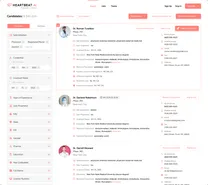
Heartbeat.ai’s contact database covers licensed healthcare professionals across the United States, including hospital leadership, physicians, and administrators in New York. You can filter by role, specialty, or location to build a targeted list and reach out directly.
Hospital decision-makers in New York generally fall into a handful of functional groups, and knowing which one you actually need to reach saves time:
- Hospital executives (CEOs, COOs, CFOs, CMOs) — set organizational policy and control budget approvals.
- Physicians and nurses — frontline clinical staff whose day-to-day experience often shapes what gets adopted at the department level.
- Hospital administrators and managers — handle operational planning, staffing, and coordination across departments.
- Procurement officers — control purchasing decisions and vendor relationships.
- Department heads and medical directors — set clinical standards, budgets, and goals for their specific units.
Matching your outreach to the right group is the first filter that matters. A vendor pitch aimed at a CFO won’t land the same way with a department head, and a recruiting message meant for a hiring manager gets ignored if it lands in a CEO’s inbox instead.
The New York Healthcare Landscape
New York’s hospital network includes major academic and referral centers such as New York-Presbyterian, Mount Sinai, and Rochester’s Strong Memorial, alongside a wide range of community and regional hospitals. Decision-making authority is spread across hospital administrators, health system executives, and public health officials, with the New York State Department of Health overseeing statewide regulation and facility licensing.
The mix of large private systems and public health oversight makes New York’s hospital environment more layered than smaller states. That’s worth accounting for when building outreach lists — a contact strategy that works for a single-hospital rural system won’t necessarily map onto a multi-campus academic network.
Why Accurate Contact Information Matters
Outdated contact information costs more than a bounced email. In recruitment, a missing or wrong number can mean weeks of delay filling a clinical or leadership role. In vendor outreach, it means pitches that never reach the person with budget authority. In networking, it means missed introductions that could have led to a partnership or referral.
The cost isn’t always obvious until you tally the wasted outreach cycles: emails sent to former employees, calls routed to a general switchboard, LinkedIn messages to someone who left the organization a year ago. Accurate, current contact data removes most of that friction.
Why These Lists Are Hard to Keep Current
A few structural factors make hospital decision-maker lists difficult to maintain in New York specifically:
- High turnover among executives and department heads — leadership changes happen frequently, especially at larger systems undergoing mergers or restructuring.
- Privacy regulations — laws like HIPAA restrict what personal health information can be shared, though this generally doesn’t cover professional business contact details for administrators and executives.
- Sheer volume and variation — New York has hundreds of hospitals with different organizational structures, so a one-size-fits-all list rarely stays accurate across all of them.
Databases that rely on periodic manual updates tend to fall behind quickly given this pace of change. Tools that continuously monitor staffing changes and cross-reference multiple data sources hold up better, though no database is ever perfectly current — some lag between a role change and a list update is unavoidable.
What a Heartbeat Contact List Includes
Heartbeat’s database is built by aggregating and verifying data from a wide range of private, public, and official sources, with the goal of covering healthcare provider contact information nationwide, including direct cell numbers and personal emails where available. A typical record includes:
- Name
- Location
- Contact numbers (work, cell, mobile)
- Email address
- Specialization
- Years of experience
- Sole proprietor status
- Licensed states
- License number
- Fax
- Address
Available Hospital Decision-Makers Lists by State
Explore comparable hospital decision-maker contact lists for other states.
| Hospital decision makers lists by states |
|---|
| Hospital decision makers lists in Alabama |
| Hospital decision makers lists in Alaska |
| Hospital decision makers lists in Arizona |
| Hospital decision makers lists in Arkansas |
| Hospital decision makers lists in California |
| Hospital decision makers lists in Colorado |
| Hospital decision makers lists in Connecticut |
| Hospital decision makers lists in Delaware |
| Hospital decision makers lists in Florida |
| Hospital decision makers lists in Georgia |
| Hospital decision makers lists in Hawaii |
| Hospital decision makers lists in Idaho |
| Hospital decision makers lists in Illinois |
| Hospital decision makers lists in Indiana |
| Hospital decision makers lists in Iowa |
| Hospital decision makers lists in Kansas |
| Hospital decision makers lists in Kentucky |
| Hospital decision makers lists in Louisiana |
| Hospital decision makers lists in Maine |
| Hospital decision makers lists in Maryland |
| Hospital decision makers lists in Massachusetts |
| Hospital decision makers lists in Michigan |
| Hospital decision makers lists in Minnesota |
| Hospital decision makers lists in Mississippi |
| Hospital decision makers lists in Missouri |
| Hospital decision makers lists in Montana |
| Hospital decision makers lists in Nebraska |
| Hospital decision makers lists in Nevada |
| Hospital decision makers lists in New hampshire |
| Hospital decision makers lists in New jersey |
| Hospital decision makers lists in New mexico |
| Hospital decision makers lists in New york |
| Hospital decision makers lists in North carolina |
| Hospital decision makers lists in North dakota |
| Hospital decision makers lists in Ohio |
| Hospital decision makers lists in Oklahoma |
| Hospital decision makers lists in Oregon |
| Hospital decision makers lists in Pennsylvania |
| Hospital decision makers lists in Rhode island |
| Hospital decision makers lists in South carolina |
| Hospital decision makers lists in South dakota |
| Hospital decision makers lists in Tennessee |
| Hospital decision makers lists in Texas |
| Hospital decision makers lists in Utah |
| Hospital decision makers lists in Vermont |
| Hospital decision makers lists in Virginia |
| Hospital decision makers lists in Washington |
| Hospital decision makers lists in West virginia |
| Hospital decision makers lists in Wisconsin |
| Hospital decision makers lists in Wyoming |
How Heartbeat Compiles This Data
Heartbeat aggregates and verifies contact information from a broad set of private, public, and official data sources, then cross-references it to reduce errors and catch role changes. The goal is direct contact data — cell numbers and personal emails, not just general hospital switchboard lines — since general numbers rarely reach the actual decision-maker.
No database claims perfect accuracy, and healthcare staffing turnover means some records will lag behind real-world changes. Treat any purchased or aggregated list as a strong starting point rather than a guaranteed-current directory, and verify key contacts before high-stakes outreach.
Who Uses Hospital Decision-Maker Lists
These lists get used by a range of people beyond marketing teams: recruiters filling clinical and executive roles, medical device and pharmaceutical sales reps, HR professionals doing outreach, and nonprofit staff running awareness or fundraising campaigns tied to healthcare institutions. Anyone using them needs to stay within applicable privacy and communications regulations, including rules around unsolicited marketing contact.
Using These Lists Effectively
A few practical habits separate outreach that gets responses from outreach that gets ignored:
- Match your message to the role. A CFO cares about budget and ROI; a department head cares about clinical workflow and patient outcomes.
- Keep it short. Hospital decision-makers are busy — a two-sentence email outperforms a five-paragraph pitch most of the time.
- Verify before high-value outreach. If you’re contacting someone for a major recruitment push or partnership, confirm their current title and organization first.
- Respect timing and volume limits. Repeated unsolicited contact damages your reputation faster than it builds relationships.
- Personalize when possible. Referencing their specific department, recent move, or specialty signals you did homework rather than mass-blasting a list.
The Bottom Line
Finding accurate hospital decision-maker contacts in New York is harder than it sounds, mainly because of staff turnover and the sheer size of the state’s hospital network. A well-maintained, continuously updated contact database — used carefully and matched to the right role — cuts down on wasted outreach and speeds up recruitment, sales, and networking efforts across New York’s hospital systems.
Frequently Asked Questions
What is a hospital decision-makers list?
It’s a compiled set of contact information for the people who make operational, clinical, and financial decisions at hospitals — typically executives, administrators, department heads, and clinical leaders.
Why would I need a hospital decision-makers list in New York?
If you’re recruiting for clinical or administrative roles, selling into hospital systems, or building professional relationships in New York’s healthcare sector, having verified contacts for the right roles saves significant time compared to cold outreach through general hospital lines.
Where can I find a reliable hospital decision-makers list in New York?
Specialized healthcare data providers, including Heartbeat.ai, maintain contact databases covering hospital leadership and staff. Look for providers that verify and update their data regularly, since staff turnover makes static lists go stale quickly.