Last updated: August 31, 2026
Illinois has one of the largest and most fragmented hospital markets in the Midwest, which makes finding the right person to call or email harder than it should be. Between large systems, academic medical centers, and independent community hospitals, the titles and reporting lines vary enough that a generic contact list rarely holds up for long.
This guide covers who actually makes purchasing, staffing, and clinical-operations decisions inside Illinois hospitals, why contact accuracy is such a persistent problem in this sector, and what to look for in a vendor before you buy a list.
What’s on this page:
Who counts as a hospital decision maker in Illinois
“Decision maker” covers a wider group than just the C-suite. Depending on what you’re selling or recruiting for, the relevant contact might be a Hospital Administrator, a Department Head, a Purchasing or Materials Manager, a Medical Director, a Pharmacy Director, or a Nursing Manager. Each of these roles controls a different slice of hospital spending and hiring, so matching your outreach to the right title matters more than reaching a large volume of generic contacts.
For medical equipment or supply sales, Purchasing Managers and Materials Directors are usually the entry point. For clinical staffing or physician recruitment, Medical Directors and Department Heads tend to carry more weight. For enterprise software, IT services, or facility-wide initiatives, you’re more likely dealing with a CFO, COO, or administrator.
The Illinois hospital landscape, briefly
Illinois is home to roughly 238 hospitals as of early 2025, though estimates vary by source and methodology, ranging from just over 200 to around 240 depending on how critical access and specialty facilities are counted. Most of these are affiliated with the Illinois Health and Hospital Association, which represents the majority of the state’s acute care providers.
Over 100 facilities are concentrated in the greater Chicago metropolitan region, covering Cook County and the surrounding collar counties. That concentration matters for outreach planning: a large share of the state’s decision-making volume sits in a relatively small geographic footprint, while rural and downstate hospitals often rely on smaller staffs where one administrator wears several hats.
Illinois’ academic medical centers, including Northwestern Memorial Hospital and Rush University Medical Center, are frequently cited among the state’s top-performing hospitals nationally, which also makes them common targets for vendor and recruiter outreach, and correspondingly harder to reach without a warm introduction or a well-targeted contact.
Why contact accuracy is a real problem here
Hospital staff directories go stale quickly. Leadership turnover, departmental restructuring, and system consolidation (a regular occurrence among Illinois’ larger health systems) mean that a list built even a year ago may have meaningfully outdated titles or contact details. Privacy rules governing how personal and professional contact information can be sourced and shared add another layer of friction, since scraping or guessing at contact details isn’t a reliable substitute for verified data.
A few practical consequences worth planning around:
- Generic front-desk numbers or shared department emails often get filtered before reaching the actual decision maker.
- Titles listed on hospital websites don’t always match who currently holds budget authority.
- Systems that recently merged or rebranded may have inconsistent contact records across their member hospitals for months after the change.
- Cell phone numbers and direct dials are harder to source than general email addresses, but tend to produce faster responses.
A simple workflow for using a hospital decision-maker list
- Segment by role before you segment by hospital. Group contacts by function (purchasing, clinical leadership, administration) so your messaging can speak directly to what that role cares about.
- Prioritize by facility size and geography. A large academic medical center in Chicago has different needs and a different buying process than a rural critical access hospital downstate.
- Verify before a high-value outreach push. Even a well-maintained list benefits from a quick spot-check on your highest-priority accounts, especially at hospitals that have recently changed ownership or merged with a larger system.
- Track bounce and response data. Feed what you learn back into how you prioritize future lists, since stale contacts tend to cluster around specific facilities rather than being evenly distributed.
What a usable hospital contact list should include
At minimum, look for name, title, facility, location, and both phone and email contact details. Specialization or department, years in the role, and licensing details (where relevant to clinical roles) help with segmentation. A list without a clear update cadence, or without any indication of how the data was sourced, is a red flag regardless of price.
Hospital decision makers lists by state
| Hospital decision makers lists by states |
|---|
| Hospital decision makers lists in Alabama |
| Hospital decision makers lists in Alaska |
| Hospital decision makers lists in Arizona |
| Hospital decision makers lists in Arkansas |
| Hospital decision makers lists in California |
| Hospital decision makers lists in Colorado |
| Hospital decision makers lists in Connecticut |
| Hospital decision makers lists in Delaware |
| Hospital decision makers lists in Florida |
| Hospital decision makers lists in Georgia |
| Hospital decision makers lists in Hawaii |
| Hospital decision makers lists in Idaho |
| Hospital decision makers lists in Illinois |
| Hospital decision makers lists in Indiana |
| Hospital decision makers lists in Iowa |
| Hospital decision makers lists in Kansas |
| Hospital decision makers lists in Kentucky |
| Hospital decision makers lists in Louisiana |
| Hospital decision makers lists in Maine |
| Hospital decision makers lists in Maryland |
| Hospital decision makers lists in Massachusetts |
| Hospital decision makers lists in Michigan |
| Hospital decision makers lists in Minnesota |
| Hospital decision makers lists in Mississippi |
| Hospital decision makers lists in Missouri |
| Hospital decision makers lists in Montana |
| Hospital decision makers lists in Nebraska |
| Hospital decision makers lists in Nevada |
| Hospital decision makers lists in New hampshire |
| Hospital decision makers lists in New jersey |
| Hospital decision makers lists in New mexico |
| Hospital decision makers lists in New york |
| Hospital decision makers lists in North carolina |
| Hospital decision makers lists in North dakota |
| Hospital decision makers lists in Ohio |
| Hospital decision makers lists in Oklahoma |
| Hospital decision makers lists in Oregon |
| Hospital decision makers lists in Pennsylvania |
| Hospital decision makers lists in Rhode island |
| Hospital decision makers lists in South carolina |
| Hospital decision makers lists in South dakota |
| Hospital decision makers lists in Tennessee |
| Hospital decision makers lists in Texas |
| Hospital decision makers lists in Utah |
| Hospital decision makers lists in Vermont |
| Hospital decision makers lists in Virginia |
| Hospital decision makers lists in Washington |
| Hospital decision makers lists in West virginia |
| Hospital decision makers lists in Wisconsin |
| Hospital decision makers lists in Wyoming |
What Heartbeat provides
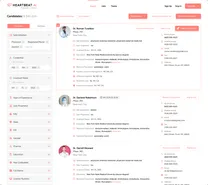
Heartbeat.ai maintains a searchable database of U.S. healthcare providers and administrators, including contact details relevant to hospital outreach in Illinois. Records typically include name, location, contact numbers, email address, specialization, years of experience, licensing details, and facility address, with filtering so you can narrow results to the specific role or region you need before reaching out.
Rather than building a list from scratch by scraping hospital websites and public directories, teams generally use a service like this to get a starting point that’s already organized by role and location, then verify their highest-priority contacts before a major campaign.
Who typically uses this kind of list
Marketing and sales teams selling into hospitals use these lists for lead generation and account-based outreach. Healthcare recruiters use them to reach hiring managers and department heads directly rather than going through a general HR inbox. PR firms, event organizers, and fundraising teams doing outreach in the Illinois healthcare space use similar contact strategies, as do independent consultants and vendors trying to get in front of the right buyer.
Getting outreach right once you have the contacts
Having accurate contacts solves only part of the problem. A few things tend to separate outreach that gets a response from outreach that gets ignored:
- Match the message to the title. A Purchasing Manager wants to know about cost, reliability, and implementation timeline. A Medical Director cares more about clinical outcomes and workflow fit.
- Keep the first message short. Hospital decision makers are busy and get pitched constantly; a two-line email with a clear ask outperforms a long one.
- Follow up with something useful, not just a reminder. A relevant data point, a short case study, or a specific question tends to land better than “just checking in.”
- Respect the compliance environment. Healthcare buyers operate under real regulatory constraints; outreach that acknowledges this builds more credibility than outreach that ignores it.
Limitations to keep in mind
No contact list, however well maintained, is complete or permanently accurate. Illinois hospitals go through leadership changes, mergers, and department restructuring on an ongoing basis, and any static list will drift out of date over time. Treat purchased data as a strong starting point rather than a permanent record, and build a light verification step into your process for high-value accounts.
Frequently Asked Questions
What is a hospital decision makers list?
It’s a database of contact information and role details for people inside hospitals who influence or control purchasing, staffing, and operational decisions.
How can a hospital decision makers list be useful in Illinois?
It helps you target outreach to the specific people with authority over hospital operations, purchasing, or partnerships, rather than guessing who to contact through general hospital directories.
Where can I find hospital decision makers lists in Illinois?
Data providers, healthcare industry associations, and market research firms are the most common sources. Look for providers that disclose how frequently their data is updated and how contact details are sourced.