Last updated: August 31, 2026
Reaching the right person inside an Arizona hospital, whether that’s a CEO, a director of nursing, or a pharmacy manager, is harder than it sounds. Titles vary by system, contact information goes stale fast, and hospitals guard staff details closely. This guide looks at why that’s the case and what a working outreach process actually looks like for sales, recruiting, and partnership teams targeting Arizona healthcare facilities.
What’s on this page:
Arizona’s Hospital Landscape at a Glance
Arizona’s hospital market is dominated by a handful of large systems. Banner Health, headquartered in Phoenix, is the state’s largest health system and operates 33 hospitals across six states, with the bulk of that footprint in Arizona. Mayo Clinic maintains a presence in the state for advanced and specialty care, and Dignity Health (part of CommonSpirit Health) runs several Arizona facilities as well. Beyond these three, the state includes a mix of regional nonprofit systems, children’s hospitals, and independent community hospitals.
Estimates of the exact number of hospitals in Arizona vary by source and methodology—some counts include specialty and critical access facilities, others don’t—so treat any single statewide total with some skepticism. What matters more for outreach purposes is that decision-making authority is distributed unevenly: a large IDN like Banner centralizes many purchasing and administrative decisions at the system level, while smaller independent hospitals may have decision-makers who are easier to reach directly but harder to find through generic search.
Why Accurate Contact Data Matters Here
Bad contact data doesn’t just waste time—it actively damages outreach programs. A few concrete consequences:
- Recruiting delays. A recruiter chasing an outdated email for a director of nursing loses days waiting for a bounce or a non-response, while a role stays open.
- Wasted sales cycles. Sales reps who reach a former administrator instead of the current one often burn an entire outreach sequence before realizing the contact has moved on.
- Compliance exposure. Outreach built on scraped or unverified data increases the risk of contacting the wrong person, or someone who has opted out, which creates avoidable friction under data privacy and communication regulations.
- Missed partnership windows. Hospital administrators change roles often enough that a list refreshed once a year can already be meaningfully out of date by the time it’s used.
Why Finding These Contacts Is Genuinely Difficult
A few structural reasons make Arizona hospital decision-maker contacts harder to source than, say, retail or tech contacts:
- Privacy and compliance layers. Hospitals limit publicly available staff directories, and HIPAA-related privacy practices at the institutional level mean administrative contact information isn’t published the way it might be at a typical corporation.
- Title inconsistency. The same role can be called “VP of Nursing,” “Chief Nursing Officer,” or “Director of Nursing Services” depending on the system, which breaks simple keyword searches.
- Turnover. Administrative and clinical leadership roles turn over regularly, so a list that’s accurate in January can have meaningful gaps by summer.
- Fragmented systems. Large IDNs like Banner centralize some decisions, while independent hospitals decide locally—so the same outreach approach doesn’t work across the whole state.
None of this means the problem is unsolvable. It means generic web searches and LinkedIn alone are rarely enough, and a maintained, verified database becomes more valuable the larger and more time-sensitive the outreach effort is.
A Practical Workflow for Sourcing Arizona Hospital Contacts
- Define the role, not just the title. Decide whether you need purchasing authority, clinical leadership, or administrative sign-off, since the right contact varies depending on what you’re selling or recruiting for.
- Segment by system size. Large IDNs like Banner or Dignity Health often require reaching regional or system-level decision-makers, while independent community hospitals may let you go straight to a department head.
- Cross-check contact freshness. Before a large outreach push, verify a sample of records against a current source (hospital website, LinkedIn, or a licensing board) to catch stale data early.
- Use multiple contact channels. Email and mobile numbers each have different response patterns; having both gives you flexibility if one channel underperforms.
- Track and prune. Log bounces and non-responses so your list improves over each outreach cycle instead of degrading.
What a Heartbeat.ai Hospital Decision-Makers List Includes
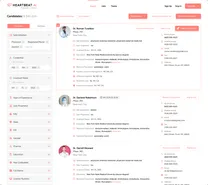
Heartbeat.ai maintains a database covering healthcare decision-makers nationwide, including roles relevant to Arizona hospitals such as hospital CEOs, directors of nursing, pharmacy managers, medical directors, healthcare administrators, laboratory directors, radiology executives, and purchasing managers. Records typically include:
- Name and title
- Location
- Work, cell, and direct-dial phone numbers
- Email address
- Specialization or department
- Years of experience
- Licensed states and license number
- Fax and mailing address
Hospital Decision-Makers Lists by State
Explore lists for other states covered in our national database.
| Hospital decision makers lists by states |
|---|
| Hospital decision makers lists in Alabama |
| Hospital decision makers lists in Alaska |
| Hospital decision makers lists in Arizona |
| Hospital decision makers lists in Arkansas |
| Hospital decision makers lists in California |
| Hospital decision makers lists in Colorado |
| Hospital decision makers lists in Connecticut |
| Hospital decision makers lists in Delaware |
| Hospital decision makers lists in Florida |
| Hospital decision makers lists in Georgia |
| Hospital decision makers lists in Hawaii |
| Hospital decision makers lists in Idaho |
| Hospital decision makers lists in Illinois |
| Hospital decision makers lists in Indiana |
| Hospital decision makers lists in Iowa |
| Hospital decision makers lists in Kansas |
| Hospital decision makers lists in Kentucky |
| Hospital decision makers lists in Louisiana |
| Hospital decision makers lists in Maine |
| Hospital decision makers lists in Maryland |
| Hospital decision makers lists in Massachusetts |
| Hospital decision makers lists in Michigan |
| Hospital decision makers lists in Minnesota |
| Hospital decision makers lists in Mississippi |
| Hospital decision makers lists in Missouri |
| Hospital decision makers lists in Montana |
| Hospital decision makers lists in Nebraska |
| Hospital decision makers lists in Nevada |
| Hospital decision makers lists in New hampshire |
| Hospital decision makers lists in New jersey |
| Hospital decision makers lists in New mexico |
| Hospital decision makers lists in New york |
| Hospital decision makers lists in North carolina |
| Hospital decision makers lists in North dakota |
| Hospital decision makers lists in Ohio |
| Hospital decision makers lists in Oklahoma |
| Hospital decision makers lists in Oregon |
| Hospital decision makers lists in Pennsylvania |
| Hospital decision makers lists in Rhode island |
| Hospital decision makers lists in South carolina |
| Hospital decision makers lists in South dakota |
| Hospital decision makers lists in Tennessee |
| Hospital decision makers lists in Texas |
| Hospital decision makers lists in Utah |
| Hospital decision makers lists in Vermont |
| Hospital decision makers lists in Virginia |
| Hospital decision makers lists in Washington |
| Hospital decision makers lists in West virginia |
| Hospital decision makers lists in Wisconsin |
| Hospital decision makers lists in Wyoming |
How the Data Is Compiled
Heartbeat.ai draws from a large network of official, private, and public sources to build and maintain healthcare provider records, including cell phone numbers and personal emails alongside work contact details. Records are checked and refreshed on a recurring basis rather than compiled once and left static, which matters given how often hospital leadership and administrative staff change roles.
No contact database is perfect. Predictive modeling and multi-source aggregation reduce the rate of outdated or incorrect records, but any list this size will include some contacts who have since changed roles or organizations. Treat match rates and accuracy figures from any vendor, including Heartbeat, as estimates worth verifying against your own campaign results rather than fixed guarantees.
Who Actually Uses These Lists
The typical users fall into a few groups:
- Healthcare sales and marketing teams reaching out about products, services, or partnership opportunities.
- Recruiters and staffing agencies filling administrative, clinical leadership, or specialist roles.
- Consultants and researchers building networks or gathering data for market analysis.
- PR and communications firms running campaigns aimed at hospital leadership.
Anyone using these lists is responsible for following applicable privacy and communication regulations, including consent and opt-out requirements that apply to email and phone outreach.
Getting More Out of a Contact List
A list is only as good as the outreach process behind it. A few things that consistently improve results:
- Lead with something specific to the recipient’s role or facility rather than a generic pitch.
- Keep messages short—hospital administrators and clinical leaders have limited time for unsolicited outreach.
- Use the channel that fits the message: a quick update might work by email, while a time-sensitive recruiting conversation often moves faster by phone.
- Review your list periodically and remove contacts who’ve changed roles, bounced repeatedly, or asked not to be contacted.
Where This Fits for Arizona Outreach
Arizona’s hospital market is concentrated around a few large systems alongside a longer tail of independent and specialty facilities. That mix means a one-size-fits-all contact strategy rarely works well—system-level outreach suits large IDNs, while direct department-level contact often works better for smaller hospitals. A maintained, verifiable contact database narrows the research time needed to figure out who to reach, but it works best paired with a process for keeping that data current and a realistic expectation that some records will always need periodic correction.
Frequently Asked Questions
What is a hospital decision-makers list?
It’s a compilation of contact information for individuals within hospitals who have authority over purchasing, administrative, or clinical decisions.
How can I get a hospital decision-makers list for Arizona?
Specialized data providers, including Heartbeat.ai, compile and maintain contact lists for hospital decision-makers by state, including Arizona.
What information does a typical list include?
Most lists include names, job titles, email addresses, phone numbers, location, and sometimes licensing details for each contact.
Why does accurate contact data matter for outreach?
Outdated or incorrect contact information slows down recruiting, wastes sales outreach cycles, and increases the risk of compliance issues tied to unsolicited communication.