Last updated: August 31, 2026
Reaching hospital decision makers in Arkansas takes more than a generic list. Titles change, people move between systems, and hospital org charts vary widely between a rural critical access facility and a large academic center. This guide covers who actually holds decision-making authority in Arkansas hospitals, why accurate contact data matters for outreach, and how to evaluate a data provider before you commit budget to a list.
What’s on this page:
Get a Hospital Decision Makers List in Arkansas from Heartbeat
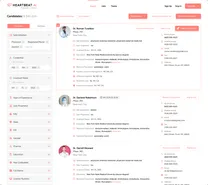
Heartbeat.ai maintains contact data on licensed healthcare professionals across the United States, including hospital administrators and department leaders in Arkansas. You can apply filters to narrow results by role, specialty, or location and export contact details for outreach.
A useful hospital decision-makers list should be organized by role, since the person you need to reach depends entirely on what you’re trying to accomplish. Common roles included in this type of list are:
- Hospital administrators — set overall strategy and operational priorities for the facility.
- Department heads — manage staffing, workflow, and quality within a specific clinical or operational unit.
- Medical directors — oversee clinical policy and physician practice standards.
- Pharmacy directors — manage medication procurement and pharmacy operations.
- Procurement or materials managers — control purchasing decisions for equipment and supplies.
- Chief financial officers — control budget approval and vendor contracts.
Which of these roles matters most to you depends on what you’re selling or recruiting for. A staffing agency generally needs department heads and HR leadership, not CFOs. A medical device vendor usually needs procurement and clinical department heads together, since purchases often require sign-off from both.
Healthcare Decision Makers in Arkansas
Every hospital in Arkansas is a member of the Arkansas Hospital Association, which has around 105 member hospitals in total, according to AHA leadership. These members include acute care, long-term care, rehabilitation hospitals, psychiatric hospitals, and one hospice member. The association also plays a role in advocacy and workforce initiatives affecting hospitals statewide.
Arkansas hospitals range from large academic and pediatric referral centers, such as the University of Arkansas for Medical Sciences and Arkansas Children’s Hospital, to regional systems like Baptist Health, down to small rural and critical access hospitals. Decision-making structure differs a lot across that range: a rural facility might have one administrator wearing several hats, while a large academic center has separate directors for nearly every function. Don’t assume the same job title carries the same authority at every facility size.
Why Accurate Contact Information Matters
Outdated or mismatched contact data wastes time on both ends. A message that reaches the wrong person, or bounces because someone changed roles, delays whatever you’re trying to accomplish — whether that’s filling a staffing gap, pitching a product, or coordinating a partnership.
For recruiters, accurate contact data shortens the path between identifying an opening and reaching the person who can approve a hire. For vendors and marketers, it means messages land with someone who actually has purchasing authority instead of getting filtered out lower in the organization. For anyone doing outreach at scale, a list that’s frequently wrong becomes a liability rather than an asset, since repeated bounces and misdirected calls can hurt sender reputation and waste rep time.
Why This Data Is Hard to Keep Current
A few structural factors make hospital decision-maker data difficult to maintain:
- Staff turnover — administrators, directors, and department heads change jobs, retire, or get promoted regularly, and public directories rarely update in real time.
- Complex hierarchies — larger systems often have overlapping titles across facilities, making it hard to tell who has final decision authority versus who simply carries a similar-sounding title.
- Privacy and compliance constraints — contact data handling needs to respect applicable privacy regulations, which limits how freely some information can be scraped or shared.
Tools that pull from multiple public and licensed sources and refresh regularly tend to hold up better than static spreadsheets pulled once and never updated. If you’re evaluating a data vendor, ask specifically how often records are refreshed and what happens when a bounce or an inaccurate number gets flagged.
What a Heartbeat Contact Record Typically Includes
A contact record for a hospital decision maker typically includes the following fields:
- Name
- Location
- Contact numbers (work, cell, mobile)
- Email address
- Specialization
- Years of experience
- Licensed states
- License number
- Fax
- Address
Hospital Decision Makers Lists by State
Access comprehensive contact lists of hospital decision-makers organized by state.
| Hospital decision makers lists by states |
|---|
| Hospital decision makers lists in Alabama |
| Hospital decision makers lists in Alaska |
| Hospital decision makers lists in Arizona |
| Hospital decision makers lists in Arkansas |
| Hospital decision makers lists in California |
| Hospital decision makers lists in Colorado |
| Hospital decision makers lists in Connecticut |
| Hospital decision makers lists in Delaware |
| Hospital decision makers lists in Florida |
| Hospital decision makers lists in Georgia |
| Hospital decision makers lists in Hawaii |
| Hospital decision makers lists in Idaho |
| Hospital decision makers lists in Illinois |
| Hospital decision makers lists in Indiana |
| Hospital decision makers lists in Iowa |
| Hospital decision makers lists in Kansas |
| Hospital decision makers lists in Kentucky |
| Hospital decision makers lists in Louisiana |
| Hospital decision makers lists in Maine |
| Hospital decision makers lists in Maryland |
| Hospital decision makers lists in Massachusetts |
| Hospital decision makers lists in Michigan |
| Hospital decision makers lists in Minnesota |
| Hospital decision makers lists in Mississippi |
| Hospital decision makers lists in Missouri |
| Hospital decision makers lists in Montana |
| Hospital decision makers lists in Nebraska |
| Hospital decision makers lists in Nevada |
| Hospital decision makers lists in New hampshire |
| Hospital decision makers lists in New jersey |
| Hospital decision makers lists in New mexico |
| Hospital decision makers lists in New york |
| Hospital decision makers lists in North carolina |
| Hospital decision makers lists in North dakota |
| Hospital decision makers lists in Ohio |
| Hospital decision makers lists in Oklahoma |
| Hospital decision makers lists in Oregon |
| Hospital decision makers lists in Pennsylvania |
| Hospital decision makers lists in Rhode island |
| Hospital decision makers lists in South carolina |
| Hospital decision makers lists in South dakota |
| Hospital decision makers lists in Tennessee |
| Hospital decision makers lists in Texas |
| Hospital decision makers lists in Utah |
| Hospital decision makers lists in Vermont |
| Hospital decision makers lists in Virginia |
| Hospital decision makers lists in Washington |
| Hospital decision makers lists in West virginia |
| Hospital decision makers lists in Wisconsin |
| Hospital decision makers lists in Wyoming |
How Heartbeat Builds Arkansas Contact Data
Heartbeat.ai compiles contact records for U.S. healthcare providers, including cell phone numbers and email addresses, by pulling from a range of public and licensed sources rather than a single static directory. Records are refreshed on an ongoing basis rather than collected once and left untouched, which matters given how often hospital staff change roles.
No contact database is perfect. Predictive matching and third-party sourcing mean some records will be outdated or incomplete no matter the provider — treat any purchased list as a starting point to verify, not a guaranteed-accurate directory.
Choosing a Hospital Decision Makers Data Provider
A few practical criteria to weigh when comparing providers for Arkansas hospital contact data:
- Refresh frequency — how often are records updated, and is there a process for flagging bad data back to the vendor?
- Filtering depth — can you filter by specific role, department, or facility type rather than just “hospital staff”?
- Coverage of rural vs. urban facilities — some providers skew toward large systems and thin out for small rural hospitals, which matters if Arkansas’s rural facilities are part of your target audience.
- Compliance posture — does the provider address how data is sourced and how it aligns with applicable privacy rules?
Who Uses These Lists
Hospital decision-maker contact lists get used by sales and marketing teams selling into healthcare, recruiters filling clinical and administrative roles, PR and communications professionals, and researchers coordinating with hospital leadership. Anyone using this kind of data for outreach should stay mindful of applicable privacy and marketing regulations, particularly around unsolicited communications and data handling.
Using the List Effectively
A list is only as useful as the outreach built around it. A few practical habits help:
- Match your message to the role — a CFO cares about cost and ROI; a medical director cares about clinical impact.
- Keep initial outreach short and specific about why you’re reaching out.
- Respect stated communication preferences and don’t over-contact the same person across multiple channels simultaneously.
- Track bounces and role mismatches so you can flag bad records rather than repeatedly using them.
Conclusion
Arkansas’s hospital landscape spans large academic centers, pediatric specialty hospitals, and small rural facilities, each with different decision-making structures. A useful contact list accounts for that variation rather than treating every hospital the same way. Whatever data source you use, plan to verify records periodically rather than treating any single list as permanently accurate.
Frequently Asked Questions
What is a hospital decision makers list?
A hospital decision makers list is a database of individuals within a hospital or healthcare organization who hold key decision-making positions, such as administrators, department heads, and financial leaders.
How can I obtain a hospital decision makers list in Arkansas?
Data providers like Heartbeat.ai offer searchable, filterable contact databases covering healthcare professionals in Arkansas and other states. Healthcare industry associations can also be a source of leads, though they aren’t primarily built as sales databases.
What types of information are included in a hospital decision makers list?
Typical records include names, job titles, contact numbers, email addresses, and sometimes department or facility affiliation and areas of specialization.