Last updated: August 28, 2026

An oncologist email list gives sales, recruiting, and marketing teams a way to reach oncology specialists directly instead of relying on general practice directories or gatekeeper front-desk lines. A useful list includes email addresses, phone numbers, practice locations, and specialty details so outreach can be targeted rather than sent as a mass blast.
Heartbeat.ai’s oncologist list is built for that kind of targeted use. It’s updated on an ongoing basis and can be filtered or customized depending on what a business or individual is trying to accomplish.
What’s on this page:
What’s Included in Heartbeat’s Oncologist Email Lists

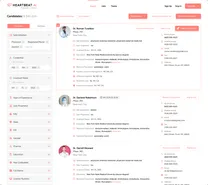
Heartbeat’s oncologist email lists cover oncologists across the United States, with data structured so teams can search, filter, and segment rather than working through an unsorted spreadsheet.
- Direct contact info: Email addresses and phone numbers instead of a generic front-desk line, whether the practice is in a major city or a smaller market.
- Specialty filtering: You can narrow the list to a subspecialty — lung cancer, pediatric oncology, and so on — so a message reaches relevant doctors rather than every oncologist in the database.
- Practice location: Each record includes name and practice location, useful for building either local relationships or a national outreach campaign.
- Additional fields where available: Depending on the state, records may also include hospital affiliation, years in practice, and professional association membership.
Data Fields Typically Included
- Oncologist name
- Practice location
- Contact numbers (work, cell, mobile)
- Email address
- Specialization
- Years of experience
- Sole proprietor status
- Licensed states
- License number
- Fax
- Address
 Accuracy & coverage of personal contact info were unrivaled by other platforms… this gives any healthcare recruiter a competitive advantage when engaging hard-to-reach healthcare providers.
Senior Growth Strategist





Why Teams Use Oncologist Mailing Lists
An accurate, filterable list changes how outreach gets done in healthcare marketing, recruiting, and research collaboration. Some practical reasons teams invest in one:

- Fewer bounces and dead ends: A list that’s regularly validated cuts down on undeliverable emails and disconnected numbers, which matters more in oncology than in many other specialties given how often practices consolidate or physicians change affiliations.
- Targeted segmentation: Filtering by specialty, location, or job title lets a campaign speak to a narrower, more relevant group instead of a generic blast, which tends to improve open and response rates.
- Market feedback loops: Direct contact with oncologists across different regions can surface useful signal on clinical trends and unmet needs — though this should be treated as informal feedback, not survey-grade research.
- Relationship building over time: Consistent, relevant outreach (not one-off blasts) is what actually builds familiarity with a specialist audience.
- Business development reach: Connecting with oncologists who influence purchasing or referral decisions supports growth in device, pharma, and service sales.
For a related use case, see our piece on the thoracic surgery email list and how targeted outreach works in a different surgical specialty.
Oncologist Categories in the List
The list spans multiple oncology subspecialties, so outreach can be narrowed to the right type of specialist.
| Oncologist Categories |
| Oncology nurse |
| Medical Oncologist |
| Surgical Oncologist |
| Radiation Oncologist |
| Gynecologic Oncologist |
| Pediatric Oncologist |
| Hematologist-Oncologist |
| Neuro-Oncologist |
| Thoracic Oncologist |
| Urologic Oncologist |
| Gastrointestinal Oncologist |
Oncologists by State
Coverage extends across all 50 states, letting you build a list scoped to a single region or a national campaign.
| Oncologist By States |
| Oncologist in Alabama |
| Oncologist in Alaska |
| Oncologist in Arizona |
| Oncologist in Arkansas |
| Oncologist in California |
| Oncologist in Colorado |
| Oncologist in Connecticut |
| Oncologist in Delaware |
| Oncologist in Florida |
| Oncologist in Georgia |
| Oncologist in Hawaii |
| Oncologist in Idaho |
| Oncologist in Illinois |
| Oncologist in Indiana |
| Oncologist in Iowa |
| Oncologist in Kansas |
| Oncologist in Kentucky |
| Oncologist in Louisiana |
| Oncologist in Maine |
| Oncologist in Maryland |
| Oncologist in Massachusetts |
| Oncologist in Michigan |
| Oncologist in Minnesota |
| Oncologist in Mississippi |
| Oncologist in Missouri |
| Oncologist in Montana |
| Oncologist in Nebraska |
| Oncologist in Nevada |
| Oncologist in New Hampshire |
| Oncologist in New Jersey |
| Oncologist in New Mexico |
| Oncologist in New York |
| Oncologist in North Carolina |
| Oncologist in North Dakota |
| Oncologist in Ohio |
| Oncologist in Oklahoma |
| Oncologist in Oregon |
| Oncologist in Pennsylvania |
| Oncologist in Rhode Island |
| Oncologist in South Carolina |
| Oncologist in South Dakota |
| Oncologist in Tennessee |
| Oncologist in Texas |
| Oncologist in Utah |
| Oncologist in Vermont |
| Oncologist in Virginia |
| Oncologist in Washington |
| Oncologist in West Virginia |
| Oncologist in Wisconsin |
| Oncologist in Wyoming |
How the Data Is Compiled
Building and maintaining an oncologist mailing list is an ongoing process, not a one-time export. Our approach combines several methods:
- Trusted sources: We draw on more than 200 sources — directories, surveys, government records, and healthcare websites — to cross-check accuracy.
- Practice websites: Reviewing practice sites directly helps enrich records with specialization and affiliation details not always found in directories.
- Regular updates: Records are refreshed on an ongoing cadence to catch practice moves and role changes.
- Strategic partnerships: Permission-based data sharing with related organizations expands coverage.
- Online directories: Listings of oncology practices and hospitals serve as a supplementary source for names and practice details.
- Public verification: Providers can flag or update their own listings, which helps catch errors that automated updates miss.
Why Choose Heartbeat.ai’s Oncologist Mailing List

Broad, Verified Coverage
Heartbeat.ai maintains a database of physicians across the U.S., including oncologists, with regular updates and verification built into the process.
Personal Contact Details
Personal cell numbers and email addresses matter most when a specialist is otherwise hard to reach through a practice’s main line — a common scenario in oncology recruiting and outreach.
Customization and Segmentation
Lists can be filtered by specialty, location, and other attributes so outreach is targeted rather than sent broadly.
Deliverability and Response
Precise targeting tends to translate into fewer bounces and better response rates than an unsegmented list.
Data Quality Practices
Ongoing verification is meant to keep the database responsive and reduce wasted outreach on outdated contacts.
Multichannel Use
The same underlying data supports email, phone, and combined outreach campaigns rather than locking you into a single channel.
What to Check Before Buying an Oncologist Email List

Data Sourcing and Update Cadence
Ask how the provider collects and validates records, and how often the list is refreshed. Stale data is the most common reason outreach campaigns underperform.
Consent and Compliance
Commercial email in the U.S. is governed by the CAN-SPAM Act. The law does not require prior opt-in consent to send a first commercial email, but every commercial message must include accurate sender information, a valid physical postal address, and a clear, working opt-out mechanism, and opt-out requests must be honored promptly. Any list you use for email outreach needs to support these requirements, not just provide addresses.
Data Fields Available
Names, titles, contact details, and geography are the baseline. The more granular the fields — subspecialty, hospital affiliation, license status — the easier it is to segment a campaign meaningfully.
Overall Quality Standards
A provider that documents its sourcing and update process is generally a safer bet than one that doesn’t explain where the data comes from.
Segmentation Options
Being able to filter by category, geography, or job title lets you send messages that are actually relevant to each recipient, which is usually what drives engagement.
For a look at a related specialty audience, see our resource on the dermatologist email list.
Who Uses an Oncologist Email List

Healthcare Organizations
Hospitals, cancer treatment centers, and clinics use the list to open lines of communication with oncologists for referrals and care coordination.
Pharmaceutical Companies
Pharma teams use it to reach oncologists about new drugs, trials, and research collaborations — audiences who are often key decision-makers in prescribing.
Medical Device Manufacturers
Device companies use it to introduce new technology, share product information, and collect clinical feedback.
Research and Academic Institutions
Researchers use it to recruit collaborators for trials and to share findings with a relevant specialist audience.
Medical Publications
Journals and publications use it to distribute research articles and updates directly to an interested oncology readership.
Healthcare Marketing Agencies
Agencies use it on behalf of clients running product launches or brand campaigns aimed at oncology specialists.
Using the List Well: A Practical Checklist

- Segment before you send. Filter by specialty, location, or title rather than emailing the full list at once — relevance drives open rates more than volume does.
- Treat replies as market signal, not proof. Feedback from oncologists on trends or needs is useful color for planning, but it isn’t a substitute for formal research.
- Build recognition over time. A single email rarely converts; consistent, relevant contact is what establishes a business as a credible resource in the specialty.
- Match the channel to the goal. Recruiting outreach, product launches, and research collaboration requests all warrant different messaging — don’t reuse one template for everything.
- Confirm compliance basics before every send. Sender identification, a postal address, and a working opt-out link are non-negotiable under CAN-SPAM.
Limitations to Keep in Mind
No third-party contact database is perfect. Oncologists change practices, retire, or shift specialties, and even frequent updates can lag real-world changes. Treat the list as a strong starting point for outreach, not a guarantee of deliverability, and expect to see some records need correction over time. Pair any list with your own suppression and bounce-handling process rather than relying solely on the vendor’s refresh cycle.
Conclusion
An accurate, well-segmented oncologist email list makes it possible to reach cancer specialists directly for research collaboration, recruiting, product outreach, or education — without the friction of cold-calling a general practice line.
Heartbeat.ai’s oncologist data can be filtered and customized to your specific use case, with attention to data accuracy, consent practices, and segmentation built into how the list is maintained.
FAQ
How accurate and up-to-date is the Oncologist Email List?
The list is refreshed on an ongoing basis using multiple sources, but as with any third-party healthcare data, expect some records to need periodic correction — no list stays perfectly current between updates.
Can I target oncologists based on specific criteria, such as location or specialization?
Yes. You can filter by geographic location and professional specialization to keep outreach relevant to each segment.
How often is the list updated?
Records are updated on a regular cadence to reflect changes in practice location, specialization, and other details, though the exact frequency can vary by state and data source.
How is privacy handled?
Any list used for commercial email outreach should be paired with CAN-SPAM compliant practices — accurate sender information, a valid postal address, and a working opt-out mechanism in every message.
Can I customize outreach by oncologist category?
Yes. The list spans categories such as medical, surgical, pediatric, and radiation oncology, so messaging can be tailored to each group rather than sent as one generic campaign.