Last updated: August 30, 2026
Oncology care in Virginia runs through a mix of academic medical centers, community cancer programs, and independent practices scattered across a geographically diverse state. For anyone doing healthcare recruiting, pharma outreach, or clinical partnership work, the practical problem is simple: finding a working phone number or email for the right oncologist, in the right subspecialty, in the right part of the state.
What’s on this page:
Oncology care in Virginia: a quick landscape view
Virginia’s oncology workforce is spread unevenly across the state, with concentration around academic hubs and noticeably thinner coverage in rural regions. Two institutions anchor much of the state’s cancer research and treatment infrastructure: VCU Massey Comprehensive Cancer Center in Richmond and the University of Virginia’s cancer program in Charlottesville. VCU Massey holds Comprehensive Cancer Center designation from the National Cancer Institute, one of only two in Virginia, designated by the National Cancer Institute, a status reserved for centers that meet NCI’s highest bar for research scope, clinical trials, and community outreach. Inova’s Schar Cancer Institute in Northern Virginia also plays a significant regional role, particularly for patients in the DC metro area who might otherwise travel to Richmond or Charlottesville.
This concentration matters for outreach strategy. If you’re building a list of oncologists for recruiting or partnership purposes, expect a denser, more specialized pool around Richmond, Charlottesville, and Northern Virginia, and a thinner, more generalist pool in rural and southwestern parts of the state.
Why contact accuracy matters more in oncology than in most specialties
Oncologists tend to be harder to reach than many other specialists. They split time between clinical duties, tumor board meetings, research commitments, and administrative work at academic centers — which means a stale phone number or a bounced email doesn’t just waste a day, it can stall a recruiting pipeline or a clinical trial enrollment conversation for weeks.
A few practical consequences of bad contact data in this specialty:
- Recruiting delays: Academic oncology roles often move slowly already; outdated contact info adds unnecessary friction to first outreach.
- Missed research collaboration windows: Trial enrollment and multi-site studies run on tight timelines. A wrong email can mean missing a recruitment cycle.
- Wasted campaign spend: Marketing to a list with high bounce rates skews response metrics and burns budget on undeliverable sends.
Common obstacles when sourcing oncologist contacts in Virginia
A few recurring issues come up when trying to build or maintain an oncologist contact list for this state:
- Uneven geographic distribution: Rural Virginia has far fewer oncologists per capita than the Richmond, Charlottesville, and Northern Virginia corridors, so lists skew toward those metro areas by default.
- Subspecialty fragmentation: Medical, surgical, radiation, gynecologic, pediatric, hematologic, and neuro-oncology each require different targeting depending on your outreach goal — a generic “oncologist” list often isn’t precise enough.
- Turnover at academic centers: Faculty physicians move between institutions, take sabbaticals for research, or shift from clinical to administrative roles, all of which can orphan old contact records.
- Public directories go stale fast: Hospital “find a doctor” pages and state license lookups are useful for verifying credentials but are rarely reliable for direct phone or email contact.
What a usable oncologist contact record should include
When evaluating any contact list — whether purchased, scraped, or manually compiled — check that it covers more than just a name and a general office line. A workable record for outreach purposes typically includes:
- Full name and credentials
- Practice location and affiliated hospital or system
- Direct or mobile phone number, not just a front-desk line
- Personal or verified work email address
- Subspecialty (medical, surgical, radiation, gynecologic, pediatric, neuro-, hematologic oncology)
- Years in practice
- Licensed state(s) and license number
- Fax and mailing address, for compliance-sensitive outreach
How Heartbeat approaches this data
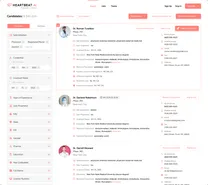
Heartbeat.ai maintains a database of U.S. healthcare providers, including oncologists in Virginia, built by pulling from a large number of public, private, and official sources and cross-referencing them to keep contact details current. The platform allows filtering by specialty, location, and other criteria so outreach teams aren’t stuck sorting through irrelevant records. Coverage includes direct cell numbers and personal emails alongside standard practice information, which is the detail that matters most when a general office line just routes to voicemail.
As with any third-party contact database, treat published accuracy figures as directional rather than guaranteed for every record — data quality can vary by specialty, region, and how recently a provider changed roles. It’s worth spot-checking a sample of records against a provider’s institutional profile before running a large campaign.
Who typically uses an oncologist contact list
- Healthcare recruiters sourcing candidates for oncology openings at hospitals or practices
- Pharmaceutical and device companies coordinating with oncologists on product education or clinical trial recruitment
- Research teams reaching out for study participation or survey collection
- Nonprofit and advocacy organizations building oncology-focused awareness or fundraising campaigns
- Consultants and independent professionals networking within the oncology community
Anyone using this kind of data should also stay current on relevant privacy and communication regulations, since outreach to licensed medical professionals still carries compliance obligations depending on the channel and purpose.
A short workflow for using an oncologist list well
- Segment by subspecialty first. A radiation oncologist and a pediatric oncologist are not interchangeable audiences — tailor the message accordingly.
- Prioritize by geography if you have limited outreach capacity. Richmond, Charlottesville, and Northern Virginia will yield the highest response density given provider concentration.
- Keep messages short and specific. Oncologists are busy; a vague pitch gets ignored faster than in most specialties.
- Track bounce and response rates. Use that data to flag records for re-verification rather than assuming the whole list is stale.
- Respect opt-outs immediately. This isn’t optional for maintaining a usable list long-term or staying compliant.
Limitations worth knowing
No contact database, including Heartbeat’s, can guarantee a fully current, zero-error dataset for a specialty as mobile and research-driven as oncology. Faculty appointments change, providers retire or relocate, and academic email formats sometimes shift after institutional mergers. Treat any purchased or aggregated list as a strong starting point that still benefits from periodic verification, not a permanent source of truth.
Frequently Asked Questions
What is an oncologist?
An oncologist is a medical doctor who specializes in diagnosing and treating cancer, often within a subspecialty such as medical, surgical, radiation, or pediatric oncology.
How do I find an oncologist in Virginia?
Ask for a referral from a primary care provider, check with your health insurance network, or search hospital and academic medical center directories such as VCU Massey or UVA Cancer Center.
What services does an oncologist in Virginia typically provide?
Depending on subspecialty, services can include cancer diagnosis, treatment planning, chemotherapy, radiation therapy, immunotherapy, surgical intervention, and long-term follow-up care.
Which Virginia hospitals have notable oncology programs?
VCU Massey Comprehensive Cancer Center, University of Virginia Cancer Center, and Inova’s Schar Cancer Institute are among the state’s more prominent oncology programs.