Last updated: August 31, 2026
If you work in healthcare recruiting, sales, or partnership development, you already know that finding a cardiologist’s direct contact information in Colorado isn’t as simple as pulling a name from a hospital directory. Public listings go stale, group practices merge, and physicians move between health systems more often than most databases update.
This guide looks at what makes cardiologist contact data hard to source accurately in Colorado, what a usable contact list should include, and how Heartbeat’s provider database approaches the problem.
What’s on this page:
Get a Cardiologist Email List for Colorado from Heartbeat
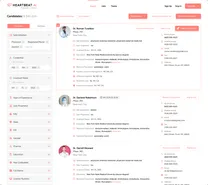
Heartbeat.ai’s platform lets you search licensed healthcare professionals across the United States and filter results by specialty, location, and other criteria to build a targeted list of cardiologists in Colorado.
Cardiology is not a single job title. The database covers several subspecialties that behave differently in terms of practice setting, referral patterns, and how reachable they tend to be:
- Interventional cardiologists perform catheter-based procedures and are often based at hospitals with cath labs.
- Cardiac electrophysiologists focus on heart rhythm disorders and typically work alongside device and ablation programs.
- Pediatric cardiologists treat children with congenital or acquired heart conditions, usually at children’s hospitals or affiliated clinics.
- General cardiologists handle initial evaluations, ongoing management, and referrals to subspecialists.
Knowing which type of cardiologist you’re trying to reach matters, because outreach that works for a general cardiologist in a private practice won’t necessarily land the same way with a hospital-employed electrophysiologist.
Colorado’s Cardiology Landscape
Colorado’s healthcare system includes a range of cardiology providers, from solo and small-group practices to large hospital-affiliated cardiology departments. Facilities such as UCHealth University of Colorado Hospital, Porter Adventist Hospital, and Penrose-St. Francis Health Services have historically been associated with advanced cardiac services, including electrophysiology labs and heart transplant programs.
Hospital rankings in this space shift from year to year. According to Axios reporting on the latest U.S. News & World Report rankings, Intermountain Health Saint Joseph Hospital became Colorado’s top-ranked hospital in 2026, ending UCHealth University of Colorado Hospital’s 14-year run at the top of the state list. UCHealth University of Colorado Hospital still ranked second statewide and remained the state’s leader in several nationally ranked specialties. Anyone citing a “best hospital for cardiology” claim should check the current year’s ranking rather than relying on older reporting, since these lists are refreshed annually.
Why Accurate Contact Information Matters
Outdated or incorrect contact details cause real friction in three common scenarios:
- Recruitment. A recruiter chasing a bad phone number or a forwarded email address loses days in a hiring cycle that’s already competitive for cardiology talent.
- Vendor and pharma outreach. Sales and medical affairs teams need to reach the right specialist directly rather than going through a general practice line that may not route messages promptly.
- Professional networking and referrals. Cardiologists building referral relationships or collaborating on research depend on being able to reach colleagues without going through multiple gatekeepers.
In each case, the cost of bad data isn’t just inconvenience — it’s missed opportunities and slower timelines.
Why Finding Cardiologists in Colorado Can Be Difficult
A few practical obstacles come up repeatedly:
- Geography. Colorado’s rural and mountain communities have fewer cardiology practices, so patients and recruiters alike may need to look beyond the immediate area.
- Volume and fragmentation. With hundreds of practicing cardiologists across multiple health systems, sorting by specialization, experience, and availability takes time if you’re doing it manually.
- Data decay. Physicians change employers, practices merge, and contact details on public sites often lag behind these moves by months or longer.
Search tools, licensing databases, and telehealth options can help close some of these gaps, but they don’t solve the core issue of keeping contact data current at scale.
What a Heartbeat Cardiologist Contact Record Includes
Heartbeat’s Colorado cardiologist records are built to give you enough detail to qualify and reach out to a provider without additional research:
- Cardiologist’s name
- Location
- Contact numbers (work, cell, mobile)
- Email address
- Specialization
- Years of experience
- Sole proprietor status
- Licensed states
- License number
- Fax
- Address
Cardiologist Contact Lists by State
Explore cardiologist contact data for other states below.
| Cardiologists by states |
|---|
| Cardiologists in Alabama |
| Cardiologists in Alaska |
| Cardiologists in Arizona |
| Cardiologists in Arkansas |
| Cardiologists in California |
| Cardiologists in Colorado |
| Cardiologists in Connecticut |
| Cardiologists in Delaware |
| Cardiologists in Florida |
| Cardiologists in Georgia |
| Cardiologists in Hawaii |
| Cardiologists in Idaho |
| Cardiologists in Illinois |
| Cardiologists in Indiana |
| Cardiologists in Iowa |
| Cardiologists in Kansas |
| Cardiologists in Kentucky |
| Cardiologists in Louisiana |
| Cardiologists in Maine |
| Cardiologists in Maryland |
| Cardiologists in Massachusetts |
| Cardiologists in Michigan |
| Cardiologists in Minnesota |
| Cardiologists in Mississippi |
| Cardiologists in Missouri |
| Cardiologists in Montana |
| Cardiologists in Nebraska |
| Cardiologists in Nevada |
| Cardiologists in New hampshire |
| Cardiologists in New jersey |
| Cardiologists in New mexico |
| Cardiologists in New york |
| Cardiologists in North carolina |
| Cardiologists in North dakota |
| Cardiologists in Ohio |
| Cardiologists in Oklahoma |
| Cardiologists in Oregon |
| Cardiologists in Pennsylvania |
| Cardiologists in Rhode island |
| Cardiologists in South carolina |
| Cardiologists in South dakota |
| Cardiologists in Tennessee |
| Cardiologists in Texas |
| Cardiologists in Utah |
| Cardiologists in Vermont |
| Cardiologists in Virginia |
| Cardiologists in Washington |
| Cardiologists in West virginia |
| Cardiologists in Wisconsin |
| Cardiologists in Wyoming |
How Heartbeat Compiles Cardiologist Contact Data
Heartbeat aggregates provider data from more than 200 official, private, and public sources, then cross-references records to reduce duplicates and outdated entries. The database includes 11 million U.S. healthcare providers, with 8.8 million direct cell phone numbers, 9.3 million personal email addresses, and 6 million direct dials tracked across specialties.
Predictive modeling is used to fill gaps where a direct match isn’t already confirmed, with reported accuracy rates of around 84% for cell phone numbers and 92% for personal emails on initial results. As with any predictive data model, treat these as starting points for outreach rather than guarantees, and verify critical contact details before high-stakes communication such as job offers or compliance-related outreach.
Who Uses a Cardiologist Contact List
Contact lists like this typically serve a specific set of use cases rather than a single audience:
- Healthcare recruiters sourcing candidates for open cardiology roles.
- Medical device and pharmaceutical sales teams reaching specialists directly.
- Conference and CME organizers inviting speakers or attendees by subspecialty.
- Researchers and referral coordinators connecting with providers for collaboration.
It’s worth being deliberate about who should not use this kind of data: mass, unsolicited marketing that ignores opt-out requests or regulatory requirements around commercial email and phone outreach isn’t a good use of a provider contact database, and it can create compliance exposure for the sender.
Getting the Most Out of a Cardiologist Contact List
A few practical guidelines make outreach more effective and less likely to be ignored:
- Segment by subspecialty before drafting outreach — a message aimed at an interventional cardiologist reads differently than one for a pediatric cardiologist.
- Keep messages short and specific about why you’re reaching out; cardiologists have limited time between clinical responsibilities.
- Respect consent and opt-out requests for any recurring communication, such as newsletters or promotional updates.
- Verify a record’s freshness periodically, especially for physicians who may have recently changed practices or hospital affiliations.
Used this way, a contact list becomes a starting point for a relationship rather than a one-time blast.
Summary
Finding accurate, current contact information for cardiologists in Colorado is harder than it looks, given the state’s geographic spread, the number of practicing specialists, and how quickly public directories go out of date. A well-maintained provider database can shorten that search considerably, provided the data is verified before it’s used for anything time-sensitive.
Frequently Asked Questions
What services do cardiologists in Colorado offer?
Cardiologists in Colorado offer a range of services including diagnosis and treatment of heart conditions, cardiac testing, monitoring and management of heart disease, heart surgery, and preventive care.
How do I find a cardiologist in Colorado?
You can find a cardiologist in Colorado by asking for a referral from your primary care physician, searching online directories of medical professionals, or contacting local hospitals and healthcare centers for recommendations.
What qualifications do cardiologists in Colorado have?
Cardiologists in Colorado have typically completed medical school, followed by a residency in internal medicine, and a fellowship in cardiology. Many also hold board certifications and additional training in cardiology subspecialties.
What should I expect during a visit to a cardiologist in Colorado?
During a visit to a cardiologist, expect a review of your medical history, a physical exam, and possibly testing such as an electrocardiogram (ECG) or echocardiogram, followed by a discussion of findings and next steps.