Last updated: August 31, 2026
Michigan has a sizable population of patients managing arthritis and related rheumatic conditions, and that means a correspondingly large network of rheumatologists, orthopedic surgeons, physical therapists, and pain management specialists across the state. For recruiters, marketers, and healthcare organizations, the challenge isn’t whether these specialists exist — it’s finding accurate, current contact details for them quickly enough to matter.
Outdated directories and stale spreadsheets slow down recruitment cycles, waste outreach budgets, and cause missed opportunities for collaboration or referral partnerships. This guide covers what to look for in an arthritis specialist contact list for Michigan, how the state’s healthcare landscape is structured, and how Heartbeat.ai’s data can support faster, more targeted outreach.
What’s on this page:
Get an Arthritis Specialist Email List for Michigan from Heartbeat
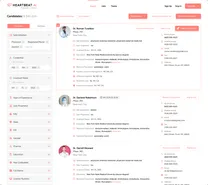
Heartbeat.ai’s platform lets you search licensed healthcare professionals across the United States, including arthritis-focused specialists in Michigan, using filters for location, specialty, and experience. You can build a targeted list and start outreach without manually cross-referencing multiple directories.
The specialists included in arthritis-related searches typically span rheumatologists, orthopedic surgeons, physical therapists, chiropractors, and pain management providers — professionals who diagnose, treat, or manage joint and musculoskeletal conditions in different capacities.
The goal of the platform is straightforward: reduce the time spent sourcing contacts so more time goes toward outreach and relationship-building. Visit Heartbeat.ai to review the available data and see whether it fits your recruitment or networking needs.
Michigan’s Arthritis and Rheumatology Care Landscape
Michigan’s academic medical centers play a large role in arthritis and rheumatic disease care. The University of Michigan’s Division of Rheumatology, based in Ann Arbor, is made up of nearly 70 faculty members and is internationally recognized for excellence in the diagnosis and management of rheumatic and musculoskeletal diseases. The division treats a wide range of conditions and including rheumatoid arthritis, lupus, antiphospholipid syndrome, scleroderma, vasculitis, Sjogren’s syndrome, psoriatic arthritis, ankylosing spondylitis, myositis, and gout.
Care isn’t confined to a single campus. Patients are seen at University of Michigan Health and the Ann Arbor VA Hospital, and rheumatology patients are seen in several clinics located in Ann Arbor, Brighton and Northville. The program also carries some historical weight in the field — the Rackham Arthritis Research Unit, established at the University of Michigan in 1937, was one of the first research units in the United States devoted to investigation of the rheumatic diseases.
Other Michigan systems, including Spectrum Health in Grand Rapids, Beaumont Health, and Henry Ford Health, also maintain rheumatology and orthopedic programs, though the scale and specialty focus vary by institution. Anyone building a list should verify current affiliations directly, since physicians move between systems and practice groups fairly often.
Why Accurate Contact Data Matters for Arthritis Specialists
Correct contact information affects three distinct groups differently:
- Patients and referring providers rely on accurate scheduling and intake contacts to connect with the right specialist without delay.
- Healthcare recruiters and hospital systems need direct lines to reach candidates during hiring, rather than routing through general front-desk numbers that may not reach the physician at all.
- Researchers and industry partners depend on verified professional emails for collaboration requests, clinical trial recruitment, or continuing education outreach.
Stale data creates friction at every one of these points. A phone number tied to a physician who has since relocated, retired, or changed practice groups wastes staff time and can damage the credibility of an outreach campaign.
Common Obstacles to Finding Arthritis Specialists in Michigan
Michigan’s mix of dense metro areas and rural counties creates real disparities in specialist access. A few recurring obstacles:
- Geographic distribution. Specialists cluster around academic centers like Ann Arbor, Grand Rapids, and Detroit, leaving rural patients and recruiters with fewer local options.
- Directory lag. Public directories and hospital websites don’t always reflect recent staff changes, new hires, or retirements.
- Fragmented data sources. Contact information is often scattered across licensing boards, hospital sites, and professional associations, none of which is a single source of truth.
Searchable, filterable databases and telehealth options have narrowed some of these gaps by making it easier to identify and reach specialists regardless of a patient’s or recruiter’s physical location. That said, no database is fully real-time — verifying a contact before a high-stakes outreach attempt is still good practice.
What’s Included in a Heartbeat Arthritis Specialist Contact List
Heartbeat’s provider records are built to support recruitment, referral outreach, and professional networking with fields that typically include:
- Specialist name
- Location
- Contact numbers (work, cell, mobile)
- Email address
- Specialization
- Years of experience
- Sole proprietor status
- Licensed states
- License number
- Fax
- Address
Arthritis Specialist Contact Lists by State
Explore contact lists for arthritis specialists in other states.
| Arthritis specialist by states |
|---|
| Arthritis specialist in Alabama |
| Arthritis specialist in Alaska |
| Arthritis specialist in Arizona |
| Arthritis specialist in Arkansas |
| Arthritis specialist in California |
| Arthritis specialist in Colorado |
| Arthritis specialist in Connecticut |
| Arthritis specialist in Delaware |
| Arthritis specialist in Florida |
| Arthritis specialist in Georgia |
| Arthritis specialist in Hawaii |
| Arthritis specialist in Idaho |
| Arthritis specialist in Illinois |
| Arthritis specialist in Indiana |
| Arthritis specialist in Iowa |
| Arthritis specialist in Kansas |
| Arthritis specialist in Kentucky |
| Arthritis specialist in Louisiana |
| Arthritis specialist in Maine |
| Arthritis specialist in Maryland |
| Arthritis specialist in Massachusetts |
| Arthritis specialist in Michigan |
| Arthritis specialist in Minnesota |
| Arthritis specialist in Mississippi |
| Arthritis specialist in Missouri |
| Arthritis specialist in Montana |
| Arthritis specialist in Nebraska |
| Arthritis specialist in Nevada |
| Arthritis specialist in New hampshire |
| Arthritis specialist in New jersey |
| Arthritis specialist in New mexico |
| Arthritis specialist in New york |
| Arthritis specialist in North carolina |
| Arthritis specialist in North dakota |
| Arthritis specialist in Ohio |
| Arthritis specialist in Oklahoma |
| Arthritis specialist in Oregon |
| Arthritis specialist in Pennsylvania |
| Arthritis specialist in Rhode island |
| Arthritis specialist in South carolina |
| Arthritis specialist in South dakota |
| Arthritis specialist in Tennessee |
| Arthritis specialist in Texas |
| Arthritis specialist in Utah |
| Arthritis specialist in Vermont |
| Arthritis specialist in Virginia |
| Arthritis specialist in Washington |
| Arthritis specialist in West virginia |
| Arthritis specialist in Wisconsin |
| Arthritis specialist in Wyoming |
How Heartbeat Builds Its Provider Contact Data
Heartbeat aggregates provider information from public and private data sources and cross-references it to keep cell phone and email records current. The aim is to shorten the sourcing step of recruitment so hiring teams spend more time engaging candidates and less time chasing down correct contact details.
As with any third-party data provider, treat published match-rate or coverage figures as marketing claims unless you can verify them against your own results. Run a small test segment before committing to a full outreach campaign, and confirm license status and current practice affiliation for any specialist before recruitment conversations move forward.
Who Uses an Arthritis Specialist Email List
Common users include:
- Healthcare recruiters filling rheumatology, orthopedic, or physical therapy roles
- Pharmaceutical and medical device sales teams targeting specialists relevant to arthritis treatment
- Marketing teams promoting continuing education, conferences, or clinical products
- Advocacy or nonprofit groups building awareness or fundraising campaigns around arthritis
- Researchers seeking collaboration or referral partnerships
Using an Arthritis Specialist Contact List Responsibly
A contact list is only as useful as the outreach strategy behind it. A few practical guidelines:
- Segment before you send. Group contacts by specialty, location, or years of experience so messaging is relevant rather than generic.
- Keep messages short. Specialists have limited time between patients; get to the point quickly.
- Respect consent and privacy rules. Follow applicable communication regulations when reaching out by email or phone.
- Verify before you rely. Cross-check license status or current affiliation for any contact central to a hiring decision.
Conclusion
Michigan’s arthritis and rheumatology care network runs through a mix of academic medical centers and regional health systems, each with its own staffing patterns and specialty focus. Reaching the right specialist — whether for recruitment, research collaboration, or outreach — depends on contact data that’s kept current. Heartbeat.ai’s provider database is built to support that kind of targeted, time-sensitive outreach across Michigan and other states.
Frequently Asked Questions
What is an arthritis specialist?
An arthritis specialist, often a rheumatologist, is a physician who diagnoses and treats arthritis and other rheumatic and autoimmune conditions.
How do I find an arthritis specialist in Michigan?
Start with a referral from a primary care physician, search hospital system directories, or use a specialized healthcare contact database to identify and verify current specialists.
What services does an arthritis specialist provide?
Services typically include diagnosis, treatment planning, medication management, joint injections, lab and imaging interpretation, and patient education on managing symptoms.
What conditions can an arthritis specialist treat?
Rheumatologists commonly treat rheumatoid arthritis, osteoarthritis, psoriatic arthritis, gout, lupus, and other autoimmune or inflammatory conditions affecting joints and connective tissue.