Last updated: August 31, 2026
Cardiologists in New York treat everything from routine arrhythmias to complex structural heart disease, and the state’s provider base is large and highly specialized. For sales, recruiting, and partnership teams in healthcare, the practical problem isn’t finding a list of names — it’s getting current, working phone numbers and email addresses for the right subspecialists.
This guide covers what New York’s cardiology landscape looks like, why contact accuracy matters more than volume, the realistic limitations of any provider database, and how to use a cardiologist contact list without wasting outreach on stale data.
What’s on this page:
Get an Email List of Cardiologists in New York from Heartbeat
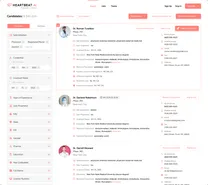
Heartbeat.ai’s database lets you filter licensed healthcare professionals across the United States by specialty, location, and other criteria, then export verified contact details for outreach.
The New York cardiology list includes multiple subspecialties — pediatric cardiologists, interventional cardiologists, cardiac electrophysiologists, and cardiovascular surgeons among them. Each treats a different slice of cardiovascular disease, so filtering by subspecialty before you build a call list saves time on the back end.
New York’s Cardiology Landscape
New York State supports a large, specialty-diverse cardiology workforce, with subspecialties spanning electrophysiology, interventional cardiology, and heart failure management. Major academic medical centers — including New York-Presbyterian, Mount Sinai, and NYU Langone — run nationally recognized cardiology and cardiac surgery programs and contribute significantly to cardiovascular research.
That concentration of academic centers matters for outreach strategy: a recruiter targeting an interventional cardiologist in Manhattan is working in a very different market than one targeting a general cardiologist in a rural upstate county, where provider density drops off sharply.
Why Contact Accuracy Matters More Than List Size
A list of 2,000 cardiologist names is only useful if the phone numbers and emails on it actually connect. In practice, accurate contact information affects three distinct groups differently:
- Patients and referring providers need a direct line to confirm appointments, coordinate care transitions, or reach a cardiologist during time-sensitive treatment decisions.
- Recruiters and health systems need working numbers and emails to fill open positions without burning weeks on bounced emails or disconnected lines — this directly affects staffing ratios and time-to-hire.
- Industry and research partners rely on accurate contact data for credentialing checks, reference verification, and building collaborations on clinical or research projects.
Outdated contact data doesn’t just slow things down — it produces false negatives. A cardiologist who’s simply changed practices or affiliated hospitals can look unreachable, even though they’re actively practicing nearby.
Why Finding the Right Cardiologist Contact Is Harder in New York
New York’s size and population create a specific set of sourcing problems: providers are unevenly distributed, with far denser coverage in the five boroughs and major metro areas than in rural upstate counties. Verifying a specific provider’s current specialty, hospital affiliation, and availability takes real research time, especially since physicians change practices more often than public directories update.
A few practical workarounds help:
- Filter by subspecialty first, not just “cardiologist.” Interventional cardiology, electrophysiology, and general cardiology have different referral and hiring patterns.
- Cross-check hospital affiliation before outreach. A provider’s listed affiliation in an old directory may no longer be current.
- Use databases with direct cell and email data, not just office switchboards. Office lines route through front desk staff and rarely reach the physician directly.
- Expect regional gaps. Rural upstate counties will have thinner provider coverage than NYC, Long Island, or the Hudson Valley — plan sourcing timelines accordingly.
What’s Included in a Heartbeat Cardiologist Contact Record
Heartbeat.ai compiles cardiologist contact data at both the state and national level, combining names, locations, and specialization detail with direct contact information rather than just office numbers.
- Cardiologist name
- Location
- Contact numbers (work, cell, mobile)
- Email address
- Specialization
- Years of experience
- Sole proprietor status
- Licensed states
- License number
- Fax
- Address
Cardiologists by State
Browse our cardiologist contact lists for other states below.
| Cardiologists by state |
|---|
| Cardiologists in Alabama |
| Cardiologists in Alaska |
| Cardiologists in Arizona |
| Cardiologists in Arkansas |
| Cardiologists in California |
| Cardiologists in Colorado |
| Cardiologists in Connecticut |
| Cardiologists in Delaware |
| Cardiologists in Florida |
| Cardiologists in Georgia |
| Cardiologists in Hawaii |
| Cardiologists in Idaho |
| Cardiologists in Illinois |
| Cardiologists in Indiana |
| Cardiologists in Iowa |
| Cardiologists in Kansas |
| Cardiologists in Kentucky |
| Cardiologists in Louisiana |
| Cardiologists in Maine |
| Cardiologists in Maryland |
| Cardiologists in Massachusetts |
| Cardiologists in Michigan |
| Cardiologists in Minnesota |
| Cardiologists in Mississippi |
| Cardiologists in Missouri |
| Cardiologists in Montana |
| Cardiologists in Nebraska |
| Cardiologists in Nevada |
| Cardiologists in New Hampshire |
| Cardiologists in New Jersey |
| Cardiologists in New Mexico |
| Cardiologists in New York |
| Cardiologists in North Carolina |
| Cardiologists in North Dakota |
| Cardiologists in Ohio |
| Cardiologists in Oklahoma |
| Cardiologists in Oregon |
| Cardiologists in Pennsylvania |
| Cardiologists in Rhode Island |
| Cardiologists in South Carolina |
| Cardiologists in South Dakota |
| Cardiologists in Tennessee |
| Cardiologists in Texas |
| Cardiologists in Utah |
| Cardiologists in Vermont |
| Cardiologists in Virginia |
| Cardiologists in Washington |
| Cardiologists in West Virginia |
| Cardiologists in Wisconsin |
| Cardiologists in Wyoming |
How This Data Is Compiled
Heartbeat.ai’s cardiologist contact data draws from a broader healthcare provider database covering U.S. professionals, matched against direct cell phone numbers and personal email addresses sourced from a mix of official, private, and public records. The goal is to cut down the time recruiters and outreach teams spend chasing dead phone lines and bounced emails.
No provider database is perfect. Physicians change jobs, retire, or move between hospital systems more often than public directories update, so treat any contact list as a strong starting point rather than a guaranteed-current source — verify affiliation and licensure status for anything hiring- or compliance-related.
Who Uses a Cardiologist Contact List
Cardiologist contact data gets used across several distinct workflows, each with different accuracy needs:
- Recruiters and HR teams sourcing candidates for open cardiology positions
- Medical device and pharma sales reps building territory call lists
- Health system business development teams building referral networks
- Researchers recruiting subspecialists for surveys or clinical studies
- Non-profits and advocacy groups conducting physician outreach campaigns
Using a Cardiologist Contact List Effectively
A few practical rules keep outreach professional and effective:
- Segment by subspecialty before you send anything. A message relevant to an interventional cardiologist will fall flat with a pediatric cardiologist.
- Keep messages short. Physicians have limited windows between patient care; a concise, specific ask gets read faster than a long pitch.
- Lead with the reason for contact. State the purpose — recruiting, partnership, research — in the first line.
- Respect communication regulations. Outreach to healthcare professionals, particularly at scale, should comply with relevant email and telemarketing rules (e.g., CAN-SPAM for email campaigns).
- Verify before you commit. For hiring or credentialing purposes, confirm license status and current affiliation directly rather than relying solely on a purchased list.
Conclusion
New York’s cardiology workforce is large, specialized, and concentrated around a handful of major academic medical centers, with thinner coverage in rural regions. Finding the right cardiologist contact isn’t usually a search problem — it’s a data-freshness problem. Contact lists that combine specialty filtering with direct phone and email data save real time in recruiting, sales, and partnership outreach, provided the underlying data is verified where it matters most.
Frequently Asked Questions
What services do cardiologists in New York offer?
Cardiologists in New York provide services ranging from heart disease diagnosis and cardiac screenings to stress tests, echocardiograms, angioplasty, and heart surgery, depending on their subspecialty.
How do I find the best cardiologist in New York?
Start with a referral from a primary care physician, then check hospital affiliation, subspecialty, and patient reviews before scheduling a consultation.
What should I expect during a visit to a cardiologist in New York?
A typical visit includes a review of medical history, a physical exam, and often additional testing such as an EKG or stress test, followed by a discussion of findings and next steps.
Do I need a referral to see a cardiologist in New York?
Referral requirements vary by insurance plan and by practice. Check directly with your insurer and the cardiologist’s office before scheduling.