What’s on this page:
Key takeaways
- Physician assistants work in Iowa hospital systems, rural clinics, and specialty practices.
- A PA’s working arrangement with a physician or other care-team member can vary by employer and setting.
- Verify current Iowa scope-of-practice requirements with the Iowa Board of Physician Assistants.
- Contact databases can contain outdated or incorrect details, so verify information before high-stakes recruiting decisions.
- Heartbeat.ai says its PA records can be filtered by specialty and location and include professional contact details.
Last updated: August 31, 2026
Iowa’s physician assistant workforce is an important audience for recruiting, credentialing outreach, device or pharmaceutical marketing, and partnership development. This guide covers what PAs do in Iowa, why contact data quality matters, and how a purpose-built database like Heartbeat.ai may help narrow a search.
Get an Email List of Physician Assistants in Iowa from Heartbeat
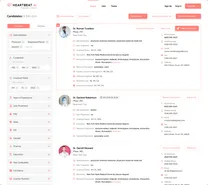
Heartbeat.ai says it maintains contact records for licensed healthcare professionals across the United States, including physician assistants practicing in Iowa. Its records can be filtered by specialty, location, and other criteria to build a targeted list rather than relying on a general directory.
Heartbeat.ai describes its dataset as covering multiple PA specialties, including general practice, surgery, pediatrics, orthopedics, dermatology, and emergency medicine. The company says records include professional details intended to help users identify relevant contacts before outreach.
For help scoping a list for a specific project, contact the Heartbeat.ai team through the site’s contact form or listed email address to ask about filtering options and available data fields.
Physician Assistants in Iowa’s Healthcare System
Physician assistants work across Iowa’s healthcare system, including hospital systems, rural clinics, and specialty practices. The article identifies UnityPoint Health, University of Iowa Hospitals and Clinics, and MercyOne as larger systems that employ PAs in a range of clinical settings.
PAs contribute to diagnosis, treatment planning, and ongoing patient management, often working with physicians and other care-team members. In rural areas, PAs may help extend the reach of local clinics and hospital-affiliated practices, particularly where recruiting and retaining physicians is challenging.
How Iowa’s PA Practice Rules Differ From Other States
Iowa’s regulatory approach to PA practice has shifted in recent years. This decade, Iowa, Montana, New Hampshire, North Dakota, Utah, and Wyoming have eliminated the legal requirement for a specific relationship between a PA and a physician or any other healthcare provider, with some minor exceptions. Iowa Code chapter 148C still addresses how physicians and PAs coordinate care, and the degree of collaboration between a physician assistant and the appropriate member of a health care team is determined at the practice level, and a physician assistant is responsible for services performed that are not performed under the supervision of a physician.
A PA’s working arrangement with a physician or other care-team member can vary by employer and setting. For recruitment or credentialing work, verify current scope-of-practice requirements with the Iowa Board of Physician Assistants rather than relying on older descriptions of a strict supervision model.
Why Contact Data Accuracy Matters for PA Outreach
Outdated or incorrect contact details can cause recruitment delays, interfere with clinical coordination, and waste marketing resources.
- Recruitment delays: A recruiter chasing a disconnected number or bounced email loses days on a search that may already be time-sensitive, especially in rural facilities with urgent staffing gaps.
- Missed clinical coordination: Referral coordination, peer consults, and care-team communication depend on being able to reach the right PA quickly.
- Wasted marketing spend: Campaigns aimed at PAs, whether for continuing education, medical devices, or professional services, underperform when a meaningful share of the list is stale.
Common Obstacles to Finding Iowa PAs
The article identifies population shifts, an aging provider workforce, and geographic maldistribution as possible challenges when sourcing PAs in Iowa, especially for rural areas. Practical responses include filtering by specialty and location, considering telehealth-capable candidates where appropriate, and monitoring academic training pipelines.
- Use a filtered database that lets you narrow by specialty and location instead of manually cross-referencing hospital staff directories.
- Factor in telehealth-capable candidates when a rural role is hard to fill locally; some PAs support remote populations without relocating.
- Watch academic pipelines at Iowa’s PA training programs, since new graduates are a recurring source of candidates for both urban systems and rural clinics.
What’s Included in Heartbeat’s Physician Assistant Contact Records
Heartbeat.ai says its PA records are intended to support recruiting, credentialing, and outreach workflows, without requiring users to assemble information from multiple sources.
- Physician assistant name
- Location
- Contact numbers (work, cell, mobile)
- Email address
- Specialization
- Years of experience
- Sole proprietor status
- Licensed states
- License number
- Fax
- Address
Physician Assistant Contact Lists by State
Browse physician assistant contact-list coverage in other states.
| Physician assistants by states |
|---|
| Physician assistants in Alabama |
| Physician assistants in Alaska |
| Physician assistants in Arizona |
| Physician assistants in Arkansas |
| Physician assistants in California |
| Physician assistants in Colorado |
| Physician assistants in Connecticut |
| Physician assistants in Delaware |
| Physician assistants in Florida |
| Physician assistants in Georgia |
| Physician assistants in Hawaii |
| Physician assistants in Idaho |
| Physician assistants in Illinois |
| Physician assistants in Indiana |
| Physician assistants in Iowa |
| Physician assistants in Kansas |
| Physician assistants in Kentucky |
| Physician assistants in Louisiana |
| Physician assistants in Maine |
| Physician assistants in Maryland |
| Physician assistants in Massachusetts |
| Physician assistants in Michigan |
| Physician assistants in Minnesota |
| Physician assistants in Mississippi |
| Physician assistants in Missouri |
| Physician assistants in Montana |
| Physician assistants in Nebraska |
| Physician assistants in Nevada |
| Physician assistants in New hampshire |
| Physician assistants in New jersey |
| Physician assistants in New mexico |
| Physician assistants in New york |
| Physician assistants in North carolina |
| Physician assistants in North dakota |
| Physician assistants in Ohio |
| Physician assistants in Oklahoma |
| Physician assistants in Oregon |
| Physician assistants in Pennsylvania |
| Physician assistants in Rhode island |
| Physician assistants in South carolina |
| Physician assistants in South dakota |
| Physician assistants in Tennessee |
| Physician assistants in Texas |
| Physician assistants in Utah |
| Physician assistants in Vermont |
| Physician assistants in Virginia |
| Physician assistants in Washington |
| Physician assistants in West virginia |
| Physician assistants in Wisconsin |
| Physician assistants in Wyoming |
How the Data Is Compiled
Heartbeat.ai says it aggregates healthcare provider information, including direct cell phone and personal email details, from public and private sources rather than relying on a single registry. The company says this approach is intended to reduce reliance on directories that may not reflect recent job changes or license renewals.
No contact database is guaranteed to be fully accurate. Providers change practices, phone numbers are reassigned, and email addresses lapse. Treat any purchased or aggregated list as a starting point for outreach, not as a guaranteed-accurate roster, and verify details before high-stakes recruiting decisions.
Who Uses Physician Assistant Contact Lists?
Potential users of physician assistant contact lists include recruiters, healthcare marketing teams, medical device and pharmaceutical outreach staff, research organizations coordinating with clinical sites, and professional associations running membership or education campaigns. Independent recruiters and staffing agencies may also use targeted lists for rural Iowa placements.
Practical Tips for Using a PA Contact List
- Segment by specialty before sending anything. A message relevant to an emergency medicine PA will land differently with a dermatology PA.
- Respect professional time. Keep outreach concise, state your purpose early, and avoid repeated follow-ups that read as spam.
- Verify before you commit to a hire. Confirm license status and current employer through the Iowa Board of Physician Assistants before finalizing any recruitment decision.
- Refresh your list periodically. PAs change jobs and locations; a list that’s a year or two old will have a meaningfully higher bounce and disconnect rate.
Frequently Asked Questions
What is the role of physician assistants in Iowa?
Physician assistants in Iowa provide medical care as part of a coordinated care team, including diagnosing conditions, developing treatment plans, and, in many settings, prescribing medications, working alongside physicians under arrangements that vary by practice setting.
How do I become a physician assistant in Iowa?
Becoming a PA in Iowa generally requires graduating from an accredited physician assistant program, passing the Physician Assistant National Certifying Exam (PANCE), and obtaining licensure through the Iowa Board of Physician Assistants.
Do physician assistants in Iowa need a supervising physician?
Iowa’s rules around physician-PA collaboration have evolved, and the specifics of any required relationship can depend on the practice setting. Check current requirements with the Iowa Board of Physician Assistants before relying on any summary, including this one.