Last updated: August 31, 2026
Recruiters, healthcare marketers, and networking professionals in Oklahoma face a familiar problem: physician assistant contact records go stale fast. Job titles change, clinics merge, phone numbers get reassigned. Building outreach around outdated data wastes time and damages sender reputation.
This guide looks at what makes physician assistant contact data useful in Oklahoma specifically, why the state’s healthcare landscape creates particular recruitment challenges, and how a verified contact list fits into a broader outreach workflow.
What’s on this page:
Get a Physician Assistant Email List for Oklahoma from Heartbeat
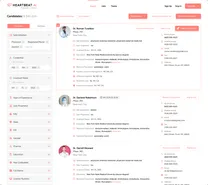
Heartbeat.ai maintains a searchable database of licensed healthcare professionals, including physician assistants, across the United States. You can filter by specialty, location, and other criteria to build a targeted list rather than working through generic directories.
The database spans multiple physician assistant specialties, including certified PAs, surgical PAs, medical PAs, family medicine PAs, and dermatology PAs. Rather than a static directory, it’s built to support direct outreach with current contact details.
If you have questions about coverage in Oklahoma or elsewhere, reach out through the Heartbeat.ai website to get started.
Oklahoma’s Healthcare Landscape
Oklahoma’s healthcare system includes a mix of hospitals, community clinics, and specialized care centers spread across a mostly rural state. Physician assistants in Oklahoma work across primary care, emergency medicine, and surgical support, often filling gaps in areas with fewer physicians available.
Large systems such as OU Medicine, Saint Francis Health System, and Integris Health anchor much of the state’s healthcare delivery. OU Medicine operates as an academic health system with a research and teaching mission. Saint Francis Health System provides tertiary-level care in the Tulsa area. Integris Health, one of the state’s larger private employers in healthcare, extends coverage across multiple communities.
Why Accurate Contact Information Matters
Bad contact data creates friction at every stage of outreach. For recruiters, an outdated email address or disconnected number means a missed interview or a candidate who never sees an opening. For networking purposes, incorrect details can stall a relationship before it starts.
A few practical consequences of working from stale data:
- Recruitment emails bounce or land in the wrong inbox, delaying hiring timelines.
- Cold outreach to a disconnected number wastes staff time and skews response-rate tracking.
- Miscommunication from wrong job titles or specialties can damage professional credibility.
- Compliance risk increases when outreach lists aren’t maintained or consented properly.
None of this is unique to Oklahoma, but the state’s rural geography and provider shortages make every wasted outreach attempt more costly — there are simply fewer qualified PAs to work with in some regions.
Recruitment Challenges Specific to Oklahoma
Oklahoma’s rural geography means physician assistants are unevenly distributed, with more availability in urban centers like Oklahoma City and Tulsa than in outlying counties. That geographic spread makes broad-based recruitment slower and more expensive than in denser states.
An aging population statewide adds pressure to an already stretched workforce, increasing demand for PAs who can support primary care and chronic disease management.
Two approaches help offset these constraints:
- Verified contact databases. A regularly updated list of licensed PAs, cross-checked against credentials and location, cuts down the time spent chasing dead leads.
- Telemedicine-enabled roles. Remote care options let PAs support patients across county lines, reducing the strict need for physical proximity in every hire.
Neither solves workforce shortages outright, but both reduce the friction involved in matching available PAs to open roles.
What’s Included in Heartbeat’s Physician Assistant Contact Data
Heartbeat.ai’s database is built for direct outreach rather than casual browsing. Typical fields available for physician assistant records include:
- Physician assistant name
- Location
- Contact numbers (work, cell, mobile)
- Email address
- Specialization
- Years of experience
- Sole proprietor status
- Licensed states
- License number
- Fax
- Address
Physician Assistant Contact Lists by State
Browse available physician assistant contact data across other states.
| Physician assistants by states |
|---|
| Physician assistants in Alabama |
| Physician assistants in Alaska |
| Physician assistants in Arizona |
| Physician assistants in Arkansas |
| Physician assistants in California |
| Physician assistants in Colorado |
| Physician assistants in Connecticut |
| Physician assistants in Delaware |
| Physician assistants in Florida |
| Physician assistants in Georgia |
| Physician assistants in Hawaii |
| Physician assistants in Idaho |
| Physician assistants in Illinois |
| Physician assistants in Indiana |
| Physician assistants in Iowa |
| Physician assistants in Kansas |
| Physician assistants in Kentucky |
| Physician assistants in Louisiana |
| Physician assistants in Maine |
| Physician assistants in Maryland |
| Physician assistants in Massachusetts |
| Physician assistants in Michigan |
| Physician assistants in Minnesota |
| Physician assistants in Mississippi |
| Physician assistants in Missouri |
| Physician assistants in Montana |
| Physician assistants in Nebraska |
| Physician assistants in Nevada |
| Physician assistants in New hampshire |
| Physician assistants in New jersey |
| Physician assistants in New mexico |
| Physician assistants in New york |
| Physician assistants in North carolina |
| Physician assistants in North dakota |
| Physician assistants in Ohio |
| Physician assistants in Oklahoma |
| Physician assistants in Oregon |
| Physician assistants in Pennsylvania |
| Physician assistants in Rhode island |
| Physician assistants in South carolina |
| Physician assistants in South dakota |
| Physician assistants in Tennessee |
| Physician assistants in Texas |
| Physician assistants in Utah |
| Physician assistants in Vermont |
| Physician assistants in Virginia |
| Physician assistants in Washington |
| Physician assistants in West virginia |
| Physician assistants in Wisconsin |
| Physician assistants in Wyoming |
How Heartbeat Compiles Contact Data
Heartbeat.ai aggregates healthcare provider data from a range of public, private, and official sources, then cross-references records to keep contact details current. The goal is to reduce the manual verification work that typically slows down recruitment and outreach campaigns.
No dataset covering millions of professionals is ever perfectly complete or instantly current — providers change roles, states, and contact details constantly. Treat any large database as a strong starting point that still benefits from spot-checking before high-stakes outreach.
Who Uses Physician Assistant Contact Lists?
Contact lists like this typically serve a mix of use cases:
- Healthcare recruiters filling open PA positions
- Marketing teams promoting relevant products or services to clinical staff
- Researchers and survey organizations collecting professional input
- Nonprofit and advocacy groups doing outreach within the medical community
- Sales teams selling into clinics and health systems
Whatever the use case, outreach should respect applicable privacy and communication regulations, including opt-out mechanisms and consent requirements where they apply.
Using the Data Effectively
A few practical guidelines for outreach to physician assistants:
- Keep messages short. Clinical staff have limited time between patients and administrative work.
- Lead with the value or relevance of your message rather than a lengthy introduction.
- Segment by specialty and location so messaging stays relevant rather than generic.
- Track bounce and response rates to flag records that may need re-verification.
- Follow applicable data protection and communication regulations for every campaign.
Oklahoma Physician Assistant Practice: Recent Changes
Oklahoma lawmakers passed amendments easing practice requirements for physician assistants, eliminating the requirement that a supervising physician be on-site at least one day per week, so long as the supervising physician is available by telecommunication, and removing a prior-approval requirement for PAs practicing in remote care settings. The amendments also afford greater flexibility to the supervising physician to establish the appropriate scope of practice and level of supervision needed.
That said, the general requirement that a physician assistant be supervised by a physician remains fully intact under Oklahoma law. Separately, physician assistants licensed in Oklahoma who are prescribing Schedule II controlled dangerous substances must be supervised by a physician. Recruiters and networking contacts should treat scope-of-practice specifics as something to confirm directly with the Oklahoma State Board of Medical Licensure and Supervision, since rules have shifted in recent legislative sessions.
Frequently Asked Questions
What are the requirements to become a physician assistant in Oklahoma?
Candidates generally complete a physician assistant program accredited by the Accreditation Review Commission on Education for the Physician Assistant and pass the Physician Assistant National Certifying Exam before applying for state licensure.
Can physician assistants in Oklahoma prescribe medication?
Yes, though prescribing authority operates under physician supervision, and PAs prescribing Schedule II controlled dangerous substances must be supervised by a physician. Specific requirements have been updated through recent legislative amendments, so current details should be verified with the state medical board.
What does a physician assistant’s scope of practice look like in Oklahoma?
Physician assistants in Oklahoma typically perform physical exams, diagnose and treat conditions, order and interpret tests, assist in procedures, and provide patient education, generally within a collaborative or supervisory arrangement with a physician. Exact scope depends on the individual practice agreement and applicable state rules.