Last updated: August 31, 2026
Ohio has a large, active population of physician assistants working across hospital systems, specialty clinics, and rural health networks. For recruiters, healthcare marketers, and staffing teams, the practical challenge isn’t finding PAs on paper — it’s finding ones with contact details that actually work. Outdated directories, generic practice-line numbers, and bounced emails slow down outreach and cost real time.
This guide looks at why accurate contact data matters for Ohio’s PA workforce, where the common breakdowns happen, and what to check for before you commit to any contact list vendor.
What’s on this page:
Ohio’s Healthcare Landscape and the Role of PAs
Ohio’s healthcare system spans large academic medical centers and community hospitals down to rural clinics. Systems like Cleveland Clinic, OhioHealth, and University Hospitals anchor much of the state’s specialty and acute care, while physician assistants fill critical roles in primary care, emergency medicine, surgery, and outpatient specialty practices throughout the state.
PAs practice under physician supervision and are licensed by the Ohio Medical Board. Physician assistants examine, diagnose, and treat patients under the supervision of a physician, and work in physicians’ offices, hospitals, outpatient clinics, and other healthcare settings. That breadth of practice settings is exactly why contact data quality varies so much — a PA working across multiple clinic locations or rotating between a hospital and an outpatient satellite office is harder to reach through a single listed number.
Why Accurate Contact Information Matters
Bad contact data has real downstream costs. A few examples specific to PA outreach:
- Recruitment: Recruiters lose candidates when interview scheduling and offer conversations stall because a phone number or email bounces.
- Vendor and pharma outreach: Sales and marketing teams targeting PAs by specialty waste budget on lists with high bounce rates.
- Professional networking: Continuing education programs, associations, and locum staffing agencies depend on being able to reach PAs directly rather than through a front-desk line.
None of this involves patient communication — this is strictly business-to-business and recruitment-focused outreach, not clinical contact.
Why Finding Current PA Contact Data in Ohio Is Difficult
A few structural issues make this harder than it should be:
- Rural distribution gaps: PAs are less concentrated in rural counties, and rural practices are less likely to maintain updated online directories.
- High job mobility: PAs frequently switch specialties or employers — a flexibility that’s part of the profession’s appeal but that makes static directories go stale fast.
- Multi-site practice: Many PAs split time across affiliated clinics, so a single “official” contact record often doesn’t reflect where they’re actually reachable.
- Licensing board limits: State board listings confirm licensure but rarely include usable direct contact information.
Databases that aggregate from multiple licensing, professional, and public sources — and that get refreshed regularly — tend to hold up better than static directory scrapes, simply because they can catch job changes and specialty shifts sooner.
What a Physician Assistant Contact Record Should Include
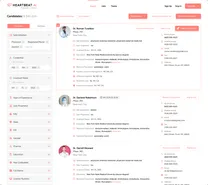
When evaluating a contact list provider for Ohio PAs, check whether records include the following fields at minimum:
- Physician assistant name
- Location
- Contact numbers (work, cell, mobile)
- Email address
- Specialization
- Years of experience
- Licensed states
- License number
- Fax
- Address
A list missing direct cell numbers or personal emails — and relying only on general office lines — will typically underperform for time-sensitive outreach like recruiting or scheduling calls.
Available Physician Assistants in Our Contact List by State
Explore our comprehensive email list cataloguing physician assistants across different states.
| Physician assistants by states |
|---|
| Physician assistants in Alabama |
| Physician assistants in Alaska |
| Physician assistants in Arizona |
| Physician assistants in Arkansas |
| Physician assistants in California |
| Physician assistants in Colorado |
| Physician assistants in Connecticut |
| Physician assistants in Delaware |
| Physician assistants in Florida |
| Physician assistants in Georgia |
| Physician assistants in Hawaii |
| Physician assistants in Idaho |
| Physician assistants in Illinois |
| Physician assistants in Indiana |
| Physician assistants in Iowa |
| Physician assistants in Kansas |
| Physician assistants in Kentucky |
| Physician assistants in Louisiana |
| Physician assistants in Maine |
| Physician assistants in Maryland |
| Physician assistants in Massachusetts |
| Physician assistants in Michigan |
| Physician assistants in Minnesota |
| Physician assistants in Mississippi |
| Physician assistants in Missouri |
| Physician assistants in Montana |
| Physician assistants in Nebraska |
| Physician assistants in Nevada |
| Physician assistants in New hampshire |
| Physician assistants in New jersey |
| Physician assistants in New mexico |
| Physician assistants in New york |
| Physician assistants in North carolina |
| Physician assistants in North dakota |
| Physician assistants in Ohio |
| Physician assistants in Oklahoma |
| Physician assistants in Oregon |
| Physician assistants in Pennsylvania |
| Physician assistants in Rhode island |
| Physician assistants in South carolina |
| Physician assistants in South dakota |
| Physician assistants in Tennessee |
| Physician assistants in Texas |
| Physician assistants in Utah |
| Physician assistants in Vermont |
| Physician assistants in Virginia |
| Physician assistants in Washington |
| Physician assistants in West virginia |
| Physician assistants in Wisconsin |
| Physician assistants in Wyoming |
How Heartbeat Builds Its Physician Assistant Contact Data
Heartbeat pulls from a wide range of official, private, and public sources and cross-references records to keep phone and email data current. Records typically include direct cell numbers and personal email addresses alongside work lines, which matters most when you’re trying to reach someone who isn’t sitting at a front desk. No contact database will hit 100% accuracy on every record — job changes, specialty moves, and license renewals happen faster than any directory can track in real time. The practical approach is to treat any purchased list as a strong starting point, verify before high-stakes outreach (like a formal offer), and expect periodic refreshes to matter more than a one-time pull.
Who Uses a Physician Assistant Contact List
Typical users include healthcare staffing and recruitment firms, medical device and pharmaceutical sales teams, continuing education and association marketers, and locum tenens agencies. Anyone running outreach to multiple PAs at once — rather than a single one-off contact — benefits from having a structured, filterable dataset instead of manually compiling numbers from clinic websites.
Using PA Contact Lists Responsibly
A few practical guidelines for outreach:
- Segment by specialty and location before sending anything — a generic blast to every PA in the state performs worse than a targeted list.
- Always include an opt-out option and honor it immediately.
- For recruitment, lead with specifics (role, location, schedule) rather than a generic pitch — PAs evaluating job offers respond better to concrete details.
- Respect that these are working clinicians; timing outreach around clinical hours reduces the odds of being ignored or blocked.
Limitations to Keep in Mind
No purchased or aggregated list replaces direct verification for anything high-stakes, like final job offers or legal notices. Contact data degrades over time as people change jobs or specialties, so a list that’s a year old should be treated with more caution than one refreshed in the last quarter. And geographic coverage in rural Ohio counties will generally be thinner than in metro areas like Columbus, Cleveland, or Cincinnati, simply because there’s less public data to draw from in those areas to begin with.
Frequently Asked Questions
What is the role of physician assistants in Ohio?
Physician assistants in Ohio work under physician supervision, diagnosing and treating patients, performing exams, ordering diagnostic tests, and prescribing medication within their scope of practice.
How can someone become a physician assistant in Ohio?
To practice as a physician assistant, you must graduate from an accredited PA program, pass the national certification exam and obtain a license in the state in which you wish to practice, completing each step in order.
What is the job outlook for physician assistants?
Employment of physician assistants is projected to grow 21 percent from 2025 to 2035, much faster than the average for all occupations, with about 11,500 openings projected each year, on average, over the decade. This is a national figure — Ohio-specific projections may differ slightly, so check state labor department data for local detail.
Can physician assistants in Ohio prescribe medication?
Yes, within the terms of their supervision agreement and Ohio’s scope-of-practice rules for PAs.