Last updated: August 31, 2026
If you’re recruiting or building referral networks around nurse practitioners in Oklahoma, the biggest bottleneck usually isn’t finding candidates — it’s finding a working phone number or email that hasn’t gone stale. Provider directories lag behind job changes, credential updates, and practice moves, which leaves recruiters chasing dead contact info instead of having conversations.
This page covers what’s changed in Oklahoma’s nurse practitioner practice environment, why accurate contact data matters more than it used to, and how a verified contact database fits into a realistic outreach workflow.
What’s on this page:
Nurse Practitioner Practice Authority in Oklahoma: What Changed
Oklahoma’s regulatory environment for NPs has shifted recently, and any recruiting or outreach content needs to reflect that. Oklahoma has historically been a restricted practice authority state, meaning nurse practitioners needed a supervisory or collaborative agreement with a physician to provide many services. With the passage of House Bill 2298, Oklahoma will become a full practice authority state in November 2025, allowing nurses with at least 6,240 hours of supervised clinical practice with prescriptive authority to apply for independent prescriptive authority licensure.
A similar bill passed the Oklahoma House and Senate in 2024 but was vetoed by the governor; a comparable bill passed again in 2025 and the veto was overturned. With the passage of House Bill 2298, Oklahoma joins a growing list of states granting nurse practitioners full practice authority, meaning they can prescribe medications and manage patient care without physician oversight.
For recruiters and healthcare marketers, this matters practically: NPs who qualify under HB 2298 will have more autonomy over prescribing and patient management, which can affect how independent practice ownership, staffing models, and job descriptions are structured in the state going forward. To qualify, APRNs must hold a valid, current license and meet specific educational and certification requirements, and the law requires malpractice insurance of at least $1 million per occurrence. Treat this as a general regulatory note, not legal guidance — anyone making hiring or compliance decisions based on scope of practice should confirm current requirements with the Oklahoma Board of Nursing.
Why Accurate Contact Data Matters for NP Recruitment
Outdated contact information causes real friction in three areas:
- Recruitment timelines: A stale email or disconnected number means a recruiter loses days re-verifying identity before an outreach message even lands.
- Care coordination: Referral networks and collaborative care arrangements depend on being able to reach the right provider promptly.
- Professional networking: Conference follow-ups, credentialing outreach, and continuing education invitations all rely on contact details staying current as NPs change employers or practice settings.
Oklahoma’s shift toward greater practice independence may accelerate job movement among NPs — as more practitioners consider opening or joining independent practices, contact details tied to a previous employer become obsolete faster.
Recruitment Challenges Specific to Oklahoma
A few structural issues make NP recruiting in Oklahoma harder than in some other states:
- Rural access gaps. Rural counties tend to have fewer NPs relative to population, which widens the gap in primary and specialty care access.
- Specialization mismatches. Demand for geriatric, neonatal, and chronic-disease-focused NPs often outpaces the local supply of specialists in those areas.
- Competitive hiring. Health systems compete directly for the same limited pool of qualified candidates, especially in urban centers.
- Manual sourcing overhead. Recruiters relying solely on public directories or LinkedIn searches spend disproportionate time verifying whether contact details are still valid.
Telehealth has helped offset some rural access gaps by letting NPs serve patients outside their immediate geography, but it doesn’t solve the underlying recruitment problem — teams still need a reliable way to reach candidates directly rather than relying on outdated listings.
Get an Email List of Nurse Practitioners in Oklahoma from Heartbeat
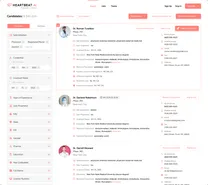
Heartbeat.ai’s database lets recruiters, marketers, and healthcare organizations search verified contact records for licensed professionals across the U.S., including Oklahoma-based nurse practitioners. You can filter by specialty — Family Nurse Practitioners, Pediatric NPs, Psychiatric NPs, Acute Care NPs, Adult-Gerontology NPs, Neonatal NPs, and others — to narrow a search to the specific role you’re trying to fill.
What’s Included in Heartbeat’s Nurse Practitioner Contact Records
Each record in the database is built to give recruiters enough context to prioritize outreach without additional research:
- Nurse practitioner name
- Location
- Contact numbers (work, cell, mobile)
- Email address
- Specialization
- Years of experience
- Sole proprietor status
- Licensed states
- License number
- Fax
- Address
 Accuracy & coverage of personal contact info were unrivaled by other platforms… this gives any healthcare recruiter a competitive advantage when engaging hard-to-reach healthcare providers.
Senior Growth Strategist






Nurse Practitioners in Our Contact List by State
Explore our contact list of available nurse practitioners across other states.
| Nurse practitioners by states |
|---|
| Nurse practitioners in Alabama |
| Nurse practitioners in Alaska |
| Nurse practitioners in Arizona |
| Nurse practitioners in Arkansas |
| Nurse practitioners in California |
| Nurse practitioners in Colorado |
| Nurse practitioners in Connecticut |
| Nurse practitioners in Delaware |
| Nurse practitioners in Florida |
| Nurse practitioners in Georgia |
| Nurse practitioners in Hawaii |
| Nurse practitioners in Idaho |
| Nurse practitioners in Illinois |
| Nurse practitioners in Indiana |
| Nurse practitioners in Iowa |
| Nurse practitioners in Kansas |
| Nurse practitioners in Kentucky |
| Nurse practitioners in Louisiana |
| Nurse practitioners in Maine |
| Nurse practitioners in Maryland |
| Nurse practitioners in Massachusetts |
| Nurse practitioners in Michigan |
| Nurse practitioners in Minnesota |
| Nurse practitioners in Mississippi |
| Nurse practitioners in Missouri |
| Nurse practitioners in Montana |
| Nurse practitioners in Nebraska |
| Nurse practitioners in Nevada |
| Nurse practitioners in New hampshire |
| Nurse practitioners in New jersey |
| Nurse practitioners in New mexico |
| Nurse practitioners in New york |
| Nurse practitioners in North carolina |
| Nurse practitioners in North dakota |
| Nurse practitioners in Ohio |
| Nurse practitioners in Oklahoma |
| Nurse practitioners in Oregon |
| Nurse practitioners in Pennsylvania |
| Nurse practitioners in Rhode island |
| Nurse practitioners in South carolina |
| Nurse practitioners in South dakota |
| Nurse practitioners in Tennessee |
| Nurse practitioners in Texas |
| Nurse practitioners in Utah |
| Nurse practitioners in Vermont |
| Nurse practitioners in Virginia |
| Nurse practitioners in Washington |
| Nurse practitioners in West virginia |
| Nurse practitioners in Wisconsin |
| Nurse practitioners in Wyoming |
How Heartbeat Compiles Nurse Practitioner Contact Data
Heartbeat aggregates provider contact information from a wide range of official, private, and public sources, then applies predictive modeling to fill in gaps and flag likely-current numbers and emails. This approach is designed to reduce the amount of manual verification recruiters have to do before reaching out, though no dataset is complete — some records will still be outdated or incomplete, particularly for providers who’ve recently changed employers or moved states.
Who Uses Nurse Practitioner Contact Lists
Contact lists like this typically get used by:
- In-house recruiting, HR, and sales teams at health systems or staffing agencies
- Marketing and advertising firms running outreach campaigns on behalf of healthcare clients
- Independent recruiters, consultants, and small practice owners building referral networks
Anyone using this kind of data is responsible for complying with applicable privacy regulations and communication laws in their outreach.
A Practical Checklist for Using NP Contact Data Responsibly
- Verify licensure status before including a provider in a hiring or referral pipeline — state boards are the authoritative source, not third-party lists.
- Keep outreach concise and specific to the role or opportunity; NPs get plenty of generic recruiting messages.
- Respect opt-outs and communication preferences immediately.
- Don’t rely on a single contact channel — having both phone and email on file reduces the odds of a stalled conversation.
- Re-verify contact details periodically, especially for providers in states like Oklahoma where scope-of-practice changes may prompt job or practice-setting changes.
Frequently Asked Questions
What is the role of nurse practitioners in Oklahoma?
Nurse practitioners in Oklahoma provide primary and specialty healthcare services, including diagnosing and treating illness, performing exams, and prescribing medications, within the scope defined by state licensure requirements.
How do I become a nurse practitioner in Oklahoma?
The general path involves becoming a registered nurse, completing a graduate-level nurse practitioner program, obtaining national certification, and applying for state licensure through the Oklahoma Board of Nursing.
Do nurse practitioners in Oklahoma have full practice authority?
Oklahoma has historically required physician supervision for many NP services. That changes with House Bill 2298: qualifying APRNs who meet clinical hour and certification requirements can apply for independent prescriptive authority once the law takes effect in November 2025. Anyone making hiring or scope-of-practice decisions should confirm current status with the Oklahoma Board of Nursing.
Are there limitations on what Oklahoma nurse practitioners can do?
Yes. Even under expanded practice authority, requirements around clinical hours, certification, malpractice insurance, and specific prescribing rules still apply. These details are set by state law and board rules, which can change — verify current requirements directly with the Oklahoma Board of Nursing before relying on them.