Last updated: August 31, 2026
Florida has one of the largest nurse practitioner workforces in the country, and that scale creates a real sourcing problem for anyone trying to recruit, market, or build referral relationships with this group. A list that’s six months stale wastes outreach budget and staff time. This guide covers what makes NP contact data useful in Florida specifically, along with the workflow and criteria worth applying before you buy or build a list.
What’s on this page:
Get an Email List of Nurse Practitioners in Florida from Heartbeat
Heartbeat.ai’s database covers licensed healthcare professionals across the United States, with filters that let you narrow by specialty, location, license status, and more so you’re not sifting through irrelevant profiles.
The list includes Family Nurse Practitioners, Adult-Gerontology Nurse Practitioners, Pediatric Nurse Practitioners, Psychiatric Nurse Practitioners, and other NP specialties, each with distinct scopes of practice and recruiting considerations.
If you’re building outreach for research studies, recruitment campaigns, or professional networking, having direct access to verified contact details cuts out a lot of the manual list-building work.
Florida’s Healthcare Landscape and Where NPs Fit In
Florida’s advanced practice registered nurse (APRN) population, which includes nurse practitioners, is regulated by the Florida Board of Nursing under Section 464.0123 of the Florida Statutes. The state has tens of thousands of actively licensed APRNs working across hospitals, clinics, and independent practices.
A notable feature of Florida’s regulatory environment: since a 2020 law took effect, qualifying APRNs can register for autonomous practice, meaning they can provide primary care services without physician supervision. This matters for recruiters and marketers because autonomous-practice NPs often operate their own clinics or lead care teams, which changes how you should approach outreach compared to NPs working under a supervising physician.
Rural and underserved areas of the state continue to have fewer healthcare resources per capita than metro areas like Miami, Tampa, or Orlando, which is worth factoring into any geographic targeting strategy.
Why Accurate Contact Data Matters More Than It Seems
Outdated contact information causes problems on three fronts:
- Recruitment: A stale phone number or defunct email address means a missed candidate, and in a competitive hiring market for APRNs, that delay often means losing them to another offer.
- Marketing and sales outreach: Bounced emails and dead numbers don’t just fail to convert — they can hurt sender reputation and skew campaign performance data.
- Professional networking and referrals: NPs building collaborative relationships with physicians, specialists, or other APRNs need working contact channels to coordinate care and share clinical updates.
None of this is about diagnosing or treating patients. It’s about the operational side of healthcare workforce management, where data quality has a direct, measurable effect on time-to-hire and campaign ROI.
Why NP Shortages Persist in Florida
Florida faces the same structural pressures as much of the country: an aging nursing workforce, retirements outpacing new licensure in some specialties, and uneven distribution between urban and rural regions. A few practical responses worth knowing:
- Data-driven workforce planning. Analyzing licensure and specialty data by region helps identify where shortages are most acute before they become a hiring crisis.
- Automated recruitment tooling. Applicant tracking systems and structured candidate databases speed up sourcing and reduce manual sorting.
- Telehealth expansion. For rural counties with fewer in-person providers, telemedicine partnerships can extend the reach of existing NPs without requiring physical relocation.
What’s Included in Heartbeat’s Nurse Practitioner Contact Data
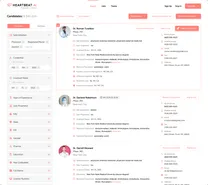
Heartbeat’s database is organized to make sourcing NP contact information straightforward, whether you need a single state or nationwide coverage. Typical fields include:
- Nurse practitioner name
- Location
- Contact numbers (work, cell, mobile)
- Email address
- Specialization
- Years of experience
- Sole proprietor status
- Licensed states
- License number
- Fax
- Address
Available Nurse Practitioners in Our Contact List by State
Browse nurse practitioner contact data by state below.
| Nurse practitioners by states |
|---|
| Nurse practitioners in Alabama |
| Nurse practitioners in Alaska |
| Nurse practitioners in Arizona |
| Nurse practitioners in Arkansas |
| Nurse practitioners in California |
| Nurse practitioners in Colorado |
| Nurse practitioners in Connecticut |
| Nurse practitioners in Delaware |
| Nurse practitioners in Florida |
| Nurse practitioners in Georgia |
| Nurse practitioners in Hawaii |
| Nurse practitioners in Idaho |
| Nurse practitioners in Illinois |
| Nurse practitioners in Indiana |
| Nurse practitioners in Iowa |
| Nurse practitioners in Kansas |
| Nurse practitioners in Kentucky |
| Nurse practitioners in Louisiana |
| Nurse practitioners in Maine |
| Nurse practitioners in Maryland |
| Nurse practitioners in Massachusetts |
| Nurse practitioners in Michigan |
| Nurse practitioners in Minnesota |
| Nurse practitioners in Mississippi |
| Nurse practitioners in Missouri |
| Nurse practitioners in Montana |
| Nurse practitioners in Nebraska |
| Nurse practitioners in Nevada |
| Nurse practitioners in New hampshire |
| Nurse practitioners in New jersey |
| Nurse practitioners in New mexico |
| Nurse practitioners in New york |
| Nurse practitioners in North carolina |
| Nurse practitioners in North dakota |
| Nurse practitioners in Ohio |
| Nurse practitioners in Oklahoma |
| Nurse practitioners in Oregon |
| Nurse practitioners in Pennsylvania |
| Nurse practitioners in Rhode island |
| Nurse practitioners in South carolina |
| Nurse practitioners in South dakota |
| Nurse practitioners in Tennessee |
| Nurse practitioners in Texas |
| Nurse practitioners in Utah |
| Nurse practitioners in Vermont |
| Nurse practitioners in Virginia |
| Nurse practitioners in Washington |
| Nurse practitioners in West virginia |
| Nurse practitioners in Wisconsin |
| Nurse practitioners in Wyoming |
How Heartbeat Compiles Nurse Practitioner Data in Florida
Heartbeat aggregates contact information from a wide range of official, private, and public sources, then applies verification and predictive modeling to keep records current. The goal is to reduce the manual research time recruiters and marketers would otherwise spend hunting down working phone numbers and email addresses one profile at a time.
No dataset stays perfectly current forever — professionals change jobs, get new numbers, or update email addresses regularly. That’s why ongoing verification matters more than a one-time list purchase.
Choosing a Nurse Practitioner Contact List: What to Check
Before committing to any data source for Florida NP outreach, it’s worth checking a few things:
- Update frequency. Ask how often records are refreshed and verified, not just when the database was first built.
- Specialty granularity. A generic “nurse practitioner” tag isn’t as useful as breakdowns by specialty (family, psychiatric, pediatric, and so on) if your outreach is specialty-specific.
- License and compliance data. Fields like license number and licensed states help confirm you’re reaching an actively credentialed provider.
- Coverage depth. Confirm the provider count and field completeness match what you actually need before paying for access.
Who Uses Nurse Practitioner Contact Lists
Marketing teams use these lists for targeted outreach to healthcare professionals, sales teams use them for pipeline building, HR and recruiting teams use them for staffing drives, and nonprofit or professional associations use them for member outreach and fundraising. Any use should stay within applicable data protection and privacy regulations — misuse can create legal exposure and damage professional relationships.
Using NP Contact Data Responsibly
A few practical guidelines for outreach to this audience:
- Keep messaging specific to the recipient’s specialty and practice setting rather than sending generic blasts.
- Respect HIPAA and other applicable privacy rules when handling any data connected to patient care contexts.
- Lead with something useful to the recipient — a relevant opportunity, resource, or clear ask — rather than a vague introduction.
- Track response rates by specialty and region so you can refine targeting over time instead of repeating the same approach indefinitely.
Bottom Line
Florida’s NP workforce is large, specialized, and increasingly able to practice autonomously, which makes accurate, specialty-level contact data more valuable than a generic list. Whether you’re recruiting, marketing, or building referral networks, the quality and freshness of your data will do more for results than the size of the list alone.
Frequently Asked Questions
What is a nurse practitioner?
A nurse practitioner is a registered nurse with advanced education and clinical training in a specific area of healthcare. NPs can diagnose and treat illnesses, prescribe medications, and manage patient care depending on their state’s scope-of-practice rules.
How do I become a nurse practitioner in Florida?
The typical path involves completing a Bachelor of Science in Nursing, passing the NCLEX-RN, earning a Master of Science in Nursing or Doctor of Nursing Practice degree, passing a national certification exam in your specialty, and applying for advanced practice licensure through the Florida Board of Nursing.
What services can nurse practitioners provide in Florida?
Florida NPs can perform physical exams, order and interpret diagnostic tests, diagnose and treat illnesses, prescribe medications, provide prenatal care, manage chronic disease, and educate patients on prevention and health promotion, within the scope defined by their license and any applicable supervision requirements.
Can nurse practitioners in Florida open their own practice?
Nurse practitioners who meet the requirements under Section 464.0123 of the Florida Statutes can register for autonomous practice. Eligibility generally requires holding an active, unencumbered Florida APRN license and at least 3,000 supervised clinical hours completed within the preceding five years, along with specific coursework in differential diagnosis and pharmacology. NPs who don’t meet these requirements typically practice under a supervisory protocol with a physician.