Last updated: August 30, 2026
Recruiters, medical staffing agencies, and healthcare marketers looking for a clinical lipidologist in North Carolina run into a narrow field. This is a subspecialty, not a broad primary care category, and the people who practice it are relatively few and often affiliated with academic medical centers rather than solo practices. That combination — small talent pool, institutional employment, outdated public directories — makes accurate contact data harder to come by than it looks at first glance.
This page explains what the credential actually means, why North Carolina’s healthcare landscape matters for outreach strategy, and how a verified contact database like Heartbeat’s can shorten the search.
What’s on this page:
What a Clinical Lipidologist Actually Does
A clinical lipidologist manages disorders of lipid metabolism — high cholesterol, elevated triglycerides, and related cardiometabolic conditions that raise cardiovascular risk. The role is generally defined as a health care professional certified by the American Board of Clinical Lipidology specializing in the identification and management of dyslipidemia and related metabolic disorders which lead to atherosclerotic cardiovascular disease and other morbidities.
Certification is not limited to physicians. The program is open to licensed physicians in the US and Canada, nurses, nurse practitioners, physician assistants, pharmacists, registered dietitian/nutritionists, clinical exercise physiologists and other healthcare professionals who meet qualifying criteria. That matters for anyone building outreach lists — “clinical lipidologist” isn’t always an MD, and job titles vary across health systems.
Worth noting for anyone doing recruiting research: the Accreditation Council of Clinical Lipidology ceased operations in 2022 following a fiduciary dissolution, so the American Board of Clinical Lipidology is now the primary certifying body for the field. Older directories or bios that reference ACCL certification may be outdated.
Healthcare Landscape in North Carolina
North Carolina’s health systems include large academic and multi-hospital networks such as UNC Health, Duke University Hospital, and Atrium Health, alongside a range of community and regional providers. Lipid specialists in the state tend to cluster around these larger systems, particularly cardiology and endocrinology departments, rather than appearing as independent practices.
Cardiovascular disease remains a major driver of demand for lipid management services nationally, and rural counties in North Carolina generally have fewer specialists per capita than metro areas like the Triangle or Charlotte. For outreach purposes, this means list-building strategies that rely only on urban hospital directories will miss providers working in smaller or rural-adjacent systems.
Why Accurate Contact Data Matters Here Specifically
For a niche specialty like this, bad contact data costs more than it would for a general practice list. A few reasons:
- Small candidate pool. Recruiting for a lipidology role means there may only be a handful of qualified candidates in the state at any given time — a single wrong email address can mean losing access to a meaningful share of the market.
- Institutional affiliations shift. Lipid specialists frequently move between academic appointments, hospital systems, and research roles, so directory listings go stale faster than for stable private-practice specialties.
- Multiple credential types. Because certification is open to physicians, NPs, PAs, pharmacists, and dietitians, a single job title search often misses qualified contacts entirely.
- Patient-side urgency. Individuals managing lipid disorders sometimes need a fast referral path, and a dead phone number or bounced email delays care coordination.
Common Obstacles in Finding Lipid Specialists in the State
Location and scarcity are the two biggest practical barriers. Rural parts of North Carolina have fewer specialists nearby, and general physician directories (hospital websites, state licensing boards) are not built for granular subspecialty search — they often don’t distinguish a lipidologist from a general cardiologist or endocrinologist.
A few approaches help close that gap:
- Cross-reference certification bodies. Checking against the ABCL’s directory can confirm whether a provider holds current certification, rather than relying on outdated bios.
- Use telehealth-enabled listings. Many lipid specialists now offer remote consultations, which widens the effective radius of who counts as “local” for patient referral purposes.
- Combine institutional and independent databases. Hospital system directories catch academic-affiliated providers; broader healthcare contact databases catch those who’ve moved or hold adjunct roles.
- Verify before outreach. Given how often affiliations change, a quick verification step before a recruiting or marketing campaign saves wasted sends.
Get the Best Email List of Clinical Lipidologists in North Carolina from Heartbeat
Whether you are looking for healthcare professionals, specialists, or surgeons, Heartbeat.ai’s email list can help you find licensed professionals across the United States. You can use customizable filters to narrow down provider profiles and reach out to them directly.
Our database includes several categories of professionals working in lipid-related care, including pediatric lipid specialists, cardiovascular-focused lipid clinicians, and lipid research scientists, along with therapeutic and preventive lipid specialists and those focused on lipid metabolism research. If you’re trying to reach these professionals for recruiting, marketing, or partnership purposes, Heartbeat.ai maintains updated contact records to support that outreach.
Reach out to us directly if you need hassle-free access to these contact lists.
About Heartbeat’s Clinical Lipidologist Contact Lists: What You Get
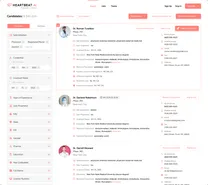
Heartbeat’s database is built to reduce the manual work of tracking down individual providers. Each record typically includes the details below, gathered into a single reference point rather than requiring searches across dozens of separate directories.
- Clinical lipidologist name
- Location
- Contact numbers (work, cell, mobile)
- Email address
- Specialization
- Years of experience
- Sole proprietor status
- Licensed states
- License number
- Fax
- Address
 Accuracy & coverage of personal contact info were unrivaled by other platforms… this gives any healthcare recruiter a competitive advantage when engaging hard-to-reach healthcare providers.
Senior Growth Strategist





Available Clinical Lipidologist Contacts by State
Explore our contact database of clinical lipidologists, organized by state.
| Clinical lipidologist by states |
|---|
| Clinical lipidologist in Alabama |
| Clinical lipidologist in Alaska |
| Clinical lipidologist in Arizona |
| Clinical lipidologist in Arkansas |
| Clinical lipidologist in California |
| Clinical lipidologist in Colorado |
| Clinical lipidologist in Connecticut |
| Clinical lipidologist in Delaware |
| Clinical lipidologist in Florida |
| Clinical lipidologist in Georgia |
| Clinical lipidologist in Hawaii |
| Clinical lipidologist in Idaho |
| Clinical lipidologist in Illinois |
| Clinical lipidologist in Indiana |
| Clinical lipidologist in Iowa |
| Clinical lipidologist in Kansas |
| Clinical lipidologist in Kentucky |
| Clinical lipidologist in Louisiana |
| Clinical lipidologist in Maine |
| Clinical lipidologist in Maryland |
| Clinical lipidologist in Massachusetts |
| Clinical lipidologist in Michigan |
| Clinical lipidologist in Minnesota |
| Clinical lipidologist in Mississippi |
| Clinical lipidologist in Missouri |
| Clinical lipidologist in Montana |
| Clinical lipidologist in Nebraska |
| Clinical lipidologist in Nevada |
| Clinical lipidologist in New hampshire |
| Clinical lipidologist in New jersey |
| Clinical lipidologist in New mexico |
| Clinical lipidologist in New york |
| Clinical lipidologist in North carolina |
| Clinical lipidologist in North dakota |
| Clinical lipidologist in Ohio |
| Clinical lipidologist in Oklahoma |
| Clinical lipidologist in Oregon |
| Clinical lipidologist in Pennsylvania |
| Clinical lipidologist in Rhode island |
| Clinical lipidologist in South carolina |
| Clinical lipidologist in South dakota |
| Clinical lipidologist in Tennessee |
| Clinical lipidologist in Texas |
| Clinical lipidologist in Utah |
| Clinical lipidologist in Vermont |
| Clinical lipidologist in Virginia |
| Clinical lipidologist in Washington |
| Clinical lipidologist in West virginia |
| Clinical lipidologist in Wisconsin |
| Clinical lipidologist in Wyoming |
How We Compile Contact Data for North Carolina
Heartbeat.ai aggregates contact details for healthcare providers nationwide, including cell phone numbers and personal email addresses, drawing on official, private, and public records. The goal is to give recruiters and healthcare marketers a single reference point rather than requiring manual searches across scattered directories, licensing boards, and hospital staff pages. Because affiliations in a subspecialty like lipidology change relatively often, records are refreshed on an ongoing basis rather than compiled once and left static.
Who Uses a Clinical Lipidologist Contact List
Healthcare recruiters and staffing agencies filling specialized cardiometabolic roles are the most common users, but the list also serves medical device and pharmaceutical sales teams, PR and communications agencies coordinating with specialists for commentary or research partnerships, and academic or nonprofit researchers seeking collaborators in lipid science. Patients occasionally use provider-level data to identify a specialist directly, though referrals from a primary care physician remain the more typical path into specialty care.
Using the List Effectively
A few practical guidelines make outreach more productive:
- Lead with relevance. A message to a lipid specialist should reference lipid-specific work, not generic cardiology language — these professionals notice the difference.
- Keep recruiting pitches concise. Given the small talent pool, a scattershot approach wastes goodwill; a targeted, specific pitch performs better.
- Respect professional boundaries. This is a B2B and recruiting resource, not a substitute for patient care coordination through normal referral channels.
- Verify before high-volume campaigns. A quick spot-check of a sample of records against current employer or licensing information catches most data drift before it costs you deliverability.
Conclusion
Clinical lipidology is a small, specialized field, and that scarcity is exactly what makes accurate contact data valuable for recruiters, marketers, and partners trying to reach these professionals in North Carolina. Heartbeat.ai’s contact lists are built to reduce the manual work involved in finding and verifying that information, whether the need is a single introduction or a broader outreach campaign.
Frequently Asked Questions
What is a clinical lipidologist?
A clinical lipidologist is a healthcare professional who specializes in diagnosing and managing lipid-related disorders such as high cholesterol and elevated triglycerides. The credential is offered through the American Board of Clinical Lipidology and is open to physicians as well as nurses, physician assistants, pharmacists, and other qualifying clinicians.
What services does a clinical lipidologist in North Carolina offer?
Services typically include lipid profile testing, management of lipid-lowering medications, dietary counseling, and individualized treatment planning for lipid disorders, usually coordinated with a patient’s broader cardiovascular care team.
How can I find a clinical lipidologist in North Carolina?
Start with a referral from your primary care physician, check directories maintained by academic medical centers such as UNC Health or Duke, or search certification records through the American Board of Clinical Lipidology.
What are the benefits of consulting a clinical lipidologist in North Carolina?
A lipid specialist brings focused expertise in managing complex or treatment-resistant lipid disorders, which can support a more tailored approach to reducing cardiovascular risk alongside a patient’s existing care team.