Last updated: August 30, 2026
Cholesterol management sits at the center of heart disease prevention, and clinical lipidologists are the specialists who handle the complicated cases — patients with genetic lipid disorders, statin intolerance, or cardiovascular risk that doesn’t respond to standard treatment. Delaware’s small size means there are relatively few of these specialists practicing statewide, which makes accurate outreach data more valuable, not less.
For recruiters, medical sales teams, and healthcare marketers, the challenge isn’t finding a list of lipidologist names. It’s finding current phone numbers and email addresses that actually connect. Provider contact information changes often — practices merge, physicians move between health systems, and directory listings lag behind reality. This piece looks at what makes contact data useful in this specialty, where the practical obstacles are, and what a working list should include.
What’s on this page:
Get the Best Email List of Clinical lipidologist in delaware from Heartbeat
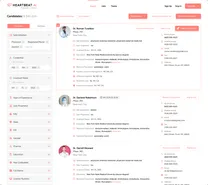
Heartbeat.ai maintains contact records for licensed healthcare professionals across the United States, including lipid specialists in Delaware. You can filter by specialty, location, and other criteria to build a targeted outreach list rather than working through a generic directory.
Lipid management draws in physicians and other clinicians from several different backgrounds. Some come to it through cardiology, some through endocrinology, some through nutrition or pharmacy training. That variety matters for outreach, because a recruiter targeting “clinical lipidologists” may actually need to reach cardiologists managing lipid clinics, endocrinologists treating hormone-driven dyslipidemia, or dietitians and pharmacists who hold clinical lipid specialist certification. Knowing which subgroup you need narrows the search and improves response rates.
Overview of the Healthcare Industry in Delaware
Delaware’s healthcare system is anchored by a small number of major systems, including Christiana Care, Bayhealth, and Beebe Healthcare. These systems support cardiovascular and preventive care programs where lipid management is part of the broader effort to reduce heart disease risk in the state’s population. Because Delaware doesn’t have the sheer volume of academic medical centers found in neighboring states, lipid specialists here often work within multi-specialty cardiology or internal medicine practices rather than standalone lipid clinics.
Why Accurate Contact Information Matters
Outdated contact details cause different problems depending on who’s using them.
- Recruiters lose time and credibility chasing dead phone numbers and bounced emails, which slows down hiring for open positions.
- Referring physicians and care coordinators depend on correct contact details to route patients efficiently, especially for a specialty with few practitioners in-state.
- Vendors and medical sales teams waste outreach budget on contacts that no longer work at the listed practice.
- Researchers and professional networks rely on current information for collaboration, referrals, and continuing education outreach.
None of this is medical advice — it’s a data hygiene problem that affects how efficiently people connect with specialists.
Why Clinical Lipidologists Are Harder to Find in Delaware
A few factors make this specialty harder to source in Delaware specifically:
- Small population base. Fewer patients statewide means fewer dedicated lipid specialists compared to larger states.
- Border-state pull. Delaware sits next to Pennsylvania and Maryland, both with larger academic medical centers, and some specialists split time or practice across state lines.
- No single statewide directory. There isn’t one authoritative, regularly updated list of every lipid specialist practicing in Delaware, so searches often mean cross-referencing hospital staff pages, National Lipid Association credential lists, and general provider directories.
Telehealth has partially closed the access gap for patients, since lipid management often relies on lab review and counseling rather than in-person procedures. For outreach purposes, though, telehealth doesn’t solve the data problem — it just means a specialist’s practice location and their actual patient base may not match.
About Heartbeat Clinical Lipidologist Contact Lists: What You Will Get
Heartbeat’s database is built to solve the sourcing problem described above: a searchable, filterable record of licensed healthcare professionals, including lipid specialists, across all states. It’s particularly useful when a home state has limited coverage and you need to widen the search or benchmark against providers elsewhere.
Each contact record is designed to give a fuller picture than a name and a general office number:
- Clinical lipidologist Name
- Location
- Contact Numbers (Work, Cell, Mobile)
- Email Address
- Specialization
- Years of Experience
- Sole Proprietor Status
- Licensed States
- License Number
- Fax
- Address
 Accuracy & coverage of personal contact info were unrivaled by other platforms… this gives any healthcare recruiter a competitive advantage when engaging hard-to-reach healthcare providers.
Senior Growth Strategist





Available Clinical Lipidologist Contacts by State
Browse our contact coverage for clinical lipidologists across U.S. states.
| Clinical lipidologist by states |
|---|
| Clinical lipidologist in Alabama |
| Clinical lipidologist in Alaska |
| Clinical lipidologist in Arizona |
| Clinical lipidologist in Arkansas |
| Clinical lipidologist in California |
| Clinical lipidologist in Colorado |
| Clinical lipidologist in Connecticut |
| Clinical lipidologist in Delaware |
| Clinical lipidologist in Florida |
| Clinical lipidologist in Georgia |
| Clinical lipidologist in Hawaii |
| Clinical lipidologist in Idaho |
| Clinical lipidologist in Illinois |
| Clinical lipidologist in Indiana |
| Clinical lipidologist in Iowa |
| Clinical lipidologist in Kansas |
| Clinical lipidologist in Kentucky |
| Clinical lipidologist in Louisiana |
| Clinical lipidologist in Maine |
| Clinical lipidologist in Maryland |
| Clinical lipidologist in Massachusetts |
| Clinical lipidologist in Michigan |
| Clinical lipidologist in Minnesota |
| Clinical lipidologist in Mississippi |
| Clinical lipidologist in Missouri |
| Clinical lipidologist in Montana |
| Clinical lipidologist in Nebraska |
| Clinical lipidologist in Nevada |
| Clinical lipidologist in New hampshire |
| Clinical lipidologist in New jersey |
| Clinical lipidologist in New mexico |
| Clinical lipidologist in New york |
| Clinical lipidologist in North carolina |
| Clinical lipidologist in North dakota |
| Clinical lipidologist in Ohio |
| Clinical lipidologist in Oklahoma |
| Clinical lipidologist in Oregon |
| Clinical lipidologist in Pennsylvania |
| Clinical lipidologist in Rhode island |
| Clinical lipidologist in South carolina |
| Clinical lipidologist in South dakota |
| Clinical lipidologist in Tennessee |
| Clinical lipidologist in Texas |
| Clinical lipidologist in Utah |
| Clinical lipidologist in Vermont |
| Clinical lipidologist in Virginia |
| Clinical lipidologist in Washington |
| Clinical lipidologist in West virginia |
| Clinical lipidologist in Wisconsin |
| Clinical lipidologist in Wyoming |
How Heartbeat Builds Its Contact Data
Heartbeat.ai pulls from a broad network of public and private data sources and applies predictive modeling to fill in gaps and validate contact records for U.S. healthcare providers, including specialists like clinical lipidologists. The goal is a working list — current cell numbers and personal emails rather than a general practice front-desk line — so outreach doesn’t stall at the first point of contact.
Because credentialing bodies like the American Board of Clinical Lipidology and the Accreditation Council for Clinical Lipidology certify professionals from multiple backgrounds — physicians, nurse practitioners, pharmacists, and registered dietitians — a useful contact list should let you filter by credential type as well as by state, so you’re not treating every “lipid specialist” record as the same kind of contact.
Choosing a Contact Data Provider: What to Check
Before committing to any provider database, it’s worth running through a short checklist:
- Update frequency. How often are records refreshed, and what happens when a contact goes stale?
- Verification method. Is the data pulled from a single directory, or cross-checked across multiple sources?
- Specialty granularity. Can you distinguish a cardiologist running a lipid clinic from a certified Clinical Lipid Specialist?
- Compliance posture. Does the provider document how it sources and handles personal contact information?
- Coverage outside your target state. For a small state like Delaware, the ability to widen a search regionally matters.
Who Uses a Clinical Lipidologist Contact List
These lists get used by a mix of teams: recruiters filling clinical positions, medical device or pharmaceutical sales reps identifying specialists, marketing teams running educational campaigns, and researchers coordinating with practicing lipidologists. Nonprofits and professional associations may also use similar lists for outreach around continuing education or advocacy. Whatever the use case, contact data should be handled in line with applicable privacy laws and used for legitimate business or professional purposes, not indiscriminate bulk messaging.
Using the List Effectively
A contact record is only as good as the outreach built around it. A few practical notes:
- Lead with something specific — a role, a research interest, a referral reason — rather than a generic pitch.
- Keep messages short. Specialists in a niche field like lipidology are often juggling clinical and administrative responsibilities.
- Email tends to outperform cold calls for this audience since it lets the recipient respond on their own schedule.
- Segment your list by credential and practice setting before you start messaging, rather than treating the whole list as one audience.
Limitations to Keep in Mind
No contact database is perfect. Even well-maintained lists lag behind real-time changes like a provider switching practices or retiring. Delaware’s small specialist pool means any single list may only cover a handful of true clinical lipidologists in-state, so cross-referencing with regional providers in Pennsylvania, New Jersey, and Maryland is often necessary for larger recruiting or outreach campaigns.
Conclusion
Delaware’s healthcare system relies on a small group of specialists to manage lipid disorders and reduce cardiovascular risk statewide. Finding and reaching them means working around a limited in-state pool, a lack of one central directory, and the usual problem of contact data going stale. A well-maintained, filterable database — one that distinguishes credential type and refreshes contact details regularly — makes that outreach more efficient, whether the goal is recruiting, referrals, or professional networking.
Frequently Asked Questions
What is a clinical lipidologist?
A clinical lipidologist is a healthcare professional who focuses on diagnosing and managing lipid disorders, such as high cholesterol and elevated triglycerides, often to reduce cardiovascular risk.
What services does a clinical lipidologist in Delaware provide?
Services typically include lipid panel review, lifestyle and dietary counseling, medication management for dyslipidemia, and cardiovascular risk assessment, usually as part of a broader cardiology or internal medicine practice.
How can I find a clinical lipidologist in Delaware?
Options include asking your primary care physician for a referral, checking with major Delaware health systems directly, or searching a credentialing body’s provider listings, since there’s no single statewide directory dedicated to this specialty.