Last updated: August 30, 2026
Ohio’s hospital and surgical-center anesthesia teams rely heavily on Certified Registered Nurse Anesthetists, and reaching the right ones by phone or email is a recurring problem for recruiters, medical sales teams, and healthcare marketers. Job boards and general directories rarely include direct contact details, and public licensing databases don’t include phone numbers or personal emails at all. This page covers what CRNAs do in Ohio, why accurate contact data matters for outreach, and how Heartbeat’s contact database can help you find and reach them.
What’s on this page:
Get an Email List of Certified Registered Nurse Anesthetists in Ohio from Heartbeat
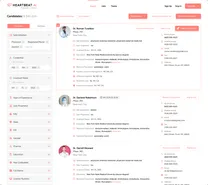
Heartbeat.ai’s database lets you search for CRNAs and other licensed healthcare professionals across the United States, then filter by location, specialization, and experience to build a targeted list. Instead of manually searching hospital directories or LinkedIn one profile at a time, you can pull verified contact records in a fraction of the time.
Our CRNA records span multiple practice settings, including surgical centers, outpatient clinics, nursing facilities, and private practice, and cover subspecialties such as pediatric anesthesia, obstetric anesthesia, neurosurgical anesthesia, and cardiovascular anesthesia. The goal is straightforward: give recruiters and healthcare marketers a way to reach the right CRNA directly, without digging through outdated staff directories or third-party aggregators that haven’t been refreshed in years.
Overview of the Healthcare Industry in Ohio
Ohio’s healthcare system includes major academic and regional systems such as Ohio State University Wexner Medical Center, Cleveland Clinic, and Cincinnati Children’s Hospital, alongside a large network of community hospitals and surgical centers. CRNAs work throughout these systems and in rural facilities where anesthesia coverage can be harder to staff.
CRNAs handle preoperative assessment, intraoperative anesthesia management, and postoperative recovery care, working alongside surgeons, anesthesiologists, and nursing staff. In rural or smaller facilities, CRNAs are often the primary anesthesia providers, which makes accurate outreach to this group especially relevant for recruiters trying to fill gaps in underserved areas.
Why Accurate Contact Data Matters for CRNA Outreach
For recruiters, a wrong phone number or an inactive email address means a missed candidate, not just a delayed one. CRNA searches are competitive, and candidates who don’t hear back from a delayed or bounced message often move on to another opportunity within days.
Accurate contact information also supports faster credential verification and follow-up during hiring, since recruiters can confirm licensure status, availability, and interest without relying on a third party to relay messages.
Beyond hiring, direct contact data supports professional networking and continuing education outreach, connecting CRNAs to peer mentorship, conference invitations, or clinical resources relevant to their specialty.
Common Challenges in Finding CRNAs in Ohio
A few recurring obstacles come up when building CRNA outreach lists:
- Limited supply: CRNA training is a multi-year process, so the pool of licensed professionals in any given state is smaller than for many other clinical roles.
- Rural distribution gaps: Facilities outside major metro areas often struggle to attract CRNAs, which concentrates candidates in a handful of large health systems.
- Verification overhead: Confirming licensure, credentials, and current employer takes time when working from outdated directories.
- Stale contact data: Nurses change employers and practice settings more often than public directories are updated, so information can go out of date quickly.
Working from a contact database that’s refreshed regularly and cross-checked against multiple sources reduces the manual verification work, though no dataset is perfect and some records will still need a quick confirmation call before you rely on them for time-sensitive outreach.
What You Get with Heartbeat’s CRNA Contact Lists
Heartbeat.ai’s database is built from a combination of official, private, and public sources and is updated on an ongoing basis to reduce the amount of stale or duplicate data in your search results. Records typically include:
- CRNA name
- Location
- Contact numbers (work, cell, mobile)
- Email address
- Specialization
- Years of experience
- Sole proprietor status
- Licensed states
- License number
- Fax
- Address
CRNA Contact Lists by State
Explore our state-wise list to find Certified Registered Nurse Anesthetists available in other regions.
| Certified Registered Nurse Anesthetists by State |
|---|
| Certified registered nurse anesthetists in Alabama |
| Certified registered nurse anesthetists in Alaska |
| Certified registered nurse anesthetists in Arizona |
| Certified registered nurse anesthetists in Arkansas |
| Certified registered nurse anesthetists in California |
| Certified registered nurse anesthetists in Colorado |
| Certified registered nurse anesthetists in Connecticut |
| Certified registered nurse anesthetists in Delaware |
| Certified registered nurse anesthetists in Florida |
| Certified registered nurse anesthetists in Georgia |
| Certified registered nurse anesthetists in Hawaii |
| Certified registered nurse anesthetists in Idaho |
| Certified registered nurse anesthetists in Illinois |
| Certified registered nurse anesthetists in Indiana |
| Certified registered nurse anesthetists in Iowa |
| Certified registered nurse anesthetists in Kansas |
| Certified registered nurse anesthetists in Kentucky |
| Certified registered nurse anesthetists in Louisiana |
| Certified registered nurse anesthetists in Maine |
| Certified registered nurse anesthetists in Maryland |
| Certified registered nurse anesthetists in Massachusetts |
| Certified registered nurse anesthetists in Michigan |
| Certified registered nurse anesthetists in Minnesota |
| Certified registered nurse anesthetists in Mississippi |
| Certified registered nurse anesthetists in Missouri |
| Certified registered nurse anesthetists in Montana |
| Certified registered nurse anesthetists in Nebraska |
| Certified registered nurse anesthetists in Nevada |
| Certified registered nurse anesthetists in New hampshire |
| Certified registered nurse anesthetists in New jersey |
| Certified registered nurse anesthetists in New mexico |
| Certified registered nurse anesthetists in New york |
| Certified registered nurse anesthetists in North carolina |
| Certified registered nurse anesthetists in North dakota |
| Certified registered nurse anesthetists in Ohio |
| Certified registered nurse anesthetists in Oklahoma |
| Certified registered nurse anesthetists in Oregon |
| Certified registered nurse anesthetists in Pennsylvania |
| Certified registered nurse anesthetists in Rhode island |
| Certified registered nurse anesthetists in South carolina |
| Certified registered nurse anesthetists in South dakota |
| Certified registered nurse anesthetists in Tennessee |
| Certified registered nurse anesthetists in Texas |
| Certified registered nurse anesthetists in Utah |
| Certified registered nurse anesthetists in Vermont |
| Certified registered nurse anesthetists in Virginia |
| Certified registered nurse anesthetists in Washington |
| Certified registered nurse anesthetists in West virginia |
| Certified registered nurse anesthetists in Wisconsin |
| Certified registered nurse anesthetists in Wyoming |
How We Compile CRNA Contact Data for Ohio
Heartbeat.ai aggregates healthcare provider data from more than 200 official, private, and public sources, then applies predictive modeling to fill in and verify contact records where public data is incomplete. This includes direct cell phone numbers and personal email addresses, not just work switchboard numbers, which tend to route through front-desk staff and slow down time-sensitive outreach.
The platform covers over 11 million US healthcare professionals, including 8.8 million direct cell phone numbers, 9.3 million personal email addresses, and 6 million direct dial numbers, with reported first-result accuracy of 84% for cell phone numbers and 92% for personal emails.
Who Uses CRNA Contact Lists
CRNA contact data gets used by a range of teams: healthcare recruiters filling anesthesia positions, medical device and pharmaceutical sales reps, continuing-education providers, professional associations, and market researchers studying anesthesia practice trends. Agencies and staffing firms working multiple state searches at once benefit from being able to filter by state and specialization rather than building separate lists from scratch each time.
Using CRNA Email Lists Effectively
A few practical guidelines apply regardless of whether you’re recruiting, selling, or networking:
- Understand HIPAA and general privacy expectations before reaching out; contact data should be used for legitimate business communication, not shared or resold.
- Keep messages specific — mention the role, location, or specialty relevant to the recipient rather than sending generic outreach.
- Respect the realities of clinical schedules; CRNAs often work irregular hours, so give a clear, low-effort way to respond.
- Verify licensure and current employer before extending any job-related communication, since practice settings change more often than directories update.
Limitations to Keep in Mind
No third-party contact database, including Heartbeat’s, guarantees 100% accuracy. Reported accuracy rates reflect first-result matches, not every record in the database, and contact details can go stale between updates as professionals change jobs or numbers. Treat contact data as a starting point for outreach, and build a quick verification step into your workflow for high-priority candidates or accounts.
Frequently Asked Questions
What is a Certified Registered Nurse Anesthetist?
A CRNA is an advanced practice registered nurse who administers anesthesia and manages related care for patients undergoing surgical or medical procedures.
How do I become a CRNA in Ohio?
The path typically starts with a Bachelor of Science in Nursing, an active RN license, and at least a year of critical care experience. From there, candidates complete an accredited nurse anesthesia program through the Council on Accreditation of Nurse Anesthesia Educational Programs, which now leads to a doctoral degree (DNP or DNAP), and pass the National Certification Examination administered by the National Board of Certification and Recertification for Nurse Anesthetists.
What is the scope of practice for CRNAs in Ohio?
CRNAs in Ohio provide anesthesia care across surgical, obstetric, and critical care settings, working alongside physicians and other clinical staff. Scope of practice and supervision requirements can vary by facility and are subject to state regulation, so specific practice arrangements should be confirmed directly with Ohio’s nursing board rather than assumed from general descriptions.
What is the job outlook for CRNAs in Ohio?
Demand for anesthesia services continues across Ohio’s hospitals, surgical centers, and rural facilities, and CRNAs remain a key part of that care team, though specific employment projections should be checked against current labor market data rather than treated as fixed.