Last updated: August 31, 2026
Certified Registered Nurse Anesthetists (CRNAs) are advanced practice nurses who administer anesthesia and manage patient care around surgical procedures. In Michigan, they work alongside anesthesiologists at academic medical centers, community hospitals, and ambulatory surgical facilities across the state. For recruiters, medical device reps, and healthcare marketers, finding a way to reach this group directly by phone or email matters more than finding their name on a roster somewhere.
This page covers what CRNAs do in Michigan, why current contact information is hard to maintain, and how a verified contact database can support recruitment and outreach efforts without wasting time on stale leads.
What’s on this page:
Get a Certified Registered Nurse Anesthetist Contact List for Michigan from Heartbeat
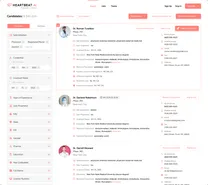
Heartbeat.ai’s platform lets you search licensed healthcare professionals across the United States, including CRNAs, and filter by location, specialty, and other criteria to build a targeted list quickly.
The platform includes CRNAs working across different practice settings — ambulatory surgical centers, critical care units, pediatric anesthesia, obstetrics, and pain management, among others. Recruiters, medical equipment vendors, and pharmaceutical companies use these contacts to reach the right prospects rather than sending generic outreach to a broad list.
Getting started is straightforward: create an account, apply your filters, and export the contacts you need. If you have questions about coverage or pricing, the Heartbeat team can walk you through it.
CRNAs in Michigan’s Healthcare Landscape
CRNAs support anesthesia delivery at major Michigan health systems, including University of Michigan Hospitals-Michigan Medicine, which reports more than 150 CRNAs practicing across its hospitals and health systems, and other large systems such as Ascension Michigan and Beaumont Health.
According to the University of Michigan Medical School, there are more than 150 CRNAs practicing at U-M Hospitals and Health Systems alone, providing anesthesia care across academic medical centers, children’s hospitals, and specialty surgical sites. Statewide, Michigan supports several accredited nurse anesthesia education programs, including offerings at the University of Michigan-Flint and Michigan State University, which continue to feed new CRNAs into the state’s workforce.
Nationally, the field faces a demographic pressure point worth noting for recruiters: workforce data cited by nursing programs suggests a meaningful share of practicing CRNAs are approaching retirement age over the coming decade, while annual graduation numbers from accredited programs haven’t kept pace with projected demand. That gap is one reason accurate, current contact information for practicing and soon-to-graduate CRNAs carries real value for hiring teams.
Why Accurate Contact Information Matters
Outdated or incomplete contact data creates real friction in a few areas:
- Recruitment timing. Anesthesia staffing shortages at a facility can escalate quickly. Reaching a qualified CRNA candidate directly — rather than waiting on a job posting to surface a response — shortens the hiring cycle.
- Research and clinical collaboration. Studies or quality initiatives involving anesthesia practice sometimes need direct access to practicing CRNAs, not just facility switchboards.
- Professional networking. CRNAs often want to connect with peers to discuss case management or continuing education, and stale directories make that harder than it should be.
None of this works well if the contact record on file is a personal email that was closed two jobs ago or a phone number tied to a previous employer.
Why Finding CRNAs in Michigan Is Harder Than It Looks
A few factors make CRNA recruiting in Michigan more difficult than a simple directory search suggests:
- Workforce supply constraints. Michigan has five accredited nurse anesthesia programs, which limits the annual pipeline of new graduates relative to demand at hospitals statewide.
- Geographic spread. Michigan includes both dense metro areas (Detroit, Ann Arbor, Grand Rapids) and large rural stretches where anesthesia coverage is thinner and CRNAs may be harder to locate through standard channels.
- Competing offers from other states. CRNAs are a portable credential nationally, and facilities in other states actively recruit against Michigan employers with competitive packages.
- Directory decay. Public directories and even hospital staff pages go stale quickly as CRNAs change employers, making manual list-building unreliable within months.
Database tools that verify contact information on a rolling basis, rather than relying on a static directory snapshot, help offset some of this — particularly for recruiters trying to fill roles in rural or underserved parts of the state.
What’s Included in a Heartbeat CRNA Contact List
A Heartbeat contact record for a CRNA in Michigan is built to give recruiters and outreach teams what they need to make first contact without extra research:
- CRNA name
- Location
- Contact numbers (work, cell, mobile)
- Email address
- Specialization
- Years of experience
- Sole proprietor status
- Licensed states
- License number
- Fax
- Address
CRNA Contact Lists by State
Explore CRNA contact lists for other states:
| Certified Registered Nurse Anesthetists by State |
|---|
| Certified registered nurse anesthetists in Alabama |
| Certified registered nurse anesthetists in Alaska |
| Certified registered nurse anesthetists in Arizona |
| Certified registered nurse anesthetists in Arkansas |
| Certified registered nurse anesthetists in California |
| Certified registered nurse anesthetists in Colorado |
| Certified registered nurse anesthetists in Connecticut |
| Certified registered nurse anesthetists in Delaware |
| Certified registered nurse anesthetists in Florida |
| Certified registered nurse anesthetists in Georgia |
| Certified registered nurse anesthetists in Hawaii |
| Certified registered nurse anesthetists in Idaho |
| Certified registered nurse anesthetists in Illinois |
| Certified registered nurse anesthetists in Indiana |
| Certified registered nurse anesthetists in Iowa |
| Certified registered nurse anesthetists in Kansas |
| Certified registered nurse anesthetists in Kentucky |
| Certified registered nurse anesthetists in Louisiana |
| Certified registered nurse anesthetists in Maine |
| Certified registered nurse anesthetists in Maryland |
| Certified registered nurse anesthetists in Massachusetts |
| Certified registered nurse anesthetists in Michigan |
| Certified registered nurse anesthetists in Minnesota |
| Certified registered nurse anesthetists in Mississippi |
| Certified registered nurse anesthetists in Missouri |
| Certified registered nurse anesthetists in Montana |
| Certified registered nurse anesthetists in Nebraska |
| Certified registered nurse anesthetists in Nevada |
| Certified registered nurse anesthetists in New hampshire |
| Certified registered nurse anesthetists in New jersey |
| Certified registered nurse anesthetists in New mexico |
| Certified registered nurse anesthetists in New york |
| Certified registered nurse anesthetists in North carolina |
| Certified registered nurse anesthetists in North dakota |
| Certified registered nurse anesthetists in Ohio |
| Certified registered nurse anesthetists in Oklahoma |
| Certified registered nurse anesthetists in Oregon |
| Certified registered nurse anesthetists in Pennsylvania |
| Certified registered nurse anesthetists in Rhode island |
| Certified registered nurse anesthetists in South carolina |
| Certified registered nurse anesthetists in South dakota |
| Certified registered nurse anesthetists in Tennessee |
| Certified registered nurse anesthetists in Texas |
| Certified registered nurse anesthetists in Utah |
| Certified registered nurse anesthetists in Vermont |
| Certified registered nurse anesthetists in Virginia |
| Certified registered nurse anesthetists in Washington |
| Certified registered nurse anesthetists in West virginia |
| Certified registered nurse anesthetists in Wisconsin |
| Certified registered nurse anesthetists in Wyoming |
How Heartbeat Compiles CRNA Contact Data
Heartbeat.ai aggregates healthcare provider data from a wide network of official, private, and public sources, then verifies and refreshes records on an ongoing basis rather than treating a directory as a one-time snapshot. That matters for a specialty like CRNAs, where job changes and credential updates happen regularly and a static list goes out of date fast.
The goal is straightforward: give recruiters and outreach teams a way to reach CRNAs directly — by cell phone or personal email — instead of routing everything through a hospital’s general contact form and hoping it reaches the right desk.
Who Uses a CRNA Contact List?
Contact lists like this get used by a range of teams, not just internal HR departments:
- Healthcare staffing agencies and internal recruiters filling anesthesia roles
- Medical device and equipment vendors selling into anesthesiology departments
- Pharmaceutical companies with anesthesia-related product lines
- Market research firms conducting surveys within the specialty
- Professional associations coordinating outreach or continuing education programs
How to Use a CRNA Contact List Without Wasting It
A verified contact list is only as useful as the outreach built around it. A few practical guidelines:
- Lead with something specific. A message referencing the role, shift structure, or facility type performs better than a generic “we have an opening” note.
- Respect their schedule. CRNAs often work rotating or extended shifts. Messages sent outside reasonable hours, or that assume immediate response, tend to get ignored.
- Keep it short. Busy clinicians skim. State the opportunity, the ask, and the next step in a few lines.
- Follow compliance basics. Any outreach campaign using personal contact information should follow applicable communication and privacy rules for the channel used (email, SMS, or phone).
- Don’t treat one list as permanent. Refresh or re-verify contact data periodically rather than reusing the same export for a year or more.
Bottom Line
Michigan’s CRNA workforce supports a healthcare system anchored by major academic and community hospital systems, and the specialty faces the same national supply pressures — an aging workforce and a graduation rate that hasn’t fully kept pace with demand — that make timely outreach worth getting right. A verified, regularly updated contact list reduces the guesswork in recruiting or connecting with CRNAs directly, rather than relying on outdated directories or general hospital contact channels.
Frequently Asked Questions
What is a certified registered nurse anesthetist (CRNA)?
A CRNA is an advanced practice registered nurse who specializes in administering anesthesia and providing care throughout the surgical process.
How do I become a CRNA in Michigan?
The typical path includes earning a Bachelor of Science in Nursing, becoming a licensed RN, gaining acute care experience, completing an accredited nurse anesthesia graduate program, and passing the national certification exam. Michigan currently has five accredited nurse anesthesia programs.
What does a CRNA do in Michigan?
CRNAs assess patients, develop anesthesia plans, administer anesthesia medications, monitor patients during procedures, and manage complications, typically working as part of a collaborative anesthesia care team alongside anesthesiologists.
Is there strong demand for CRNAs in Michigan?
Workforce data suggests demand for anesthesia providers nationally is growing as the population ages, while a meaningful share of the current CRNA workforce is approaching retirement age, which supports continued demand for qualified CRNAs in Michigan and elsewhere.