Last updated: August 30, 2026
Certified Registered Nurse Anesthetists (CRNAs) administer and manage anesthesia care across Pennsylvania’s hospitals, surgical centers, and outpatient clinics. For recruiters, healthcare marketers, and organizations building professional networks, the practical challenge isn’t knowing that CRNAs exist — it’s finding accurate, current contact details for them. Stale phone numbers and bounced emails waste outreach budgets and slow down hiring timelines.
This page explains why CRNAs matter to Pennsylvania’s healthcare workforce, why contact accuracy is a real operational problem, and how a maintained contact database can support recruitment and networking efforts without the guesswork.
What’s on this page:
Get a Certified Registered Nurse Anesthetist Email List from Heartbeat
Heartbeat.ai maintains contact data on licensed healthcare professionals across the United States, including CRNAs. You can filter profiles by specialty, location, and other criteria to build a targeted outreach list.
CRNAs work across a range of subspecialties, including pediatric, obstetric, cardiac, neurosurgical, and gastroenterology anesthesia care. Having contact access to professionals across these subfields is useful for outreach, market research, and recruitment campaigns aimed at specific practice areas.
If you’re building a CRNA outreach list for Pennsylvania, sign up with Heartbeat.ai to get started.
CRNAs in Pennsylvania’s Healthcare System
Pennsylvania has a substantial CRNA workforce supporting anesthesia delivery across the state’s hospital systems. Major health systems, including the University of Pennsylvania Health System and UPMC, rely on CRNAs to help deliver anesthesiology services, pain management support, and emergency anesthesia coverage.
The scale of these systems means CRNA staffing decisions have a direct effect on surgical capacity and patient access to care, which is part of why accurate workforce data and contact information matter to hospital administrators, staffing agencies, and recruiters operating in the state.
Why Accurate Contact Information Matters
Outdated contact details create friction at every stage of professional communication.
For recruiters, an incorrect phone number or inactive email address can mean a missed opportunity to reach a qualified candidate before a competitor does. Healthcare hiring often moves quickly, and slow or failed outreach has a real cost in time and lost placements.
For networking and professional collaboration, accurate contact data allows CRNAs and the organizations working with them to stay connected for continuing education, peer consultation, and career opportunities. When contact information is unreliable, those connections break down quietly — no bounce notification, just silence.
Why Finding CRNAs in Pennsylvania Can Be Difficult
Several factors make CRNA recruitment and networking harder than it should be:
- Competition for qualified candidates — Health systems across the state compete for a limited pool of certified anesthesia providers.
- Rural-urban distribution gaps — CRNAs tend to cluster around major metro health systems, leaving rural facilities with thinner coverage.
- Licensing and credentialing steps — Verifying licensure and credentials adds time to any hiring or verification workflow.
- Workforce turnover and retirements — Contact and employment data can go stale quickly as providers change roles or retire.
A few practical approaches help offset these challenges:
- Use specialty-specific contact databases rather than general directories to narrow searches by subspecialty and location.
- Cross-check contact records periodically, since phone numbers and email addresses in healthcare change more often than practice affiliations.
- Combine direct outreach with professional association channels, such as state nursing boards, for candidates who are harder to reach through cold contact alone.
What a Heartbeat CRNA Contact List Includes
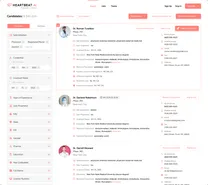
Heartbeat’s database is built to help offset the sourcing challenges above by consolidating CRNA contact records in one searchable place. A typical record includes:
- Certified Registered Nurse Anesthetist Name
- Location
- Contact Numbers (Work, Cell, Mobile)
- Email Address
- Specialization
- Years of Experience
- Sole Proprietor Status
- Licensed States
- License Number
- Fax
- Address
CRNA Contact Lists by State
Explore our comprehensive email list of Certified Registered Nurse Anesthetists, categorized by different U.S. states.
| Certified registered nurse anesthetists by states |
|---|
| Certified registered nurse anesthetists in Alabama |
| Certified registered nurse anesthetists in Alaska |
| Certified registered nurse anesthetists in Arizona |
| Certified registered nurse anesthetists in Arkansas |
| Certified registered nurse anesthetists in California |
| Certified registered nurse anesthetists in Colorado |
| Certified registered nurse anesthetists in Connecticut |
| Certified registered nurse anesthetists in Delaware |
| Certified registered nurse anesthetists in Florida |
| Certified registered nurse anesthetists in Georgia |
| Certified registered nurse anesthetists in Hawaii |
| Certified registered nurse anesthetists in Idaho |
| Certified registered nurse anesthetists in Illinois |
| Certified registered nurse anesthetists in Indiana |
| Certified registered nurse anesthetists in Iowa |
| Certified registered nurse anesthetists in Kansas |
| Certified registered nurse anesthetists in Kentucky |
| Certified registered nurse anesthetists in Louisiana |
| Certified registered nurse anesthetists in Maine |
| Certified registered nurse anesthetists in Maryland |
| Certified registered nurse anesthetists in Massachusetts |
| Certified registered nurse anesthetists in Michigan |
| Certified registered nurse anesthetists in Minnesota |
| Certified registered nurse anesthetists in Mississippi |
| Certified registered nurse anesthetists in Missouri |
| Certified registered nurse anesthetists in Montana |
| Certified registered nurse anesthetists in Nebraska |
| Certified registered nurse anesthetists in Nevada |
| Certified registered nurse anesthetists in New hampshire |
| Certified registered nurse anesthetists in New jersey |
| Certified registered nurse anesthetists in New mexico |
| Certified registered nurse anesthetists in New york |
| Certified registered nurse anesthetists in North carolina |
| Certified registered nurse anesthetists in North dakota |
| Certified registered nurse anesthetists in Ohio |
| Certified registered nurse anesthetists in Oklahoma |
| Certified registered nurse anesthetists in Oregon |
| Certified registered nurse anesthetists in Pennsylvania |
| Certified registered nurse anesthetists in Rhode island |
| Certified registered nurse anesthetists in South carolina |
| Certified registered nurse anesthetists in South dakota |
| Certified registered nurse anesthetists in Tennessee |
| Certified registered nurse anesthetists in Texas |
| Certified registered nurse anesthetists in Utah |
| Certified registered nurse anesthetists in Vermont |
| Certified registered nurse anesthetists in Virginia |
| Certified registered nurse anesthetists in Washington |
| Certified registered nurse anesthetists in West virginia |
| Certified registered nurse anesthetists in Wisconsin |
| Certified registered nurse anesthetists in Wyoming |
How Heartbeat Compiles CRNA Contact Data
Heartbeat.ai draws on a range of official, private, and public sources to build and maintain contact records for healthcare providers nationwide, including CRNAs practicing in Pennsylvania.
Contact data in healthcare changes frequently — providers switch employers, phone numbers get reassigned, and email domains change when practices merge. Because of that, no contact list is ever permanently complete; treat any list, including this one, as a working dataset that benefits from periodic verification rather than a static, one-time download.
Who Uses a CRNA Contact List?
Recruiters, healthcare staffing agencies, marketing teams, non-profit organizations, researchers, and event organizers all use contact lists like this one for outreach, hiring, and professional communication. Individuals may also use contact data for direct professional networking.
Any use of contact data for marketing or recruitment should follow applicable privacy and anti-spam regulations, including obtaining consent where required and providing a clear opt-out option.
Using a CRNA Contact List Effectively
A few practices make outreach more productive and more respectful of recipients’ time:
- Lead with a clear, specific purpose in the first line of any email or call — vague outreach gets ignored.
- Segment by specialty and setting — a message aimed at a pediatric CRNA in an academic hospital should read differently than one aimed at an independent contractor.
- Keep messages short. Busy clinicians respond better to concise, professional communication than long pitches.
- Always include an opt-out and honor it promptly.
- Verify before you send at scale. A quick spot-check of a sample of records can catch outdated entries before a large campaign goes out.
Limitations Worth Knowing
No third-party contact database, including this one, can guarantee that every phone number or email address is current at the moment you use it. Licensing status, credentials, and specialty listings should be independently verified through official state boards or the employing institution before making hiring or clinical staffing decisions based on this data.
Frequently Asked Questions
How do I become a certified registered nurse anesthetist in Pennsylvania?
Becoming a CRNA typically requires completing a graduate program in nurse anesthesia, passing the national certification exam, and obtaining a state nursing license.
What are the requirements to maintain CRNA certification in Pennsylvania?
CRNAs generally need to meet continuing education requirements and periodically recertify through the national certifying body for the profession.
Which organizations oversee CRNAs in Pennsylvania?
CRNAs practicing in Pennsylvania are regulated by the Pennsylvania State Board of Nursing, and many follow practice standards set by the American Association of Nurse Anesthesiology.