Last updated: August 30, 2026
Pennsylvania employs a large number of Advanced Practice Nurses (APNs) across hospitals, clinics, and independent practices, and reaching the right ones for recruitment, sales, or professional outreach means starting with contact data that’s actually current. Titles change, practices merge, and phone numbers and email addresses go stale faster than most lists get updated. This guide covers what APNs do in Pennsylvania, the regulatory environment that shapes how they practice, and how to build outreach lists that hold up over time.
What’s on this page:
What Counts as an Advanced Practice Nurse in Pennsylvania
Advanced Practice Nurses is an umbrella term covering Nurse Practitioners (NPs), Clinical Nurse Specialists (CNSs), Certified Registered Nurse Anesthetists (CRNAs), and Certified Nurse Midwives (CNMs). Within the NP category, Pennsylvania’s workforce includes Acute Care, Adult, Emergency, Family, Geriatric, Pediatric, and Psychiatric Mental Health Nurse Practitioners, among other specialties. Each of these roles carries a distinct scope of practice, licensure pathway, and, in some cases, different prescriptive authority rules — which matters if you’re segmenting a contact list by specialty rather than treating APNs as one uniform group.
Pennsylvania’s Scope of Practice: What’s Changed and What Hasn’t
Pennsylvania is what’s known as a “reduced practice state,” meaning that Certified Registered Nurse Practitioners must have a written collaborative agreement with a licensed physician to work. This is a meaningful distinction from full practice authority states, where NPs can diagnose, treat, and prescribe independently once licensed.
Today, a nurse practitioner in Pennsylvania cannot practice without a signed collaborative agreement with two doctors, and depending on the setting, a nurse practitioner may be asked to pay a monthly or annual fee to a physician to act as a collaborator. That arrangement has practical consequences beyond paperwork. If one of the two collaborating physicians retires or leaves, the nurse practitioner must stop seeing patients until another collaborator is identified and the paperwork is completed, adding new costs to the nurse practitioner.
Legislative efforts to change this have been ongoing for years. State Sen. Camera Bartolotta has introduced a bill to expand NP practice every year since 2018, keeping the same bill number across two administrations, and it has yet to make it to a governor’s desk. The Senate has already passed an expansion bill, SB25, voting 38-12 in favor of full practice authority for NPs in a recent session, though it has not become law as of this writing. Most of the commonwealth’s neighbors, with the exception of Ohio, allow the providers to operate independent of a physician.
For anyone building outreach lists or recruitment pipelines, this regulatory backdrop matters practically: NPs in Pennsylvania often have an active, named collaborating physician relationship, and staffing changes among physicians can directly affect an NP’s ability to practice — which in turn affects hiring urgency and turnover patterns you might see in the field.
Why Accurate Contact Data Matters for This Group Specifically
APNs are licensed to diagnose conditions, order and interpret tests, and prescribe medications within their scope — responsibilities that put them squarely in decision-making roles for recruiters, medical device and pharma reps, and healthcare networking professionals. A few reasons accurate contact data carries more weight for this group than for administrative staff:
- Collaborative agreement turnover creates hiring windows. When a collaborating physician relationship ends, an NP may need to find a new practice setting quickly, which can create short recruitment windows that stale contact lists miss entirely.
- Specialty segmentation reduces wasted outreach. A Psychiatric Mental Health NP and an Emergency NP have almost nothing in common professionally. Lists that don’t separate by specialty tend to generate lower response rates and more opt-outs.
- Verified direct lines beat general facility numbers. Hospital switchboards and shared department emails rarely reach an individual APN directly; personal or work-verified mobile numbers and emails get a response faster.
Common Challenges in Finding and Verifying APN Contacts
Recruiters and marketers working the Pennsylvania market run into a few recurring obstacles:
- Licensure verification takes time. Confirming that a candidate’s license, specialty, and collaborative agreement status are current usually means cross-checking against the Pennsylvania Department of State’s professional licensing system, which is authoritative but not built for bulk outreach.
- Scope-of-practice rules narrow the candidate pool. Because Pennsylvania requires a physician collaborator, some qualified NPs from full-practice-authority states may be less interested in relocating, which shrinks the pipeline compared to neighboring states.
- Workforce turnover and retirements. An aging nurse population combined with steady demand growth means contact lists compiled even a year ago may already have gaps.
- Cost of living and compensation expectations. Pennsylvania’s cost of living in certain metro areas can affect whether out-of-state candidates are willing to relocate, which is worth factoring into recruitment messaging.
Technology helps close some of these gaps. Licensing databases confirm credentials, specialty-filtered contact platforms cut down on manual searching, and video screening removes some of the friction around out-of-state candidates.
Get Verified Advanced Practice Nurse Contacts in Pennsylvania from Heartbeat
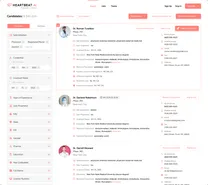
Heartbeat.ai maintains a searchable database of licensed healthcare professionals, including Advanced Practice Nurses across specialties such as Acute Care, Adult, Emergency, Family, Geriatric, and Pediatric Nurse Practitioners, plus Psychiatric Mental Health NPs and Certified Registered Nurse Anesthetists. You can filter by specialty, location, and license status to build a list matched to your specific outreach goal rather than working from a generic directory.
What’s Included in a Heartbeat APN Contact Record
- Advanced Practice Nurse name
- Location
- Contact numbers (work, cell, mobile)
- Email address
- Specialization
- Years of experience
- Sole proprietor status
- Licensed states
- License number
- Fax
- Address
Available Advanced Practice Nurses in Our Contact List by State
Browse Advanced Practice Nurse contact lists organized by state.
| Advanced practice nurses by states |
|---|
| Advanced practice nurses in Alabama |
| Advanced practice nurses in Alaska |
| Advanced practice nurses in Arizona |
| Advanced practice nurses in Arkansas |
| Advanced practice nurses in California |
| Advanced practice nurses in Colorado |
| Advanced practice nurses in Connecticut |
| Advanced practice nurses in Delaware |
| Advanced practice nurses in Florida |
| Advanced practice nurses in Georgia |
| Advanced practice nurses in Hawaii |
| Advanced practice nurses in Idaho |
| Advanced practice nurses in Illinois |
| Advanced practice nurses in Indiana |
| Advanced practice nurses in Iowa |
| Advanced practice nurses in Kansas |
| Advanced practice nurses in Kentucky |
| Advanced practice nurses in Louisiana |
| Advanced practice nurses in Maine |
| Advanced practice nurses in Maryland |
| Advanced practice nurses in Massachusetts |
| Advanced practice nurses in Michigan |
| Advanced practice nurses in Minnesota |
| Advanced practice nurses in Mississippi |
| Advanced practice nurses in Missouri |
| Advanced practice nurses in Montana |
| Advanced practice nurses in Nebraska |
| Advanced practice nurses in Nevada |
| Advanced practice nurses in New hampshire |
| Advanced practice nurses in New jersey |
| Advanced practice nurses in New mexico |
| Advanced practice nurses in New york |
| Advanced practice nurses in North carolina |
| Advanced practice nurses in North dakota |
| Advanced practice nurses in Ohio |
| Advanced practice nurses in Oklahoma |
| Advanced practice nurses in Oregon |
| Advanced practice nurses in Pennsylvania |
| Advanced practice nurses in Rhode island |
| Advanced practice nurses in South carolina |
| Advanced practice nurses in South dakota |
| Advanced practice nurses in Tennessee |
| Advanced practice nurses in Texas |
| Advanced practice nurses in Utah |
| Advanced practice nurses in Vermont |
| Advanced practice nurses in Virginia |
| Advanced practice nurses in Washington |
| Advanced practice nurses in West virginia |
| Advanced practice nurses in Wisconsin |
| Advanced practice nurses in Wyoming |
How Heartbeat Compiles and Verifies This Data
Heartbeat.ai pulls healthcare provider contact information from a network of public and private sources, then applies predictive modeling to score how likely a given phone number or email is to be accurate before it reaches you. Rather than treating every result as equally reliable, the platform surfaces the highest-confidence matches first, which cuts down on wasted outreach to disconnected numbers or dead inboxes.
For a state like Pennsylvania, where collaborative agreements tie an NP’s practice status to a specific physician relationship, keeping specialty and licensure fields current is especially useful — it lets you tell the difference between an NP who’s newly available and one who’s settled into a long-term practice arrangement.
Who Uses APN Contact Lists
APN contact data gets used across several distinct workflows, and the right approach differs by use case:
- Healthcare recruiters sourcing candidates for hospital systems, urgent care networks, or specialty practices.
- Medical device and pharmaceutical sales teams identifying prescribers and specialists relevant to a specific product line.
- Researchers and associations conducting surveys or building membership outreach.
- Healthcare marketers promoting continuing education, conferences, or professional services.
Whatever the use case, outreach to licensed healthcare professionals should stay within professional communication norms and applicable privacy regulations, including HIPAA where patient information could be implicated.
A Quick Checklist Before You Launch Outreach
- Confirm the specialty filter matches your actual target audience — don’t send Emergency NP messaging to Pediatric NPs.
- Check that license status and state are current, particularly for candidates who may be mid-transition between collaborating physicians.
- Use direct verified contact fields (cell, personal email) over shared facility lines when speed matters.
- Keep messaging concise and specific to the recipient’s practice area — generic pitches tend to underperform with clinical audiences.
- Review compliance requirements relevant to your outreach type before sending.
The Bottom Line
Pennsylvania’s collaborative agreement requirement makes it a somewhat different market than full-practice-authority states — NP availability and career moves are shaped by physician relationships in a way that doesn’t apply everywhere. Legislative efforts to change that have been active for years but haven’t yet resulted in a new law. Whether that’s a live consideration for your outreach or just useful background, working from a contact list that’s filtered by specialty and regularly verified will save more time than any other single step in the process.
Frequently Asked Questions
What is the scope of practice for advanced practice nurses in Pennsylvania?
Advanced practice nurses in Pennsylvania can diagnose conditions, order and interpret diagnostic tests, and prescribe medications within their licensed scope. Nurse practitioners specifically must maintain a written collaborative agreement with a licensed physician to practice and to hold prescriptive authority.
What are the educational requirements to become an advanced practice nurse in Pennsylvania?
Advanced practice nursing roles typically require a graduate degree — a master’s or doctoral degree in nursing — with a specialization matching the intended role, such as nurse practitioner, clinical nurse specialist, nurse anesthetist, or nurse midwife, along with national certification in that specialty.
Are advanced practice nurses in Pennsylvania required to have a collaborative agreement with a physician?
Yes. Pennsylvania is currently a reduced practice state, meaning nurse practitioners must have a written collaborative agreement with a licensed physician to practice and prescribe. Legislation to remove this requirement has been introduced repeatedly in recent years but has not been enacted as of this writing.