Last updated: August 31, 2026
Advanced Practice Registered Nurses (APRNs) form a core part of South Carolina’s healthcare workforce, filling primary care and specialty gaps that physicians alone can’t cover, particularly in rural counties. For anyone recruiting these professionals or marketing products and services to them, the challenge usually isn’t finding a list of names — it’s finding contact details that are current enough to actually reach someone.
This guide covers what APRNs do in South Carolina, why accurate contact data matters for recruiting and outreach, and how Heartbeat’s contact database can support that work.
What’s on this page:
Get an Email List of Advanced Practice Nurses in South Carolina from Heartbeat
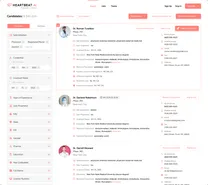
Heartbeat.ai’s platform lets you search licensed healthcare professionals across the United States and filter down to the specific APRN profiles you need, then pull verified contact details in seconds.
Heartbeat’s database covers the four recognized categories of APRN:
- Nurse Practitioners (NPs)
- Certified Nurse-Midwives (CNMs)
- Clinical Nurse Specialists (CNSs)
- Certified Registered Nurse Anesthetists (CRNAs)
Whether you’re recruiting, building a referral network, or reaching out for a product or research purpose, you can filter by specialty, location, and experience level to build a list that fits the task rather than working through a generic directory.
APRNs in South Carolina’s Healthcare Landscape
South Carolina law recognizes four categories of Advanced Practice Registered Nurse: nurse practitioner, certified nurse-midwife, clinical nurse specialist, and certified registered nurse anesthetist. To hold the credential, a nurse must complete a graduate-level program with supervised clinical practice in their specialty area and hold national certification in that area.
Health systems such as the Medical University of South Carolina, Prisma Health, and Roper St. Francis rely on APRNs across primary care and specialty units. Their advanced training gives them an expanded scope of practice compared to standard RNs, which matters most in rural parts of the state where physician access is thinner. That makes APRN staffing decisions particularly consequential outside the major metro areas.
Why Accurate Contact Information Matters
Bad contact data costs time in ways that compound. A recruiter working from an outdated list burns hours chasing dead emails and disconnected numbers before ever reaching a candidate. A few practical consequences worth naming:
- Recruiting delays: Incorrect contact details mean interview requests and offers sit unseen, and open positions stay open longer than they need to.
- Missed networking opportunities: Referral relationships and professional collaboration depend on being reachable when it counts.
- Wasted outreach spend: Marketing or research campaigns built on stale lists generate bounces and low response rates, skewing any read on what’s actually working.
None of this is unique to South Carolina, but it’s more acute in a state with an uneven distribution of healthcare professionals between urban and rural areas.
Why Finding APRNs in South Carolina Can Be Difficult
A few structural factors make sourcing APRN contacts harder than it should be:
- Uneven geographic distribution: Rural counties often have far fewer APRNs relative to population than metro areas do.
- Workforce aging: As experienced nurses retire, demand for replacement hires keeps rising faster than the pipeline fills.
- Fragmented public records: Licensing boards and directories don’t always include working phone numbers or personal emails, and information goes stale quickly as professionals change jobs.
A well-maintained, searchable database addresses this by consolidating verified contact information in one place, filterable by specialty, location, and experience — which cuts down the manual research time recruiters and marketers would otherwise spend chasing outdated sources.
What You Get With Heartbeat’s APRN Contact Lists
Heartbeat’s database is built for healthcare-specific outreach, with fields designed to match how recruiters and marketers actually segment their targets. A typical profile includes:
- Advanced Practice Nurse Name
- Location
- Contact Numbers (Work, Cell, Mobile)
- Email Address
- Specialization
- Years of Experience
- Sole Proprietor Status
- Licensed States
- License Number
- Fax
- Address
Available Advanced Practice Nurses by State
Explore contact lists for advanced practice nurses across other states:
| Advanced practice nurses by states |
|---|
| Advanced practice nurses in Alabama |
| Advanced practice nurses in Alaska |
| Advanced practice nurses in Arizona |
| Advanced practice nurses in Arkansas |
| Advanced practice nurses in California |
| Advanced practice nurses in Colorado |
| Advanced practice nurses in Connecticut |
| Advanced practice nurses in Delaware |
| Advanced practice nurses in Florida |
| Advanced practice nurses in Georgia |
| Advanced practice nurses in Hawaii |
| Advanced practice nurses in Idaho |
| Advanced practice nurses in Illinois |
| Advanced practice nurses in Indiana |
| Advanced practice nurses in Iowa |
| Advanced practice nurses in Kansas |
| Advanced practice nurses in Kentucky |
| Advanced practice nurses in Louisiana |
| Advanced practice nurses in Maine |
| Advanced practice nurses in Maryland |
| Advanced practice nurses in Massachusetts |
| Advanced practice nurses in Michigan |
| Advanced practice nurses in Minnesota |
| Advanced practice nurses in Mississippi |
| Advanced practice nurses in Missouri |
| Advanced practice nurses in Montana |
| Advanced practice nurses in Nebraska |
| Advanced practice nurses in Nevada |
| Advanced practice nurses in New hampshire |
| Advanced practice nurses in New jersey |
| Advanced practice nurses in New mexico |
| Advanced practice nurses in New york |
| Advanced practice nurses in North carolina |
| Advanced practice nurses in North dakota |
| Advanced practice nurses in Ohio |
| Advanced practice nurses in Oklahoma |
| Advanced practice nurses in Oregon |
| Advanced practice nurses in Pennsylvania |
| Advanced practice nurses in Rhode island |
| Advanced practice nurses in South carolina |
| Advanced practice nurses in South dakota |
| Advanced practice nurses in Tennessee |
| Advanced practice nurses in Texas |
| Advanced practice nurses in Utah |
| Advanced practice nurses in Vermont |
| Advanced practice nurses in Virginia |
| Advanced practice nurses in Washington |
| Advanced practice nurses in West virginia |
| Advanced practice nurses in Wisconsin |
| Advanced practice nurses in Wyoming |
How Heartbeat Compiles Its APRN Contact Data
Heartbeat.ai aggregates provider data from a wide range of public and private sources across the U.S. healthcare system, matching personal emails and cell phone numbers to individual providers to speed up outreach and hiring. Coverage includes 11 million U.S. healthcare professionals, with 8.8 million direct cell phone numbers, 9.3 million personal email addresses, and 6 million direct dials, and Heartbeat cites predictive modeling accuracy of roughly 84% for cell numbers and 92% for personal emails on the first result returned.
Who Uses an APRN Email List?
The use cases vary more than you’d think:
- Recruiters and staffing agencies filling open APRN roles
- Marketing teams promoting clinical products, devices, or services
- Sales teams building healthcare-focused outreach campaigns
- Researchers or journalists distributing surveys or information requests
- Independent consultants and non-profits coordinating with clinical partners
Using an APRN Contact List Effectively
A list is only as useful as the outreach built around it. A few practical habits make the difference:
- Segment before you send. Group contacts by specialty or region so your message is relevant to the recipient, not generic.
- Keep messages short. APRNs are working clinicians with limited time between shifts — get to the point.
- Follow up, but don’t overdo it. One well-timed follow-up beats a barrage of reminders.
- Verify before you rely. Cross-check details for anything time-sensitive, like an interview offer or event invite.
- Respect privacy expectations. Personal contact information should be used for the stated professional purpose, not resold or repurposed.
Conclusion
South Carolina’s healthcare system depends on a steady supply of well-placed APRNs, particularly in rural areas where physician coverage is thin. Finding and reaching the right professionals hinges on having contact information that’s actually current. Heartbeat.ai’s database is built to support that — covering the major APRN categories, filterable by state and specialty, and updated to reduce the time recruiters and marketers spend chasing bad data.
Frequently Asked Questions
What is the role of advanced practice nurses in South Carolina?
Advanced practice nurses in South Carolina provide primary and specialty healthcare services, including diagnosing, treating, and managing patients’ health conditions, often expanding access in areas with fewer physicians.
What are the requirements to become an advanced practice nurse in South Carolina?
An APRN in South Carolina must hold a registered nursing license, complete a graduate-level advanced practice program with supervised clinical training, and hold national certification in their specialty.
What are the different types of advanced practice nurses in South Carolina?
South Carolina recognizes four APRN categories: nurse practitioners, certified nurse-midwives, clinical nurse specialists, and certified registered nurse anesthetists.