Last updated: August 28, 2026

The U.S. Bureau of Labor Statistics counted roughly 17,400 radiation therapists working nationwide in 2025, most of them in hospitals and outpatient cancer centers. That’s a small, tightly credentialed population, which makes it both valuable to reach and genuinely hard to find accurate contact details for.
Recruiters, medical device vendors, continuing-education providers, and researchers all run into the same wall: radiation therapists don’t publish personal contact information the way some other professions do, and generic directories go stale fast. A working radiation therapists email list needs to be current, verified, and built with consent in mind.
This guide covers what a usable dataset should include, how Heartbeat AI compiles and maintains its records, and how to evaluate any provider before you buy.
What’s on this page:
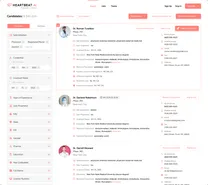
What’s Included in Heartbeat AI’s Radiation Therapists Email List

A useful mailing list does more than supply an email address. It gives you enough context to know whether the contact is even worth reaching out to.
- Specialized contacts: Records are focused specifically on radiation therapists practicing in the US, rather than a broad radiology or oncology bucket.
- Verified details: Email addresses, phone numbers, and professional affiliations are checked against current sources before inclusion.
- Career context: Location, specialty, and years of experience help you prioritize outreach instead of contacting everyone the same way.
Data Fields Typically Included
- Name
- Location and address
- Work and mobile phone numbers
- Email address
- Specialization
- Years of experience
- Sole proprietor status
- Licensed states and license number
- Fax number
 Accuracy & coverage of personal contact info were unrivaled by other platforms… this gives any healthcare recruiter a competitive advantage when engaging hard-to-reach healthcare providers.
Senior Growth Strategist





Why an Accurate Mailing List Matters
A stale or scraped list wastes budget and can hurt your sender reputation. A well-maintained one does the opposite:
Sharper targeting
Segmenting by specialty or location lets you send messages that are actually relevant to the recipient, instead of one generic blast.
Lower cost per response
When contacts are verified rather than guessed at, fewer emails bounce and fewer dollars are wasted chasing dead addresses.
Real networking value
Access to a working directory opens doors to partnerships and collaboration within the radiation therapy community, not just one-off outreach.
Better research samples
Researchers and surveyors can use a verified contact base as a more reliable sampling frame for studies tied to radiation therapy practice.
More relevant messaging
Detailed fields like experience level or specialty let you tailor the message itself, not just the subject line.
Radiation Therapists by Category
The directory spans several related roles within radiation oncology support.
| Radiation Therapists by Categories |
| Radiation Oncology Therapists |
| Dosimetrists |
| Medical Dosimetrists |
| Radiation Therapy Technologists |
| Radiation Therapy Nurses |
| Simulation Therapists |
Radiation Therapists by State
Coverage spans all 50 states, with select regions carrying higher concentrations of practicing radiation therapists.
How the Data Is Compiled

Building a list that stays accurate over time takes more than a one-time scrape. Here’s the general workflow behind it:
Sourcing from multiple channels
Data is pulled from reputable databases, industry publications, and professional networks, rather than a single source that could go stale.
Structured record capture
Details from customer records and forms, including names, emails, addresses, and phone numbers, get organized into a consistent format.
Opt-in and sign-up data
Information from online sign-ups is folded in, capturing professionals who’ve already expressed interest in relevant services or products.
Partner collaboration
Working with sales and marketing partners helps identify additional leads and cross-check details already on file.
Verification before inclusion
Records go through an organized check before being added, confirming authenticity rather than assuming accuracy.
Ongoing cleaning
Outdated or irrelevant entries get removed on a recurring basis so the list doesn’t quietly degrade.
Continuous monitoring
Updates and re-verification happen on an ongoing basis rather than only at the point of initial collection.
Evaluating Heartbeat AI’s Radiation Therapists Database

Focused targeting
Records are limited to licensed radiation therapists rather than a broader radiology grouping, which keeps outreach relevant.
Multiple verified sources
Data draws from official sources, healthcare directories, and professional networks, with access extending to 11+ million healthcare providers across the broader Heartbeat AI platform.
Ongoing verification
Updates run through a network of data partners so information doesn’t sit unchanged for years at a time.
Filtering options
Filtering by specialization, location, and experience lets you narrow the list to the segment that actually matters for a given campaign.
Consent-based collection
Data is gathered with a consent-based approach intended to align with regulations such as GDPR and the CAN-SPAM Act.
Accessible formatting
Records are structured for straightforward use in marketing or research workflows without extra cleanup.
Partner-sourced insight
Collaboration with sales and marketing teams adds depth to the leads already on file.
Scheduled maintenance
Verification and periodic cleansing keep the database aligned with current industry standards rather than a fixed snapshot.
What to Check Before Buying Any Radiation Therapist Email List

Not every vendor maintains the same standards. Run through this checklist before committing budget:
- Freshness: Ask how often records are refreshed. Stale data hurts deliverability and can damage your sender reputation.
- Source reliability: Confirm the list draws from professional associations, healthcare directories, or reputable vendors rather than unverified scrapes.
- Regulatory compliance: Check that acquisition aligns with data protection and privacy laws, with explicit consent behind each record.
- Customization: Look for filtering by specialty, location, or experience so you’re not buying one-size-fits-all data.
- Verification cadence: Ask whether updates happen in real time or only on a fixed annual schedule.
Who Typically Uses This Kind of List
Radiation therapist contact data serves a fairly specific set of use cases:
Healthcare facilities
Hospitals, clinics, and cancer centers use it to recruit and hire radiation therapists for oncology departments.
Educational institutions
Colleges with radiation therapy programs use it for student outreach, internships, and research collaboration.
Job placement agencies
Healthcare-focused recruiters connect qualified radiation therapists with open roles across care settings.
Medical equipment manufacturers
Vendors reach out for product demonstrations and updates on new radiation therapy technologies.
Research organizations
Institutions studying radiation therapy connect with experienced practitioners for trials and collaborative projects.
Professional associations
Member organizations use contact data to share updates and organize events within the field.
Independent healthcare recruiters
Recruiters identify candidates and manage part of the hiring pipeline for healthcare facilities.
Industry suppliers
Suppliers of medical gear and protective equipment connect with therapists who may need their products.
Continuing education providers
Course and workshop providers reach practitioners looking to expand their credentials.
Getting More From the List Once You Have It

Owning accurate data is only half the job. How you use it determines whether it actually produces results.
Segment before you send
Break the list down by location, specialization, or experience level so each group gets a message relevant to them.
Write for the specific reader
Address recipients by name and tie the message to something concrete about their practice, not a generic pitch.
Lead with something useful
Industry updates, research findings, or educational resources tend to land better than a straight sales pitch.
Design for mobile
Many clinicians check email between patients on a phone, so a responsive layout matters more than it might elsewhere.
Watch timing and frequency
Account for time zones and avoid over-messaging. A lighter, well-timed cadence usually outperforms volume.
Limitations to Keep in Mind
No third-party list, however well maintained, is a substitute for direct verification during outreach. Contact details can change when a therapist switches employers or states, and even frequently updated databases carry some lag. Treat the list as a strong starting point for outreach, not a guarantee that every record is current the day you use it.
Conclusion
Connecting with the right radiation therapist starts with a dependable contact list, and building one in-house from scratch is rarely practical given how small and specialized this workforce is. Heartbeat AI maintains a regularly updated, consent-based directory that’s built for this kind of targeted healthcare outreach.
FAQs
What is a radiation therapist email list?
It’s a database containing contact information, such as email addresses and phone numbers, for professionals working as radiation therapists, used for recruitment, marketing, research, and networking.
How accurate and updated is the data?
Records go through verification and periodic cleansing, with updates run on an ongoing basis to keep information current and relevant.
Can I use the list for recruitment?
Yes. Healthcare facilities and job placement agencies commonly use this kind of list to reach qualified radiation therapists for open roles and hiring outreach.