What’s on this page:
Key takeaways
- The directory is described as containing reconstructive surgeons’ email addresses, phone numbers, and professional background details.
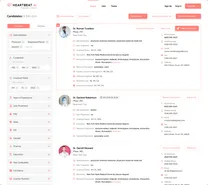
- The listed fields may include location, specialization, years of experience, state licenses, license numbers, and work contact details.
- The article recommends checking a vendor’s data sources, refresh practices, accuracy process, privacy practices, and filtering options before buying.
- Segment contacts by subspecialty, location, or experience and tailor outreach to the recipient.
- Contact records can become outdated, so verify important details and maintain bounce and suppression processes.
Last updated: August 28, 2026

Reconstructive surgery covers a wide range of subspecialties, from craniofacial repair to microsurgery, and the professionals practicing in this space are not always easy to find contact details for. Many keep personal numbers and inboxes private, and some listings you find online are simply out of date.
Heartbeat AI’s reconstructive surgeons email list is built to close that gap. It’s a database of verified contact records for practicing surgeons in this specialty, refreshed on a regular basis so outdated or inactive entries don’t sit in your pipeline.
What You Get in Heartbeat AI’s Reconstructive Surgeons Email List

The list combines email addresses, cell numbers, and professional background data for reconstructive surgeons practicing across the US. Here’s what that generally means in practice:
- Broad coverage: the list spans multiple reconstructive subspecialties rather than a narrow slice of the field.
- Targeting filters: you can narrow contacts by location, subspecialty, or other relevant criteria instead of emailing a flat, undifferentiated list.
- Professional context: profiles include background details so outreach can reference actual expertise rather than generic language.
- Periodic refresh cycles: records are checked and updated on a recurring basis to reduce bounce rates and wasted outreach.
Data Fields Typically Included
- Name
- Location
- Contact numbers (work, cell, mobile)
- Email address
- Specialization
- Years of experience
- Sole proprietor status
- Licensed states
- License number
- Fax
- Address
 Accuracy & coverage of personal contact info were unrivaled by other platforms… this gives any healthcare recruiter a competitive advantage when engaging hard-to-reach healthcare providers.
Senior Growth Strategist






Why an Accurate Mailing List Matters

A clean, current contact list changes how a campaign performs, and it also changes how much time your team spends fixing problems instead of running outreach.
Better Analytics and Reporting
Accurate contact data can make campaign metrics more useful. Bounce and response rates are easier to interpret when the underlying list is not filled with invalid or inactive addresses.
Precision Targeting
A directory built around reconstructive surgery lets you narrow outreach to the right subspecialty instead of casting a wide net across general surgeons who won’t be relevant.
Time Savings
Every hour spent chasing a bounced email or a disconnected number is an hour not spent on strategy. A maintained list reduces that overhead.
Improved Response Rates
Messages that land in a real, monitored inbox have a real chance of a reply. Messages sent into a bounced or abandoned address don’t.
Building Credibility
Reaching a surgeon through a verified, professional channel can signal that your outreach was researched rather than sent indiscriminately.
Reconstructive Surgeons by Category
The specialty includes a range of practitioners, each with different training and focus areas.
| Reconstructive Surgeons by Category |
| Plastic Surgeon |
| Orthopedic Surgeon |
| Maxillofacial Surgeon |
| Hand Surgeon |
| Microsurgeon |
| Reconstructive Urologist |
| Reconstructive Cardiothoracic Surgeon |
| Craniofacial Surgeon |
| Burn Surgeon |
| Reconstructive Ophthalmic Surgeon |
| Reconstructive Breast Surgeon |
| Reconstructive Neurosurgeon |
| Reconstructive Genitourinary Surgeon |
| Reconstructive Trauma Surgeon |
| Reconstructive Pediatric Surgeon |
| Limb Reconstruction Surgeon |
| Reconstructive Gynecologic Surgeon |
Reconstructive Surgeons Available by State
The database is presented as covering licensed reconstructive surgeons across every US state. Confirm current coverage and licensing details for the locations you need.
| Reconstructive Surgeons By States |
| Reconstructive Surgeons in Alabama |
| Reconstructive Surgeons in Alaska |
| Reconstructive Surgeons in Arizona |
| Reconstructive Surgeons in Arkansas |
| Reconstructive Surgeons in California |
| Reconstructive Surgeons in Colorado |
| Reconstructive Surgeons in Connecticut |
| Reconstructive Surgeons in Delaware |
| Reconstructive Surgeons in Florida |
| Reconstructive Surgeons in Georgia |
| Reconstructive Surgeons in Hawaii |
| Reconstructive Surgeons in Idaho |
| Reconstructive Surgeons in Illinois |
| Reconstructive Surgeons in Indiana |
| Reconstructive Surgeons in Iowa |
| Reconstructive Surgeons in Kansas |
| Reconstructive Surgeons in Kentucky |
| Reconstructive Surgeons in Louisiana |
| Reconstructive Surgeons in Maine |
| Reconstructive Surgeons in Maryland |
| Reconstructive Surgeons in Massachusetts |
| Reconstructive Surgeons in Michigan |
| Reconstructive Surgeons in Minnesota |
| Reconstructive Surgeons in Mississippi |
| Reconstructive Surgeons in Missouri |
| Reconstructive Surgeons in Montana |
| Reconstructive Surgeons in Nebraska |
| Reconstructive Surgeons in Nevada |
| Reconstructive Surgeons in New Hampshire |
| Reconstructive Surgeons in New Jersey |
| Reconstructive Surgeons in New Mexico |
| Reconstructive Surgeons in New York |
| Reconstructive Surgeons in North Carolina |
| Reconstructive Surgeons in North Dakota |
| Reconstructive Surgeons in Ohio |
| Reconstructive Surgeons in Oklahoma |
| Reconstructive Surgeons in Oregon |
| Reconstructive Surgeons in Pennsylvania |
| Reconstructive Surgeons in Rhode Island |
| Reconstructive Surgeons in South Carolina |
| Reconstructive Surgeons in South Dakota |
| Reconstructive Surgeons in Tennessee |
| Reconstructive Surgeons in Texas |
| Reconstructive Surgeons in Utah |
| Reconstructive Surgeons in Vermont |
| Reconstructive Surgeons in Virginia |
| Reconstructive Surgeons in Washington |
| Reconstructive Surgeons in West Virginia |
| Reconstructive Surgeons in Wisconsin |
| Reconstructive Surgeons in Wyoming |
How the Data Is Compiled

Identifying Relevant Sources
Data collection draws from official records, medical associations, hospital directories, academic institutions, and other reputable healthcare-focused platforms.
Collaboration with Data Partners
Heartbeat AI works with a network of data partners across the healthcare industry to widen coverage and cross-check accuracy.
Regular Data Updates
Heartbeat AI says entries are refreshed on an ongoing basis, with new records added and outdated or inactive ones removed. Ask how refreshes are conducted and how the provider verifies current practice and license status.
Privacy Compliance
Ask the provider to explain which privacy requirements apply to the data, how it is sourced, and what safeguards are in place. Do not assume a contact list is HIPAA-compliant without supporting details.
Specialized Segmentation
Records are segmented by criteria relevant to reconstructive surgery, so outreach can be tailored instead of generic.
Quality Assurance
Ask how data points are cross-referenced and validated before entries are added to the outreach list.
Why Choose Heartbeat AI’s Reconstructive Surgeons Email Directory
A few things set this directory apart for teams doing targeted outreach in this specialty.
Comprehensive and Accurate Data
The directory draws on diverse, reliable sources and is continually maintained so your networking effort isn’t built on guesswork.
Collaboration with Extensive Data Partners
A wide network of healthcare data partners feeds into the list, adding depth to coverage of reconstructive surgery specifically.
Regular Data Updates
New entries get added and outdated information gets removed on a recurring schedule, keeping the list relevant as the field changes.
User-Friendly Interface
The platform is built to make searching, filtering, and exporting contacts straightforward rather than a technical chore.
What to Check Before Buying a Reconstructive Surgeons Email List

Not every vendor selling healthcare contact data holds up under scrutiny. Before committing budget, run through these checks:
Source Reliability
Confirm the provider sources contacts from reputable channels — professional associations, verified records, or established healthcare data vendors — rather than scraped or purchased lists of unknown origin.
Data Accuracy and Precision
A usable list needs current, verified information. Ask how often records are refreshed and how accuracy is measured.
Compliance with Regulations
Make sure list acquisition and use align with applicable privacy laws and industry standards, and that contacts were gathered with appropriate consent.
Customization Options
Look for filtering by specialization, location, or experience so you’re not paying for a one-size-fits-all list that requires manual cleanup later.
Ethical Data Practices
Favor providers who follow recognized data-protection frameworks such as GDPR and HIPAA in how records are sourced and managed.
Who Uses a Reconstructive Surgeons Database

Healthcare Service Providers
Hospitals and clinics use the list to identify skilled professionals for collaboration, staffing, or referral partnerships.
Medical Equipment Suppliers
Companies selling surgical instruments or reconstructive tools use it to reach surgeons directly relevant to their product line.
Pharmaceutical Companies
Pharma teams use the list for outreach related to clinical trials or relevant treatment information.
Marketing and Advertising Agencies
Healthcare-focused agencies use it to run promotional campaigns targeted at this specialty.
Job Placement Agencies
Recruiters use it to connect surgeons with open roles and career opportunities.
Educational Institutions
Universities use it for guest lectures, alumni engagement, or academic partnerships tied to reconstructive surgery.
Consulting Firms
Firms working on healthcare practice optimization or policy use it to bring in specialist expertise.
Getting More Out of the List: A Practical Workflow

Buying the list is the easy part. Getting a return from it takes some discipline in how you use it.
Segment Before You Send
Break the list down by specialization, location, or experience level before drafting anything. A single message to the entire file may be less relevant than a smaller, well-targeted batch.
Write for the Recipient
Generic outreach may be overlooked. Where relevant, reference the surgeon’s specific subspecialty or region.
Lead with Something Useful
Content that’s actually relevant to a reconstructive surgeon’s practice builds more trust than a straightforward sales pitch on the first touch.
Design for Mobile
Some surgeons may check email between procedures or while on the go, so messages that do not render cleanly on a phone may be harder to read.
Plan a Follow-Up Sequence
One email may not be enough to achieve your outreach goal. A short sequence with incremental value can help keep your message visible without becoming noise.
A Few Limitations Worth Knowing
No contact database is perfect. Surgeons change practices, retire, or switch email providers, so even a well-maintained list will have some records that go stale between refresh cycles. Treat the data as a strong starting point for outreach, not a guarantee of deliverability, and keep your own suppression and bounce-tracking process running alongside it.
Conclusion
Building a contact list in-house can take time and require ongoing checks for outdated details. Heartbeat AI’s list is presented as a way to reduce that work with regularly updated, segmentable contact records.
FAQs
What is included in the directory of reconstructive surgeons?
Typical fields include email address, name, phone numbers, medical facility affiliation, specialization, and licensing details.
Can I customize the list based on specific criteria?
Yes. Lists can generally be filtered by location, subspecialty, years of experience, or other criteria relevant to your outreach.
Can I use the reconstructive surgeon’s database for marketing campaigns?
Yes, provided the data is sourced and used in a manner consistent with applicable privacy and data protection regulations.