


Last updated: August 28, 2026

Radiation oncology is a small specialty. Research on the workforce has put the national density at roughly 1.64 radiation oncologists per 100,000 people, based on Area Health Resource File data analyzed by researchers studying geographic distribution of the specialty. That scarcity, combined with an uneven distribution across states and metro areas, makes generic prospecting lists a poor fit for anyone trying to reach this group. A list built specifically around radiation oncology contacts saves the manual research work of tracking down who is actually practicing, where, and how to reach them.
Heartbeat AI maintains a database of healthcare provider contact information, including radiation oncologists, that outreach teams can filter and segment for their own campaigns. Below is a breakdown of what’s in the list, how it’s built, and what to check before you buy any provider contact data.
What’s on this page:
About HeartBeat’s Radiation Oncologists Specialist Email List: What You Will Get
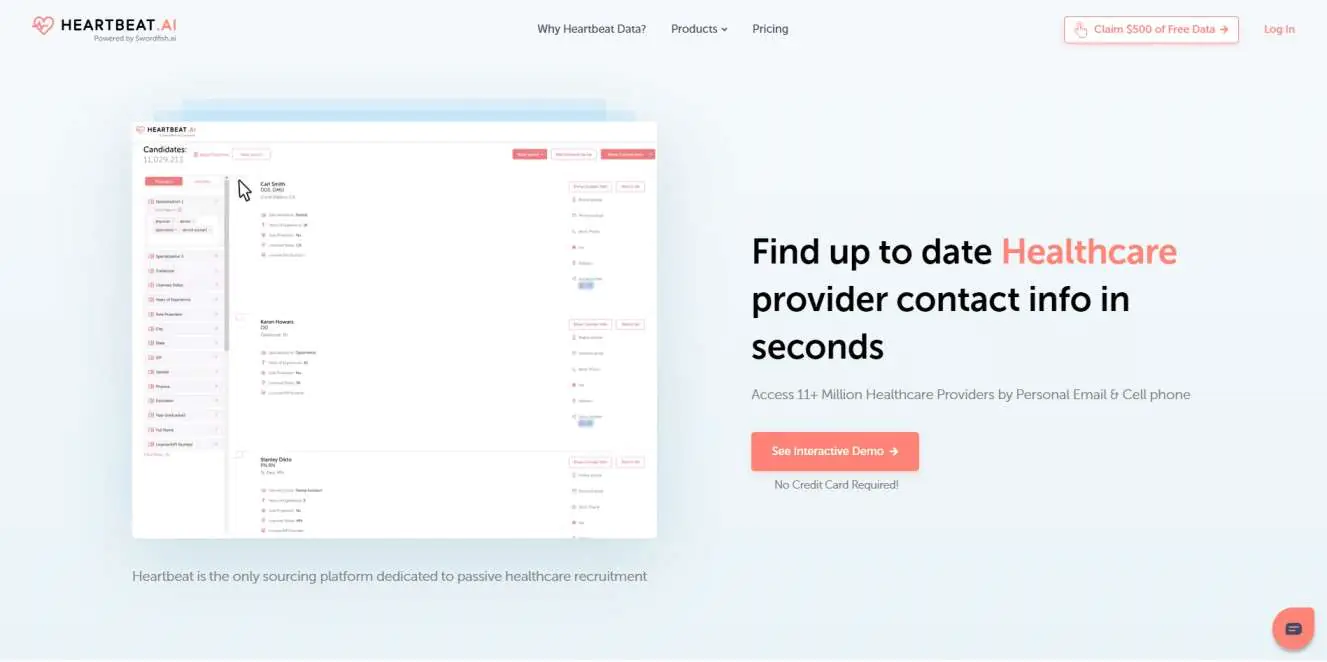
Heartbeat AI provides direct contact records for radiation oncology specialists rather than generic industry lists. Here’s what’s included:
- Direct email contacts: Email addresses for radiation oncologists rather than general practice inboxes.
- Regularly refreshed contacts: Records are checked and updated so you’re not emailing someone who left the role months ago.
- Segmentation options: Filter by location, experience level, or specialty area so your outreach targets a defined subset rather than a broad blast.
- Compliance-minded sourcing: Data is compiled with privacy practices in mind, which matters for both legal exposure and recipient trust.
- Support for multiple campaign types: Marketing, education, recruiting, or networking outreach can all draw on the same base list with different filters applied.
Types of Data Included in Radiation Oncologist Email Lists
- Names of radiation oncologists
- Location
- Contact numbers (work, cell, mobile)
- Email address
- Specialization
- Years of experience
- Sole proprietor status
- Licensed states
- License number
- Fax
- Address
 Accuracy & coverage of personal contact info were unrivaled by other platforms… this gives any healthcare recruiter a competitive advantage when engaging hard-to-reach healthcare providers.
Senior Growth Strategist





Benefits of Using a Valid Radiation Oncologists Specialist Email Database
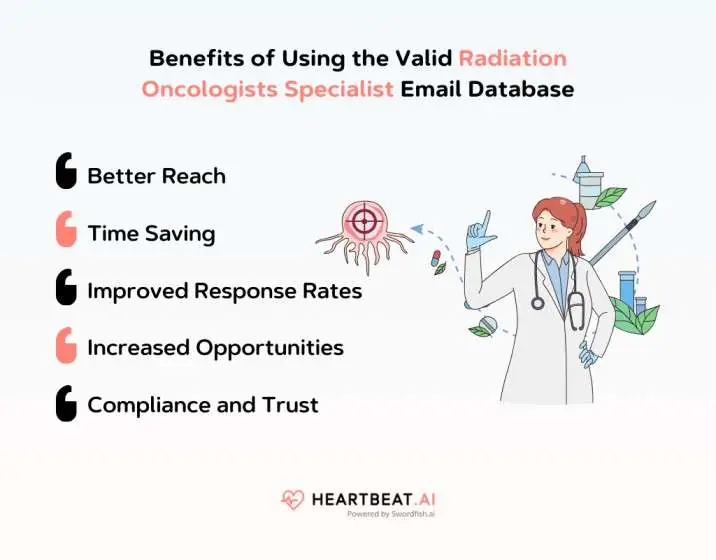
Better reach
Working from a verified list of radiation oncologists means your messages land with people who actually practice in the field, instead of getting lost in generic distribution blasts.
Time saved on research
Having a ready-made contact set removes the manual work of hunting down names, credentials, and current contact details one at a time.
Better response rates
Targeted, current contacts tend to produce higher engagement than broad lists, simply because the content is more likely to be relevant to the recipient.
More paths to partnership
A well-organized list can support more than a single campaign — it can open doors for collaborations, research partnerships, or mentorship connections within radiation oncology.
Compliance and trust
Working from a list built with privacy practices in mind reduces legal exposure and helps keep your outreach on the right side of email regulations.
Who You’ll Find in Our Radiation Oncologists Email Directory, by Category
This segment of the database covers several roles within radiation oncology care teams, not just physicians.
| Radiation Oncologist Categories |
| Clinical Radiation Oncologists |
| Radiation Oncology Medical Physicists |
| Radiation Oncology Nurses |
| Radiation Oncology Technologists |
| Radiation Oncology Dosimetrists |
Available Radiation Oncologists in Our Email List, by State
Below is a state-by-state directory of radiation oncologist contacts across the United States.
How We Compile a Radiation Oncologist Mailing List
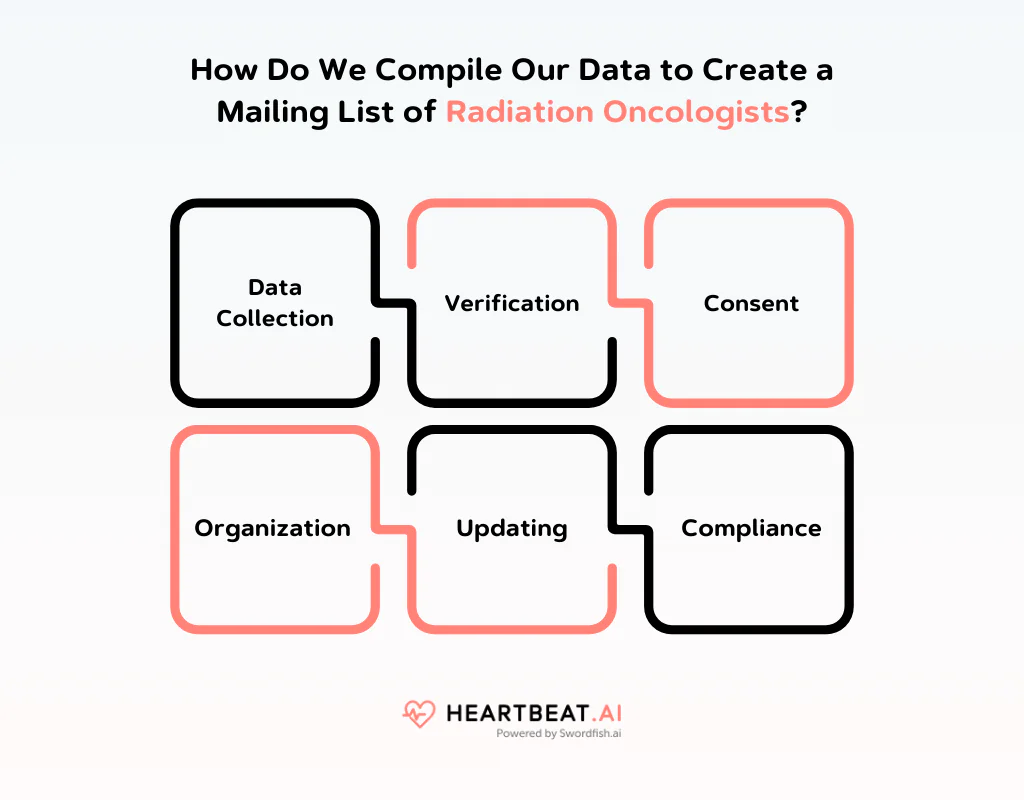
Data collection
Information is pulled from a range of sources, including medical directories, professional networking sites, and healthcare institution websites, capturing names, specialties, and contact details.
Verification
Email addresses and phone numbers are checked for validity using verification tools, and where possible, professionals are contacted directly to confirm details and current specialty.
Consent
Confirming that professionals are comfortable being included in outreach lists matters both for privacy compliance and for the quality of engagement.
Organization
Verified records are organized by location, experience, and area of interest within radiation oncology so lists can be filtered precisely.
Updating
Because professionals move, retire, or shift focus, records are periodically revisited to remove outdated entries and add new ones.
Compliance
Data handling follows privacy regulations such as GDPR in Europe and HIPAA in the United States, with mechanisms for professionals to review, update, or remove their information.
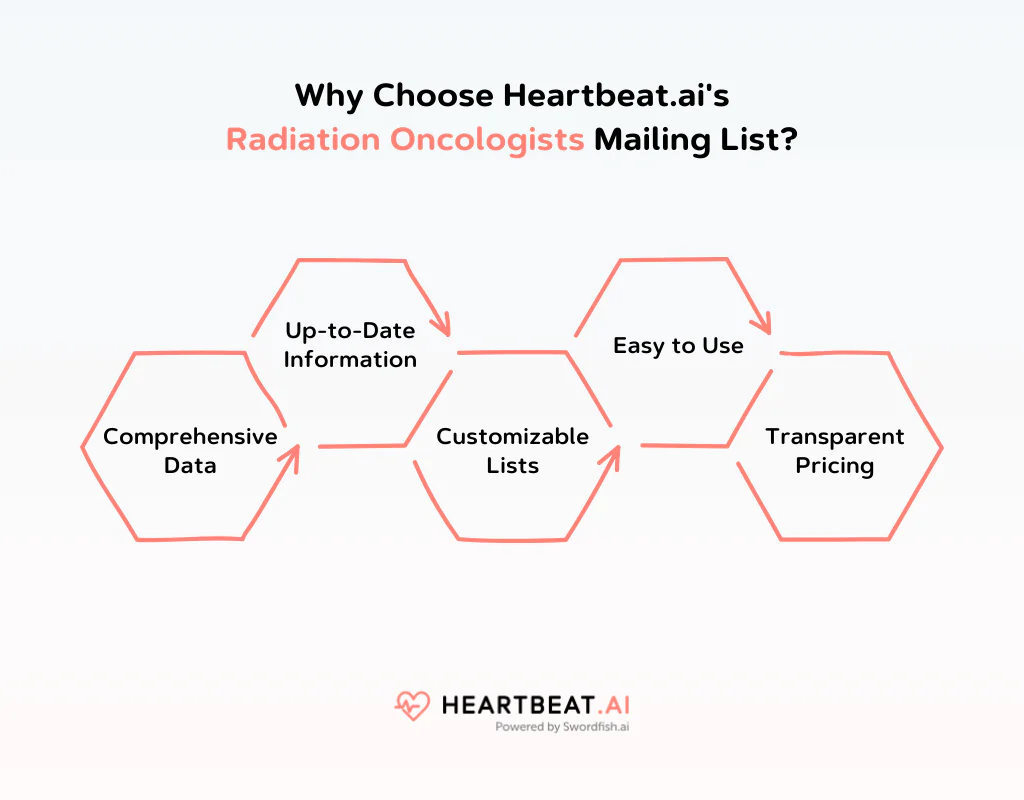
Why Choose Heartbeat.ai’s Radiation Oncologists Mailing List?
Broad healthcare coverage
Heartbeat.ai maintains contact records across 11 million healthcare professionals in the U.S., with cell phone, email, and direct dial coverage that extends into specialty fields like radiation oncology.
Regular refresh cycles
Outdated contact data wastes outreach budget. Records in our data are periodically checked and updated to reduce bounce and dead-end rates.
Customizable filtering
Lists can be filtered by criteria relevant to your campaign rather than delivered as a single undifferentiated batch.
Straightforward tools
The product extension and file upload features are built for non-technical users running outreach campaigns.
Transparent pricing
The pricing structure is laid out clearly, without hidden fees added after the fact.
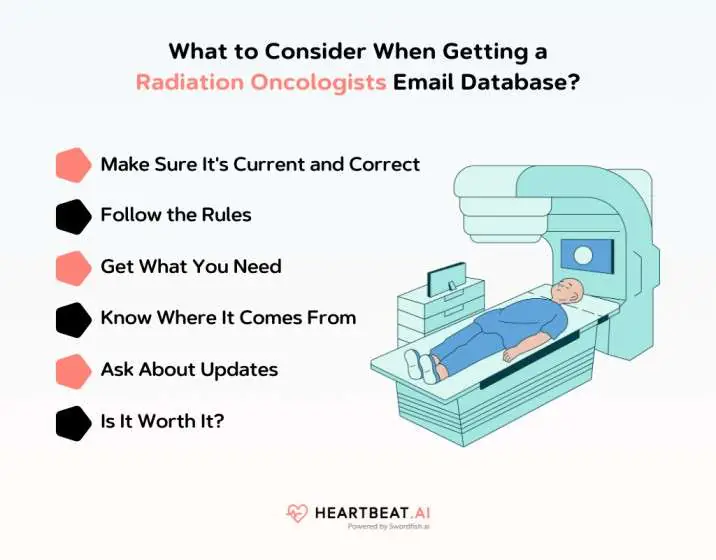
What to Check Before Buying a Radiation Oncologists Email Database
Currency and accuracy
Confirm the contacts represent oncologists who are currently practicing and treating patients — outdated or incorrect entries simply won’t reach anyone.
Regulatory compliance
Marketing emails are subject to specific rules. Make sure the list provider’s sourcing and consent practices keep you on the right side of them.
Filtering options
A list that lets you narrow by practice setting, specialty focus, or geography is more useful than one delivered as a flat file.
Sourcing transparency
Ask how the provider gathers its contacts. Reputable sourcing tends to correlate with better data quality overall.
Update cadence
Ask how often the list is refreshed — oncologists change roles, retire, or move practices, and stale data compounds quickly.
Value for cost
Weigh the price against what the list actually delivers. Extremely cheap lists are often thin on verification; extremely expensive ones aren’t automatically better.
Who Uses a Radiation Oncologists Email List?
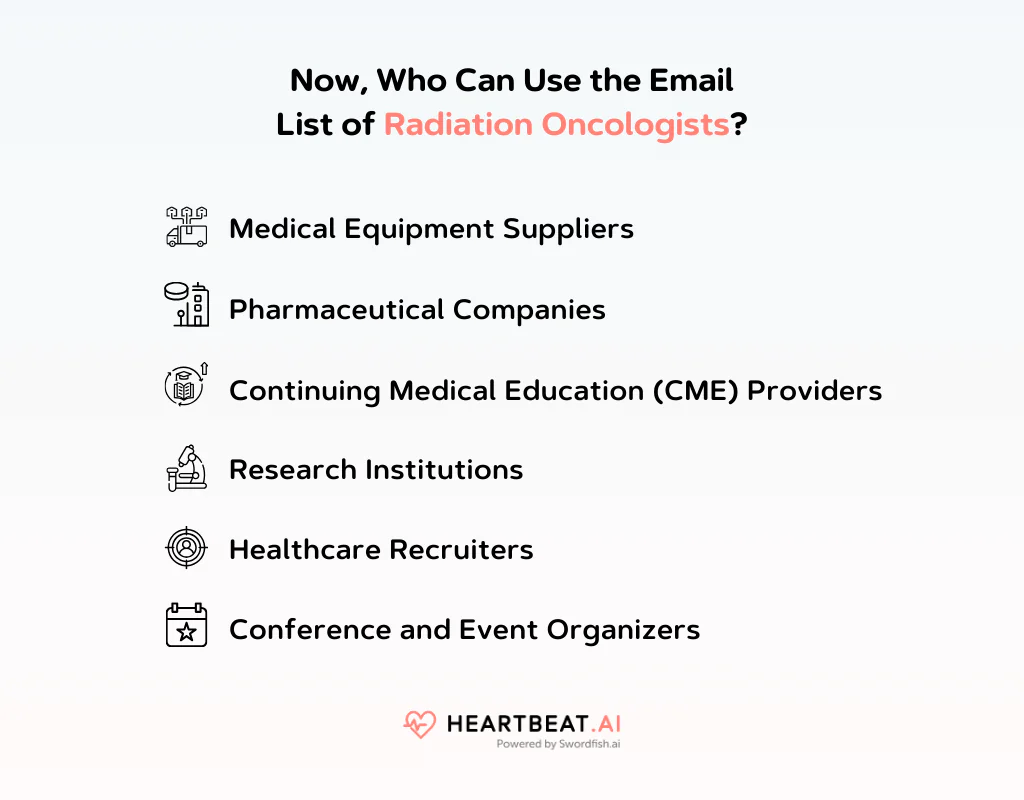
Medical equipment suppliers
Companies selling devices, equipment, or software used in radiation therapy use these contacts to introduce products directly to practicing oncologists.
Pharmaceutical companies
Sharing information about new drugs, clinical trials, or research findings relevant to radiation oncology depends on reaching the right specialists directly.
Continuing medical education providers
Organizations offering CME courses or seminars can promote them directly to a relevant specialist audience.
Research institutions
Researchers seeking collaborators for radiation oncology studies can use the list to reach out to potential co-investigators.
Healthcare recruiters
Recruiters filling radiation oncology roles can contact qualified candidates directly instead of relying on job boards alone.
Conference and event organizers
Invitations to speak at or attend medical conferences and workshops reach the right specialty audience more efficiently through a targeted list.
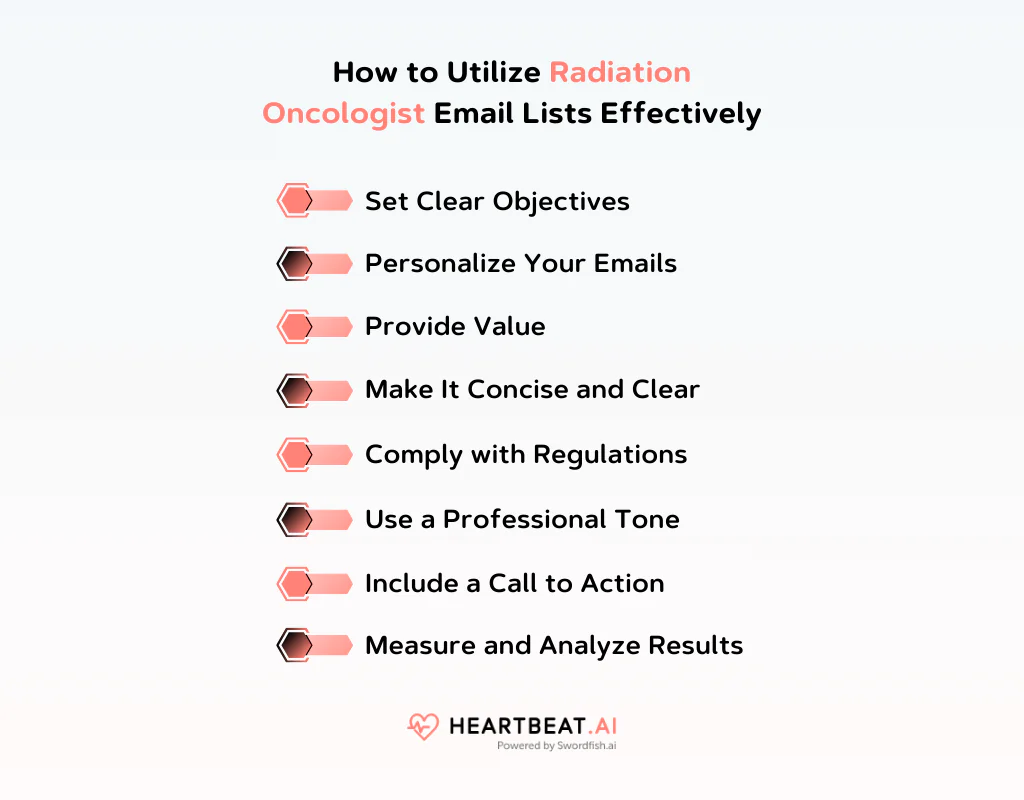
How to Use a Radiation Oncologists Email List Effectively
A good contact list is only half the equation. How you use it determines whether it produces results or just complaints.
- Set a clear objective for each campaign — promoting a product, inviting to a conference, or sharing research all call for different messaging.
- Personalize where you can. Address recipients by name and reference details relevant to their specialty or location if your list supports segmentation.
- Lead with value. Every email should give the recipient something worth their time, not just a pitch.
- Keep it concise. A clear subject line and a short, scannable body with bullet points tend to perform better than dense paragraphs.
- Follow the rules. Comply with regulations such as GDPR and CAN-SPAM, include an opt-out mechanism, and never send to contacts without consent.
- Use a professional tone that respects the recipient’s expertise without slipping into jargon.
- Include one clear call to action — a link, a reply prompt, or a registration button — rather than several competing requests.
- Track performance. Open rates, click-through rates, and reply rates tell you what’s working and what to adjust in the next send.
Limitations Worth Keeping in Mind
No contact database, regardless of provider, is perfect. Radiation oncology is a small field with high turnover risk relative to its size — a handful of professionals moving states or leaving practice can meaningfully shift regional coverage. Treat any list as a strong starting point rather than a permanent asset, and build periodic re-verification into your own outreach process rather than assuming a one-time purchase stays accurate indefinitely.
Conclusion
A radiation oncologists email list narrows a genuinely hard-to-reach specialty into a workable outreach channel. Given how few practitioners exist relative to the population, and how unevenly they’re distributed, a filtered, verified list beats broad prospecting almost every time.
If you’re evaluating providers for this kind of specialty data, take a look at Heartbeat AI.
Frequently Asked Questions
Can I see a sample before buying a radiation oncologist email list?
Some providers offer sample datasets or previews before you commit to a purchase — worth asking about directly.
How do I ensure data security when using a radiation oncologist contact list?
Work with providers who prioritize data security and follow industry-standard encryption and protection practices.
Are there restrictions on how I can use a radiation oncologist email list?
Yes. Respect legal and ethical boundaries around personal information, and avoid spamming or using the list outside its intended purpose.

