Last updated: August 29, 2026

Reaching orthodontists directly by email or phone is useful for dental suppliers, insurance companies, recruiters, and anyone doing B2B outreach in the dental specialty. The challenge isn’t finding an orthodontist list — a search turns up dozens. The challenge is finding one that’s actually accurate, current, and legally usable for marketing purposes.
Generic or scraped lists tend to have outdated addresses, duplicate entries, and providers who’ve retired or moved practices. That wastes budget and can hurt your sender reputation. This guide covers what a legitimate orthodontist email list should include, how providers like Heartbeat AI compile and verify this data, and what to check before you buy or use one.
What’s on this page:
What’s Included in an Orthodontist Email List

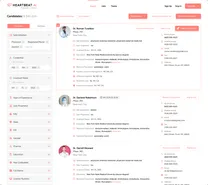
The Heartbeat AI orthodontist database pulls together contact and practice information for orthodontic specialists across the U.S. Key features typically include:
- State-specific segmentation: Data organized by state so you can target providers in a specific licensing jurisdiction or service area.
- Customization options: Filters for location, years of experience, practice type, and other criteria so you’re not paying for contacts outside your target market.
- Verified email addresses: Used for direct outreach and digital marketing campaigns.
Typical Data Fields
- Orthodontist name
- Practice location
- Contact numbers (work, cell, mobile)
- Email address
- Specialization
- Years of experience
- Sole proprietor status
- Licensed states
- License number
- Fax number
- Practice address
 Accuracy & coverage of personal contact info were unrivaled by other platforms… this gives any healthcare recruiter a competitive advantage when engaging hard-to-reach healthcare providers.
Senior Growth Strategist






Why List Accuracy Matters for Outreach
An accurate, well-maintained list affects results in a few measurable ways:
- Deliverability and engagement: Messages that land in valid inboxes have a chance of being opened; bounced or misrouted emails don’t.
- Data for optimization: Clean lists let you track open rates, click-through rates, and conversions with confidence that the numbers reflect real performance, not data rot.
- Sender reputation: High bounce rates from bad data can get your domain flagged by email providers, hurting deliverability for every future campaign.
- Cost efficiency: Paying to email addresses that no longer exist is money spent for zero return.
- Better outcomes: Cleaner targeting generally translates into more responses and more booked conversations.
Orthodontist Categories You May Encounter
Adjacent dental specialties are sometimes bundled into or confused with orthodontist-specific data. Here’s how the categories break out:
| Orthodontist Categories |
| General Dentist |
| Periodontist or Gum Specialist |
| Pedodontist or Pediatric Dentist |
| Endodontist or Root Canal Specialist |
| Oral Pathologist or Oral Surgeon |
| Prosthodontist |
Orthodontist Data by State
Below is the full state breakdown for orthodontist contact records.
How This Type of Data Gets Compiled

A credible orthodontist mailing list generally goes through a few stages before it reaches a buyer:
Data collection
Sourcing starts with public directories, professional healthcare databases, and industry publications to identify individuals and practices specializing in orthodontics. Source credibility matters more than volume here — a smaller list built from reliable directories beats a bigger one scraped indiscriminately.
Verification and updating
Raw data gets cross-referenced across multiple sources, sometimes with phone or email verification. Lists need regular refreshes to drop retired practitioners and add new ones — a list that isn’t updated within the past several months should be treated with some skepticism.
Segmentation and customization
Records get organized by geography, years in practice, or sub-specialization, which is what lets a buyer pull a narrower, more targeted subset instead of a single undifferentiated file.
CRM and analytics integration
The list is typically formatted to plug into Customer Relationship Management (CRM) software and analytics tools, so you can track responses and refine targeting for future campaigns.
Evaluating Heartbeat.ai’s Orthodontist Mailing List

Coverage
Heartbeat’s Prospector tool is built around broad coverage of U.S. healthcare providers, including orthodontists, which is useful when you need a database that scales beyond a single region.
Direct contact information
Access to cell phone and email data, rather than just general office lines, can make outreach faster and reduce the number of gatekeepers between you and the provider.
Customer feedback
Reviews on the site point to satisfaction with data accuracy, which lines up with feedback on other provider lists, like the doctor contact list offered through the same platform.
Speed
Faster access to verified contacts can meaningfully shorten outreach and recruitment cycles compared to manually compiling contacts from public directories.
What to Check Before You Buy a List

Source and accuracy
Ask where the data originated. Trusted medical directories, professional associations, and healthcare databases hold up better than scraped or unverified sources. Cross-reference a sample before committing to a full purchase.
Consent and compliance
The CAN-SPAM Act applies to healthcare email when the primary purpose is commercial advertisement of a product or service, and the law does not exempt healthcare-related messages. Compliant commercial email requires accurate sender information, non-deceptive subject lines, clear disclosure that the message is an advertisement, a valid physical postal address, and a working opt-out mechanism. A common misconception is that HIPAA blocks B2B outreach to providers — but HIPAA applies to protected health information like diagnoses and treatment records, not a physician’s business email address or practice phone number, which are professional contact details available through public directories.
Data security
Whoever holds the list should have reasonable safeguards — encryption, access controls, and periodic review of security protocols — to prevent unauthorized use or breaches.
Opt-out handling
Recipients must be told how to opt out of future marketing email, and opt-out requests should be honored within 10 days to stay compliant and avoid spam complaints.
Ethical use
Send to providers who’ve given consent or have an existing professional relationship with your organization, and keep the content genuinely relevant rather than generic filler.
For a related use case, see our guide on the endocrinologists email list for targeted outreach in another medical specialty.
Who Typically Uses an Orthodontist Email List

- Dental practices and clinics looking to build referral relationships or collaborate with orthodontic specialists.
- Orthodontic supply companies reaching potential B2B clients to promote equipment and products.
- Insurance companies expanding provider networks or managing contract negotiations and enrollment.
- Marketing and advertising agencies running campaigns on behalf of orthodontic clients.
- Researchers and academics recruiting participants or collaborators for studies.
- Patients looking to find or contact an orthodontist for treatment inquiries.
Getting More Out of an Orthodontist Email List

A quick working checklist before you launch a campaign:
- Define your goal — sales, recruiting, referrals, or research each call for a different message and cadence.
- Write for the reader — orthodontists get pitched constantly; a message that’s specific and short outperforms a generic template.
- Refresh the list regularly — pull invalid or bounced addresses out on a set schedule rather than waiting for deliverability to drop.
- Use a proper email platform — one with analytics, automation, and unsubscribe handling built in, so compliance isn’t something you’re managing manually.
- Track results and adjust — open rates, click-throughs, and conversions tell you whether the list and message are actually working together.
Bottom Line
An accurate, well-segmented orthodontist email list is a practical tool for anyone doing B2B outreach in the dental space — suppliers, agencies, insurers, and recruiters alike. The value isn’t in the list size; it’s in how current and verifiable the data is, and whether it’s used in a way that respects consent rules and the recipient’s time.
A provider like Heartbeat can save the manual work of building and maintaining this kind of database, but the buyer is still responsible for how the data gets used — checking sourcing, honoring opt-outs, and keeping messaging relevant.
Frequently Asked Questions
Is it legal to use an orthodontist email list for marketing?
Yes, provided you follow CAN-SPAM requirements — accurate sender information, no deceptive subject lines, ad disclosure, a valid postal address, and a working opt-out — and honor opt-out requests promptly.
Do orthodontist email lists contain details beyond email addresses?
Most established lists include names, practice names, locations, phone numbers, specialization, and other identifying details that let you personalize outreach and target specific subsets.
How often should I email an orthodontist list?
There’s no fixed rule, but sending only a few relevant messages per month tends to hold up better than frequent, low-value emails. Prioritize relevance over volume, and time campaigns around industry events when open rates tend to be higher.