Last updated: August 28, 2026
Finding accurate, current contact information for obstetrics and gynecology specialists is harder than it sounds. Estimates vary by source and methodology, but recent industry data puts the number of practicing OB-GYNs in the United States at more than 49,000, spread across hospitals, private practices, academic medical centers, and specialty clinics. Manually tracking down verified emails and phone numbers for even a fraction of that group is slow work, and directories go stale quickly as physicians change practices or retire.
A well-maintained obstetrics gynecologist email list solves the sourcing problem, but not every list is built the same way. Below is what typically goes into a usable dataset, what to check before you buy one, and how to put it to work without wasting budget on bad contacts.
What’s on this page:
What’s Included in an Obstetrics Gynecologist Email List

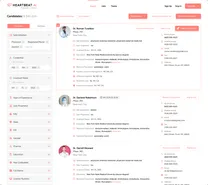
Heartbeat’s obstetrics gynecologist data covers a mix of identifying and professional details that let you filter and personalize outreach rather than blast a generic list. A typical record includes:
- Full name and practice location
- Direct contact numbers (work, cell, mobile)
- Verified email address
- Specialization and sub-specialty
- Years in practice
- Sole proprietor status
- Licensed states and license number
- Fax and mailing address
Coverage this granular is what separates a working prospecting tool from a static spreadsheet. Without specialty and location fields, for example, a message aimed at maternal-fetal medicine physicians ends up in a general OB-GYN’s inbox instead, and response rates suffer accordingly.
 Accuracy & coverage of personal contact info were unrivaled by other platforms… this gives any healthcare recruiter a competitive advantage when engaging hard-to-reach healthcare providers.
Senior Growth Strategist






Why a Verified List Matters More Than List Size

A large list of stale contacts is worse than a smaller list of verified ones. Teams that rely on outdated data typically see three problems compound: wasted send volume, damaged sender reputation from bounces, and low engagement that makes future campaigns harder to run. A verified obstetrics gynecologist database addresses each of these directly.
Targeting by Specialty
Segmenting by sub-specialty, whether reproductive endocrinology, maternal-fetal medicine, or gynecologic oncology, means your message lands with people who actually make decisions in that area, rather than a generalist who has no reason to respond.
Fewer Wasted Sends
Sending to invalid or outdated addresses wastes budget and can flag your domain as a spam source. A list checked against current sources reduces that risk considerably.
Stronger Professional Reputation
Recruiters, vendors, and researchers who reach out with accurate, relevant information build trust faster than those sending generic blasts to mismatched contacts.
Compliance Considerations
Using a list built on legitimate, consent-aware sourcing supports compliance with data protection frameworks like GDPR and HIPAA, depending on where your targets and business are located. Note that HIPAA generally governs protected health information handled by covered entities, not business contact details for professionals; still, responsible list providers should be transparent about how data was sourced and whether recipients can opt out.
OB-GYN Categories You’ll Find in the Data
Within a comprehensive obstetrics gynecologist directory, you’ll find several distinct sub-specialties, each with different outreach priorities and decision-making authority.
| Obstetrics Gynecologist Categories |
| Reproductive endocrinologist |
| Obstetrics and gynecology physician |
| Maternal-fetal medicine specialist |
| Urogynecologist |
| Infertility specialist |
| Reproductive surgeon |
| Gynecologic oncologist |
Available Obstetrics Gynecologist Contacts by State
Coverage extends across every U.S. state, with distribution naturally skewing toward higher-population states with more hospital systems and academic centers.
How This Data Gets Compiled

Building and maintaining an accurate OB-GYN dataset is an ongoing process, not a one-time export. Here’s roughly how it works at Heartbeat:
Sourcing
Data is pulled from roughly 200 trusted sources, including medical directories and healthcare databases, to build out a working baseline of obstetricians and gynecologists.
Sorting by Specialty
Technology is used to parse and classify records so healthcare professionals get grouped correctly by their specialty and sub-specialty.
Accuracy Checks
Records are cross-referenced across sources and refreshed on a recurring basis rather than left static.
Regulatory Awareness
Providers should be mindful of healthcare data regulations, including HIPAA in the U.S., when handling and distributing provider contact information.
Structuring the Data
Information gets organized by location, experience, and practice setting so lists can be filtered for specific campaign needs.
Ongoing Refresh
Because OB-GYNs move between practices, change specialties, or retire, records need continuous updating to stay useful.
What to Check Before You Buy a List

Not all vendors are equally rigorous. Before committing budget, run through this short checklist:
- Regulatory alignment — confirm the provider’s sourcing practices are consistent with HIPAA, GDPR, or other applicable data protection rules for your target region.
- Audience fit — check that the list can be filtered to your actual targets, whether that’s general OB-GYNs, a specific sub-specialty, or a geographic region.
- Source transparency — ask where the data comes from and how often it’s refreshed. A vendor that can’t explain its sourcing is a red flag.
- Consent practices — understand whether contacts have any expectation of being reached for business outreach, and build in an easy opt-out.
- Verification standard — look for email verification and validation practices that keep bounce rates low.
Who Actually Uses This Kind of List

Healthcare Providers
Hospitals and clinics use OB-GYN contact data to coordinate referrals, collaborate on care plans, and share clinical updates within their networks.
Pharmaceutical Companies
Pharma teams use it to connect with prescribers for product education, clinical trial recruitment, and updates on new treatments.
Medical Equipment Suppliers
Suppliers rely on accurate contact data to schedule product demonstrations and keep practices informed about new devices.
Research Institutions
Universities and research groups use these contacts to recruit collaborators for studies, surveys, and clinical research in obstetrics and gynecology.
Healthcare Associations
Professional bodies use verified contact data to notify members about conferences, continuing education, and policy changes relevant to the specialty.
Getting More Out of the List Once You Have It

Having the data is only step one. How you use it determines whether it actually generates response.
Segment Before You Send
Break the list into groups by location, sub-specialty, practice size, or other relevant traits. A message to a solo rural practice reads differently than one to a hospital-affiliated maternal-fetal medicine group, and it should.
Lead With Relevant Content
Share information that’s actually useful to the recipient’s work, research findings, procedure updates, or details tied directly to their specialty, rather than a generic pitch.
Personalize Beyond the Name Field
Reference the specific challenges a sub-specialty faces. A gynecologic oncologist and a general OB-GYN have very different day-to-day priorities.
Respect the Rules
Keep campaigns aligned with applicable healthcare data guidance and make unsubscribing simple and immediate.
Track and Adjust
Monitor opens, clicks, and reply rates, then adjust segmentation and messaging based on what’s actually working rather than assumptions.
Limitations Worth Knowing
No list, however well-maintained, is perfect. Physicians change practices more often than public directories update, sub-specialty self-reporting isn’t always consistent, and email deliverability can shift with spam filter changes on the recipient’s end. Treat any purchased or licensed list as a strong starting point that still benefits from periodic verification, not a permanent, static asset.
Final Thought
A working obstetrics gynecologist email list saves the time that would otherwise go into manual directory searches, and it improves outreach precision when the data includes real specialty and location detail. Heartbeat AI compiles and maintains this kind of dataset with regular verification built into the process, which is worth checking against your own outreach goals before committing budget.
Frequently Asked Questions
Is an obstetrics gynecologist email list GDPR compliant?
It depends on the provider. Confirm that any list you use aligns with GDPR or other applicable data protection regulations, since healthcare-adjacent contact data warrants extra scrutiny.
Can I target OB-GYN contacts by geographic location?
Yes. Most quality providers offer location-based filtering so you can focus outreach on specific states, regions, or metro areas.
Can I expect a high response rate from an OB-GYN email list?
Response rates vary based on your content, targeting precision, and how relevant the message is to the recipient’s specialty and practice setting.