Last updated: August 28, 2026

Neurologists diagnose and manage conditions affecting the brain, spinal cord, and nervous system, from epilepsy to multiple sclerosis to Parkinson’s disease. That specialization makes them a valuable audience for referral partners, medical device companies, pharmaceutical outreach, and recruiters, but it also makes them hard to reach through generic contact databases.
The core problem is turnover and decay. Neurologists move between hospital systems, switch practices, or change email addresses as institutions update their domains. A list built even a year ago may already contain a meaningful share of dead or bounced addresses. Add HIPAA-adjacent privacy expectations and state-level data rules, and sourcing accurate neurologist contacts becomes a real operational task, not a one-time download.
This article walks through what a usable neurologist contact list should include, how that data gets compiled and verified, and practical ways to use it without wasting outreach budget or damaging your sender reputation.
What’s on this page:
What’s In a Neurologist Contact Database
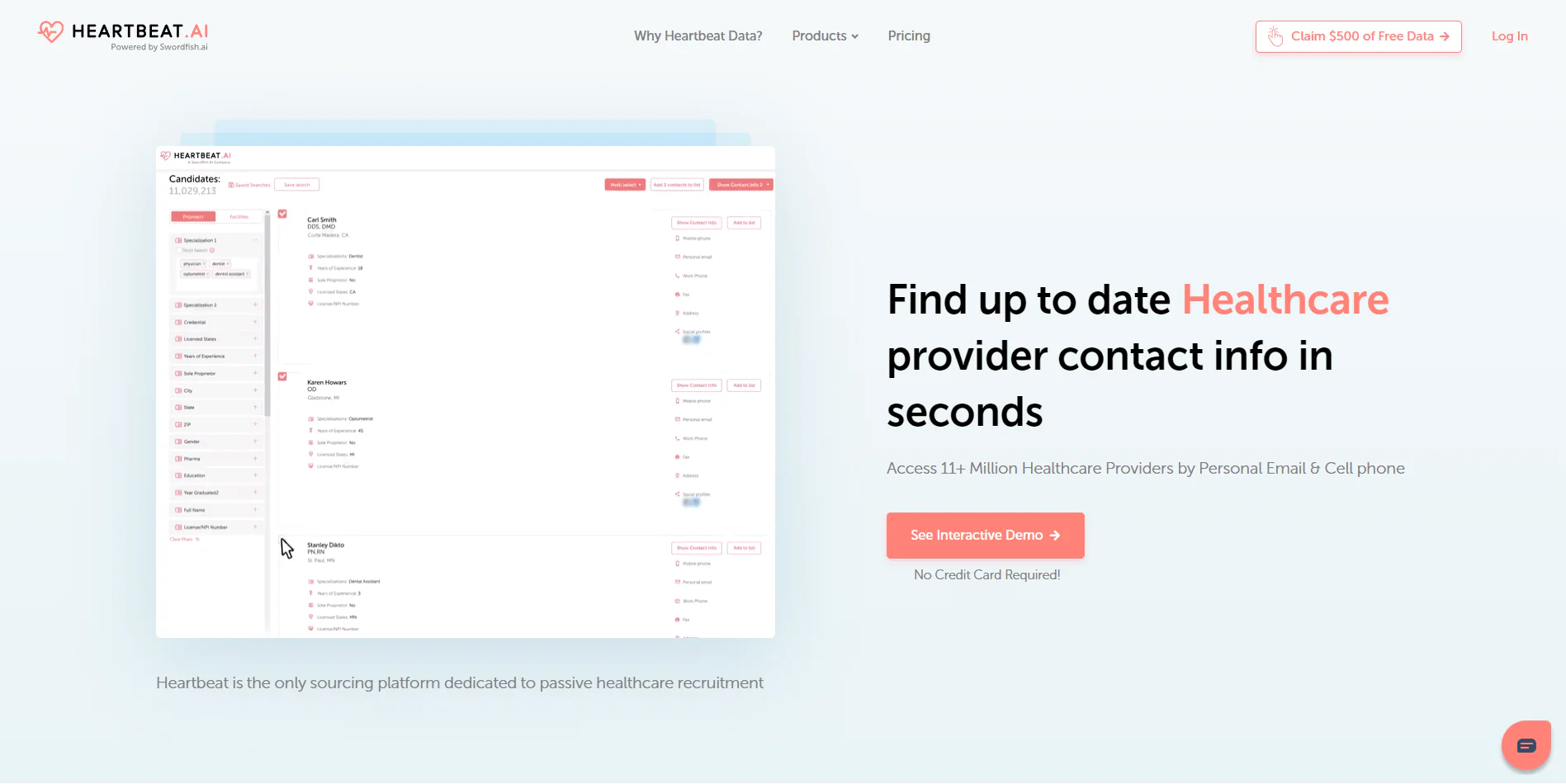
Heartbeat AI maintains a neurologist contact database built for healthcare recruitment and outreach. Here’s what the platform provides:
- Direct contact access: validated mobile numbers and personal email addresses rather than generic practice inboxes.
- Filterable search: narrow results by license taxonomy code, license issue and expiration dates, and registered qualifications.
- List enrichment: append mobile numbers, personal emails, and social profiles to contact records you already have.
Typical Data Fields
- Neurologist name
- Location
- Contact numbers (work, cell, mobile)
- Email address
- Specialization
- Years of experience
- Sole proprietor status
- Licensed states
- License number
- Fax
- Practice address
 Accuracy & coverage of personal contact info were unrivaled by other platforms… this gives any healthcare recruiter a competitive advantage when engaging hard-to-reach healthcare providers.
Senior Growth Strategist






Why an Accurate List Matters More Than a Large One
A list with 50,000 neurologist emails is worthless if a third of them bounce. Accuracy compounds: it protects your sender reputation, keeps you compliant, and determines whether your campaign actually gets read.
Precision targeting
Accurate records mean your outreach reaches the specialists you actually intended to contact, rather than a name that left the practice two years ago.
Cost and professionalism
Fewer bounces mean less wasted spend and fewer wrong-address emails landing in inboxes that no longer belong to the recipient — which reflects poorly on your organization.
Compliance and time savings
Keeping a list current reduces the chance of contacting someone who has opted out or whose data should have been refreshed, and it cuts down on manual cleanup work.
Campaign performance
Clean lists produce better open and response rates simply because the emails are landing in active, monitored inboxes. See our related piece on cardiologist mailing lists for a comparable specialty use case.
Deliverability
Fewer bounces protect your domain’s sending reputation with email providers, which matters for every future campaign, not just the current one.
Neurologist Categories You’ll Find in a Contact List
Neurology contact databases are typically segmented by sub-specialty so outreach can be targeted rather than generic:
| Neurologist Categories |
| Clinical Neurophysiologists |
| Vascular Neurologists |
| Pediatric Neurologists |
| Neurosurgeon |
| Oncologist |
Neurologist Contacts by State
Coverage is also organized geographically, which matters if you’re recruiting or marketing regionally rather than nationally:
How Neurologist Contact Data Gets Compiled
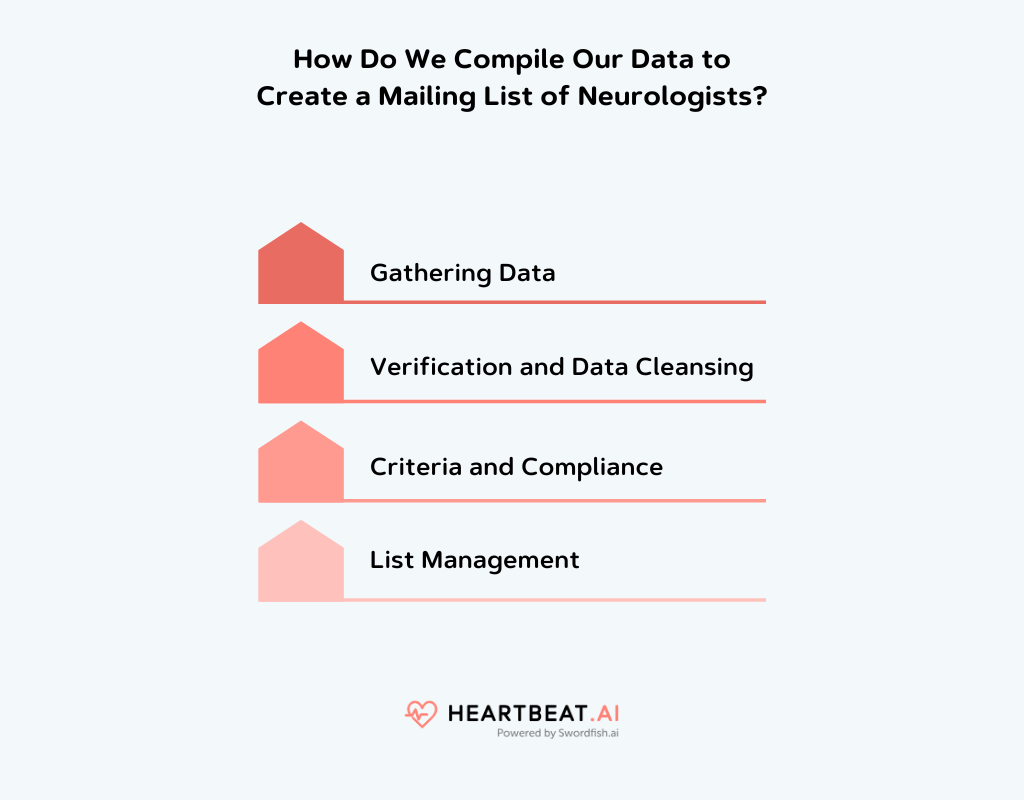
Sourcing
Reliable providers start with medical directories, professional associations, and healthcare institution listings, cross-referencing resources such as neurology professional organizations and hospital directories.
Verification and cleansing
Records get checked, sometimes by direct phone verification with an office, then deduplicated and corrected for known errors before being added to the working list.
Inclusion criteria and compliance
Specific criteria — location, specialty, license status — determine what makes the final list. Compliance with data protection standards and consent expectations should apply throughout, not just at collection.
Ongoing list management
Data is organized into a usable format with core fields like contact details and specialization, and refreshed periodically since practice changes happen continuously.
What to Look For in a Neurologist Contact Provider
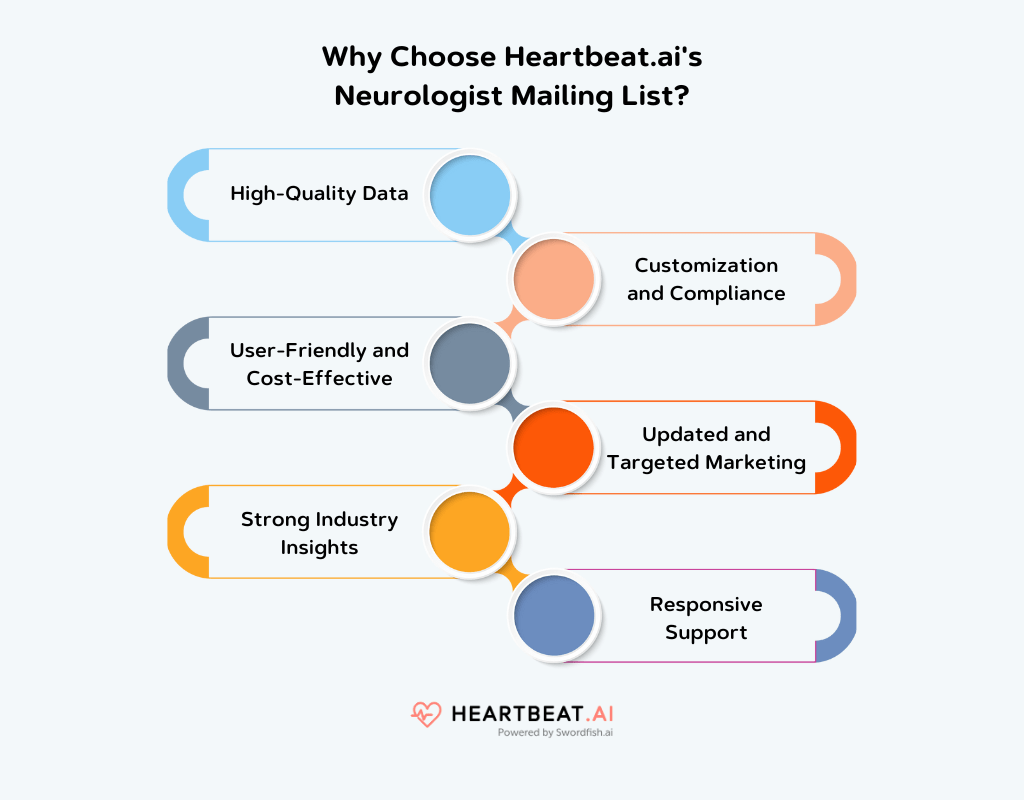
Not every contact database is built the same way. Here’s what separates a usable list from a stale spreadsheet:
Verification depth
Look for providers that verify records regularly rather than scraping a directory once and reselling the same file for years.
Customization
You should be able to filter by region, specialty, or license status rather than buying an all-or-nothing national file.
Format and usability
A workable export saves you the manual effort of collecting and structuring this data yourself.
Refresh cadence
Ask how often records are updated. A list that hasn’t been touched in a year will underperform regardless of how it was originally sourced.
What to Check Before Buying a Neurologist Email List
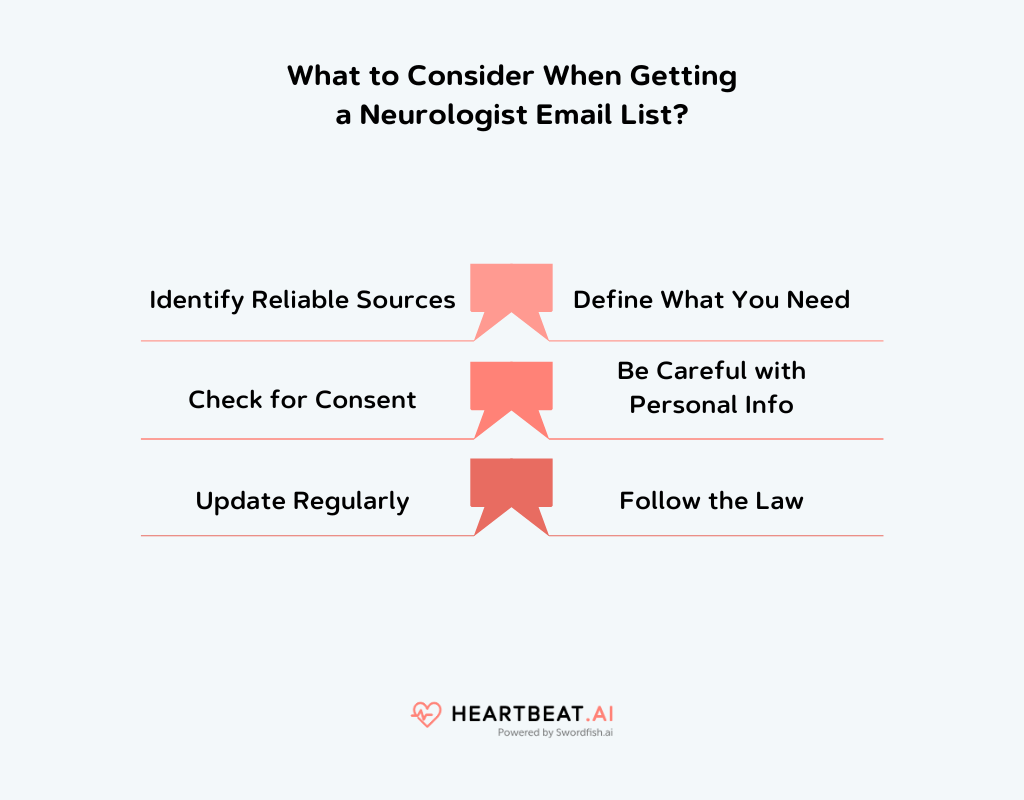
Source reliability
Trusted sources like medical associations, hospital systems, and established healthcare data providers such as Heartbeat generally produce more accurate records than scraped directories. This matters as much for a general doctors list as it does for a specialty-specific one.
Defined criteria
Narrow your target by location or sub-specialty before you buy. Vague criteria lead to wasted outreach and lower response rates.
Consent and legitimacy
Confirm the provider’s data collection practices respect consent expectations and applicable privacy rules — this protects your organization’s reputation as much as the recipient’s privacy.
Minimal necessary data
Stick to what you actually need — contact details and professional affiliation. Collecting more personal data than necessary adds risk without adding value.
Ongoing maintenance
Plan to review and refresh your list periodically rather than treating a one-time purchase as permanent. For a comparison of specialty outreach approaches, see our article on urologists email list tactics.
Who Actually Uses Neurologist Contact Lists
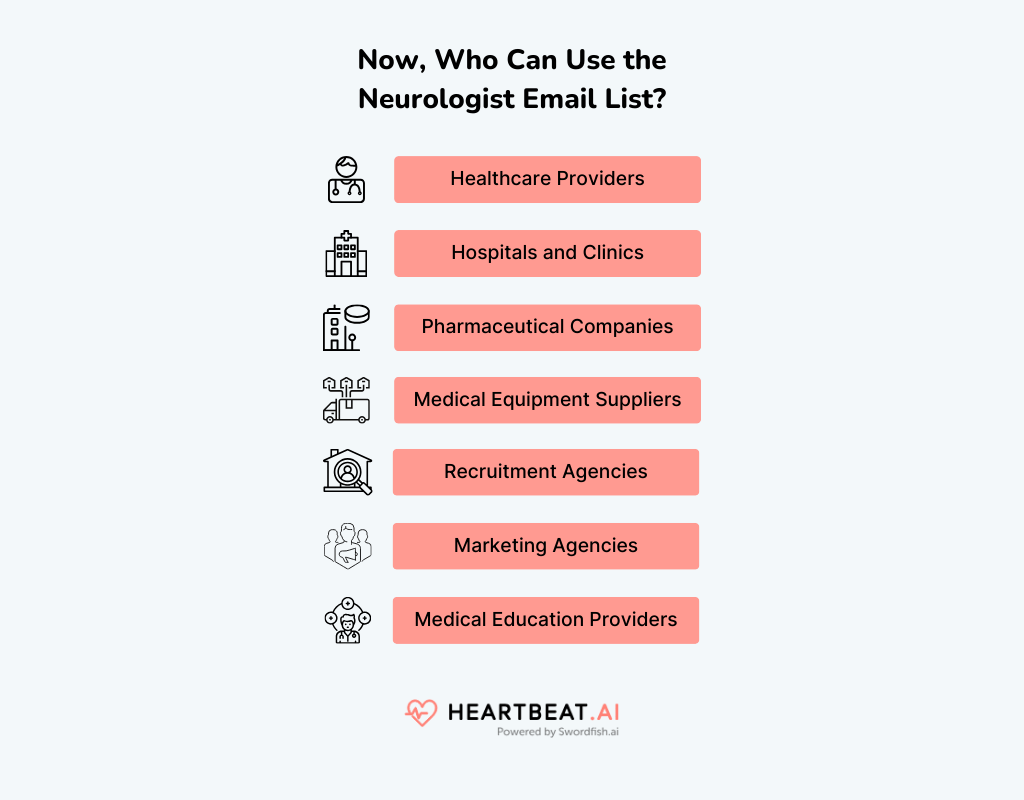
Healthcare providers and health IT companies
Referring physicians use these lists to connect with specialists for consultations, while health IT vendors use them to introduce software relevant to a neurology practice.
Hospitals and clinics
Institutions use contact data for recruiting, research collaboration, or sharing clinical updates with affiliated neurologists.
Pharmaceutical companies
Pharma teams use verified contacts to introduce new treatments or invite participation in clinical trials, subject to applicable regulatory and consent requirements.
Medical equipment suppliers
Suppliers market diagnostic and treatment equipment directly to the specialists who purchase or recommend it.
Recruitment agencies
Staffing firms use the data to match neurologists with open positions or locum placements.
Marketing agencies
Agencies running campaigns for healthcare clients use segmented lists to tailor messaging by specialty rather than broadcasting generically.
Medical education providers
Continuing education organizations use contact lists to invite neurologists to training, workshops, or accredited seminars.
Getting More From a Neurologist Contact List
Marketing approach
- Segment first: split your list by specialization, location, or demonstrated interest before you write a single email.
- Lead with substance: share research findings or treatment developments rather than opening with a sales pitch.
- Be direct about value: if you’re promoting a product or service, explain concretely how it improves patient care or practice efficiency.
- Offer real events: webinars or workshops should provide genuine clinical or professional value, not just a lead-gen wrapper.
- Personalize: using a name and relevant context typically outperforms generic blasts.
Recruitment approach
- Post specific openings: vague “we’re hiring” messages get ignored; specifics get responses.
- Show what’s different: facilities, research access, and work environment are what candidates weigh.
- Use testimonials carefully: only include ones you have explicit permission to share.
- Make follow-up easy: a named contact and fast response time matters more than a polished job listing.
Professional networking
- Reach out directly: use the list for legitimate peer-to-peer collaboration or knowledge exchange, not mass promotion.
- Reciprocity works: offering something useful in return for advice tends to build longer relationships than one-sided requests.
A Practical Checklist Before You Launch
- Confirm the list has been verified or refreshed within the past few months.
- Segment by specialty or geography before drafting your message.
- Check your provider’s consent and compliance practices, not just their data volume.
- Start with a small test batch to gauge bounce rate before a full send.
- Track deliverability metrics so you know when the list needs another refresh.
Where Heartbeat Fits
Heartbeat AI provides neurologist contact data with the sourcing, verification, and filtering approach described above. If you’re planning outreach to this specialty, request a sample and check bounce rates against your own campaign before committing to a full list.
Frequently Asked Questions
Is it legal and ethical to use a neurologist email list?
It can be, provided you respect consent expectations, follow applicable data protection rules, and use the data for legitimate healthcare communication, recruitment, or marketing purposes.
Are neurologist email lists updated regularly?
Reputable providers refresh their data periodically to remove outdated contacts and add new ones, though update frequency varies by vendor — ask before you buy.
Why does accuracy matter so much for this kind of list?
Inaccurate or outdated contacts waste outreach budget, hurt your sender reputation, and increase the risk of contacting someone who never consented to be on the list.
Can I use a neurologist email list for recruitment?
Yes, recruiters commonly use these lists to reach out about openings, provided outreach respects privacy expectations and any applicable consent requirements.