


Last updated: August 28, 2026

Cardiology practices, device makers, CME providers, and recruiters all face the same problem: reaching the right cardiologist without wasting time on bad contact data. A cardiologist email list, when accurate and properly segmented, turns a scattershot outreach effort into something closer to a targeted conversation.
The challenge is that contact details for physicians change often. Cardiologists move between practices, switch affiliations, or update credentials, and any list that isn’t refreshed regularly starts losing value fast. Add in privacy and compliance requirements around healthcare professional data, and building a usable list becomes a real operational task rather than a one-time download.
What’s on this page:
About HeartBeat’s Cardiologist Email Lists: What You Get
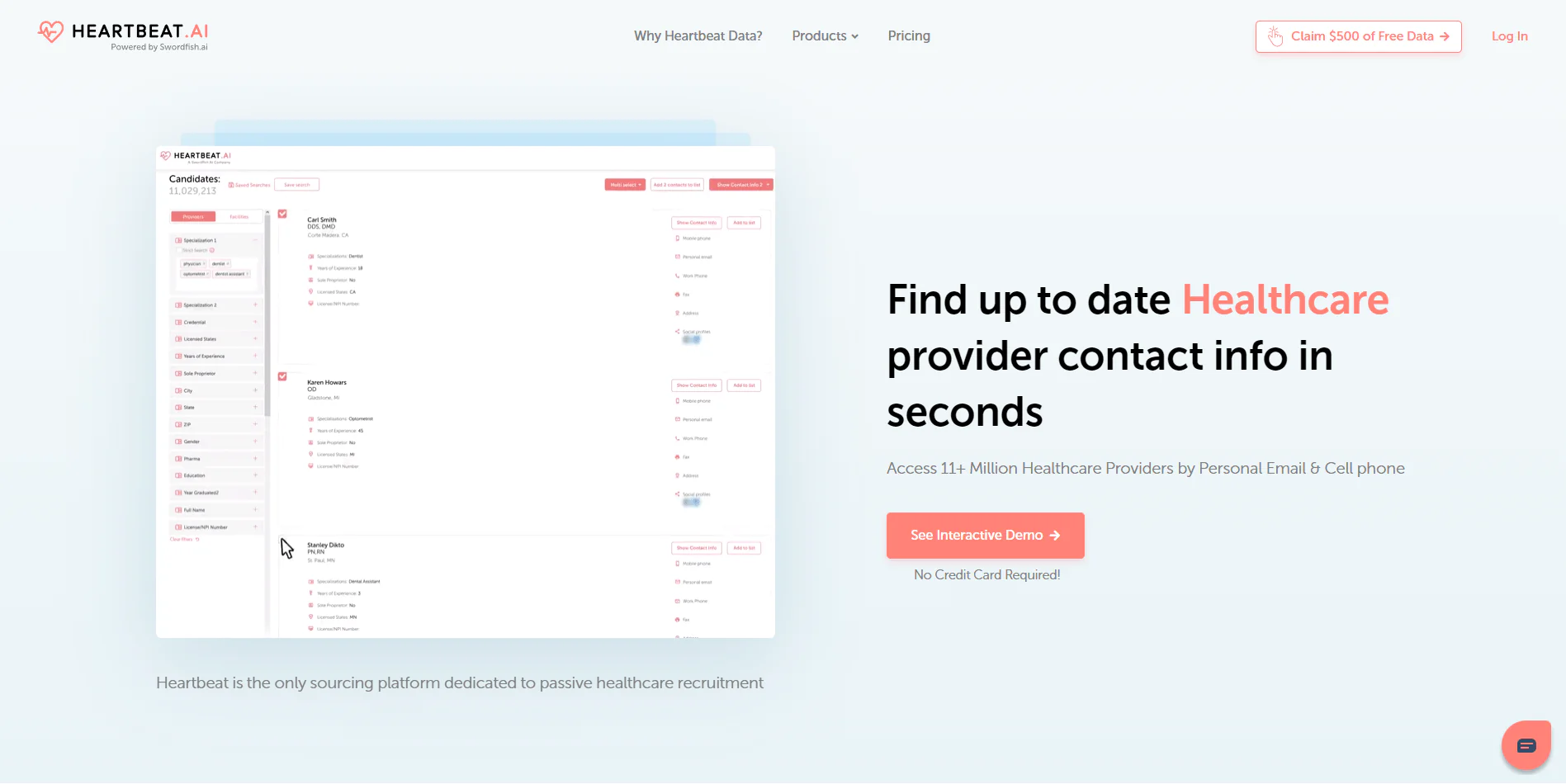
HeartBeat AI’s cardiologist email lists give you direct access to cardiologists across the United States. Depending on how you use the data, that access supports several practical goals:
- Targeted outreach: Send relevant information and announcements to the cardiology audience that actually cares about them.
- Ongoing communication: Keep touchpoints consistent so updates reach the right professionals when timing matters.
- Education and training: Promote CME courses, seminars, and webinars to cardiologists looking to build skills.
- Career development: Share job openings, networking events, and mentorship programs relevant to cardiology careers.
- Knowledge sharing: Support the exchange of treatment approaches, new technology, and research findings.
- Market research: Collect feedback directly from cardiologists to inform product or service decisions.
What’s Included in a Cardiologist Mailing List
- Cardiologist name
- Location
- Contact numbers (work, cell, mobile)
- Email address
- Specialization
- Years of experience
- Sole proprietor status
- Licensed states
- License number
- Fax
- Address
 Accuracy & coverage of personal contact info were unrivaled by other platforms… this gives any healthcare recruiter a competitive advantage when engaging hard-to-reach healthcare providers.
Senior Growth Strategist





Why List Accuracy Matters
An outdated or invalid cardiologist mailing list doesn’t just underperform — it actively wastes budget and staff time chasing dead ends. Here’s what changes when the data is actually reliable:
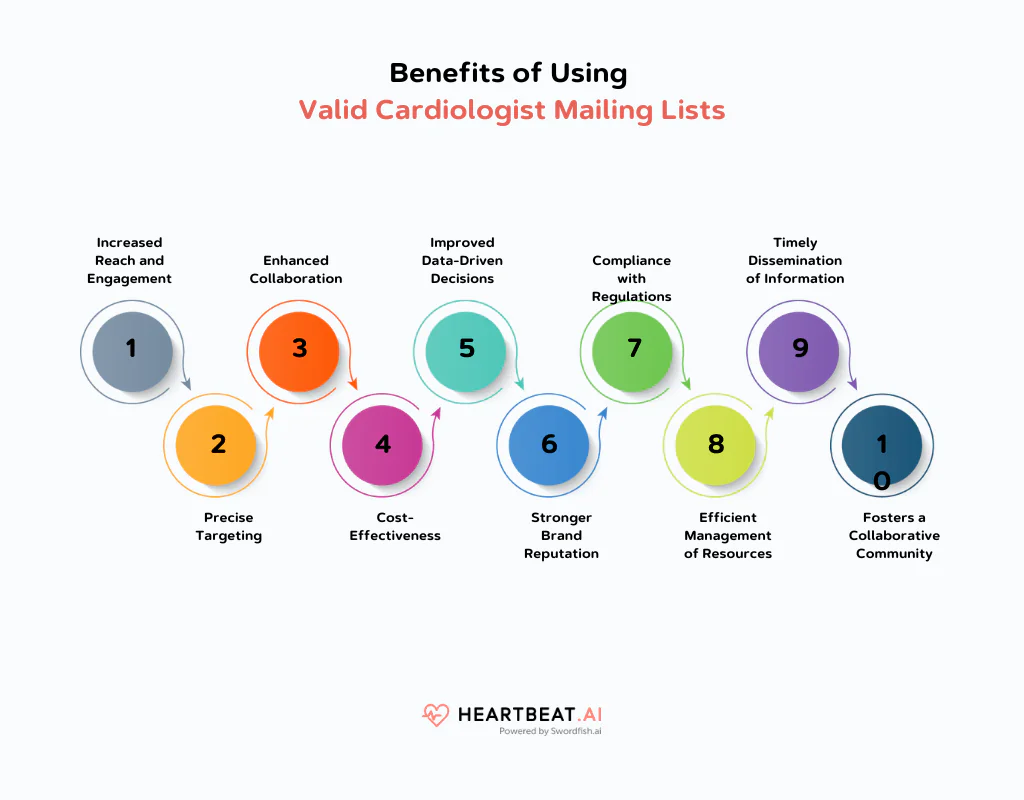
- Better reach and engagement: Messages actually land with practicing cardiologists, which matters for clinical trial recruitment, education programs, and product launches.
- Precise targeting: Clean data supports filtering by specialization (interventional cardiology, electrophysiology, etc.), location, and experience — so outreach goes to the people it’s actually relevant to.
- Easier collaboration: Researchers, device companies, and pharmaceutical teams can connect with the right cardiology contacts without guesswork.
- Lower wasted spend: Fewer bounced emails and dead numbers means your outreach budget goes further.
- Stronger brand trust: Consistent, relevant contact reduces the annoyance factor and builds credibility over time.
- Regulatory alignment: Working from consented, properly sourced data supports compliance efforts tied to healthcare communication rules.
- Less manual cleanup: A well-maintained list frees your team from constant list-scrubbing so they can focus on strategy.
For further exploration of harnessing email lists for healthcare marketing, we invite you to review our article focusing on leveraging chiropractors email list for targeted outreach strategies in the medical domain.
Cardiologist Categories You’ll Find in the List
The list spans multiple cardiology subspecialties, which matters if your outreach needs to be specialty-specific rather than generic.
| Cardiologist Categories |
| Clinical Cardiologists |
| Interventional Cardiologists |
| Electrophysiologists |
| Cardiac Imaging Specialists |
| Heart Failure Specialists |
| Congenital Heart Specialists |
| Cardio-Oncologists |
| Preventive Cardiologists |
| Cardiac Rehabilitation Specialists |
| Cardiac Surgeons |
Cardiologists Available by State
Browse cardiologist contacts by state to narrow outreach to a specific region or licensing jurisdiction.
| Cardiologist By States |
| Cardiologist in Alabama |
| Cardiologist in Alaska |
| Cardiologist in Arizona |
| Cardiologist in Arkansas |
| Cardiologist in California |
| Cardiologist in Colorado |
| Cardiologist in Connecticut |
| Cardiologist in Delaware |
| Cardiologist in Florida |
| Cardiologist in Georgia |
| Cardiologist in Hawaii |
| Cardiologist in Idaho |
| Cardiologist in Illinois |
| Cardiologist in Indiana |
| Cardiologist in Iowa |
| Cardiologist in Kansas |
| Cardiologist in Kentucky |
| Cardiologist in Louisiana |
| Cardiologist in Maine |
| Cardiologist in Maryland |
| Cardiologist in Massachusetts |
| Cardiologist in Michigan |
| Cardiologist in Minnesota |
| Cardiologist in Mississippi |
| Cardiologist in Missouri |
| Cardiologist in Montana |
| Cardiologist in Nebraska |
| Cardiologist in Nevada |
| Cardiologist in New Hampshire |
| Cardiologist in New Jersey |
| Cardiologist in New Mexico |
| Cardiologist in New York |
| Cardiologist in North Carolina |
| Cardiologist in North Dakota |
| Cardiologist in Ohio |
| Cardiologist in Oklahoma |
| Cardiologist in Oregon |
| Cardiologist in Pennsylvania |
| Cardiologist in Rhode Island |
| Cardiologist in South Carolina |
| Cardiologist in South Dakota |
| Cardiologist in Tennessee |
| Cardiologist in Texas |
| Cardiologist in Utah |
| Cardiologist in Vermont |
| Cardiologist in Virginia |
| Cardiologist in Washington |
| Cardiologist in West Virginia |
| Cardiologist in Wisconsin |
| Cardiologist in Wyoming |
How the Data Gets Compiled
Building an accurate cardiologist mailing list is an ongoing process, not a one-time export. Here’s the general approach behind maintaining usable healthcare provider data:
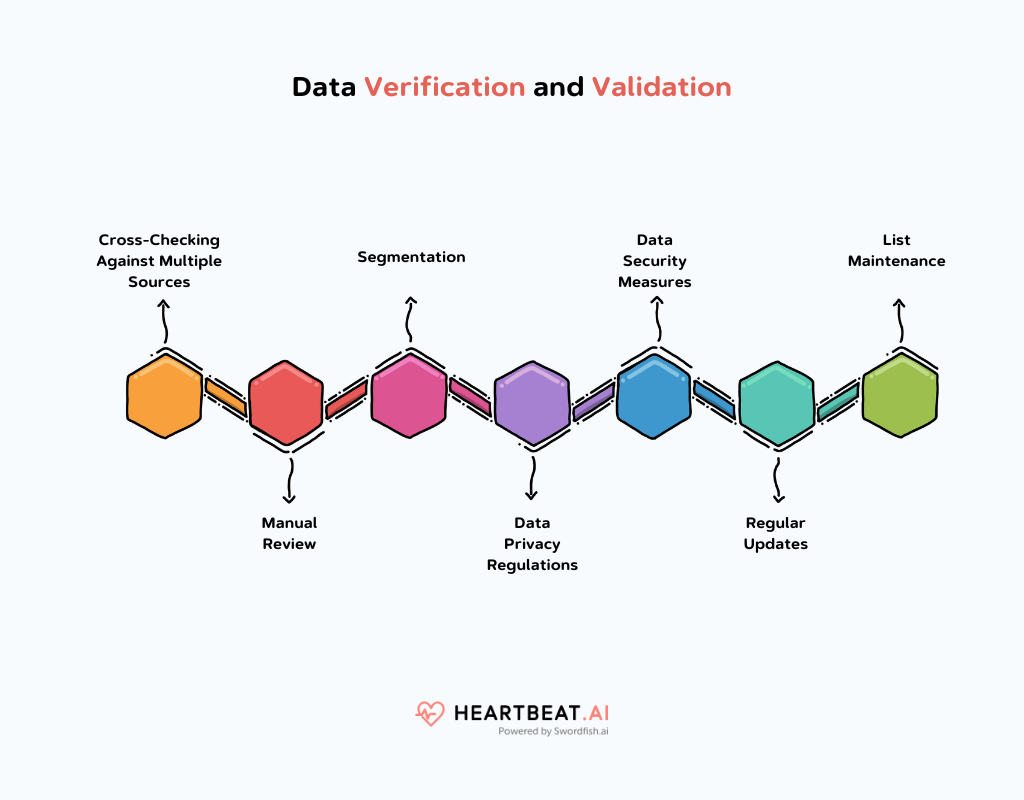
- Cross-checking against multiple sources: Extracted data gets compared across sources to catch discrepancies before it reaches a list.
- Manual review: Data specialists check individual entries rather than relying solely on automated matching.
- Segmentation: Records are organized by location, specialization, and experience so campaigns can be targeted rather than blasted broadly.
- Privacy compliance: Handling of provider data should follow applicable privacy regulations relevant to healthcare contact information.
- Security controls: Encryption, access controls, and periodic audits help protect sensitive contact records.
- Ongoing updates: Lists need regular refreshing to reflect new cardiologists and changed affiliations — a stale list degrades quickly in this field.
Choosing a Cardiologist Mailing List Provider: What to Look For
Not every data vendor treats verification the same way. Before committing budget to a list, it’s worth checking a few things:
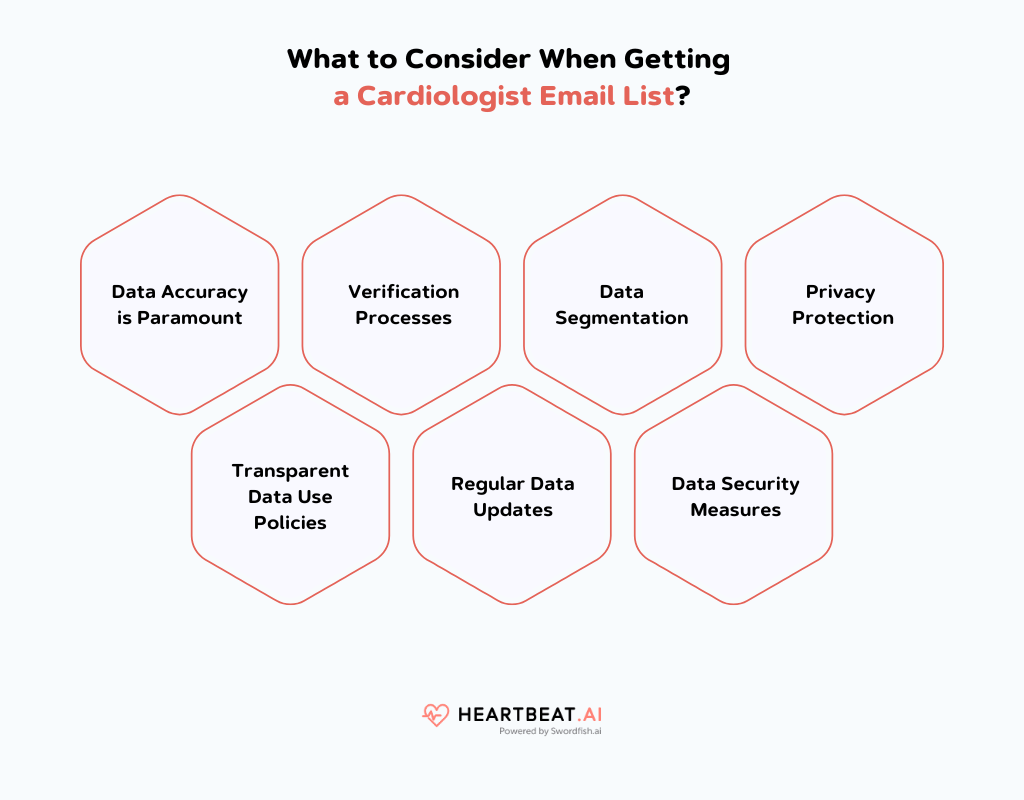
Data accuracy
Outdated contact information leads to failed outreach and wasted spend. Ask how recently the records were verified.
Verification method
Understand how the provider confirms email and phone validity — automated checks alone are weaker than combined automated and manual review.
Segmentation options
A provider that lets you filter by specialty, location, or experience level saves time compared to working from one flat list.
Privacy safeguards
Ask what protections are in place for personal and sensitive contact information, and how consent is handled.
Transparent data-use policies
Clear, published rules on how the list can and can’t be used are a reasonable proxy for how seriously a provider takes compliance.
Update frequency
Contact details for physicians change regularly, so ask how often the underlying data is refreshed.
Security measures
Confirm what protects the list from unauthorized access — this matters both for compliance and for protecting your own outreach investment.
Dive into our comprehensive article discussing the utilization of forensic neurologists email lists for strategic outreach in the healthcare sector, offering valuable insights for your marketing endeavors.
Who Actually Uses a Cardiologist Email List
Healthcare organizations
- Pharmaceutical and medical device companies: Reach target audiences for clinical trials, product launches, and educational programs.
- Researchers: Recruit study participants and share findings relevant to cardiology practice.
- Healthcare marketing agencies: Build campaigns on behalf of hospitals, clinics, and other providers.
- Medical associations and societies: Communicate with members about events, education, and industry news.
- CME providers: Promote courses and programs to cardiologists pursuing continuing education.
Non-healthcare organizations
- Medical publishers: Promote journals, textbooks, and other publications relevant to cardiology.
- Financial institutions: Offer services tailored to healthcare professionals.
- Technology companies: Introduce healthcare-specific software to cardiology practices.
- Recruitment agencies: Connect candidates with open cardiology roles.
- Event organizers: Promote conferences, workshops, and other relevant events.
Individuals
- Cardiologists networking with peers: Connect for collaboration, research partnerships, and knowledge exchange.
- Medical students and trainees: Access mentorship and resources from practicing cardiologists.
- Patients and caretakers: Look up information about a specific cardiologist’s background or expertise.
Putting the List to Work
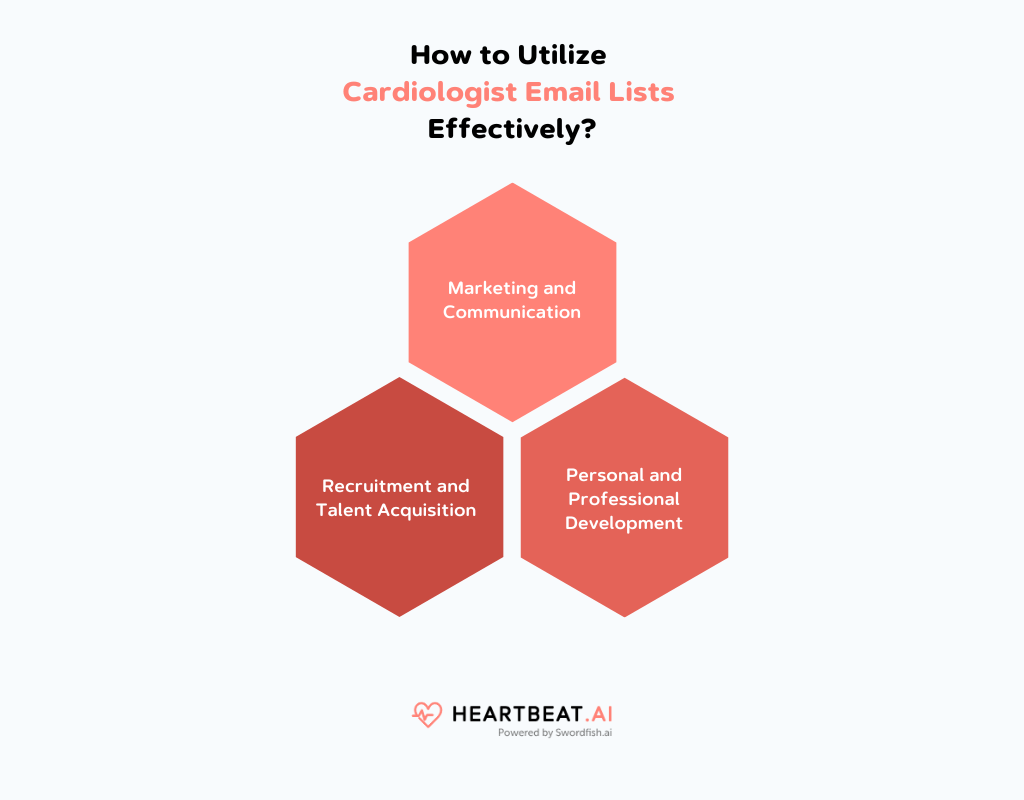
Marketing and communication
- Segment first: Break the list down by specialization, location, and experience before drafting a single message.
- Announce with purpose: Save launches and major updates for cardiologists who are actually relevant to them.
- Share substance: Research findings and practical insights build more trust than promotional copy alone.
- Promote relevant events: Conferences and webinars perform better when targeted by specialty.
- Support patient education: Some organizations partner with cardiologists on outreach materials for patients.
Recruitment
- Target by specialty and location: Advertise open roles to cardiologists whose background actually matches the position.
- Build a pipeline early: Engaging medical students and trainees now can pay off in future hiring cycles.
- Play the long game: Not every contact converts immediately — relationship-building matters for recruitment outreach.
Professional development
- Network deliberately: Use contact lists to find peers or mentors in specific subspecialties.
- Stay current: Targeted updates keep you informed on research and practice trends without wading through irrelevant noise.
The Bottom Line
A cardiologist email list is only as useful as its accuracy and how well it’s segmented. Treat it as an ongoing resource that needs periodic verification, not a static file you buy once and forget. Whether the goal is recruitment, education, research collaboration, or product marketing, the return depends on reaching cardiologists who are actually the right fit — and reaching them at a current, working contact point.
FAQs
How do I ensure the accuracy of a cardiologist email list?
Look for a provider that runs multi-step verification and refreshes its data on a regular schedule rather than relying on a single static export.
What are the best ways to segment a cardiologist email list?
Common approaches include filtering by subspecialty (interventional cardiology, electrophysiology, and similar), by geography for regional campaigns, and by experience level when the message differs for early-career versus established physicians.
Is it ethical to use a cardiologist email list for marketing?
It depends on consent and how the outreach is handled. Physicians receive a high volume of email, so clear opt-out options and honest disclosure of how contact information was sourced matter for compliant, respectful outreach.
How can I use a cardiologist email list for recruitment?
Focus messaging on the specifics of the role and organization — team, projects, and practical benefits — rather than generic outreach, and target by specialty and location so the message actually fits the recipient.
Can a cardiologist email list support personal or professional development?
Yes, within reason. It can help identify potential mentors, connect with peers in a subspecialty, or find out about relevant conferences and resources — though it works best as one part of a broader networking effort.

