Last updated: August 31, 2026
Minnesota’s healthcare system includes major academic medical centers and community hospitals that rely on infectious disease specialists for diagnosis, treatment planning, and infection control. For recruiters, sales teams, and healthcare marketers, finding accurate contact information for these specialists is often the bottleneck between a good outreach strategy and a stalled one.
This guide covers what to look for in an infectious disease specialist contact list, the common obstacles in sourcing this data in Minnesota, and how Heartbeat’s database approaches the problem.
What’s on this page:
Get an Infectious Disease Specialist Email List for Minnesota from Heartbeat
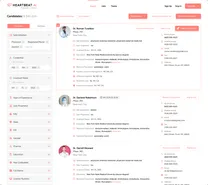
Heartbeat.ai maintains a searchable database of licensed healthcare professionals across the United States, including infectious disease specialists. You can apply filters by specialty, location, and other criteria to narrow down profiles and reach the right contacts faster.
Our data set covers different subspecialties within infectious disease, including HIV/AIDS care, tropical medicine, pediatric infectious disease, and clinical virology and microbiology. It also includes infectious disease consultants, trainees, research fellows, epidemiologists, and professionals working in pharma and biotech.
If you’re building a list for recruitment, business development, or professional networking, contact us to see how the database maps to your specific target criteria before committing to a campaign.
Healthcare Landscape in Minnesota
Minnesota’s provider network includes Mayo Clinic, University of Minnesota Medical School’s teaching hospitals, and systems like Abbott Northwestern Hospital. Mayo Clinic in particular is known for handling complex and rare disease cases, which shapes the concentration of infectious disease expertise in the state.
Beyond these flagship institutions, smaller hospitals and regional clinics also employ infectious disease specialists, particularly in areas with active transplant, oncology, or immunocompromised patient populations where infection risk management is a daily concern.
Why Accurate Contact Data Matters
Outdated or incomplete contact information creates real friction in three areas:
- Recruitment: a stale phone number or inactive email address can mean a qualified candidate never sees your outreach, or worse, that you lose them to a competing offer while chasing the wrong contact details.
- Clinical coordination: when specialists need to consult quickly on a case, delays caused by bad contact data can slow down decision-making.
- Professional networking: conferences, research collaborations, and referral relationships depend on being able to reach the right person without going through several gatekeepers.
None of this replaces a hospital’s internal credentialing or clinical communication systems. A commercial contact list is a sourcing tool, not a substitute for verified provider directories used in active patient care.
Common Obstacles to Finding This Data in Minnesota
Manually building a list of infectious disease specialists usually means combing through hospital directories, state licensing boards, and professional association rosters. This approach has a few recurring problems:
- Directory listings often lag behind actual staffing changes, so titles, affiliations, or contact details can be out of date by the time you find them.
- Privacy and confidentiality rules limit how much personal contact information hospitals or boards will publish directly.
- Cross-referencing multiple sources to confirm a single specialist’s current role and contact details is time-consuming, especially at scale.
Centralized provider databases address some of these gaps by aggregating public licensing records, professional listings, and other sourced data into one searchable system with filters for specialty, location, and credentials. That doesn’t eliminate the need for periodic re-verification, since provider mobility (new jobs, retirements, practice changes) is constant in any specialty.
What You Get in Heartbeat’s Infectious Disease Specialist Contact List
Heartbeat.ai’s database is built to simplify sourcing infectious disease specialists across the country, including Minnesota. Each profile is designed to include:
- Specialist name
- Location (city and state)
- Contact numbers (work, cell, mobile)
- Email address
- Specialization
- Years of experience
- Sole proprietor status
- Licensed states
- License number
- Fax
- Address
Infectious Disease Specialist Lists by State
Browse infectious disease specialist contact lists in other states below.
How Heartbeat Compiles Contact Data
Heartbeat.ai aggregates provider data from over 200 official, private, and public sources to build out contact profiles for U.S. healthcare professionals, including cell phone numbers and personal email addresses.
Heartbeat reports coverage of roughly 11 million U.S. healthcare professionals, with around 8.8 million direct cell numbers, 9.3 million personal email addresses, and 6 million direct dial numbers in the database. The company describes its predictive modeling as reaching approximately 84% accuracy on cell phone numbers and 92% on personal emails for a first-attempt match. These figures reflect Heartbeat’s own reported performance and are worth validating against your own campaign results over time.
Evaluating a Contact List Before You Buy
Not every provider database is built the same way. Before committing budget to a list, it helps to check a few things:
- Refresh cadence: ask how often the underlying data is updated, since provider job changes happen constantly.
- Match rate transparency: a vendor that shares its accuracy methodology is easier to evaluate than one that only offers a headline number.
- Filtering depth: can you narrow by subspecialty, state license, or years of experience, or only by broad specialty category?
- Compliance posture: confirm how the vendor sources and handles data given healthcare privacy expectations, even when the data itself is professional (not patient) contact information.
Who Uses Infectious Disease Specialist Contact Lists?
These lists tend to serve a specific set of use cases rather than general-purpose marketing. Common users include recruiters filling clinical openings, medical device or pharma sales teams targeting infectious disease practices, researchers coordinating with clinical collaborators, and healthcare marketing teams promoting relevant products or services to this specialty.
Using the List Responsibly
A contact list is only as useful as the outreach built around it. A few practical guardrails:
- Keep messages specific to the specialist’s subspecialty rather than sending generic outreach to the entire list.
- Respect professional communication norms; infectious disease specialists are often balancing high clinical caseloads, so concise, relevant messaging performs better than long pitches.
- Never include patient-identifiable information in outreach communications.
- Track bounce and response rates so you can flag and correct bad data over time rather than repeatedly contacting stale numbers or addresses.
Conclusion
Finding accurate contact information for infectious disease specialists in Minnesota is a real operational challenge, not just a data entry problem. Centralized databases like Heartbeat’s can reduce the manual work involved, but no list replaces ongoing verification, especially in a field where provider roles shift frequently. Used carefully, this kind of data can meaningfully speed up recruitment and outreach workflows.
Frequently Asked Questions
How can I find a list of infectious disease specialists in Minnesota?
You can search hospital directories, professional association listings, or use a provider database that lets you filter by specialty and location.
What qualifications should I look for in an infectious disease specialist?
Board certification in infectious disease, relevant clinical experience, and current hospital or practice affiliation are common indicators worth checking.
Are there notable infectious disease specialists in Minnesota?
Minnesota’s major academic centers, including Mayo Clinic and University of Minnesota Medical School affiliates, employ infectious disease specialists across a range of subspecialties.