Last updated: August 31, 2026
Building outreach lists for infectious disease specialists in Florida sounds simple until the contact details turn out to be stale. A name and a hospital affiliation only get you so far — recruiters, pharma marketers, and network managers all need working phone numbers and email addresses, not just a directory entry that hasn’t been checked in two years.
This guide covers what makes Florida’s infectious disease specialist landscape distinct, why accurate contact data matters more than it might seem, and how a verified provider database like Heartbeat’s fits into a practical outreach workflow.
What’s on this page:
Get an email list of infectious disease specialists in Florida from Heartbeat
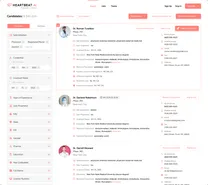
Heartbeat.ai maintains a searchable database of licensed healthcare professionals across the United States, including infectious disease specialists. You can filter by specialty, location, and other criteria to build a targeted contact list instead of cold-emailing a generic directory.
Infectious disease is a broad specialty, and the professionals working under that umbrella vary quite a bit in focus. Depending on your outreach goal, you might be looking for:
- Clinical infectious disease specialists
- Pediatric infectious disease specialists
- HIV infectious disease specialists
- Travel medicine specialists
- Infection prevention and control specialists
- Tuberculosis and respiratory disease specialists
- Medical microbiologists
- Epidemiologists
Each of these subgroups tends to sit in different practice settings — academic medical centers, public health departments, hospital infection-control offices — so a list built around a single generic “infectious disease” tag often misses the mark. Filtering by role and setting before you start outreach saves a lot of wasted sends.
Florida’s healthcare landscape for infectious disease care
Florida’s infectious disease care is anchored by academic and hospital systems with dedicated divisions, including UF Health Shands in Gainesville and Mayo Clinic in Jacksonville. UF Health’s infectious disease program, for example, runs through a Division of Infectious Diseases and Global Medicine that fights infectious diseases through comprehensive treatment plans, patient education on preventative techniques and following guidelines for standardized care. Pediatric infectious disease and HIV care are handled through dedicated subspecialty teams, including a Pediatric HIV/AIDs program that provides HIV care to infants, children, and adolescents in North-Central Florida at Gainesville, as well as at satellite clinics in Tallahassee, Panama City, and Pensacola.
Beyond these flagship systems, the state has a wide mix of community hospitals, public health departments, and independent infectious disease practices — which is exactly why building a single, current list is harder than it looks. Access and affordability gaps persist in some regions, particularly for underserved communities, and that unevenness shows up in provider directories too: some regions are thick with listings, others are thin.
Why accurate contact information actually matters here
For patients or referring clinicians, a working phone number for an infectious disease specialist can shorten the time to a consult, which matters for time-sensitive conditions. For recruiters, reaching a specialist directly — rather than through a general hospital switchboard — reduces the odds that an opportunity dies in a voicemail queue.
For anyone doing collaborative or research outreach, current contact details are what actually let conversations happen: sharing findings, coordinating on a case, or simply keeping a professional relationship alive over time. None of that works if the email bounces or the number has been reassigned.
Why finding a current list is harder than it should be
A few recurring problems come up when people try to build this kind of list themselves:
- Outdated directories. Many public and hospital directories aren’t updated in real time, so inactive or relocated providers still show up.
- Inconsistent data formats. Names, specialties, and locations get entered differently across sources, making it hard to merge lists cleanly.
- Privacy and compliance friction. Contact details are sometimes withheld or obscured because of privacy rules, which is reasonable but slows down legitimate outreach.
- Credential verification. Confirming that a listed specialist is actually licensed and in good standing takes extra steps most people skip.
A workable fix is a database that’s refreshed on an ongoing basis and cross-references licensing status, rather than a static PDF or a directory that hasn’t been touched since it was published. It won’t eliminate every gap, but it narrows the window between when a provider’s information changes and when your list reflects that.
What you get in a Heartbeat contact list for infectious disease specialists
Instead of just names and cities, a Heartbeat contact list includes the details needed to actually start a conversation:
- Specialist name
- Location
- Contact numbers (work, cell, mobile)
- Email address
- Specialization
- Years of experience
- Sole proprietor status
- Licensed states
- License number
- Fax
- Address
 Accuracy & coverage of personal contact info were unrivaled by other platforms… this gives any healthcare recruiter a competitive advantage when engaging hard-to-reach healthcare providers.
Senior Growth Strategist





Infectious disease specialist lists by state
Looking outside Florida? Browse contact lists for infectious disease specialists in other states below.
Where this data comes from
Heartbeat.ai aggregates provider information — including personal emails and cell phone numbers — from a wide range of official, private, and public sources, then applies predictive modeling to fill in gaps and verify existing entries. That combination of sourcing and modeling is what separates a live database from a static directory: it’s checked and re-checked rather than published once and left alone.
No contact database is perfect. Providers change jobs, numbers get reassigned, and email addresses get retired. Treat any list — Heartbeat’s included — as a strong starting point rather than a guarantee, and build a quick verification step into your outreach workflow for high-stakes contacts.
Who actually uses a list like this
In practice, the buyers of an infectious disease specialist contact list tend to fall into a few camps: recruiters sourcing candidates for hospital or public health roles, pharma and medical device marketers targeting a clinical specialty, market researchers running physician surveys, and nonprofits doing outreach around infectious disease programs. Each use case has its own tone and cadence, but all of them depend on the same basic thing — a number or email that actually reaches the person.
A quick workflow for using the list well
- Segment by subspecialty first (pediatric ID, HIV, infection control, etc.) rather than treating “infectious disease specialist” as one audience.
- Lead with a short, specific reason for contact — vague outreach gets ignored by busy clinicians.
- Respect quiet hours and clinical schedules; timing matters more with physicians than with most other professional audiences.
- Keep a compliance checklist for anti-spam and privacy rules handy before any bulk send.
- Refresh or re-verify contacts periodically rather than assuming a purchased list stays accurate indefinitely.
Conclusion
Florida’s infectious disease specialists are spread across academic medical centers, community hospitals, and public health departments, and no single free directory keeps up with all of it. A maintained, filterable database narrows that gap and gives recruiters, marketers, and researchers a more reliable starting point for outreach — provided it’s used with a bit of ongoing verification rather than treated as a permanent, static record.
Frequently Asked Questions
What is an infectious disease specialist?
An infectious disease specialist is a physician who focuses on the prevention, diagnosis, and treatment of infections caused by bacteria, viruses, fungi, and parasites.
How can I find a list of infectious disease specialists in Florida?
Options include the Florida Department of Health’s provider resources, individual hospital system directories such as UF Health or Mayo Clinic, and specialized provider databases that consolidate and verify contact details across sources.
What qualifications should I look for in an infectious disease specialist in Florida?
Relevant factors include board certification in infectious disease, completion of an accredited fellowship, active state licensure, and clinical experience relevant to the condition in question.
Do I need a referral to see an infectious disease specialist in Florida?
That depends on your insurance plan. Check with your insurer or primary care physician to confirm whether a referral is required before scheduling.