Last updated: August 31, 2026
Locating current, working contact information for internal medicine specialists in Arkansas is a recurring headache for healthcare recruiters, medical sales teams, and marketing staff. Directories go stale fast — physicians change practices, retire, or shift specialties — and generic online searches rarely turn up direct phone numbers or personal email addresses.
This guide covers what a usable internal medicine specialist list should include, why Arkansas presents some specific sourcing challenges, and how a data provider like Heartbeat.ai fits into a recruitment or outreach workflow.
What’s on this page:
Get an Email List of Internal Medicine Specialists in Arkansas from Heartbeat
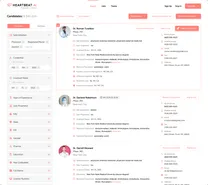
Heartbeat.ai maintains a searchable database of licensed healthcare professionals across the United States, including internal medicine specialists in Arkansas. Filters let you narrow results by specialty, location, and other criteria so you can build a targeted contact list rather than sorting through irrelevant profiles.
Internal medicine covers a wide range of sub-specialties, and a well-organized contact list typically breaks these out separately rather than lumping every provider under one label. Common sub-specialties include:
- Cardiology — heart and blood vessel conditions
- Endocrinology, diabetes, and metabolism — gland and hormone disorders
- Gastroenterology — digestive system conditions
- Hematology — blood, bone marrow, and lymph node disorders
- Infectious disease
- Nephrology — kidney conditions
- Oncology — cancer care
- Pulmonology — lung and respiratory conditions
- Rheumatology — joint, muscle, and bone conditions
Segmenting a list this way matters for outreach: a message aimed at a cardiologist rarely fits a rheumatologist, and treating all internal medicine physicians as one audience tends to lower response rates.
Healthcare Landscape in Arkansas
Arkansas’s internal medicine providers work across a mix of academic medical centers, children’s hospitals, and regional health systems. The University of Arkansas for Medical Sciences (UAMS) is a major presence in medical education, research, and clinical care, while Arkansas Children’s Hospital serves as the state’s pediatric referral center. Baptist Health operates multiple hospitals and clinics across the state.
Because many specialists split time between academic appointments, hospital employment, and private practice, a single directory rarely captures the full picture — which is part of why static lists go out of date quickly.
Why Accurate Contact Information Matters
Accurate, current contact data for internal medicine specialists serves a few distinct purposes:
- Recruitment: Recruiters need direct lines to evaluate candidates’ experience and fit without relying on front-desk gatekeeping or outdated hospital directories.
- Referral and care coordination: Correct contact details help other providers route referrals or follow-up questions to the right specialist without delay.
- Professional networking: Associations, research collaborators, and medical device or pharma reps rely on working emails and numbers to initiate legitimate professional contact.
In each case, the cost of bad data isn’t just wasted time — it’s missed opportunities and, in recruitment specifically, longer time-to-hire.
Why Finding This Data in Arkansas Is Harder Than It Looks
A few factors make Arkansas specifically tricky for building an internal medicine contact list:
- Rural distribution: Specialists are spread across a largely rural state, and many practice outside major metro areas covered by standard directories.
- Provider turnover: Physicians change practice locations, join or leave hospital systems, or retire, and printed or lightly maintained directories don’t keep pace.
- No single centralized source: Providers appear across hospital systems, private practices, and academic faculty listings, with no one authoritative registry that covers all of them.
- Privacy restrictions: Some contact details are intentionally not published, which limits what basic web scraping alone can surface.
Data vendors address this by combining multiple public and licensed sources, cross-checking for changes in practice affiliation, and refreshing records on an ongoing basis rather than treating a list as a one-time export.
What a Heartbeat.ai Contact Record Includes
Heartbeat.ai’s database is built to reduce the manual work of tracking down internal medicine specialists one at a time. A typical record includes:
- Internal medicine specialist name
- Location
- Contact numbers (work, cell, mobile)
- Email address
- Specialization
- Years of experience
- Sole proprietor status
- Licensed states
- License number
- Fax
- Address
Internal Medicine Specialist Lists by State
Heartbeat.ai’s coverage extends beyond Arkansas. Below are links to internal medicine specialist lists in other states.
| Internal medicine specialist list by states |
|---|
| Internal medicine specialist list in Alabama |
| Internal medicine specialist list in Alaska |
| Internal medicine specialist list in Arizona |
| Internal medicine specialist list in Arkansas |
| Internal medicine specialist list in California |
| Internal medicine specialist list in Colorado |
| Internal medicine specialist list in Connecticut |
| Internal medicine specialist list in Delaware |
| Internal medicine specialist list in Florida |
| Internal medicine specialist list in Georgia |
| Internal medicine specialist list in Hawaii |
| Internal medicine specialist list in Idaho |
| Internal medicine specialist list in Illinois |
| Internal medicine specialist list in Indiana |
| Internal medicine specialist list in Iowa |
| Internal medicine specialist list in Kansas |
| Internal medicine specialist list in Kentucky |
| Internal medicine specialist list in Louisiana |
| Internal medicine specialist list in Maine |
| Internal medicine specialist list in Maryland |
| Internal medicine specialist list in Massachusetts |
| Internal medicine specialist list in Michigan |
| Internal medicine specialist list in Minnesota |
| Internal medicine specialist list in Mississippi |
| Internal medicine specialist list in Missouri |
| Internal medicine specialist list in Montana |
| Internal medicine specialist list in Nebraska |
| Internal medicine specialist list in Nevada |
| Internal medicine specialist list in New hampshire |
| Internal medicine specialist list in New jersey |
| Internal medicine specialist list in New mexico |
| Internal medicine specialist list in New york |
| Internal medicine specialist list in North carolina |
| Internal medicine specialist list in North dakota |
| Internal medicine specialist list in Ohio |
| Internal medicine specialist list in Oklahoma |
| Internal medicine specialist list in Oregon |
| Internal medicine specialist list in Pennsylvania |
| Internal medicine specialist list in Rhode island |
| Internal medicine specialist list in South carolina |
| Internal medicine specialist list in South dakota |
| Internal medicine specialist list in Tennessee |
| Internal medicine specialist list in Texas |
| Internal medicine specialist list in Utah |
| Internal medicine specialist list in Vermont |
| Internal medicine specialist list in Virginia |
| Internal medicine specialist list in Washington |
| Internal medicine specialist list in West virginia |
| Internal medicine specialist list in Wisconsin |
| Internal medicine specialist list in Wyoming |
How This Data Gets Compiled
Building a reliable specialist list is less about finding one perfect source and more about combining and reconciling several imperfect ones — licensing boards, hospital staff directories, NPI registry data, and professional association listings each cover part of the picture. Records need regular re-verification because practice affiliations and contact details change often, particularly for physicians who move between hospital employment and private practice.
Heartbeat.ai applies this kind of multi-source aggregation and ongoing refresh process to build out its provider records, including direct cell numbers and personal emails where available, rather than relying solely on published office lines.
Who Uses an Internal Medicine Specialist Contact List
These lists get used differently depending on the goal:
- Healthcare recruiters sourcing candidates for hospital or practice openings
- Medical device and pharma sales teams targeting specialists relevant to their product line
- Marketing teams promoting continuing education, conferences, or clinical services
- Researchers recruiting participants or expert reviewers for studies
- Referral coordinators connecting patients with the right specialist
Using the List Effectively — A Few Ground Rules
A contact list is only as useful as the outreach built around it. Some practical guidelines:
- Lead with a clear, specific reason for reaching out — physicians have limited time and little patience for vague pitches.
- Segment by sub-specialty before sending anything; a cardiology-focused message sent to a nephrologist wastes both sides’ time.
- Respect opt-outs and applicable communication regulations rather than treating the list as a mass-blast tool.
- Keep a light follow-up cadence rather than repeated unsolicited contact.
Recruitment outreach and marketing outreach should generally use different messaging, even when pulling from the same underlying list.
Conclusion
Building an accurate internal medicine specialist list in Arkansas takes more effort than a single directory search, given the state’s rural geography and the pace at which providers change practices. A maintained database like Heartbeat.ai’s can shortcut that work by combining multiple sources and refreshing records over time, giving recruiters and marketers a more current starting point for outreach.
Frequently Asked Questions
How can I find an internal medicine specialist in Arkansas?
You can search a healthcare provider database, check hospital system directories, or ask for a referral from a primary care physician.
What qualifications should I look for in an internal medicine specialist?
Board certification in internal medicine and relevant experience with the condition or population you’re focused on are reasonable starting points to check.
How current is contact data for specialists typically kept?
Reliable providers refresh their databases on an ongoing basis, since physicians frequently change practice locations, affiliations, or specialties.