Last updated: August 28, 2026

Reaching infectious disease nurses through cold outreach or generic staffing databases rarely works. Registered nurses held about 3.4 million jobs in 2024, and infectious disease specialization is a small slice of that total, spread across hospitals, public health departments, transplant centers, and academic medical systems. A list that isn’t segmented by specialty and refreshed regularly turns into wasted sends and bounced calls fast.
This page breaks down what a usable infectious disease nurses contact list actually needs to contain, how compliant data providers typically build and maintain one, and how different teams — recruiters, medical device reps, event organizers, consultants — put the list to work without burning trust or violating outreach laws.
What’s on this page:
What a Working Infectious Disease Nurses List Should Include
A list built for outreach or hiring needs more than a name and an email address. At minimum, look for:
- Verified contact details: current work and mobile numbers, and a professional email address that’s been checked for deliverability, not just scraped from a directory.
- Practice-level detail: specialization, years of experience, licensed states, and license number, so you can filter down to the right subset instead of blasting everyone.
- Location data: state and facility address, useful for regional campaigns, event invitations, or compliance-driven segmentation.
- Refresh cadence: nurses change employers, get licensed in new states, or leave clinical roles. A list that isn’t updated regularly degrades within months.
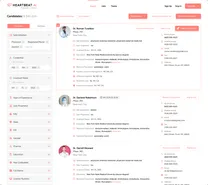
Data Fields Commonly Found in an Infectious Disease Nurses List
- Name
- Location
- Contact numbers (work, cell, mobile)
- Email address
- Specialization
- Years of experience
- Sole proprietor status
- Licensed states
- License number
- Fax
- Address
 Accuracy & coverage of personal contact info were unrivaled by other platforms… this gives any healthcare recruiter a competitive advantage when engaging hard-to-reach healthcare providers.
Senior Growth Strategist





Why a Verified List Matters More Than a Big One
Size alone doesn’t make a list useful. A database of a hundred thousand infectious disease nurse contacts that’s 40% outdated performs worse than a smaller, current one. Here’s where accurate lists actually pay off:
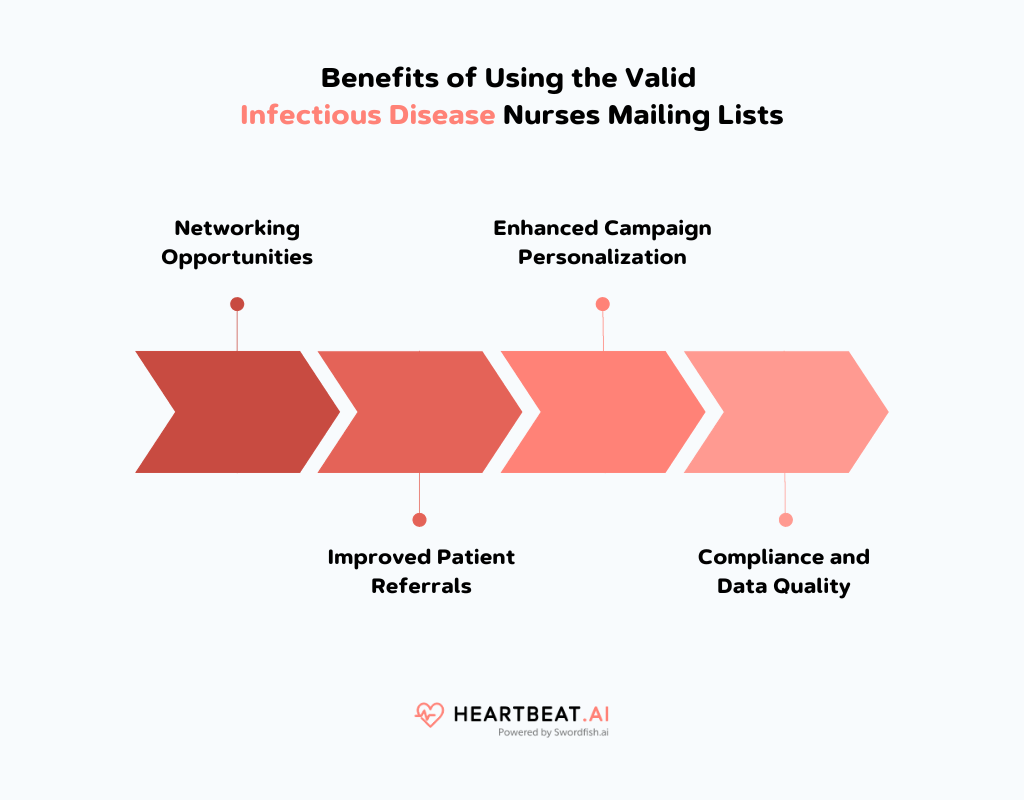
Networking and Referral Pathways
A current list makes it easier to connect with the right specialist for a collaboration, referral, or industry conversation instead of guessing who’s still in the role.
More Efficient Referrals
Nurses and care coordinators can locate the right infectious disease specialist faster when contact data is accurate, which matters in time-sensitive referral situations.
Personalization That Actually Lands
Segmenting by specialization or years of experience lets you write messages that read like they were written for that recipient, not for everyone in nursing.
Compliance and Data Hygiene
Using a list that’s maintained with privacy law in mind reduces legal exposure and signals professionalism, which matters when you’re trying to build long-term relationships in healthcare.
Infectious Disease Nurse Categories You’ll Find in a Segmented List
Segmentation by subspecialty is what separates a useful list from a name dump. Common categories include:
| General Infectious Disease Nurses |
| Pediatric Infectious Disease Nurses |
| Transplant Infectious Disease Nurses |
| Bacterial Infectious Disease Nurses |
Infectious Disease Nurses by State
State-level filtering matters for licensure-specific outreach, regional hiring, or geographically targeted event invitations. Browse the directory of infectious disease nurses by state below.
How This Kind of List Gets Built and Maintained
A workable process for compiling infectious disease nurse contact data generally follows a few stages, regardless of vendor:
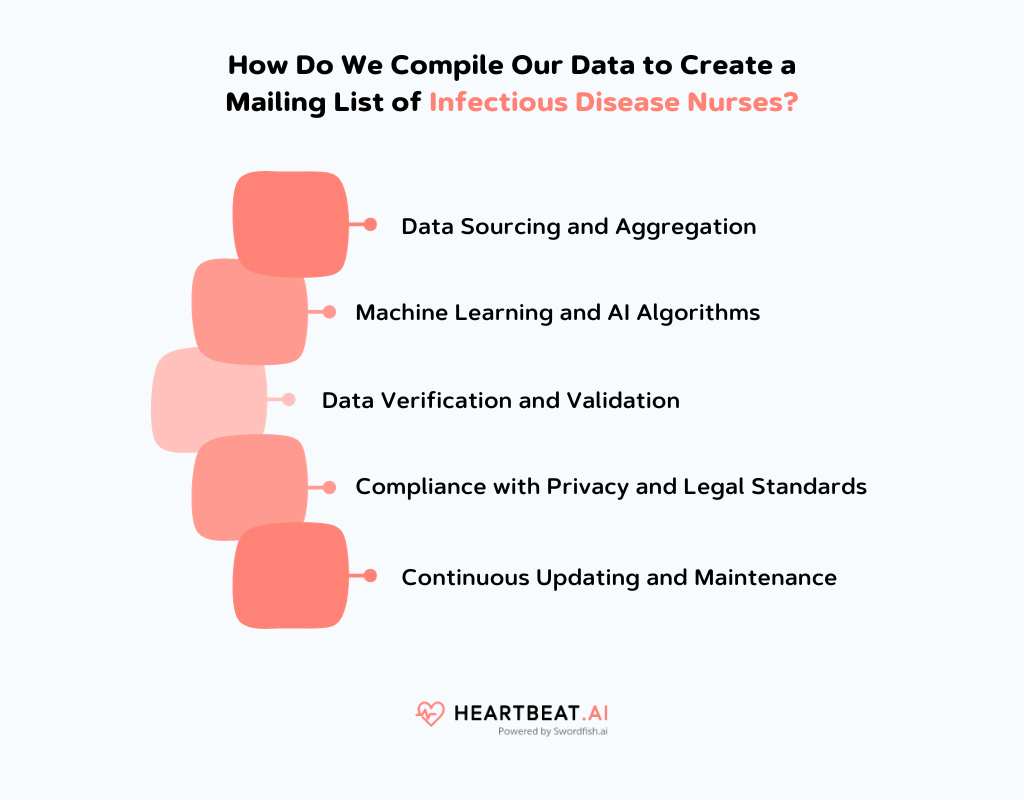
Sourcing from Multiple Records
Data gets pulled from medical registries, licensing boards, and healthcare directories rather than a single source, which reduces blind spots and improves coverage across specialties.
Automated Matching and Organization
Matching algorithms help cross-reference records across sources so duplicate or conflicting entries get flagged rather than shipped to customers.
Manual and Automated Verification
Automated checks catch obvious errors, but verification against license status and employer records is what actually confirms an entry is current.
Privacy and Legal Compliance
Any provider handling this kind of data in the U.S. needs a process built around HIPAA obligations and general data protection expectations, particularly around how contact data is sourced and stored.
Ongoing Refresh Cycles
Because nurses change jobs, states, and specialties, a list that isn’t re-verified on a schedule starts decaying almost immediately after it’s built.
If you’re building out broader clinical outreach, related specialty lists like a Geriatric Nurses Email List or a Plastic Surgery Nurses Email List can round out a broader nursing outreach strategy.
What to Look For in a Provider
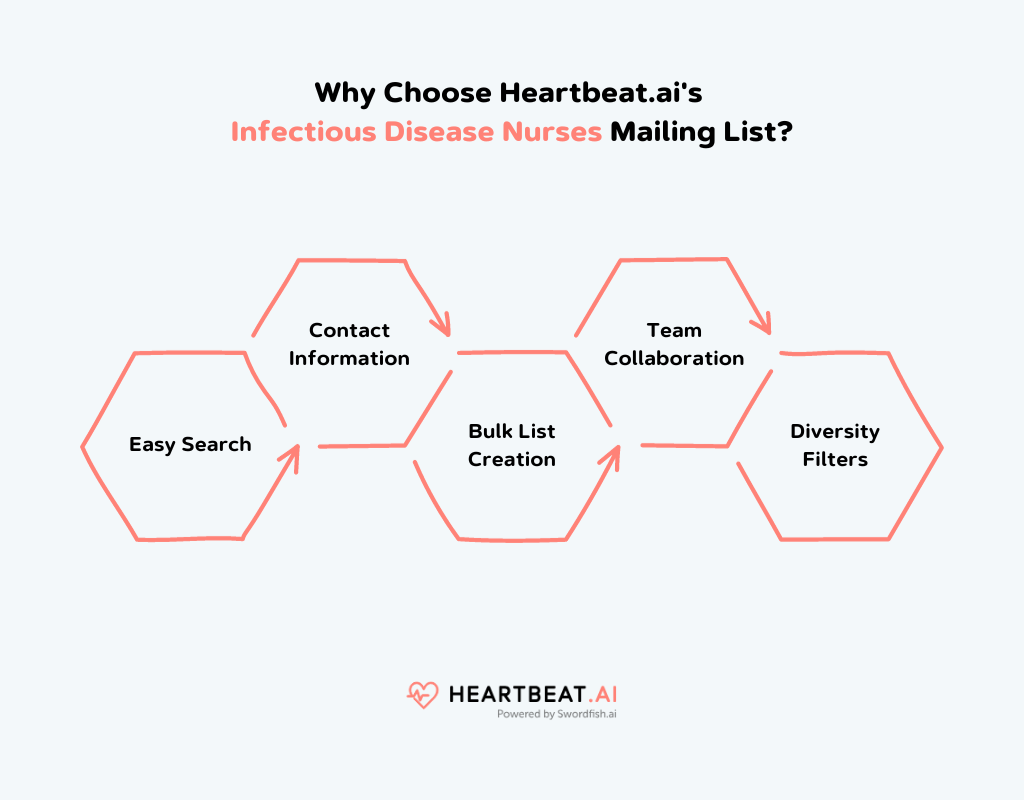
Search and Filtering
You should be able to filter by specialty and subspecialty quickly instead of manually sorting through a flat export.
Direct Contact Access
Look for platforms that surface both email and mobile numbers directly, rather than requiring a separate lookup step for phone data.
Bulk List Building
For larger campaigns, the ability to build lists in bulk saves meaningful time compared to manual, one-by-one contact collection.
Team Access Controls
If multiple people on your team need access, look for role-based permissions so data use stays organized and auditable.
Filtering for Diverse Candidate Pools
For recruiting use cases, filters that support building a diverse candidate pool can help teams meet broader hiring goals.
What to Check Before You Buy a List
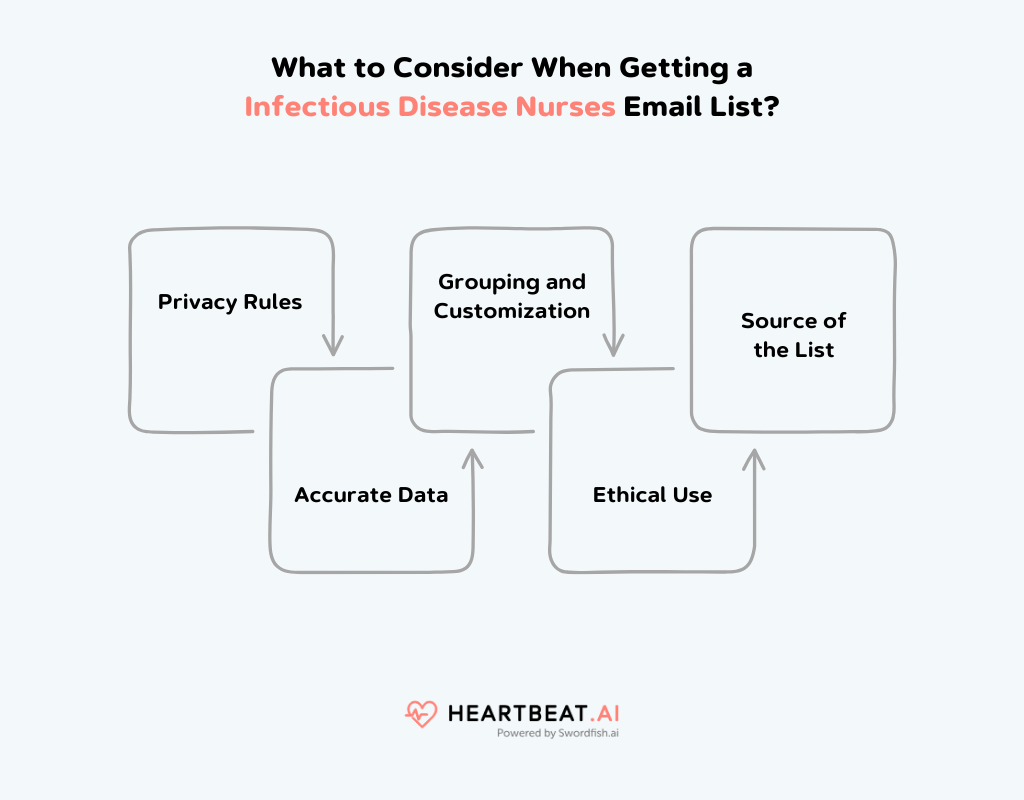
Privacy Compliance
Data use should follow applicable privacy law — GDPR if you’re operating in or reaching contacts in Europe, and HIPAA considerations relevant to U.S. healthcare data handling. Skipping this step risks penalties and reputational damage.
Data Accuracy
Confirm the list is current and reflects nurses who are actively practicing. Outdated records waste budget and can damage your sender reputation.
Segmentation Options
Check whether you can filter by location, experience, or specialization before you buy. Segmentation is what makes targeted outreach possible instead of generic blasts.
Intended Use
Be clear about why you’re contacting this audience. Outreach should offer something genuinely relevant to the recipient’s work, not just a sales pitch dressed as networking.
Source Transparency
Ask how the provider sources and verifies its data. Vendors that can’t explain their methodology are a red flag on both quality and compliance grounds.
Who Actually Uses This Kind of List
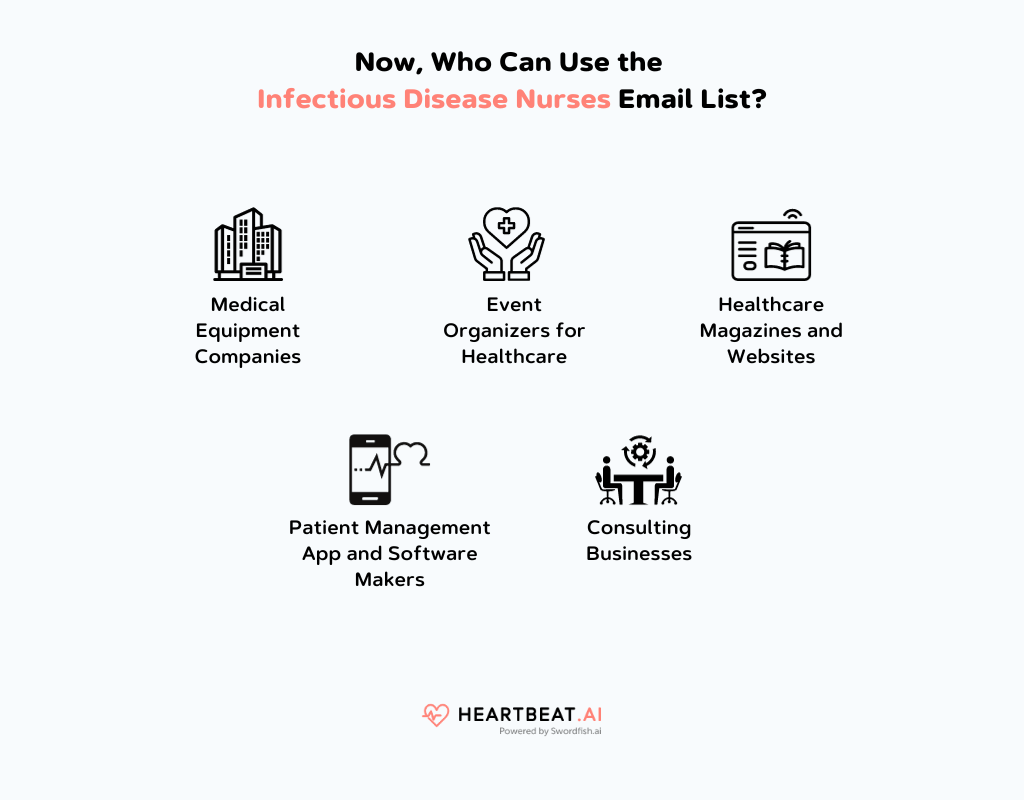
Medical Equipment and Pharma Companies
Sales teams use verified contacts to reach infectious disease nurses directly about relevant devices, supplies, or medications, rather than relying on general hospital procurement channels.
Healthcare Event Organizers
Conference and CE program organizers use these lists to invite qualified speakers and attendees for infectious disease-focused sessions.
Healthcare Media and Publications
Editorial teams use nurse contact data to source interviews, contributor pitches, and subject-matter input for articles aimed at this audience.
Health Tech and Software Vendors
Companies building patient management or clinical workflow tools use the list to reach the specific nursing roles most likely to evaluate or adopt their product.
Healthcare Consulting Firms
Consultants use targeted lists to identify healthcare organizations and staff who may need support with infectious disease program management or operational efficiency.
A Practical Outreach Checklist
Before you send anything to a purchased or licensed list, run through this:
- Know your recipient. Infectious disease nurses deal with specific clinical and operational challenges daily — write to that, not to nursing in general.
- Define one goal per email. Are you informing, selling, or recruiting? Pick one and build the message around it.
- Stay on topic. Tie your offer directly to their work instead of a generic pitch that could apply to any healthcare role.
- Personalize beyond the name field. Reference specialization, location, or role context where the data supports it.
- Follow opt-out and consent rules. Commercial email in the U.S. is governed by the CAN-SPAM Act, which requires accurate sender information, no misleading subject lines, and a working unsubscribe mechanism. If you’re contacting individuals covered by GDPR, additional consent requirements apply.
Where This Fits in a Broader Outreach Strategy
An infectious disease nurses list works best as one piece of a targeted healthcare outreach effort, not a standalone tactic. Pair it with clear segmentation, a defined purpose for each campaign, and a compliance review before you send. Teams that skip the segmentation step tend to see poor response rates regardless of how accurate the underlying data is — the list quality only matters if the message matches who’s receiving it.
For teams sourcing this kind of provider data on an ongoing basis, prioritize vendors that are transparent about sourcing, refresh their records on a defined schedule, and support the segmentation filters your outreach actually needs.
Frequently Asked Questions
How often should an infectious disease nurses email list be updated?
Contact data degrades as nurses change employers, licenses, or roles, so lists should be refreshed on a regular, defined schedule rather than compiled once and left static.
Is it legal to buy or use a nurses’ contact list for marketing?
It can be, provided the data was sourced and is used in compliance with applicable laws such as HIPAA-related handling standards in the U.S. and the CAN-SPAM Act for commercial email, or GDPR if contacts fall under its scope.
What makes a nurses’ contact list “verified”?
Verification typically means cross-referencing contact details against license records and other sources to confirm the person is still active in the role and the contact information is current, rather than relying on a single unconfirmed data point.