Last updated: August 28, 2026

Pharmaceutical companies, medical equipment suppliers, and healthcare recruiters all run into the same wall when trying to reach infection preventionists: contact data that’s either outdated, incomplete, or scraped from sources nobody can verify. Infection control specialists work across hospitals, long-term care, public health departments, and increasingly in non-clinical settings, which makes them a fragmented audience to find through generic directories.
This page covers what a workable infection control specialists email list should include, how outreach data gets compiled and verified, and what to check before you buy or license one.
What’s on this page:
What’s In a Heartbeat Infection Control Specialists Email List

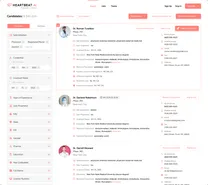
Heartbeat’s infection control specialists database includes direct contact details for professionals in the field, covering email addresses, cell and work numbers, licensing information, and practice details.
- Coverage: a broad set of infection prevention and control professionals across care settings, not limited to a single specialty or region.
- Refreshed records: contact details are updated on a recurring basis, and inactive or bounced entries are removed rather than left in the file.
- Segmentation: you can filter by role, location, or specialty rather than treating the whole list as one audience.
Data Fields Typically Included
- Name
- Location
- Contact numbers (work, cell, mobile)
- Email address
- Specialization
- Years of experience
- Sole proprietor status
- Licensed states
- License number
- Fax
- Address
 Accuracy & coverage of personal contact info were unrivaled by other platforms… this gives any healthcare recruiter a competitive advantage when engaging hard-to-reach healthcare providers.
Senior Growth Strategist





Why Data Quality Matters More Than List Size

A long list of names is worth little if half the emails bounce. The practical value of a clean infection control specialists directory shows up in how outreach actually performs.
Targeting Precision
Segmenting by role, setting, or specialty lets you send relevant messages instead of one generic blast to everyone with “infection control” in a title.
Personalization
Knowing whether a contact works in a hospital, a long-term care facility, or a public health department changes what message actually lands.
Time Saved
Fewer bounced emails and dead numbers means less time spent chasing contacts who never respond.
Feedback Loop
Open and reply data from a clean list gives you something real to act on; results from a bad list mostly tell you the list was bad.
Infection Control Specialists by Category
Infection prevention and control work spans several distinct roles, from bedside practitioners to research and technical positions. Recognizing which category a contact falls into helps you frame outreach appropriately.
Infection Control Specialists by State
Licensed infection control professionals are represented across every state, which matters if your outreach needs to respect state-specific licensing or regional market plans.
How This Data Gets Compiled

Wide Reach and Precision
Heartbeat’s Prospector draws on a database covering U.S. healthcare professionals, with coverage extending into North America, Europe, and APAC.
Verified and Compliant Data
Data collection is designed to align with privacy frameworks such as CCPA, GDPR, and CAN-SPAM. Records are refreshed on a regular cadence to keep deliverability high.
Networking Scale
The underlying database spans millions of direct-dial numbers and email addresses across healthcare, giving reasonable reach for infection control outreach specifically.
CRM-Ready Format
Lists are structured to plug into common CRM tools, so they work for recruitment, market research, or campaign management without heavy reformatting.
Direct Mail Support
USPS-verified and CASS-certified address details support direct mail campaigns, including outreach into less densely populated areas, with geo-targeting options for regional expansion.
What to Check Before You Buy a List

- Source reliability: ask where the data originates. Official registries, verified healthcare directories, and vetted vendors are worth more than scraped web lists.
- Compliance: confirm the vendor’s data collection and consent practices align with applicable privacy laws before you start sending.
- Accuracy and validation: ask how often records are checked and what bounce or deliverability rate you should expect.
- Customization: a list you can filter by specialty, location, or role is more useful than a flat, unsegmented file.
- Update cadence: find out how frequently the vendor refreshes records; infection control staff change roles and employers like anyone else.
Who Typically Uses This Data

Infection Control Software Developers
Vendors building surveillance, monitoring, or reporting tools use the list to reach the people who actually evaluate and adopt this software.
Research Institutions
Academic and research groups use it to recruit participants for studies, surveys, or collaborative infection prevention research.
Medical Equipment Suppliers
Suppliers of PPE, sterilization equipment, and disinfection products use the list to reach the professionals who influence purchasing decisions.
Pharmaceutical Companies and Recruiters
Pharma teams use it for clinical trial recruitment and product communication; recruiters use it to source candidates for infection control roles.
Getting More From the List

A clean contact list is only the starting point. What you do with it determines whether outreach converts.
Segment by Role
Group contacts by setting, specialty, or seniority, then tailor messaging to what each group actually cares about rather than sending one version to everyone.
Research Real Pain Points
Infection preventionists deal with staffing constraints, compliance documentation, and evolving guidance. Content that speaks to those specifics performs better than generic pitches.
Set Clear Campaign Goals
Decide upfront whether a campaign is meant to inform, promote, or open a collaboration, and track a metric — reply rate, click-through, or booked calls — that matches that goal.
Create Space for Peer Exchange
Webinars or small-group discussions give specialists a reason to engage beyond reading another email.
Offer Something Concrete
A whitepaper, case study, or relevant resource tends to earn more attention than a straightforward sales pitch.
Conclusion
Reaching infection control specialists effectively comes down to two things: accurate contact data and messages that respect how specific this audience’s work actually is. A clean, well-segmented list saves time and reduces wasted outreach, but it only pays off when paired with content that reflects real understanding of the field.
Heartbeat AI compiles and maintains healthcare contact data, including infection control specialists, with an emphasis on verification and regular updates. Heartbeat AI can be a starting point if you’re building outreach in this space.
FAQs
What is an infection control specialists email database?
It’s a curated set of contact records — emails, phone numbers, job titles, and related details — for professionals working in infection prevention and control, organized for targeted outreach.
Does this kind of database need to comply with privacy laws?
Yes. Vendors compiling and selling contact data should operate within applicable privacy and data protection frameworks, and buyers should confirm this before using a list for outreach.
Why buy a list instead of building one internally?
Building an accurate list from scratch takes significant time and ongoing maintenance. A vendor-maintained, verified list with segmentation options usually gets you to productive outreach faster.