Last updated: August 28, 2026
Gynecologic oncologists are a small, specialized slice of the physician population. Reaching them by email or phone for legitimate B2B purposes — medical device sales, pharma outreach, recruiting, conference invitations, research collaboration — usually means working from a purchased or licensed contact list rather than building one from scratch. That makes list quality the whole game: a directory full of stale addresses or wrong specialties wastes budget and can hurt your sender reputation.
This page walks through what a gynecologic oncologist contact database typically contains, how reputable providers compile and maintain that data, what to check before you buy, and how to use the list once you have it.
What’s on this page:
What’s Included in a Gynecologic Oncologists Contact Database
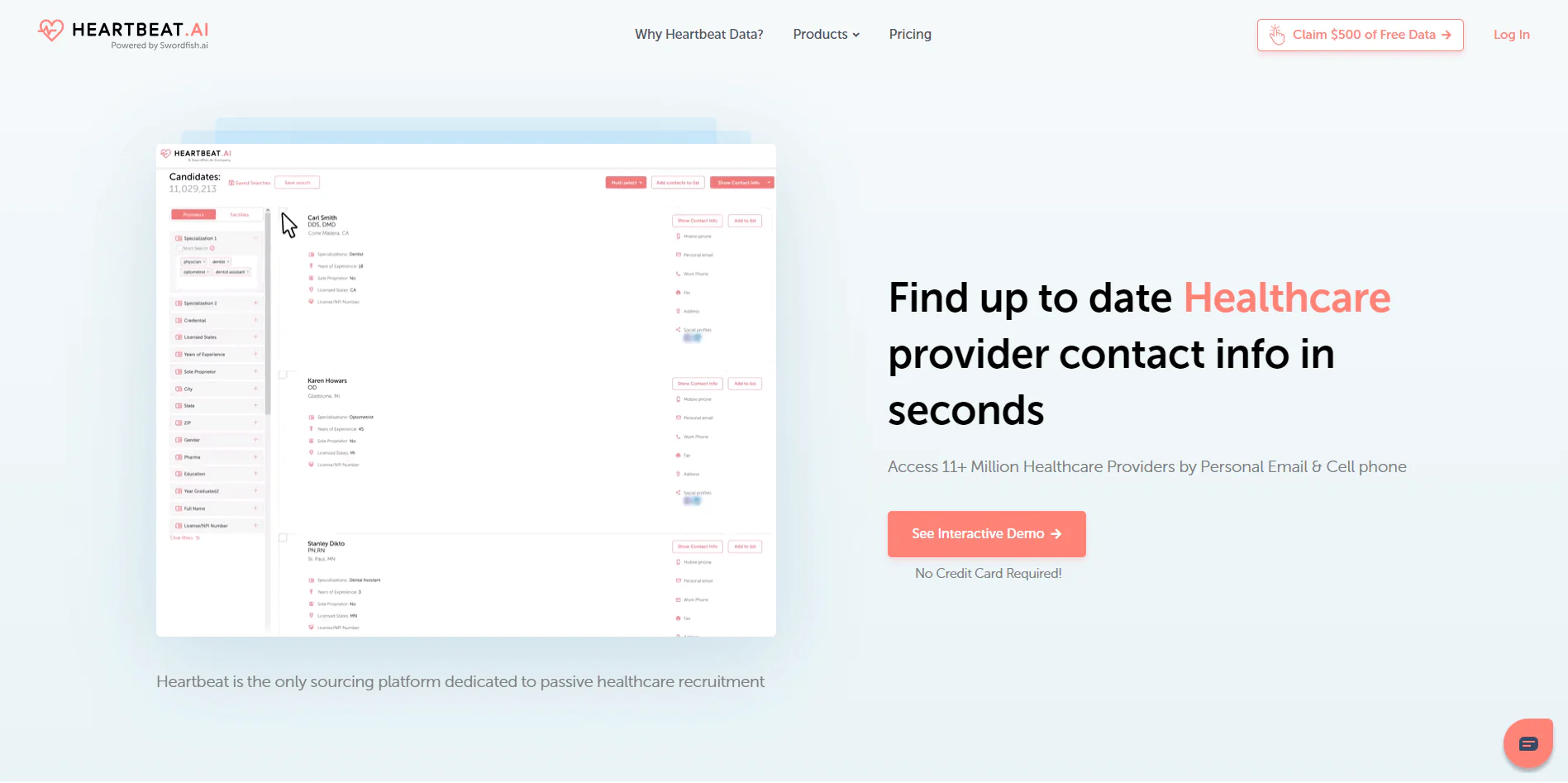
Heartbeat’s gynecologic oncologist records are built for outreach that needs to be specific — by state, by affiliation, or by the broader oncology subspecialty. A record typically includes more than a name and email; it should give you enough context to qualify the contact before you reach out.
- Broad coverage: a database spanning gynecologic oncologists across the US, so you can build lists at the national, state, or metro level.
- Ongoing updates: contact records in our physician database are refreshed on a regular cycle rather than compiled once and left static.
- Segmentation: filter by geography, subspecialty, or other criteria instead of blasting a single undifferentiated list.
- CRM-ready formatting: records are structured to import cleanly into CRM systems without manual cleanup.
- Professional context: affiliations, specialization detail, and related fields that support more relevant, less generic messaging.
Typical Data Fields
- Gynecologic oncologist’s name
- Location
- Contact numbers (work, cell, mobile)
- Email address
- Specialization
- Years of experience
- Sole proprietor status
- Licensed states
- License number
- Fax
- Address
 Accuracy & coverage of personal contact info were unrivaled by other platforms… this gives any healthcare recruiter a competitive advantage when engaging hard-to-reach healthcare providers.
Senior Growth Strategist






Why a Clean, Verified List Matters More Than a Big One
A large list of bad addresses is worse than a smaller list of good ones — bounces and spam complaints damage domain reputation and can get future campaigns filtered before they’re opened. A verified, segmented list changes the economics of outreach.
- Focused targeting: segmentation lets you reach the subset of gynecologic oncologists relevant to your product or role, instead of a generic OB/GYN blast.
- Better engagement: accurate, current contact data means more of your emails land in front of a real, working inbox.
- Lower cost per qualified contact: fewer bounces and wasted sends stretch outreach budgets further.
- Reputation protection: clean lists reduce spam complaints, which matters for long-term deliverability.
- Direct access: a verified list gives you a real path to the specialist instead of relying on a general practice inbox.
Our pediatric nephrologists mailing list follows the same approach if your outreach spans other pediatric or specialty segments.
Related Oncology Categories in Our Database
Gynecologic oncology sits alongside several other oncology subspecialties in our directory. Depending on your campaign, one of these adjacent categories might be a better fit.
| Oncologists Categories |
| Neuro-oncologists |
| Tele-Oncologists |
| Pediatric Hematology-Oncologists |
| Orthopedic Oncologists |
Gynecologic Oncologists by State
Browse state-level pages if you need contacts concentrated in a specific region rather than a nationwide list.
How This Data Gets Compiled
Building a mailing list of gynecologic oncologists takes ongoing work, not a one-time scrape. A defensible process generally includes:
- Sourcing from professional records: pulling from medical directories, professional associations, and conference attendee data rather than a single scraped source.
- Email verification: running addresses through a verification step so obviously dead or malformed addresses don’t make it into the final list.
- Deduplication and cleaning: removing duplicate entries and correcting obvious errors on a recurring basis.
- Scheduled refreshes: updating records periodically, since physicians change practices, retire, or move between affiliations.
- Consent-aware collection: gathering and using professional contact information in a way that respects applicable privacy rules and professional norms.
Worth noting: gynecologic oncology is an ABOG subspecialty that requires primary OB/GYN certification plus a fellowship, so a “gynecologic oncologist” record should reflect genuine subspecialty training rather than general OB/GYN practice — a distinction worth double-checking with any list vendor.
Why Heartbeat’s Gynecologic Oncologist List
Heartbeat Prospector, backed by an extensive healthcare provider database, is built for this kind of targeted specialist outreach. A few reasons teams choose it:
Scale and Reach
The underlying database spans millions of personal email addresses and direct cell phone numbers across US healthcare professionals, giving outreach programs a wide base to segment down from.
Regularly Refreshed Records
Contact records are updated on an ongoing basis rather than left static, which matters given how often physicians change practices or affiliations. You can also pull current contact details from the web using our Chrome extension.
Compliance-Aware Sourcing
Records are compiled with attention to privacy and professional data-use norms, which matters if your outreach needs to hold up to internal compliance review.
Segmentation for Relevance
Filtering by specialty, affiliation, and location lets you tailor messaging instead of sending one generic version to every contact.
Experience at Scale
Heartbeat maintains large physician and healthcare-provider databases across many specialties, not just this one, which supports consistent data practices across lists.
Cost-Efficient Outreach
Direct contact reduces reliance on intermediaries or paid ad placements to reach the same audience, which can lower cost per qualified contact over time.
What to Check Before You Buy a List
Not every list labeled “gynecologic oncologists” is equally useful. Before committing budget, run through this checklist.
How recently was it updated?
Ask directly. A list that hasn’t been refreshed in a year will have a meaningfully higher bounce rate than one refreshed monthly or quarterly.
Is it actively cleaned?
Deduplication and error correction should be a recurring process, not a one-time step at compilation.
Can you segment it?
A list you can’t filter by state, affiliation, or subspecialty forces you into generic messaging, which tends to underperform.
Does the provider have a track record?
A vendor with experience maintaining large healthcare databases is more likely to have defensible sourcing and update practices than a one-off data broker.
Does it match your actual target?
Confirm the list is scoped to your real audience — region, subspecialty, practice setting — before you buy, rather than a broad OB/GYN list mislabeled as gynecologic oncology.
See our hematologist email list for a comparable specialty audience if your campaign spans oncology-adjacent fields.
Who Typically Uses This List
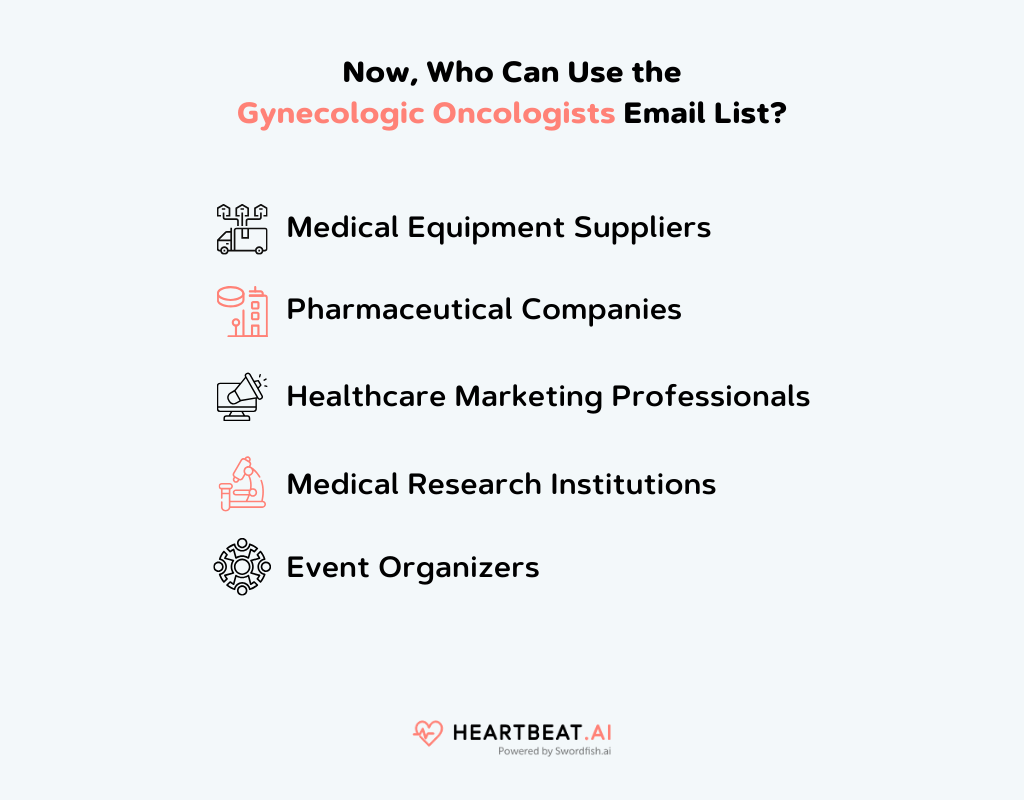
Medical Equipment Suppliers
Suppliers use the list to introduce new instruments, devices, or surgical technologies relevant to gynecologic oncology practice.
Pharmaceutical Companies
Pharma teams use it to inform specialists about new treatments, clinical trials, or drug updates relevant to gynecologic cancers.
Healthcare Marketing Teams
Marketers use the segmentation to run campaigns aimed specifically at this subspecialty instead of a broad OB/GYN audience.
Medical Research Institutions
Researchers use it to recruit participants for studies, surveys, or academic collaboration within gynecologic oncology.
Event Organizers
Conference and CME organizers use it to invite relevant specialists to events, panels, or workshops in the field.
Using the List Without Burning Your Sender Reputation
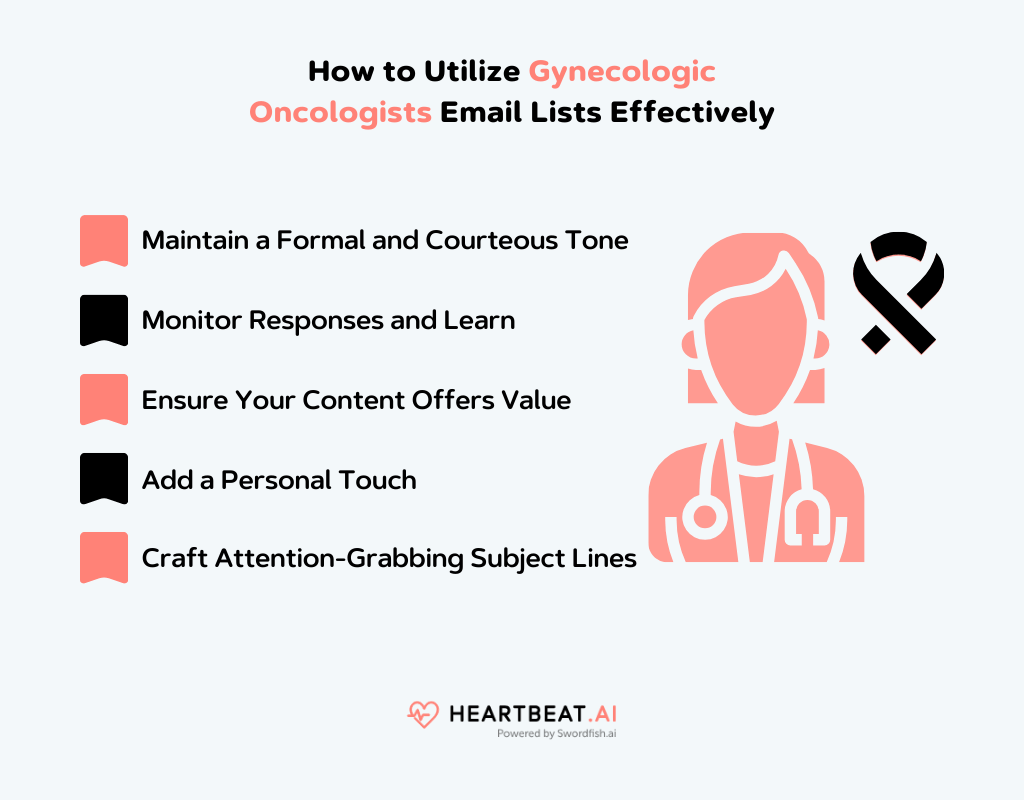
Keep the Tone Professional
Physicians get a lot of vendor email. A direct, respectful, low-hype tone tends to perform better than aggressive sales language.
Track What’s Working
Open rates, click-throughs, and reply rates tell you which subject lines and offers are landing — use that to refine future sends rather than repeating what isn’t working.
Lead With Something Useful
An email that offers a genuinely relevant resource, update, or invitation performs better than a pure pitch.
Personalize Where It’s Real
Reference actual affiliation or specialization detail rather than inserting a first name into a template — recipients notice the difference.
Write Honest Subject Lines
Clear and specific beats clever. Misleading subject lines get flagged as spam and hurt deliverability for your next send.
Conclusion
A gynecologic oncologists email list is only as useful as its accuracy and how well it’s segmented. Poorly maintained data wastes outreach budget and can damage sender reputation; a clean, regularly updated, properly segmented list makes targeted marketing, recruiting, and research outreach considerably more efficient.
If you’re evaluating providers, ask specifically about update frequency, verification process, and segmentation options before committing. Heartbeat offers this kind of data for gynecologic oncologists and other healthcare specialties.
FAQs
Can I use this list to promote products or services to gynecologic oncologists?
Yes — this is a common, legitimate use case for medical device, pharma, and healthcare marketing teams, provided your outreach complies with applicable email marketing regulations such as CAN-SPAM.
How accurate is a typical gynecologic oncologist contact database?
Accuracy varies by provider and depends heavily on how recently the data was verified and refreshed. Ask any vendor for their specific verification methodology rather than relying on a generic accuracy claim.
How often should this kind of list be updated?
Reputable providers refresh contact data on a recurring schedule — often monthly or quarterly — since physicians change practices, affiliations, and contact details over time.