Last updated: August 29, 2026
Demand for clinical social workers keeps climbing. The Bureau of Labor Statistics projects overall employment for social workers to grow 6% from 2025 to 2035, faster than the average for all occupations, with roughly 69,100 openings expected each year as the field replaces retirees and workers who move into other roles. For anyone trying to reach this workforce — recruiters, health systems, associations, researchers — that growth also means a bigger, more scattered pool of contacts to track down.
A current, well-organized email list solves a practical problem: finding accurate contact details for licensed clinical social workers without spending weeks on manual research. Heartbeat AI compiles and verifies this kind of contact data for healthcare outreach, recruiting, and partnership efforts.
What’s on this page:
What You Get With Heartbeat’s Clinical Social Worker Email Data
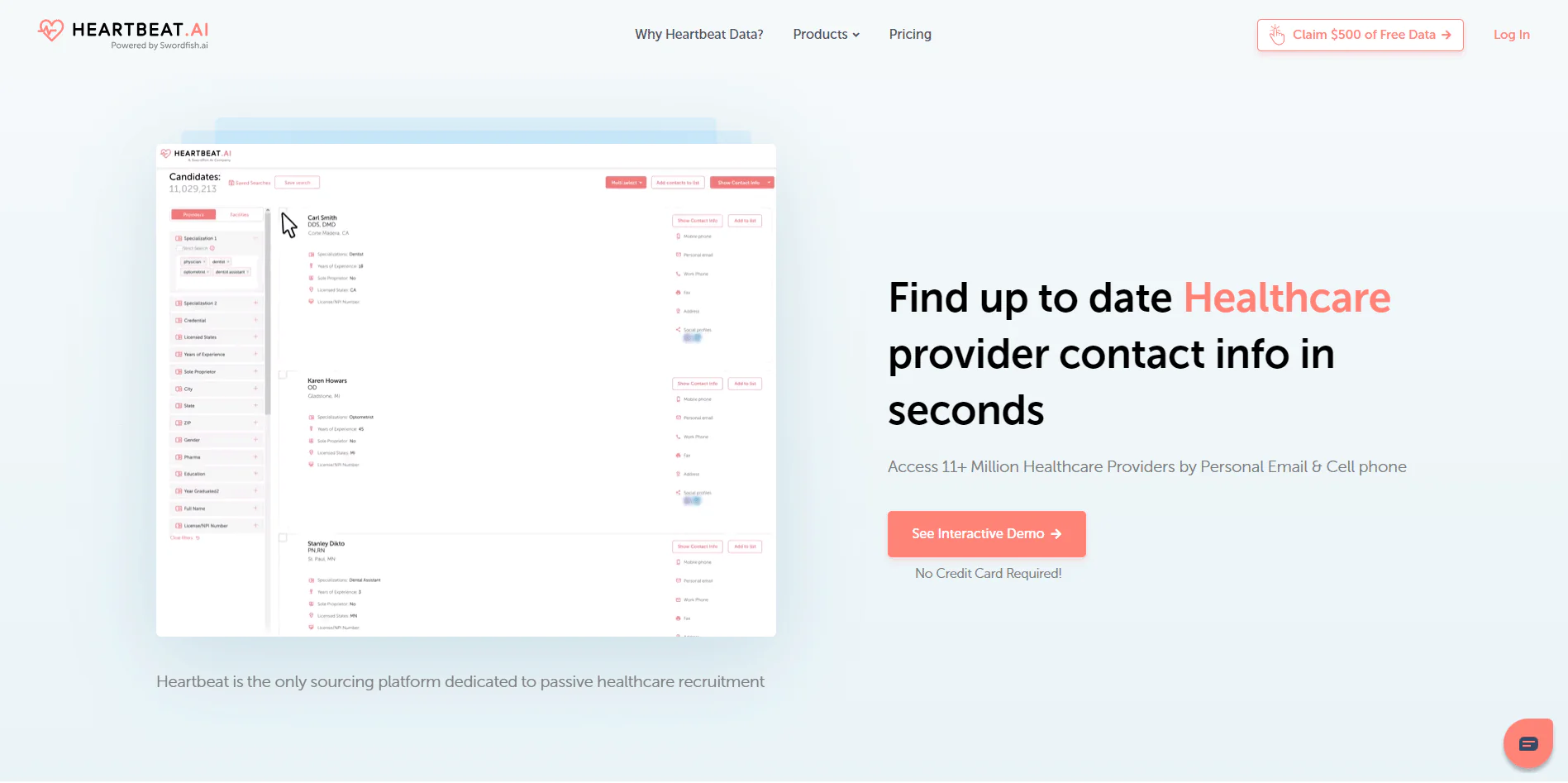
Heartbeat AI builds targeted contact lists of clinical social workers using data analysis and verification workflows designed for healthcare outreach. Here’s what’s typically included:
- Access to professionals: A list of email addresses covering clinical social workers across regions and practice settings.
- Targeted outreach: Contact data segmented by criteria relevant to your campaign, so you’re not messaging people outside your target group.
- Time savings: A ready-to-use resource instead of hours spent researching individual contacts.
- Ongoing updates: Contact records refreshed on a regular basis to reduce bounce rates and outdated entries.
- Customization: Filtering by region, specialty, or experience level depending on your campaign needs.
Data Fields Typically Included
- Name
- Location
- Contact numbers (work, cell, mobile)
- Email address
- Specialization
- Years of experience
- Sole proprietor status
- Licensed states
- License number
- Fax
- Address
 Accuracy & coverage of personal contact info were unrivaled by other platforms… this gives any healthcare recruiter a competitive advantage when engaging hard-to-reach healthcare providers.
Senior Growth Strategist






Why Verified Email Lists Matter for This Niche
Clinical social workers are a small, specialized professional group compared to physicians or nurses, so poor list quality shows up fast — high bounce rates, low open rates, and wasted budget. Here’s where a verified list actually pays off:
Targeted Outreach
Direct access to a specific professional group means your message reaches people who can actually act on it, rather than a broad, unqualified audience.
Time and Cost Efficiency
A pre-compiled list removes the research and data collection step from your workflow, which usually translates into lower cost per contact reached.
Improved Deliverability
Valid, current addresses reduce bounces and keep your sender reputation intact — a real concern once your domain starts triggering spam filters.
Networking and Partnership Opportunities
Lists built around a profession make it easier to identify potential collaborators, referral partners, or subject-matter experts for content and research projects.
Market and Field Insight
A broad, current base of contacts across specialties and regions can surface patterns in how the field is organized — useful context when planning outreach or product positioning.
Clinical Social Worker Categories in the Database
Clinical social work spans several distinct practice areas, each with its own focus and typical work setting.
| Clinical Social Worker Categories |
| Child and Adolescent Clinical Social Workers |
| Adult Clinical Social Workers |
| Geriatric Clinical Social Workers |
| Medical Social Workers |
| Psychiatric Clinical Social Workers |
| Trauma and Crisis Intervention Social Workers |
| Forensic Social Workers |
Clinical Social Workers by State
Coverage extends across all 50 states, so you can narrow a list to a specific state or build a national campaign.
How This Data Gets Compiled
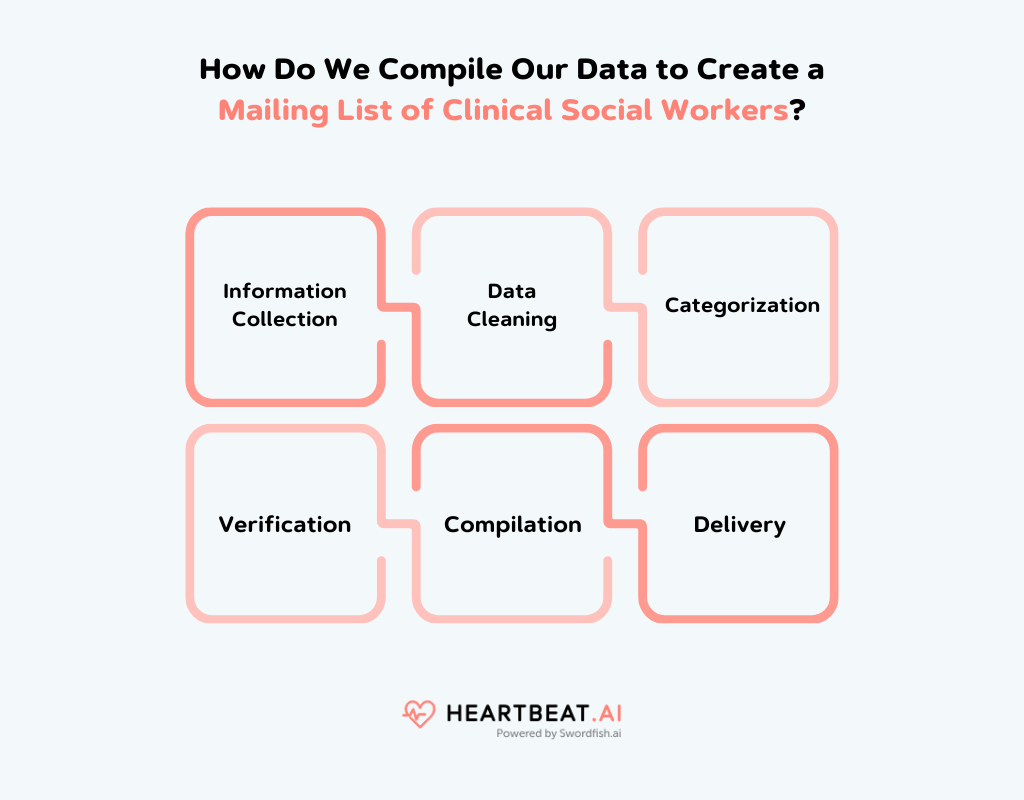
Building a usable mailing list isn’t a single step — it’s a sequence of checks, each catching something the last one missed.
Information Collection
Data is pulled from public directories, social media profiles, and professional websites, capturing names, contact details, and other relevant professional information.
Data Cleaning
Duplicate and outdated records get removed so the list reflects current, usable contacts rather than legacy entries.
Categorization
Social workers are sorted by specialization and location, which is what makes targeted segmentation possible later.
Verification
Contact details go through verification checks aimed at confirming the information is still accurate before it reaches you.
Compilation
Cleaned, categorized, and verified data is organized into a format you can actually work with — not a raw export.
Delivery
The finished list is delivered in the format that fits your workflow, typically a spreadsheet.
Why Consider Heartbeat.ai for This Data
Broad Healthcare Coverage
Heartbeat.ai maintains a database spanning many healthcare provider types, including clinical social workers, so you’re not limited to a narrow slice of the field.
Direct Personal Contact Info
Cell phone numbers and personal email addresses give you a more direct line than generic office contacts, which often get filtered or routed elsewhere.
Specialized Search Filters
Filtering by specific criteria helps narrow results down to the exact professionals relevant to your campaign, rather than sifting through an unfiltered list.
Team Collaboration Features
Organizations get tools for setting credit limits and viewing usage reports, which helps keep multi-person outreach efforts coordinated.
Browser Extension
A Chrome Extension extends contact lookup to platforms like LinkedIn, adding flexibility beyond a static list export.
Decision Checklist: What to Verify Before Buying a List
- Accuracy: Ask how often records are refreshed. A list that’s a year stale will underperform regardless of size.
- Relevance: Confirm the list can be filtered to the specialty, region, or experience level your campaign actually needs.
- Data sourcing: Understand where the contacts come from — reputable, verifiable sources generally hold up better over time.
- Legal compliance: Any list you use should support compliance with data privacy and anti-spam regulations; sending to unconsented contacts creates legal exposure.
- Cost fit: Weigh list cost against expected reach and conversion, not just the total contact count.
- Customization: Check whether filtering and segmentation are available, since a one-size list rarely performs as well as a targeted one.
Who Typically Uses This Kind of List
Healthcare Facilities
Hospitals and clinics use lists like this to find licensed clinical social workers for open roles or collaborative patient care arrangements.
Mental Health Practices
Private and group practices reach out to LCSWs for recruitment or patient referrals, cutting down the time spent searching for the right fit.
Social Work Associations
Professional associations use contact data to share updates and promote continuing education opportunities within the field.
Pharmaceutical and Healthcare Companies
Companies in these sectors use targeted outreach for research collaboration, product development insight, or advocacy partnerships.
Research Institutions
Academic teams use verified contacts to recruit participants or collaborators for studies and surveys related to social work practice.
Government and Regulatory Bodies
Licensing boards and agencies rely on accurate contact records to maintain communication with licensed professionals.
Using the List Effectively Once You Have It
Segment First
Break the list into groups by location, specialization, or other relevant criteria before sending anything. Segmentation is what makes personalization possible at scale.
Write Honest Subject Lines
Attention-grabbing is fine; misleading is not. Spammy subject lines cost you credibility and hurt future deliverability.
Personalize Beyond the Name
Use available data fields — specialty, region, experience level — to make the email feel relevant rather than mass-produced.
Lead With Useful Content
Share information that genuinely helps the recipient in their work: industry updates, practical resources, or relevant research.
Make the CTA Obvious
One clear action per email — download, schedule, register — stated plainly near the top or bottom of the message.
Design for Mobile
Many recipients will open on a phone first. A clean, single-column layout reads better than a dense desktop template squeezed down.
Test and Iterate
Run structured A/B tests on subject lines, content, CTAs, and send times, and let the results — not assumptions — guide the next campaign.
Limitations to Keep in Mind
No purchased list is perfect. Contact data ages quickly as professionals change jobs or practices, and even verified emails can go stale within months. Regulatory requirements around consent and outreach also vary by state and by channel, so it’s worth confirming your use case fits current compliance rules before a large-scale send.
Conclusion
A reliable clinical social workers email list saves time and reduces the guesswork in reaching this specific professional group, whether the goal is recruitment, referral partnerships, research collaboration, or association communication. Heartbeat AI compiles and verifies this kind of healthcare provider contact data for outreach at scale.
Frequently Asked Questions
Can I filter the clinical social worker email list by specialty?
Yes, most lists can be filtered by social work specialty so outreach targets the professionals most relevant to your campaign.
How can I protect the privacy of contact data in the list?
Store and transmit data securely, and follow applicable data protection and anti-spam regulations to maintain trust and legal compliance.
Can I personalize email campaigns using this contact data?
Yes — using data fields like specialty, location, and experience level lets you tailor messaging in ways that tend to improve engagement.