Last updated: August 30, 2026
Washington’s critical care units depend on nurses who can manage rapidly changing patient conditions, and finding accurate contact information for these specialists is a persistent problem for recruiters, healthcare marketers, and networking professionals. A wrong phone number or a stale email address doesn’t just waste time — it can mean an open ICU position stays unfilled for weeks, or a marketing campaign never reaches the people who actually make purchasing decisions.
This guide covers what critical care nursing looks like in Washington State, why contact accuracy matters more here than in many other fields, and how a compiled contact list can be built and used responsibly.
What’s on this page:
Get the Best Email List of Critical Care Nurses in Washington from Heartbeat
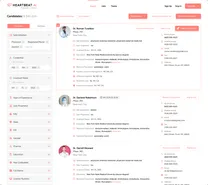
Heartbeat.ai’s platform lets you search licensed healthcare professionals across the United States and filter down to the specialty, location, or credential type you need.
Critical care nursing covers several distinct sub-specialties, including ICU nurses, NICU nurses, PICU nurses, cardiac care nurses, and surgical ICU nurses. Each group works with different patient populations and equipment, so a list that lumps them together isn’t as useful as one that lets you filter by sub-specialty. Heartbeat’s list can be narrowed to the exact segment relevant to your outreach.
If you want to see how the filtering and data delivery works, reach out to Heartbeat.ai directly — the sign-up and data request process is straightforward.
Overview of the Healthcare Industry in Washington State
Washington’s nursing workforce includes tens of thousands of registered nurses, a portion of whom work in critical care settings. Academic medical centers such as Harborview Medical Center and the University of Washington Medical Center anchor much of the state’s critical care capacity, particularly for trauma and complex surgical cases.
Outside the Seattle metro area, rural hospitals and clinics carry a disproportionate share of the burden for underserved populations, often with fewer specialists on staff. That geographic split matters for anyone building outreach lists: a contact strategy built only around large urban medical centers will miss a meaningful share of the state’s critical care workforce.
Why Accurate Contact Information Matters
Contact accuracy affects three distinct groups differently:
- Recruiters lose candidates to competing offers when outreach is delayed by bad phone numbers or bounced emails.
- Marketers and vendors waste ad spend and damage sender reputation when a large share of a list is undeliverable.
- Peers and collaborators lose opportunities for case consultation or professional referrals when directory information is out of date.
Because critical care nurses often change employers, units, or credentials as they gain experience, static directories go stale faster than in many other professions. This is one reason a one-time data pull tends to underperform a list that gets periodically refreshed.
Challenges in Finding Critical Care Nurses in Washington State
Several factors make sourcing critical care nurses in Washington harder than sourcing generalist RNs:
- Workforce turnover. Critical care work is physically and emotionally demanding, and burnout-driven turnover is a recognized issue in the field.
- Aging population demand. A growing population of older adults increases demand for intensive and acute care services statewide.
- Rural distribution. Washington’s geography spreads critical care staff across a mix of major medical centers and small rural facilities, complicating any single-source directory approach.
Technology has narrowed some of these gaps. Applicant tracking systems speed up resume screening, and HR information systems give employers better visibility into workforce trends and future staffing needs. Tele-ICU programs, which let critical care nurses and physicians monitor patients remotely, are increasingly used to extend specialist coverage into rural hospitals that can’t staff a full-time intensivist team. None of these tools replace an accurate contact list, but they reduce how much manual searching is needed once you’ve identified the right professionals.
What You Get in a Heartbeat Critical Care Nurses Contact List
A Heartbeat list is built to support outreach that needs to move quickly, whether that’s filling an open position or coordinating a time-sensitive marketing campaign. Typical fields include:
- Critical care nurse name
- Location
- Contact numbers (work, cell, mobile)
- Email address
- Specialization
- Years of experience
- Sole proprietor status
- Licensed states
- License number
- Fax
- Address
Available Critical Care Nurses in Our Contact List by State
Explore comprehensive contact lists of critical care nurses organized by state.
| Critical care nurses by state |
|---|
| Critical care nurses in Alabama |
| Critical care nurses in Alaska |
| Critical care nurses in Arizona |
| Critical care nurses in Arkansas |
| Critical care nurses in California |
| Critical care nurses in Colorado |
| Critical care nurses in Connecticut |
| Critical care nurses in Delaware |
| Critical care nurses in Florida |
| Critical care nurses in Georgia |
| Critical care nurses in Hawaii |
| Critical care nurses in Idaho |
| Critical care nurses in Illinois |
| Critical care nurses in Indiana |
| Critical care nurses in Iowa |
| Critical care nurses in Kansas |
| Critical care nurses in Kentucky |
| Critical care nurses in Louisiana |
| Critical care nurses in Maine |
| Critical care nurses in Maryland |
| Critical care nurses in Massachusetts |
| Critical care nurses in Michigan |
| Critical care nurses in Minnesota |
| Critical care nurses in Mississippi |
| Critical care nurses in Missouri |
| Critical care nurses in Montana |
| Critical care nurses in Nebraska |
| Critical care nurses in Nevada |
| Critical care nurses in New hampshire |
| Critical care nurses in New jersey |
| Critical care nurses in New mexico |
| Critical care nurses in New york |
| Critical care nurses in North carolina |
| Critical care nurses in North dakota |
| Critical care nurses in Ohio |
| Critical care nurses in Oklahoma |
| Critical care nurses in Oregon |
| Critical care nurses in Pennsylvania |
| Critical care nurses in Rhode island |
| Critical care nurses in South carolina |
| Critical care nurses in South dakota |
| Critical care nurses in Tennessee |
| Critical care nurses in Texas |
| Critical care nurses in Utah |
| Critical care nurses in Vermont |
| Critical care nurses in Virginia |
| Critical care nurses in Washington |
| Critical care nurses in West virginia |
| Critical care nurses in Wisconsin |
| Critical care nurses in Wyoming |
How This Data Is Compiled
Heartbeat.ai builds its healthcare provider database from a mix of official, private, and public sources, combining licensing records with contact information such as cell numbers and personal email addresses. The goal is to give recruiters and marketers a single place to search rather than piecing together directories, LinkedIn profiles, and hospital staff pages one at a time.
No contact database is perfect. Nurses change jobs, phone numbers get reassigned, and license renewals lag behind actual practice changes. Any list — Heartbeat’s included — should be treated as a strong starting point rather than a guaranteed-accurate directory, and periodic list hygiene (bounce tracking, opt-out removal, re-verification) is worth building into your workflow.
Who Uses a Critical Care Nurses Contact List?
The realistic user base for this kind of list includes:
- Hospital and staffing agency recruiters filling open ICU, NICU, or PICU positions
- Medical device and pharmaceutical sales teams targeting critical care specialists
- Healthcare marketing agencies running account-based campaigns
- Independent professionals such as insurance or benefits brokers seeking clinical decision-makers
- Researchers or associations coordinating continuing education or conference outreach
Using a Contact List Responsibly
A few practical guidelines improve response rates and keep outreach compliant:
- Keep messages short, specific, and clearly relevant to the recipient’s specialty.
- Avoid sending anything that resembles patient-related communication through a business contact channel — this content is for provider outreach, not clinical use.
- Respect opt-out requests immediately and remove those contacts from future campaigns.
- Be mindful of shift schedules; critical care nurses often work non-standard hours, so timing matters more than volume.
- Lead with something useful — a relevant resource, a clear job description, or a specific ask — rather than a generic pitch.
None of this guarantees a response, but it reduces the odds of being ignored or flagged as spam.
Conclusion
Finding and maintaining accurate contact information for critical care nurses in Washington State takes more effort than it does for many other professions, given turnover, geographic spread, and the pace of change in acute care staffing. A well-maintained, filterable contact list — refreshed periodically rather than treated as a one-time purchase — is the most practical way to keep recruitment and outreach efforts from stalling.
Frequently Asked Questions
What are the main responsibilities of critical care nurses in Washington?
Critical care nurses monitor and treat patients in unstable or life-threatening conditions, administer medications and procedures, and coordinate closely with physicians and other specialists to manage complex cases.
What is the job outlook for critical care nurses in Washington?
Demand for critical care nursing remains steady across Washington, driven by an aging population and continued growth in acute and intensive care services, though staffing pressures and turnover remain ongoing challenges in the specialty.
What are the education and training requirements for critical care nurses in Washington?
Critical care nurses typically need a nursing degree, an active Washington RN license, and specialty certification in critical care. Continuing education is generally required to maintain licensure and stay current with clinical practice standards.