What’s on this page:
Key takeaways
- Nurses may change employers, units, specialties, or contact preferences, so contact records can become outdated.
- Filtering by specialty, location, and experience can help narrow a critical care nurse contact list.
- Critical care includes distinct areas such as neonatal, pediatric, coronary, trauma, and surgical care.
- Confirm current RN licensure independently when it matters for a role or compliance decision.
- Treat third-party contact data as a starting point and verify records before relying on them.
- Outreach should follow applicable privacy and marketing requirements and remain relevant to the recipient’s professional role.
Last updated: August 30, 2026
Recruiters, healthcare marketers, and networking teams working in South Carolina’s hospital systems all run into the same problem: critical care nursing contact data goes stale fast. Nurses change units, switch employers, or move between the state’s major health systems, and a list that was accurate six months ago can quietly become a liability.
This page looks at why accurate contact information matters for critical care nurse outreach in South Carolina, what makes this specialty harder to reach than general nursing staff, and how Heartbeat’s contact database can support recruitment and networking efforts.
Get an Email List of Critical Care Nurses in South Carolina from Heartbeat
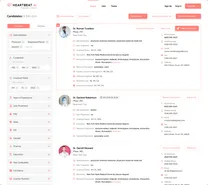
Heartbeat.ai says its contact database covers licensed healthcare professionals across the United States, including critical care nursing specialists. You can filter by specialty, location, and experience level to narrow the profiles you want to review before reaching out.
Critical care nursing covers several sub-specialties, including neonatal intensive care, pediatric intensive care, coronary care, trauma care, surgical critical care, and general adult acute care. Each role requires different clinical training, and recruiters targeting one sub-specialty over another need contact lists that reflect that distinction rather than a single generic “ICU nurse” category.
If you’re looking for a segment not covered by our standard filters, our team can help scope a custom list for academic, analytical, or recruitment purposes.
Healthcare Landscape in South Carolina
South Carolina’s hospital systems include the Medical University of South Carolina, Prisma Health, and Roper St. Francis Healthcare, which operate critical care units staffed by specialized nursing teams. These systems are among the state’s healthcare employers and may be relevant to recruiters seeking ICU, trauma, and cardiac care professionals.
Recruiters targeting specialized nursing roles can benefit from defining the role and audience clearly before beginning outreach.
Why Accurate Contact Information Matters
Contact accuracy affects three distinct groups: recruiters, professional networkers, and organizations coordinating care logistics.
For recruitment teams, outdated numbers or bounced emails can slow hiring, from initial outreach through offer negotiation. In a specialized field, delays may make it harder to connect with candidates while they are considering opportunities.
For networking and professional development, accurate contact details support continuing education outreach, conference invitations, and peer collaboration. Stale data here simply means missed connections, not urgent risk.
Whatever the use case, the underlying issue is the same: contact lists degrade over time as people change jobs, specialties, or contact preferences, and a list that isn’t refreshed regularly loses value quickly.
Why Critical Care Nurses Are Hard to Reach in South Carolina
A few factors make this specialty more difficult to recruit and contact than general nursing roles:
- Credentialing barriers. Entry into critical care nursing typically requires an RN license plus specialized experience, and many nurses pursue Critical Care Registered Nurse (CCRN) certification through the American Association of Critical-Care Nurses. A minimum of 1,750 hours of direct bedside care of acutely/critically ill patients is one path to CCRN eligibility, which limits the pool of nurses who can move into these roles quickly.
- Workforce shortage pressure. Chronic disease prevalence and an aging nursing workforce nationally have kept demand for critical care nurses elevated, which increases competition among employers trying to fill the same roles.
- High-stress working conditions. Critical care units carry heavier patient acuity and shift demands than general medical-surgical floors, which affects retention and can make nurses less responsive to unsolicited outreach.
- Fragmented contact sources. Provider directories, state licensing boards, and hospital staff pages don’t always stay in sync, so recruiters piecing together contact information from public sources alone often end up with outdated numbers or generic hospital switchboard lines instead of direct contacts.
None of this means recruitment is impossible — it means the data layer needs to be treated as its own workflow step rather than an afterthought.
A Practical Workflow for Reaching Critical Care Nurses
Whether you’re building a recruitment pipeline or a networking outreach list, a few decision points help keep the process efficient:
- Define the specialty precisely. Trauma, neonatal, coronary, and surgical critical care nurses have different training paths and often respond to different messaging. Segment your list before writing outreach copy.
- Verify licensure status where it matters for compliance. For any role involving direct patient contact, confirm current RN licensure rather than relying solely on a contact database.
- Prioritize direct contact channels over general facility lines. Cell numbers and personal email addresses get faster responses than hospital switchboards, particularly for time-sensitive recruitment.
- Refresh lists on a defined cycle. Given how often nurses change employers or units, a list older than a few months should be re-verified before a large outreach push.
- Respect privacy and consent norms. Outreach to healthcare professionals should follow applicable privacy and marketing regulations, and messaging should stay professional and relevant to the recipient’s role.
What’s Included in Heartbeat’s Critical Care Nurse Contact Data
Heartbeat’s database compiles contact and professional details for critical care nurses, structured to support both recruitment and networking use cases:
- Critical care nurse name
- Location
- Contact numbers (work, cell, mobile)
- Email address
- Specialization
- Years of experience
- Sole proprietor status
- Licensed states
- License number
- Fax
- Address
Critical Care Nurse Contact Lists by State
Explore critical care nurse contact data for other states below.
| Critical care nurses by states |
|---|
| Critical care nurses in Alabama |
| Critical care nurses in Alaska |
| Critical care nurses in Arizona |
| Critical care nurses in Arkansas |
| Critical care nurses in California |
| Critical care nurses in Colorado |
| Critical care nurses in Connecticut |
| Critical care nurses in Delaware |
| Critical care nurses in Florida |
| Critical care nurses in Georgia |
| Critical care nurses in Hawaii |
| Critical care nurses in Idaho |
| Critical care nurses in Illinois |
| Critical care nurses in Indiana |
| Critical care nurses in Iowa |
| Critical care nurses in Kansas |
| Critical care nurses in Kentucky |
| Critical care nurses in Louisiana |
| Critical care nurses in Maine |
| Critical care nurses in Maryland |
| Critical care nurses in Massachusetts |
| Critical care nurses in Michigan |
| Critical care nurses in Minnesota |
| Critical care nurses in Mississippi |
| Critical care nurses in Missouri |
| Critical care nurses in Montana |
| Critical care nurses in Nebraska |
| Critical care nurses in Nevada |
| Critical care nurses in New hampshire |
| Critical care nurses in New jersey |
| Critical care nurses in New mexico |
| Critical care nurses in New york |
| Critical care nurses in North carolina |
| Critical care nurses in North dakota |
| Critical care nurses in Ohio |
| Critical care nurses in Oklahoma |
| Critical care nurses in Oregon |
| Critical care nurses in Pennsylvania |
| Critical care nurses in Rhode island |
| Critical care nurses in South carolina |
| Critical care nurses in South dakota |
| Critical care nurses in Tennessee |
| Critical care nurses in Texas |
| Critical care nurses in Utah |
| Critical care nurses in Vermont |
| Critical care nurses in Virginia |
| Critical care nurses in Washington |
| Critical care nurses in West virginia |
| Critical care nurses in Wisconsin |
| Critical care nurses in Wyoming |
How Heartbeat Builds This Data
Heartbeat says it compiles contact records from a mix of public, private, and official sources, then organizes the data by specialty, location, and license status so recruiters can filter for particular critical care roles. As with any third-party contact database, spot-check records and confirm current licensure independently before relying on them for compliance-sensitive decisions.
Who Uses Critical Care Nurse Contact Lists?
Contact lists like this typically support a mix of use cases: hospital recruiters filling open ICU and trauma positions, staffing agencies building talent pipelines, medical device and pharmaceutical sales teams identifying relevant specialists, continuing education providers promoting certification courses, and researchers conducting workforce studies.
Any use of this data should comply with applicable privacy and marketing regulations, and outreach should stay relevant to the recipient’s professional role.
Using Critical Care Nurse Contact Data Effectively
A few practices separate effective outreach from outreach that gets ignored or flagged as spam:
- Keep messages specific to the recipient’s specialty rather than sending generic nursing recruitment copy to everyone on the list.
- Lead with something concrete — a specific role, unit, or opportunity — rather than a vague introduction.
- Respect working schedules; critical care nurses often work rotating or overnight shifts, so timing outreach matters.
- Keep messages short. Nurses in high-acuity roles have limited time to read unsolicited outreach.
- Maintain confidentiality standards when handling any contact data tied to healthcare professionals.
Limitations to Keep in Mind
No third-party contact database is guaranteed to be current or complete. Specialty tags may lag behind a nurse’s actual role, license status can change between data refreshes, and contact preferences vary by individual. Treat any purchased list as a starting point for outreach, not a guaranteed-accurate directory, and verify information before compliance-sensitive use.
Frequently Asked Questions
What is the role of critical care nurses in South Carolina?
Critical care nurses provide direct care to patients who are critically ill or injured, typically working in intensive care units, emergency departments, and other high-acuity hospital settings.
What qualifications are required to become a critical care nurse in South Carolina?
Critical care nurses first complete a nursing degree program and obtain a Registered Nurse (RN) license. Many also pursue Critical Care Registered Nurse (CCRN) certification through the American Association of Critical-Care Nurses, which requires a set number of direct bedside care hours with acutely or critically ill patients.
What is the job outlook for critical care nurses in South Carolina?
Demand for critical care nurses in South Carolina has generally tracked with the state’s hospital capacity and population growth. Prospective employers include major health systems such as the Medical University of South Carolina, Prisma Health, and Roper St. Francis Healthcare.