Last updated: August 28, 2026

Clinical research nurses sit at the intersection of patient care and trial protocol, which makes them hard to reach through ordinary provider directories. Many split time between clinical duties and study coordination, and their contact details rarely show up in standard hospital staff listings.
A dedicated email list narrows that gap. Instead of hunting through institutional websites or conference rosters, you get a working set of verified contacts to build outreach around, whether that’s recruiting for a trial, promoting a CME program, or introducing a new research tool.
This guide covers what a clinical research nurse email list typically includes, how these lists get built, what to check before you buy one, and how to use the contacts without wasting them.
What’s on this page:
What’s Typically Included in a Clinical Research Nurse Email List
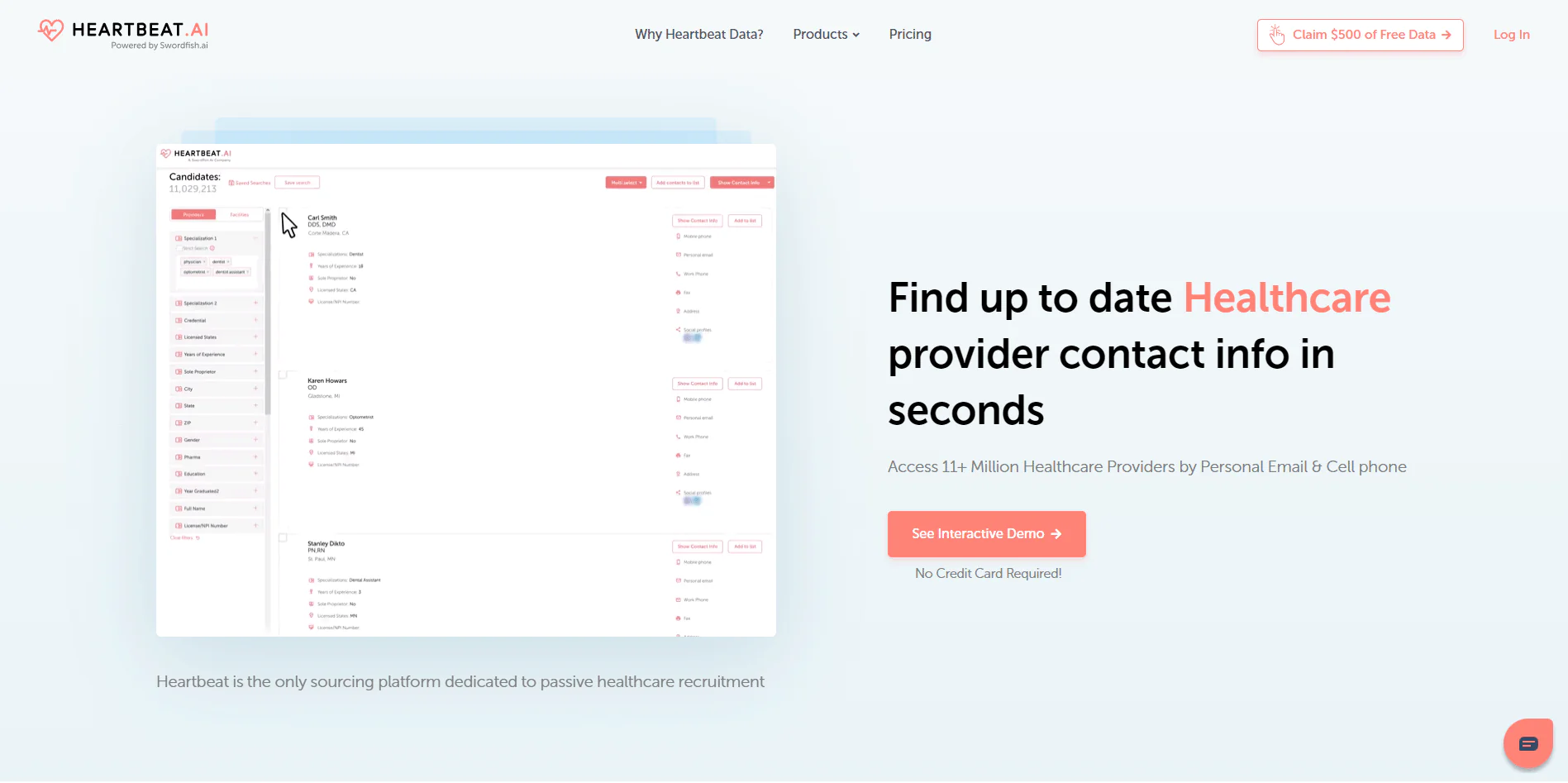
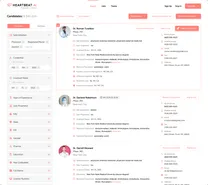
Providers like Heartbeat AI build nurse contact databases using automated collection paired with manual verification, aiming to keep records current as nurses change roles or employers.
A useful clinical research nurse list generally gives you:
- Targeted contacts: a filtered set of nurses working specifically in clinical research rather than general practice.
- Direct outreach paths: phone and email details that let you skip gatekeepers when reaching experienced research staff.
- Segmentation options: the ability to group contacts by specialty, location, or years of experience for more relevant messaging.
- Refreshed data: periodic verification so you’re not emailing addresses that bounced months ago.
Types of Data Included in Clinical Research Nurse Email Lists
- Name
- Location
- Contact numbers (work, cell, mobile)
- Email address
- Specialization
- Years of experience
- Sole proprietor status
- Licensed states
- License number
- Fax
- Address
 Accuracy & coverage of personal contact info were unrivaled by other platforms… this gives any healthcare recruiter a competitive advantage when engaging hard-to-reach healthcare providers.
Senior Growth Strategist






Why a Targeted List Beats General Outreach
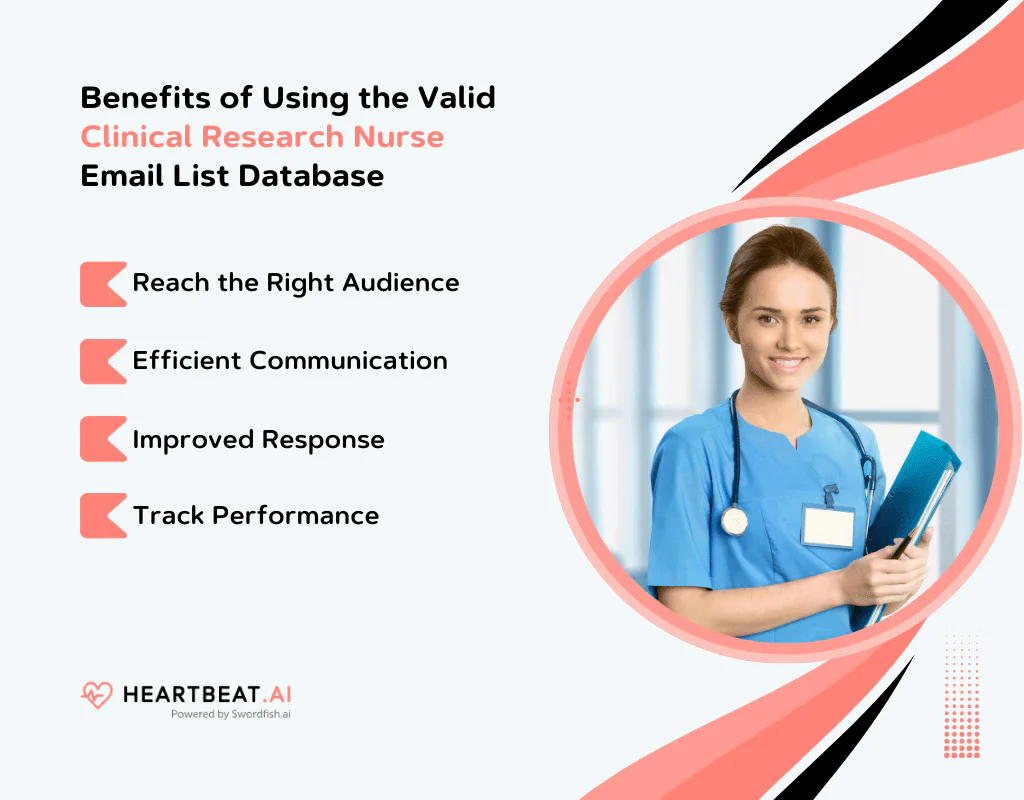
Reach the right audience
You’re contacting nurses actually working in research roles, not a broad nursing population that happens to include a few.
Less manual searching
Accurate contact data cuts down the time spent hunting for a working email or verifying a phone number by hand.
Better response rates
Messages sent to a relevant, correctly targeted audience tend to get more meaningful replies than blanket outreach.
Measurable performance
Tracking opens, clicks, and replies lets you see what’s working and adjust your approach instead of guessing.
Clinical Research Nurse Categories You’ll Find in a Directory
Clinical research nursing isn’t one uniform role. Nurses in this field specialize by therapeutic area, and outreach that ignores this tends to land flat. Common categories include:
| Clinical Research Nurse Categories |
| Oncology Clinical Research Nurses |
| Cardiology Clinical Research Nurses |
| Pediatric Clinical Research Nurses |
| Infectious Disease Clinical Research Nurses |
| Neuroscience Clinical Research Nurses |
| Pharmaceutical Clinical Research Nurses |
| Diabetes Clinical Research Nurses |
| Geriatric Clinical Research Nurses |
Clinical Research Nurses by State
If you’re building outreach around a specific region, here’s a state-by-state breakdown to work from.
How This Kind of Data Gets Compiled
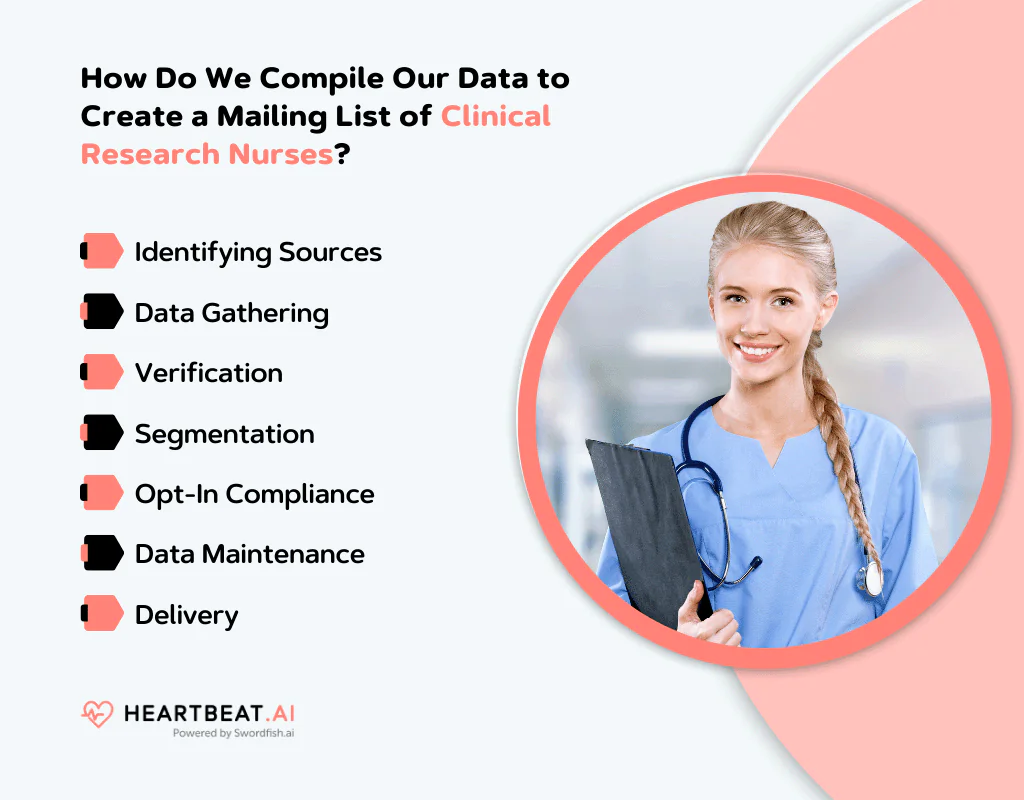
Building a reliable nurse contact list is less about scraping volume and more about disciplined process. A workable approach looks like this:
Source identification
Pulling from medical associations, healthcare institutions, and professional directories rather than a single scraped source.
Data gathering
Collecting name, contact details, professional affiliations, and area of expertise for each record.
Verification
Checking records against current information so the list doesn’t carry stale addresses or outdated titles.
Segmentation
Grouping contacts by specialization, location, or experience level so messaging can be targeted rather than blasted broadly.
Opt-in and compliance checks
Confirming contacts have a legitimate basis to be reached, which matters for both deliverability and legal exposure.
Ongoing maintenance
Refreshing the list periodically, since nurses change employers, specialties, and contact details over time.
Delivery
Providing the finished list in a format that fits into your existing outreach or CRM workflow.
What to Check Before You Buy a List
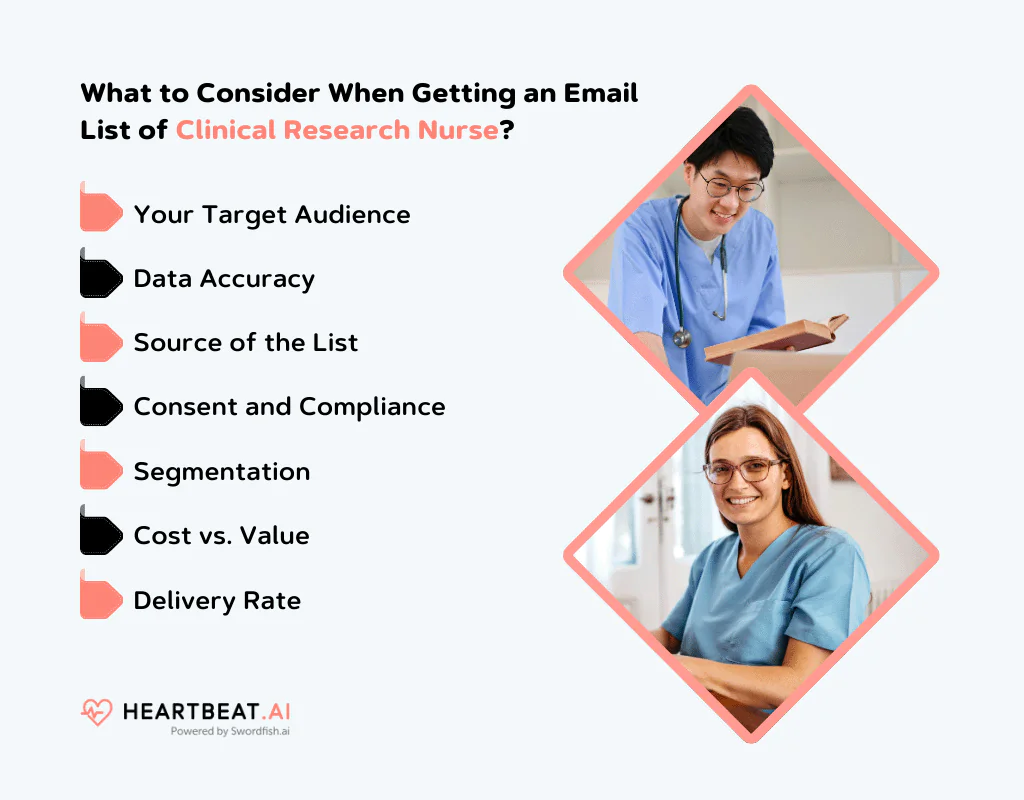
Define your audience first
Get specific about who you actually need: a region, a specialty, an experience level. A broad, undifferentiated list is harder to use well.
Data accuracy
Outdated or incorrect contact information defeats the purpose of buying a list in the first place.
Source transparency
Ask where the data comes from and how it’s verified. Vague answers are a red flag.
Consent and compliance
Confirm the list respects applicable privacy and data protection rules before you use it for outreach.
Segmentation capability
Check whether you can filter or slice the list by specialty or location, since that directly affects how targeted your campaigns can be.
Cost versus value
Weigh the price against what the list can realistically do for your recruitment, marketing, or research goals.
Expected delivery rate
Ask about bounce rates. A list with a high bounce rate can hurt your sender reputation over time.
Who Typically Uses This Kind of List
- Medical research institutions coordinating studies that involve human subjects.
- Biotechnology firms running trials for new treatments or devices.
- Clinical trial recruitment agencies that need nurses with access to potential participants.
- Healthcare marketing professionals promoting campaigns, materials, or events to research staff.
- Continuing medical education providers notifying nurses of training and certification opportunities.
- Healthcare software and technology companies introducing tools built for clinical research workflows.
Using the List Without Wasting It
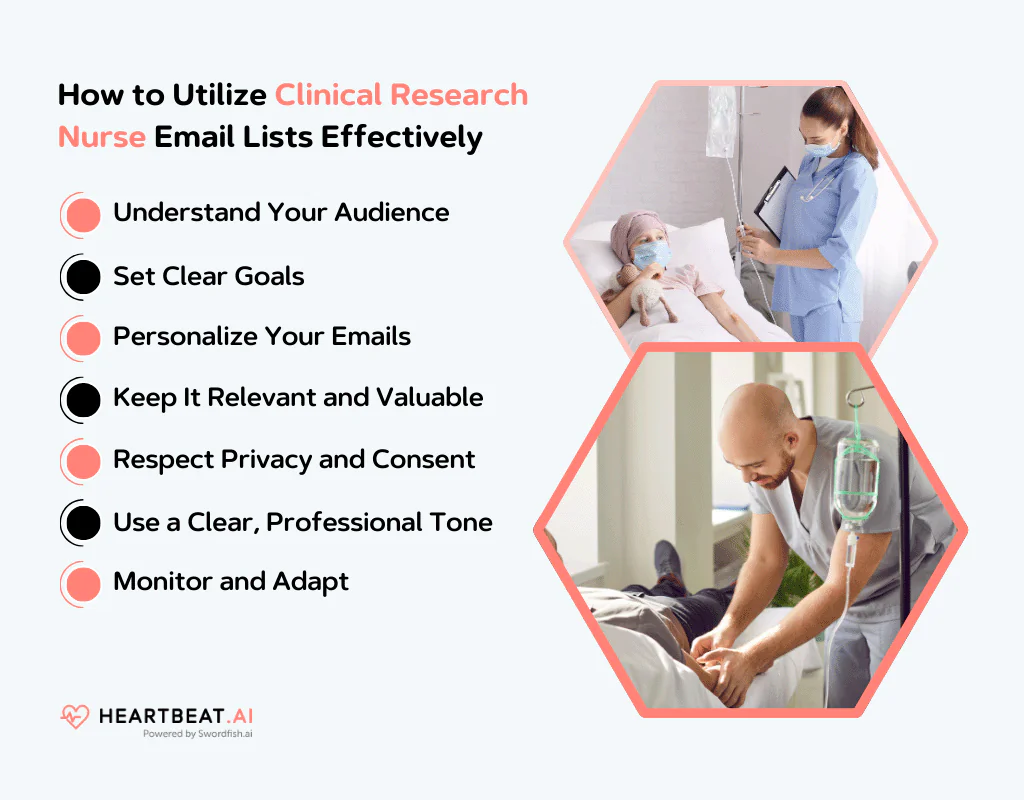
A good list still gets wasted with the wrong outreach habits. A few things worth keeping in mind:
- Know your audience. Clinical research nurses are busy and technically fluent — write accordingly.
- Set a clear goal per campaign. Informing, recruiting, and selling require different messaging, so decide which one you’re doing before you write.
- Personalize where it matters. Referencing a specific specialty or research area beats a generic greeting.
- Make every email worth opening. Skip filler; lead with something useful.
- Respect consent. Only email contacts obtained through a compliant process, and always include an opt-out.
- Keep tone professional but plain. Avoid slang and avoid unnecessary jargon.
- Watch performance and adjust. Open and reply rates will tell you if your subject lines or content need work.
Limitations Worth Knowing
No purchased list is perfect. Contact details age quickly as nurses change roles, and even well-maintained databases will contain some outdated records. Treat verification claims from any vendor as a starting point, not a guarantee, and build in your own checks — such as monitoring bounce and complaint rates — once you start sending.
Where Heartbeat AI Fits
Heartbeat AI provides access to healthcare provider contact data, including clinical research nurse records, along with a Chrome extension that helps pull contact details while browsing platforms like LinkedIn. If you’re evaluating a provider for a nurse mailing list in this space, ask directly about source transparency, verification cadence, and segmentation options before committing.
Frequently Asked Questions
What should I include in an email to clinical research nurses?
Relevant, specific content: research updates, professional development opportunities, or tools that genuinely help their work. Skip generic pitches.
How can I grow my list of clinical research nurse contacts?
Offer resources worth subscribing for, show up at industry events, use professional social platforms, and let existing contacts refer colleagues.
Can I share a clinical research nurse email list with others?
No. Sharing lists without consent can violate privacy laws and vendor terms. Keep the list confidential and use it only for its intended purpose.