Last updated: August 28, 2026
The ear, nose, and throat (ENT) devices market has been expanding steadily, driven by an aging population, rising rates of hearing loss, and growth in minimally invasive procedures. Market research firms estimate the global market at roughly $20-27 billion as of the mid-2020s, with projections in the $37-42 billion range by 2032, though exact figures vary by research firm and methodology. That growth means more practicing ENT specialists, and more competition for anyone trying to reach them by phone or email.
Finding accurate, current contact details for otolaryngologists and related specialists is the practical problem. Public directories go stale quickly, and cold-searching for individual practice emails eats up time that could go toward actual outreach. This is where a purpose-built ENT specialist email list fits in — provided it’s accurate, compliant, and reasonably current.
What’s on this page:
What a Usable ENT Specialist Contact Database Should Include

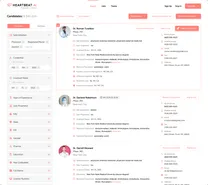
Heartbeat AI compiles contact data on healthcare professionals, including ENT specialists, to support outreach and networking efforts. A workable database for this niche generally needs the following:
- Comprehensive contact information: names, email addresses, and where available, phone numbers and practice locations.
- Segmentation: the ability to filter by geography, subspecialty, or practice type so outreach can be targeted rather than blasted broadly.
- Regular refresh cycles: healthcare professionals change practices, retire, or update contact details often enough that a list older than a year or two starts losing value fast.
- A usable export format: CSV or similar formats that drop cleanly into a CRM or email platform without manual reformatting.
- Attention to privacy law: lists should be compiled and used with an eye toward relevant privacy regulations such as GDPR and HIPAA, since healthcare contact data carries extra sensitivity.
Typical Data Fields
- Name
- Location/address
- Phone numbers (work, cell)
- Email address
- Specialization or subspecialty
- Years in practice
- License number and licensed states
- Fax (where applicable)
 Accuracy & coverage of personal contact info were unrivaled by other platforms… this gives any healthcare recruiter a competitive advantage when engaging hard-to-reach healthcare providers.
Senior Growth Strategist






Why Targeted Lists Beat Generic Outreach

Direct access, less guesswork
A verified list gets you to the right inbox without hunting through practice websites or hospital directories one by one.
Sharper targeting
If you’re selling ENT-specific products, services, or clinical trial opportunities, segmentation by subspecialty or location keeps your message relevant to the recipient instead of generic.
Time recovered
Building a contact list manually is slow work. A pre-verified list frees that time for follow-up, personalization, or other parts of a campaign.
Networking and research support
Researchers recruiting study participants or organizers inviting speakers benefit from having a searchable pool of practicing specialists rather than starting from zero.
Response rate considerations
Messages sent to a relevant, correctly segmented audience tend to perform better than blasts to a broad, untargeted list — though results still depend heavily on message quality and timing.
Categories of ENT Specialists You’ll Find in a Directory
ENT is a broad field with several distinct subspecialties, each with different clinical focus:
| ENT Specialist Category |
|---|
| Otolaryngologists |
| Otologists |
| Rhinologists |
| Laryngologists |
| Head and Neck Surgeons |
| Pediatric Otolaryngologists |
| Facial Plastic Surgeons |
ENT Specialists by State
Browse state-level pages for ENT specialist contact availability across the U.S.
How Contact Data Like This Gets Compiled

A defensible provider process generally looks like this:
- Multi-source aggregation: pulling from medical directories, professional networks, and public records rather than a single source.
- Verification: checking that contacts are still active in practice and that details match current records.
- Ongoing refresh: removing stale entries and adding newly licensed or newly listed specialists on a regular cycle.
- Privacy-conscious handling: aligning data collection and use with relevant frameworks like GDPR and HIPAA where applicable.
- Segmentation: tagging records by location, specialty, and practice type so users can filter rather than mass-mail.
- Quality checks: a final review pass before a list ships to a customer.
No list, regardless of provider, is permanently accurate — physicians change practices, retire, or update contact preferences constantly. Treat any purchased list as a strong starting point that still benefits from periodic verification on your end.
What Heartbeat.ai Offers for ENT Specialist Outreach

Database size and accuracy
Heartbeat.ai maintains an extensive database covering over 11 million U.S. healthcare professionals, with reported accuracy rates around 84% for cell numbers and 92% for personal emails.
Direct contact access
Rather than relying on generic office lines, the platform surfaces direct cell numbers and personal emails, cutting down on gatekeeping and phone-tag.
Search precision
The Prospector tool lets users filter by specialty, subspecialty, and procedures performed, so outreach can target ENT specialists specifically rather than a broad physician pool.
Diversity filters
Filters supporting more inclusive candidate sourcing are available for recruitment-focused use cases.
Integration and collaboration
A Chrome Extension connects the platform to LinkedIn and Facebook for contact lookups, and the platform supports shared team access.
Pricing and support
Heartbeat.ai offers multiple pricing plans depending on whether you’re an individual recruiter, agency, or larger organization, backed by a help center and documentation.
Checklist: Evaluating Any ENT Specialist Email Directory

- Accuracy and recency: stale contacts waste outreach budget and hurt sender reputation.
- Legal compliance: confirm the provider’s practices align with privacy frameworks such as GDPR or HIPAA.
- Segmentation options: filtering by location, subspecialty, or practice type matters more than raw list size.
- Source transparency: a provider that can explain where its data comes from is generally more trustworthy than one that can’t.
- Cost versus value: the cheapest list is rarely the best deal if half the contacts bounce.
- Support quality: access to help with campaign setup or data questions matters once you’re actually using the list.
Who Typically Uses These Lists

- Medical equipment suppliers reaching specialists who purchase or recommend ENT-specific devices.
- Pharmaceutical companies communicating about new treatments, drug information, or clinical trial recruitment.
- Healthcare marketers promoting services, conferences, or educational content relevant to the field.
- Medical researchers seeking collaborators or study participants.
- Recruitment agencies filling clinical openings at hospitals or specialty clinics.
- Event organizers inviting specialists to conferences, workshops, or CME sessions.
A Practical Workflow for Using the List

- Define the goal first. Marketing a product, recruiting for a role, and inviting speakers to an event call for different messaging and different segments of the list.
- Segment before sending. Break the list down by location, subspecialty, or interest area instead of treating every ENT specialist as the same audience.
- Personalize the message. Address recipients by name and reference something relevant to their practice area — generic mass emails get ignored or reported as spam.
- Lead with value. Whether it’s useful clinical information, a relevant product, or an event worth attending, give the recipient a reason to keep reading.
- Stay compliant. Respect privacy regulations and recipient preferences; unwanted or non-compliant email erodes trust and can create legal exposure.
- Track what happens. Open and response rates tell you which segments and messages are working, so you can adjust the next round.
- Keep the list current. Periodically remove bounced or inactive contacts and refresh with new entries.
Limitations Worth Knowing
No purchased contact list is a substitute for a real outreach strategy. Even a well-verified list will contain some outdated entries, and response rates depend heavily on message relevance, timing, and compliance with anti-spam rules. Treat list quality as one input among several, not a guarantee of campaign results.
Conclusion
An accurate, well-segmented ENT specialist contact list saves time and improves targeting for marketing, recruitment, and research outreach in a growing specialty field. The value comes from verification, segmentation, and compliance — not just raw contact volume.
Heartbeat AI provides a database of healthcare provider contacts, including ENT specialists, built around these principles.
Frequently Asked Questions
How can I ensure my email campaign to ENT specialists is effective?
Tailor messaging to the specialist’s subspecialty and location, personalize where possible, and lead with content or offers that are genuinely relevant to their practice rather than generic pitches.
What is the average cost of an ENT specialist email list?
Cost varies by provider, list size, and depth of data included. A higher upfront cost for verified, segmented data is often worth it compared to a cheaper list full of stale contacts.
How can I integrate an ENT specialist database into my CRM?
Most lists are delivered as CSV or Excel exports, which import directly into standard CRM and email marketing platforms with minimal manual work.