What’s on this page:
Key takeaways
- A Utah physician email list can save time, but no list is guaranteed to remain accurate.
- Compare vendors by asking how they verify contact details, how often they refresh records, and what their accuracy figures mean for your target segment.
- Use specialty, location, and practice-type filters to keep outreach relevant to the audience.
- The article lists Heartbeat AI, Rentech Digital, and Book Your Data, with different access and pricing approaches.
- Test a small sample before purchasing at scale, and plan for some bounced emails.
Last updated: August 30, 2026
Building a marketing or recruiting campaign around Utah physicians starts with contact data that is current and relevant to your audience. No email list is guaranteed to be accurate: outdated contacts can waste budget, harm sender reputation, and slow partnership or hiring efforts.
This guide covers what makes a Utah physician email list useful, how to evaluate providers, and how to structure outreach so your messages actually get opened rather than deleted.

Why a Verified Utah Physician List Matters
A stale contact list creates more problems than it solves. Bounced emails hurt domain reputation, wasted send volume costs money, and physicians who receive irrelevant or repeated pitches tend to tune out future messages entirely.
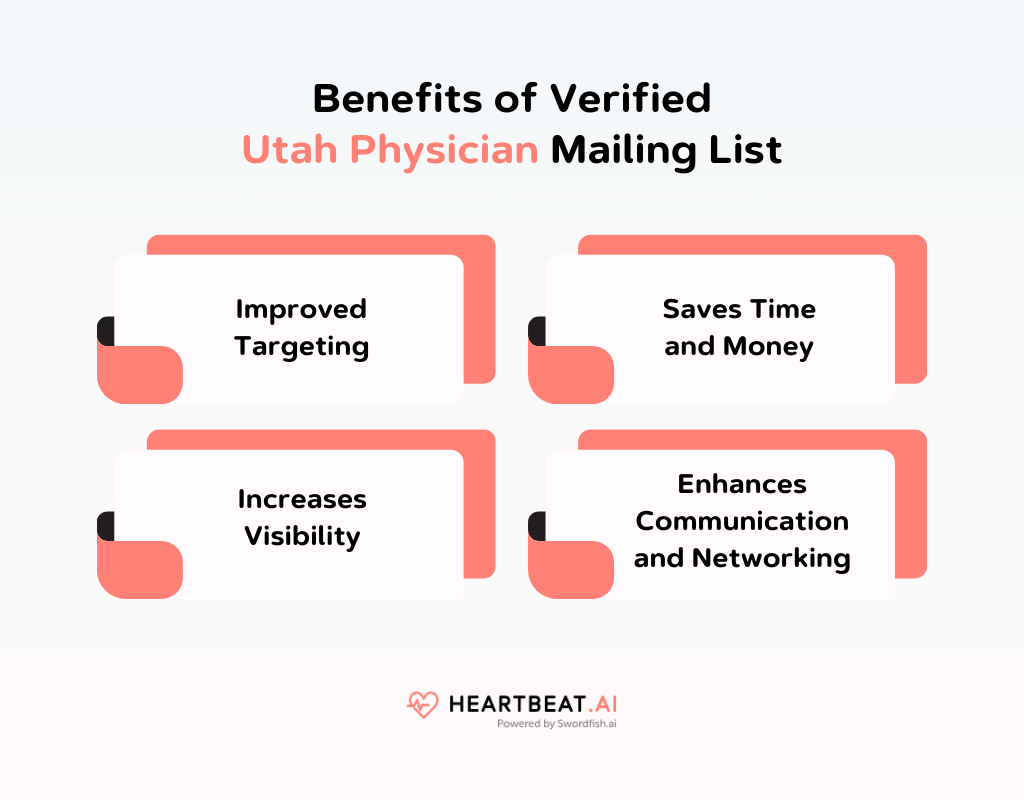
Better Targeting
A list segmented by specialty, location, or practice type lets you send relevant messages to people who are actually positioned to respond. Blasting the same message to every physician in the state, regardless of specialty, tends to produce low engagement and higher unsubscribe rates.
Time and Cost Efficiency
Sourcing physician contacts manually, one LinkedIn profile or practice website at a time, eats hours that could go toward actual outreach or campaign strategy. A pre-built, verified list shifts that time back to execution.
Credibility Within the Medical Community
Messages that land in an active, correct inbox and reference a physician’s actual specialty read as more credible than generic mass emails. Over time, this affects how receptive physicians are to future outreach from your organization.
Stronger Networking Opportunities
Direct access to accurate contact details opens doors to partnerships, referral relationships, or collaboration opportunities that would be harder to build through cold outreach alone.
How to Find a Verified Utah Physician Email List
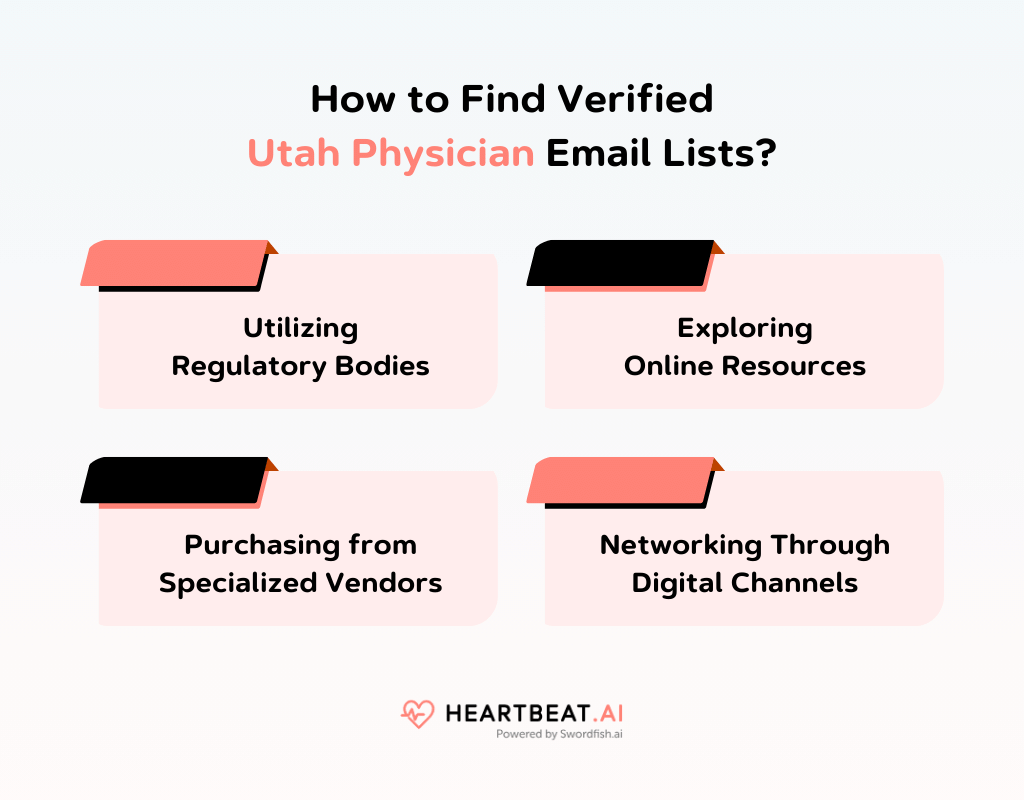
State Licensing and Medical Association Records
Utah’s Division of Professional Licensing maintains physician licensure records that can be a starting point for identifying providers. These records may not include direct email addresses, so confirm what information is available and verify contact details separately.
Healthcare Directories and Hospital Websites
Hospital system directories and specialty association member pages sometimes list physician contact information. Coverage is inconsistent, and update frequency varies widely by source, so cross-checking is necessary.
Specialized Data Vendors
Specialized data vendors such as Heartbeat AI describe their services as collecting, verifying, and refreshing physician contact data. Before buying, ask how verification works, how often records are refreshed, and what accuracy information applies to the Utah segment you need.
Professional Networks and Social Platforms
Physicians who are active on LinkedIn or similar platforms sometimes list contact preferences publicly. Building a list this way works, but it’s slow and doesn’t scale well beyond a handful of targeted contacts.
Comparing Three Utah Physician Email List Providers
Choosing a provider comes down to a few practical questions: how current is the data, how is it verified, and does the pricing model fit your outreach volume. Here’s how three providers compare.
1. Heartbeat AI
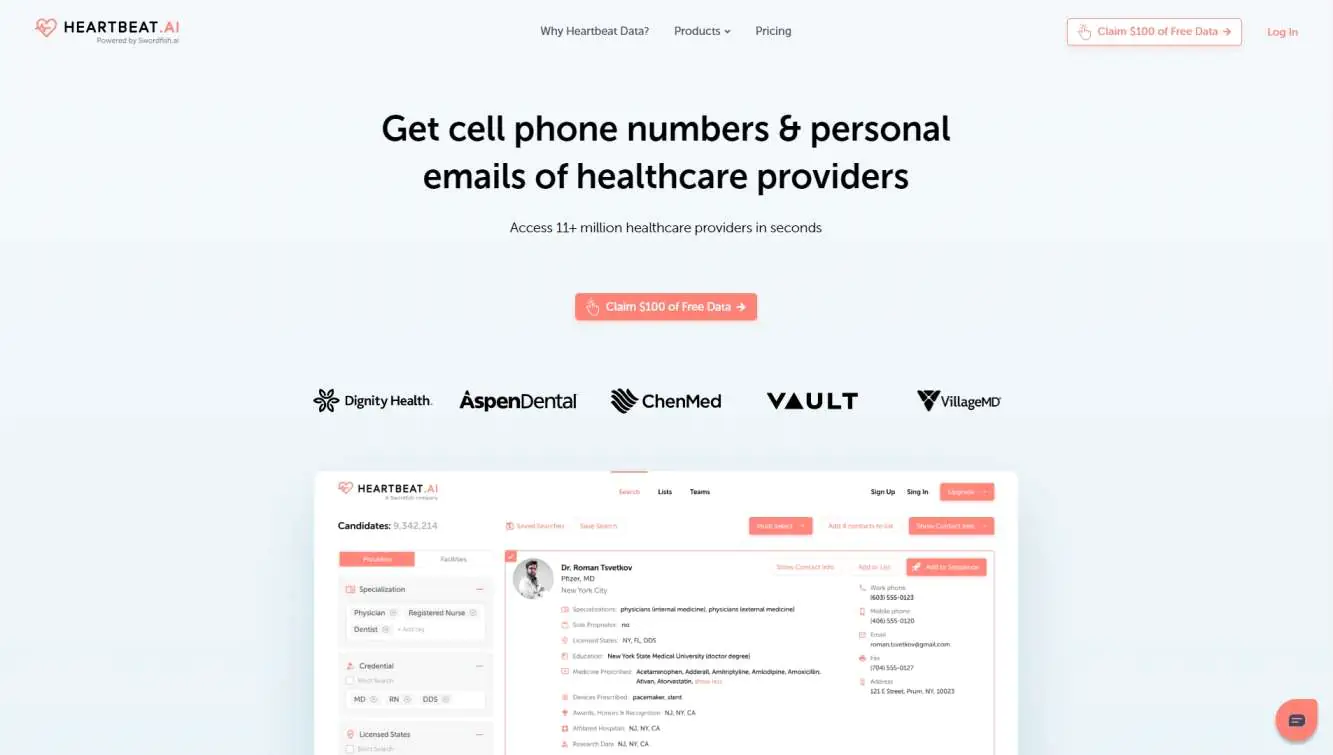
Heartbeat AI builds its physician email database around ongoing verification rather than a one-time data pull. The company organizes contacts by specialty and location, which supports more targeted outreach than a flat, unsegmented list.
Company Snapshot
- Founded: 2020
- Headquarters: Delaware
- Company size: 11–50 employees
Key Features
Chrome Extension and Prospector Tool
Heartbeat AI offers a Chrome Extension that surfaces contact details from platforms like LinkedIn, Facebook, and Twitter. The Prospector Tool lets you search for healthcare providers by specialty and pull contact information directly.
File Upload for Enrichment
You can upload existing lists of healthcare professionals for data enrichment, which speeds up cleaning up an internal CRM or spreadsheet you already have.
CRM Sync
Data syncs with common CRM platforms, avoiding manual re-entry when moving contacts into an active outreach pipeline.
Deliverability Focus
Beyond sourcing addresses, Heartbeat AI applies deliverability practices intended to reduce bounce rates and keep sender reputation intact.
Campaign Analytics
Reporting tools track open and response patterns, which helps identify which messaging or segments are performing and which need adjustment.
Pricing
Pricing is customized based on volume and use case; you’ll need to talk with the sales team to get a specific quote.
Pros
- Supports segmented, specialty-specific outreach
- Broad database across specialties and geographies
- Deliverability-focused approach to reduce bounce rates
- Built-in analytics for campaign tracking
Cons
- Like any data vendor, it depends on external sources to keep records current, so periodic re-verification on your end is still worthwhile
2. Rentech Digital
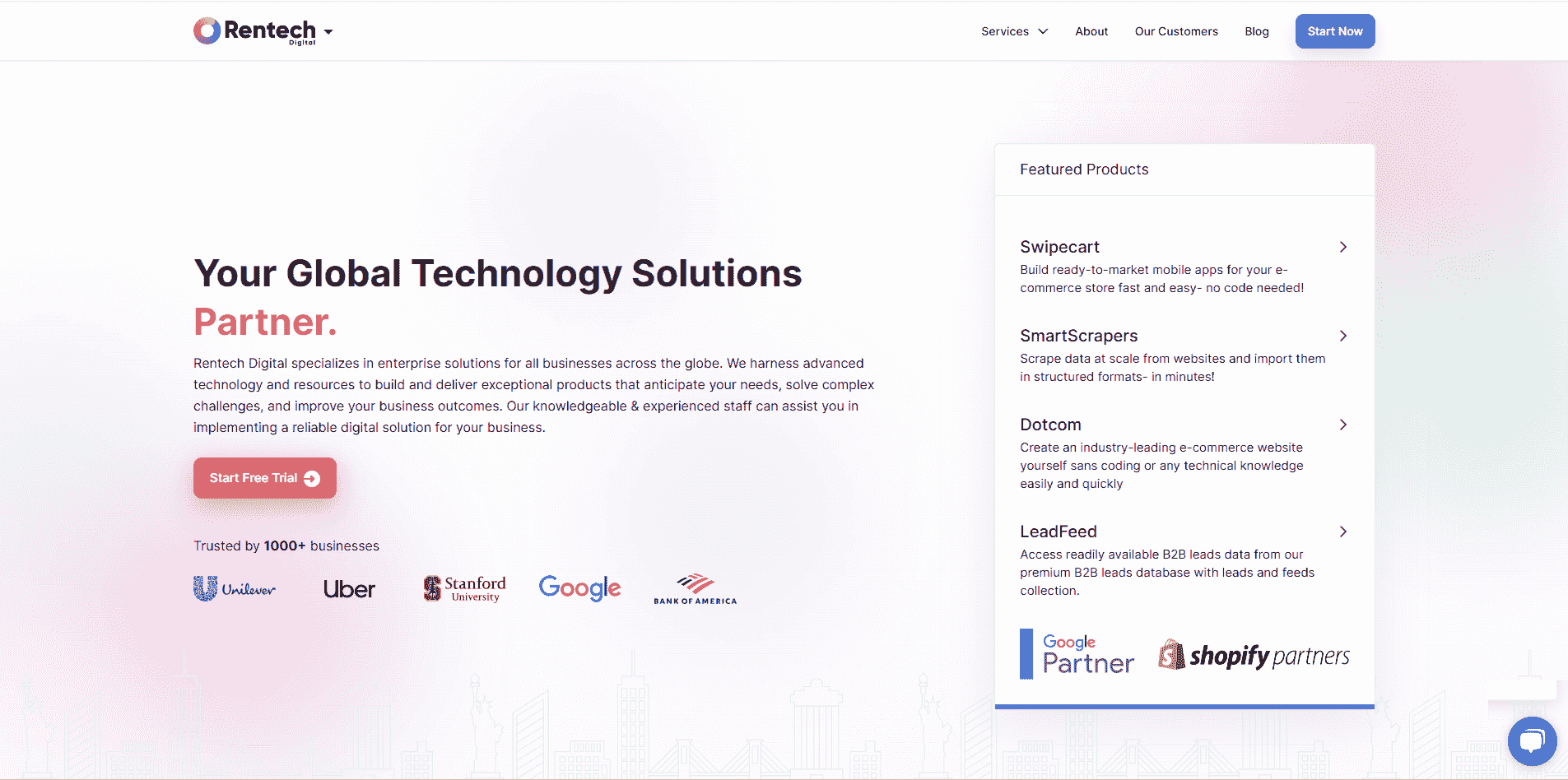
Rentech Digital lets you filter physician lists by specialty, location, and practice size, which is useful if your outreach needs a narrow audience rather than a broad state-wide blast.
Company Snapshot
- Founded: 2014
- Headquarters: New York, NY
- Company size: 51–200
Key Features
- Targeted email selection: Filter by role, location, or expertise.
- Continuous data refresh: Contact details are updated on an ongoing basis.
- Compliance focus: Practices are built around legal standards for using personal information.
- Detailed physician profiles: Specialty and workplace information included for more informed outreach.
- Support and advisory services: Available if you need help refining a list or campaign.
Pricing
A free trial is available. The Basic plan runs $149/month, Advanced is $199/month, and custom Enterprise plans start at $299/month.
Pros
- Supports narrow, highly targeted campaigns
- Regular refresh cycle reduces stale contacts
- Compliance-oriented data practices
- Detailed profiles support personalization
Cons
- The range of filtering options can feel like a lot for a first-time user
- Advanced features and deeper profiles add to the cost
3. Book Your Data
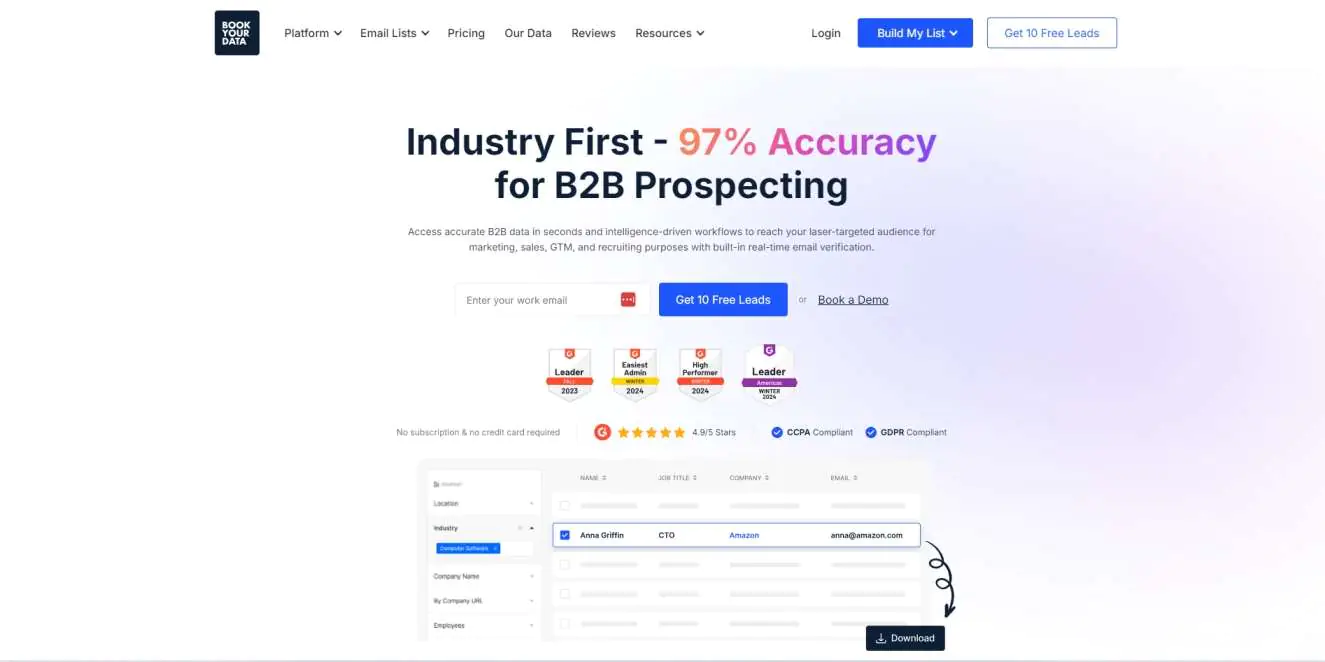
Book Your Data is built around fast, self-serve access: build your criteria, buy credits, and download a list right away rather than going through a sales conversation.
Company Snapshot
- Founded: 2015
- Headquarters: Washington, D.C.
- Company size: 11–50
Key Features
- Instant access: Download a list immediately after purchase.
- Customization tool: Filter by location, specialty, or other criteria.
- Data accuracy checks: Regular verification aims to reduce outdated contacts.
- Global reach: Useful if your outreach isn’t limited to Utah or the U.S.
- Simple interface: Straightforward for non-technical users.
Pricing
Book Your Data uses a credit system starting with 10 free credits. Pricing ranges from roughly $129 for 250 credits up to $24,999 for 250,000 credits, with the per-credit cost dropping as volume increases.
Pros
- Fast, self-serve access to contacts
- Customizable criteria for building a list
- Credit pricing scales down at higher volumes
- Global reach beyond a single state or country
Cons
- The customization tools take a bit of getting used to
- Global reach is unnecessary overhead if your campaign is strictly local
How to Choose a Provider

Before committing to a vendor, compare its data freshness, verification method, reputation, and pricing against your campaign needs:
- Data refresh frequency: Ask how often contacts are re-verified and outdated entries removed.
- Verification method: Understand whether the provider checks emails for deliverability, not just format validity.
- Reputation: Look for reviews or case examples from businesses that have used the list for similar campaigns.
- Pricing vs. value: The cheapest list isn’t automatically the best deal if it costs you more in bounces, wasted sends, or wasted time later.
Why Consider Heartbeat AI
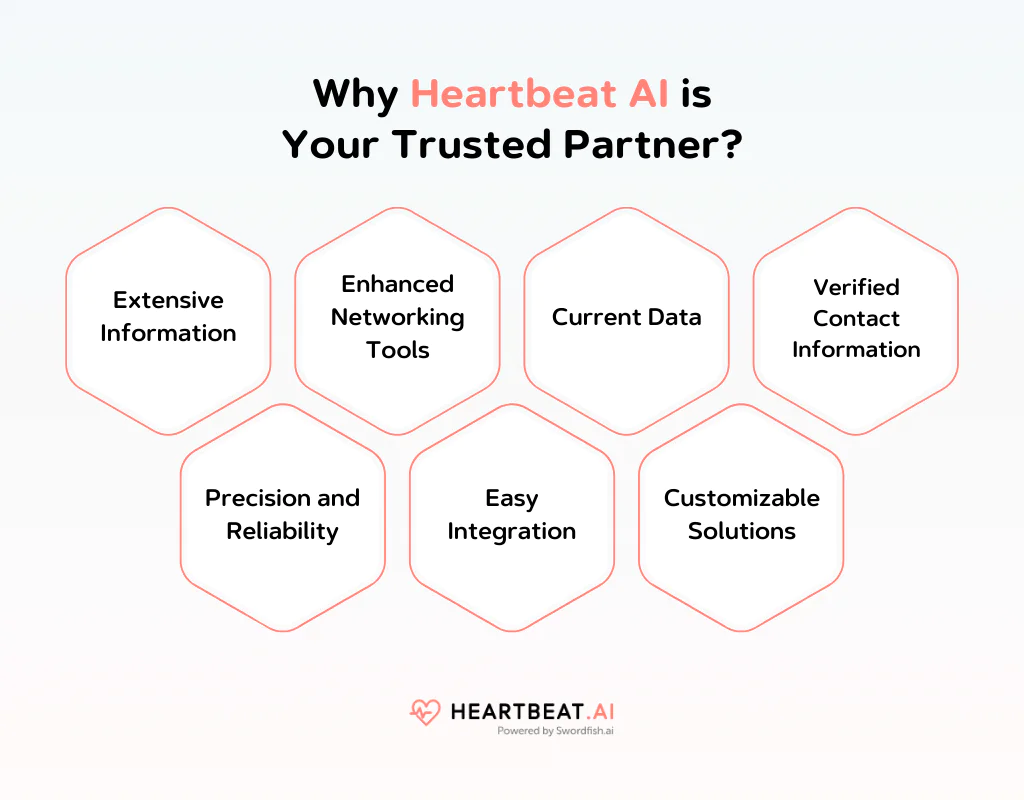
Heartbeat AI publishes some specific figures about its database that are worth noting as context, not guarantees for any single Utah-specific segment. According to the company’s own published data, Heartbeat.AI maintains a database with information on over 2.4 million physicians, alongside broader healthcare professional coverage that includes cell and landline numbers sourced from over 200 data channels. The company also states accuracy rates of roughly 84% for phone numbers and 92% for emails on its own site.
Database Scope
The physician-specific database is part of a larger healthcare professional dataset that spans multiple provider types beyond physicians alone, which is useful if your outreach eventually expands to nurses, PAs, or other clinical roles.
Networking Tools
The Chrome Extension and Prospector tool extend beyond static list delivery, letting you pull contact details as you come across individual providers on LinkedIn or elsewhere.
Ongoing Verification
Rather than a single static export, the platform is built around continuous updates, which matters given how often physicians change practices, specialties, or contact details over a career.
Integration and Customization
Data can be synced into existing CRM workflows, and list criteria can be adjusted to match a specific campaign rather than working from a single generic export.
New accounts can start with a free data credit to test the platform before committing to a larger plan.
Getting More From a Physician Contact List
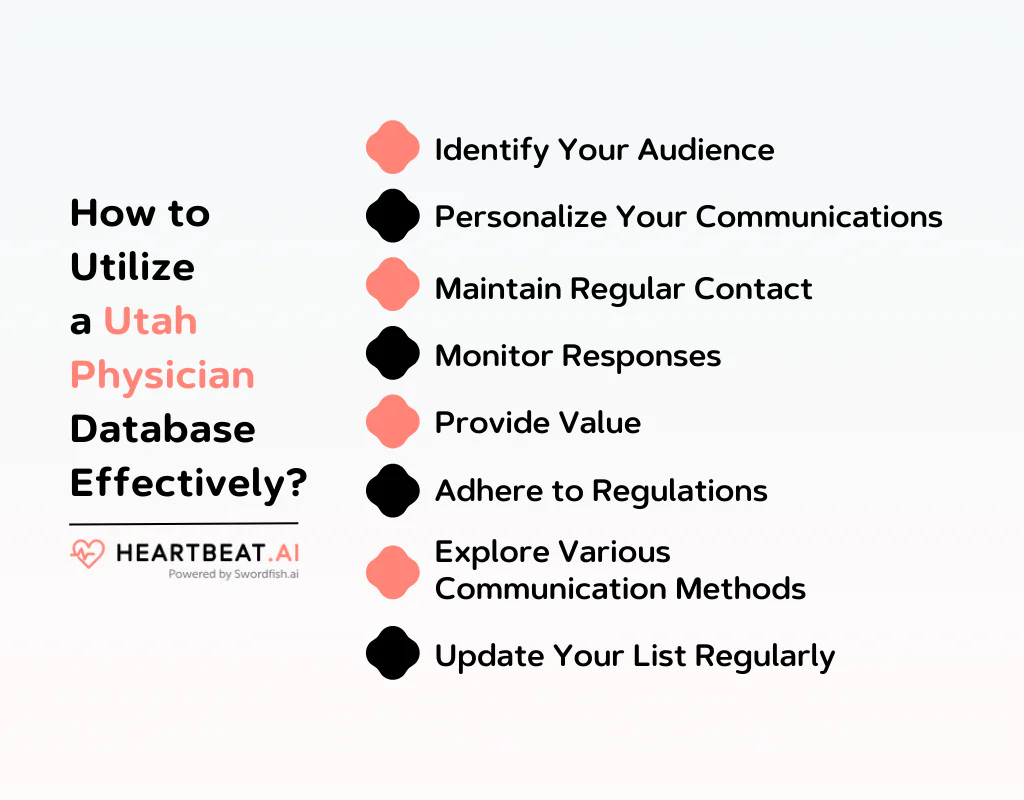
Having accurate contact data is only half the job. Here’s a practical workflow for turning a list into results:
- Define your audience narrowly. Identify which specialties or practice types are actually relevant to what you’re offering, rather than targeting every physician in the state.
- Personalize by specialty. A message that references a physician’s actual field of practice performs better than a generic template.
- Plan a follow-up cadence. A single email rarely gets a response. Space out two or three follow-ups without becoming repetitive.
- Track engagement. Open and response rates tell you what’s working and what needs to change.
- Lead with value. A relevant resource, invitation, or piece of information performs better than a pure sales pitch.
- Respect opt-outs and privacy preferences. Honor unsubscribe requests immediately and keep records of consent where required.
- Diversify channels. Some physicians respond better to a phone call or direct mail than to another email in a crowded inbox.
- Re-verify periodically. Even a well-sourced list degrades over time as physicians change roles or practices.
Limitations Worth Knowing
No physician contact list is permanently accurate. Physicians change practices, retire, or update their contact details, and refreshed databases can still have a lag. Treat vendor-published accuracy figures as averages, not guarantees for a specific state or specialty, and plan for some bounced emails.
Conclusion
A Utah physician email list can save sourcing time, but its usefulness depends on verification, pricing, and whether its segmentation matches your campaign. No provider can guarantee that every address will be current. Test a small sample before committing to a larger purchase.
Frequently Asked Questions
Are there any restrictions on using a Utah physician email directory?
Restrictions can include limits on commercial use, resale of the data, or contacting individuals who have opted out. Review the terms of use provided by whichever directory or vendor you use.
Can I customize the list from a Utah physician email directory?
Most providers let you filter by specialty, location, practice size, and other criteria so you can build a list suited to a specific campaign rather than working from a single generic export.
Can I use a Utah physician email directory for marketing purposes?
Yes, but any email marketing to physicians needs to comply with applicable regulations, including the CAN-SPAM Act, which governs commercial email in the U.S.