What’s on this page:
Key takeaways
- A Florida dental assistants email list is most useful when its role and location criteria match the campaign.
- Before buying a list, request a sample and ask how the data was collected, refreshed, and verified.
- Florida credentialing requirements may apply to particular dental-assisting duties; check current Board of Dentistry requirements.
- Provider statements about data coverage, sourcing, and accuracy should be independently assessed rather than treated as guarantees.
- Review applicable email-marketing, privacy, opt-out, and provider licensing requirements before using or sharing contact data.
Last updated: August 29, 2026
A Florida dental assistants email list can help organizations target recruiting, product marketing, or continuing-education outreach more precisely than a general healthcare audience. Its usefulness depends on the list’s accuracy, relevance, and whether your planned outreach complies with applicable rules.
This article covers what a Florida dental assistants email list is useful for, how to source one responsibly, what to look for in a data provider, and how to structure a campaign that actually gets opened and read.

Why a Florida-Specific Dental Assistants List Matters
Marketing to a broad, unsegmented healthcare audience wastes budget and gets ignored. A list built specifically around dental assistants practicing in Florida changes that dynamic in a few concrete ways.

Targeted Marketing Strategies
Campaigns focused on a specific role and state can be more relevant than generic dental industry messages. Write about products, training, or job openings for dental assistants rather than treating dentists, hygienists, and office managers as the same audience.
Increased Engagement
Content that addresses dental assistants’ work may be more relevant to them than a generic dental industry newsletter. Relevance alone, however, does not guarantee that recipients will open or respond to an email.
Higher Conversion Rates
A close match between the audience and the offer can make a campaign more relevant. It does not guarantee conversions, so measure results and adjust the message and targeting.
Cost Efficiency
A narrowly targeted list may reduce spending on contacts who are unlikely to be relevant, such as dentists, hygienists, or unrelated healthcare workers. Check the list’s accuracy and audience fit before assuming it will save money.
Networking and Professional Development
A solid contact base also opens doors for partnerships, referral relationships, or collaboration with dental practices, associations, and training programs across the state.
How to Find Verified Florida Dental Assistants Email Contacts

Building or sourcing a reliable list takes some legwork. Here’s a realistic breakdown of where usable data actually comes from.
Professional Associations and Organizations
Groups like the Florida Dental Assistants Association (FDAA) and the American Dental Assistants Association (ADAA) sometimes maintain member directories. Access is typically limited to members, but the contacts tend to be current and relevant.
State Regulatory Resources
Florida does not generally license dental assistants in the same way it licenses dentists and hygienists, but state requirements can apply to particular duties and credentials, including expanded functions and dental radiography. Check current Florida Board of Dentistry requirements before relying on this distinction. This route may help confirm credentialing requirements, but it should not be treated as a source of email contacts; verify whether any relevant public directory exists before assuming there is none.
Networking Events and Conferences
Dental industry conferences and local continuing-education events in Florida remain a practical way to collect direct contacts and build relationships that lead to email exchanges over time.
LinkedIn and Professional Networking Platforms
Searching LinkedIn with location and job-title filters can surface dental assistants working in Florida. Direct engagement on the platform sometimes leads to a shared email address, though this approach is slow if you need volume.
Purchasing From a Data Provider
For most teams running ongoing outreach, buying a list from a vetted provider is faster than manual sourcing. Before paying for anything, request a sample and confirm how the data was collected, how often it’s refreshed, and what verification process is used.
Comparing Data Providers
Not all healthcare contact data providers work the same way. Below is a comparison of three providers commonly used for healthcare and dental contact data.
1. Heartbeat AI

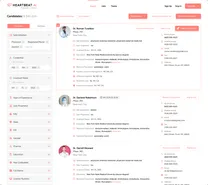
Heartbeat AI describes its offering as healthcare contact data, including direct-dial and email records for U.S. healthcare professionals such as dental staff. The company says it draws from more than 200 sources. Confirm the current sourcing and verification methods with the provider, and do not assume this means every record is accurate or that the database will include contacts unavailable through LinkedIn.
About Heartbeat AI
- Founded: 2020
- Headquarter: Delaware
- Company Size: 11-50 Employees
Features of Heartbeat AI
Broad Healthcare Professional Database
Users can search across a large database of U.S. healthcare workers, spanning multiple specialties and roles beyond dentistry.
Bulk Contact Handling
The platform supports bulk data processing, which matters if you’re building outreach lists at scale rather than one contact at a time.
Chrome Extension and Prospector Tool
Heartbeat AI works with the Swordfish AI Chrome Extension, which pulls contact details from LinkedIn, Facebook, and Twitter profiles directly in the browser. The Prospector Tool lets you search for healthcare providers by specialty and pull contact information quickly.
File Upload
You can upload existing contact files to enrich or verify records you already have, rather than starting from scratch.
CRM Sync
Integrating with your CRM keeps contact records consistent across your sales and marketing tools instead of managing separate spreadsheets.
Customizable List Building
Lists can be filtered by specialty, location, or practice size, which is useful for narrowing down to Florida-based dental assistants specifically.
Pricing
Pricing is quote-based and depends on list size and the criteria you need, so it’s worth reaching out directly for a scoped estimate.
Pros
- Supports live adjustments to outreach based on current data
- Works across multiple channels rather than a single data source
- Can reduce reliance on outside recruiting agencies
- Lets teams build and manage their own contact database in-house
Cons
- New users may need time to get comfortable with the interface
2. DataCaptive

DataCaptive offers healthcare contact lists across a range of specialties, with an emphasis on accuracy and customization for marketing teams.
About DataCaptive
- Founded: 2015
- Headquarters: Santa Clara, California
- Company Size: 1000-5000
Features
- Comprehensive Data: Records typically include names, emails, and phone numbers.
- Regular Updates: The company states it refreshes its databases periodically to keep contact info current.
- Customized Lists: Lists can be segmented to match specific campaign goals.
- Compliance Claims: DataCaptive states it aligns its practices with major privacy frameworks such as GDPR and HIPAA.
Pricing
Pricing tiers have historically ranged from a free entry-level option to paid plans; confirm current rates directly with the provider since pricing structures change.
Pros
- Wide selection of healthcare contact data
- Stated compliance with major privacy standards
- Customizable list segmentation
- Dedicated customer support
Cons
- Some learning curve to use the platform effectively
- Interface can feel dense for new users
3. MedicoReach

MedicoReach positions itself around verified healthcare contact lists, supporting outreach to dental assistants, doctors, and other medical specialists.
About MedicoReach
- Founded: 2014
- Headquarters: Leander, Texas
- Company Size: 11-50 Employees
Features
- Healthcare Focus: Lists are built specifically for healthcare marketing rather than general B2B use.
- Verification Process: The provider states it runs verification checks to improve deliverability.
- CRM Compatibility: Lists are designed to plug into common CRM and marketing automation tools.
- Strategic Support: MedicoReach offers guidance alongside the raw data to help with campaign setup.
Pricing
Pricing is customized per client; you’ll need to contact MedicoReach directly to get a quote.
Pros
- Emphasis on verification and accuracy
- CRM-compatible list formatting
- Strategic support for campaign planning
- Responsive customer support
Cons
- Narrow healthcare focus limits use outside that niche
- Full feature access often tied to higher-tier plans
How to Choose a Provider

A few practical checks before committing to any provider:
Check Reputation
Look for reviews, references, or case studies from other healthcare marketing teams before signing a contract.
Verify Data Sources
Ask directly where the data comes from and how often it’s refreshed. Vague answers here are a red flag.
Confirm Legal Compliance
Make sure the provider’s practices align with relevant privacy regulations, including HIPAA for U.S. health data and GDPR if any contacts fall under European jurisdiction.
Look at Customization Options
Filtering by location, role, or experience level can help make a campaign more relevant. Ask providers which fields are available and how they verify them.
Compare Pricing Honestly
Treat unusually low prices as a reason to check data sources, recency, and sample quality. Compare providers on evidence of data quality and the terms of use, not price alone.
Test Customer Support
Ask a question before you buy. How a provider handles a pre-sale inquiry is a decent preview of post-sale support.
Request a Sample
Always ask for a sample or trial before a full purchase. This is the single fastest way to catch outdated or mismatched data before it costs you a campaign.
Where Heartbeat AI Fits

Heartbeat AI focuses specifically on healthcare communications data rather than general B2B contacts, which matters if dental and healthcare outreach is a core part of your workflow.
Bulk Data Management
Handling large contact volumes without manual cleanup is useful for teams scaling outreach across multiple states or specialties.
Verification Process
Heartbeat AI states that it draws from more than 200 sources and includes personal email addresses. Ask the provider how it defines and verifies current records, and assess a sample before relying on those claims.
Database Reach
The company describes its database as covering millions of U.S. healthcare professionals, including dentists, and offering cell and direct-dial numbers. These are vendor claims; verify current figures and the records relevant to your campaign directly with Heartbeat AI before relying on them.
Accuracy Claims
Heartbeat AI cites accuracy rates for its phone and email data. Treat any vendor-stated rate as a claim to verify, not a guarantee; ask how accuracy is measured and confirm current figures before using them in a proposal.
Networking Tools
Beyond raw data, the Chrome Extension and Prospector Tool help with day-to-day sourcing rather than just bulk list downloads.
Getting the Most From the List Once You Have It

Having a good list is only half the job. Here’s a practical checklist for turning it into results:
- Set a specific objective: Know whether you’re promoting a product, recruiting, inviting people to a course, or driving event signups before you write a single line of copy.
- Segment the list: Break it down by region within Florida, experience level, or area of interest so messaging feels relevant rather than generic.
- Write for the role: Content about new dental technology, career development, or upcoming certifications tends to land better than generic dental industry news.
- Personalize where it counts: Even basic personalization, like using a recipient’s name, tends to improve open and response rates over a fully generic blast.
- Design for mobile: Assume most recipients are checking email on a phone between patients, not at a desktop.
- Time it sensibly: Early week or later afternoon sends tend to fit better around a dental assistant’s typical schedule, though this varies by practice.
- Use one clear call to action: Don’t make recipients guess what you want them to do next.
Limitations to Keep in Mind
No purchased list is perfect. Contact information can become outdated when professionals change practices, and vendor verification claims are not guarantees of deliverability. Before sending, check applicable email-marketing, privacy, and opt-out requirements and the provider’s data-use terms. HIPAA applies to protected health information handled by covered entities and their business associates; an email address is not automatically HIPAA-protected health information simply because it belongs to a healthcare professional.
Frequently Asked Questions
Can I filter the list by specialty or location?
Most providers, including Heartbeat AI, let you filter by geographic location and role so you can narrow a broad healthcare database down to dental assistants working specifically in Florida.
Can I share the list with others?
That depends entirely on the licensing terms from whichever provider you buy from. Review the agreement before sharing data outside your organization, since unauthorized sharing can violate the provider’s terms or applicable privacy rules.
How do I buy a Florida dental assistants email list?
Reach out directly to a healthcare-focused data provider like Heartbeat AI, DataCaptive, or MedicoReach and request a scoped quote based on your target criteria and volume.