Last updated: August 29, 2026
Finding accurate contact information for telehealth professionals is harder than it sounds. These providers often split time between multiple states, work through staffing platforms rather than a single employer, and don’t always show up in traditional hospital directories. A well-built telehealth professionals email list solves that specific problem: it gives you a way to reach virtual-care clinicians directly instead of chasing down front-desk numbers that rarely connect you to the right person.
One trend worth noting: physicians are pursuing multi-state licensure at a faster pace than a decade ago, which is part of what’s fueling the growth of telehealth. One family medicine physician accumulated licenses in every state plus Washington, D.C. over three years after starting with just four. That kind of multi-state practice pattern makes accurate, current contact data even more valuable, since a provider’s location and licensing status can shift from year to year.
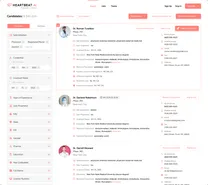
Heartbeat AI maintains a database built to keep pace with that movement, combining verified contact records with segmentation options so outreach teams can target the right specialists instead of blasting a generic list.
What’s on this page:
About Heartbeat’s Telehealth Professionals Email List: What You Will Get

Here’s what’s included when you work with Heartbeat’s telehealth professional database:
- Customization options: Filter and build lists according to your specific marketing or outreach needs rather than working from a static export.
- Verified contacts: Records go through a verification process so you’re not spending outreach budget on dead addresses or disconnected numbers.
- Segmented lists: Data is organized by specialization, geographic location, and experience level so campaigns can be targeted rather than broad.
- Regulatory awareness: Lists are built with attention to relevant privacy and data protection standards.
- Integration capability: Data can be exported into common CRM systems and marketing platforms for campaign execution.
Types of Data Included in Telehealth Professional Email Lists
- Name
- Location
- Contact numbers (work, cell, mobile)
- Email address
- Specialization
- Years of experience
- Sole proprietor status
- Licensed states
- License number
- Fax
- Address
 Accuracy & coverage of personal contact info were unrivaled by other platforms… this gives any healthcare recruiter a competitive advantage when engaging hard-to-reach healthcare providers.
Senior Growth Strategist






Benefits of Using a Valid Telehealth Professional Mailing List

An up-to-date list of telehealth professionals carries a few practical advantages over cold outreach or scraped contact data:
Better response rates
Messages sent to a targeted, relevant audience tend to land better than mass outreach, simply because the recipient actually fits the offer.
Fewer bounced or dead contacts
Lists that get refreshed regularly reduce the odds you’re emailing an address that was abandoned two years ago.
More credible outreach
Professionals are more likely to engage with a message that looks like it came through a legitimate channel rather than a generic scrape.
Easier to stay current on industry shifts
Segmented lists make it simpler to follow specific niches within telehealth as the field changes, rather than treating every recipient the same way.
Support for research and resource-sharing
Valid contact lists also make it easier to circulate research, case studies, or practice resources to the right specialists, which matters for organizations doing outreach beyond straight sales.
Who You’re Likely to Find in a Telehealth Professional Email List, by Category
Telehealth spans several distinct specialties, each with different workflows and outreach expectations.
| Telehealth Professional Categories |
| Telenurse |
| Telepsychiatrist |
| Teletherapist |
| Teleradiologist |
| Teledermatologist |
| Telepathologist |
Available Telehealth Professionals in Our Email List, by State
Heartbeat’s telehealth professional email data covers every U.S. state.
| Telehealth Professional By States |
| Telehealth Professional in Alabama |
| Telehealth Professional in Alaska |
| Telehealth Professional in Arizona |
| Telehealth Professional in Arkansas |
| Telehealth Professional in California |
| Telehealth Professional in Colorado |
| Telehealth Professional in Connecticut |
| Telehealth Professional in Delaware |
| Telehealth Professional in Florida |
| Telehealth Professional in Georgia |
| Telehealth Professional in Hawaii |
| Telehealth Professional in Idaho |
| Telehealth Professional in Illinois |
| Telehealth Professional in Indiana |
| Telehealth Professional in Iowa |
| Telehealth Professional in Kansas |
| Telehealth Professional in Kentucky |
| Telehealth Professional in Louisiana |
| Telehealth Professional in Maine |
| Telehealth Professional in Maryland |
| Telehealth Professional in Massachusetts |
| Telehealth Professional in Michigan |
| Telehealth Professional in Minnesota |
| Telehealth Professional in Mississippi |
| Telehealth Professional in Missouri |
| Telehealth Professional in Montana |
| Telehealth Professional in Nebraska |
| Telehealth Professional in Nevada |
| Telehealth Professional in New Hampshire |
| Telehealth Professional in New Jersey |
| Telehealth Professional in New Mexico |
| Telehealth Professional in New York |
| Telehealth Professional in North Carolina |
| Telehealth Professional in North Dakota |
| Telehealth Professional in Ohio |
| Telehealth Professional in Oklahoma |
| Telehealth Professional in Oregon |
| Telehealth Professional in Pennsylvania |
| Telehealth Professional in Rhode Island |
| Telehealth Professional in South Carolina |
| Telehealth Professional in South Dakota |
| Telehealth Professional in Tennessee |
| Telehealth Professional in Texas |
| Telehealth Professional in Utah |
| Telehealth Professional in Vermont |
| Telehealth Professional in Virginia |
| Telehealth Professional in Washington |
| Telehealth Professional in West Virginia |
| Telehealth Professional in Wisconsin |
| Telehealth Professional in Wyoming |
How We Compile Data for a Telehealth Professional Mailing List

Building a usable telehealth contact database is a multi-step process, not a one-time scrape:
Data collection
Data is pulled from public directories, healthcare forums, professional networking platforms, and industry events, focused on names, specialties, contact details, and telehealth activity.
Data enrichment
Collected records are verified and supplemented with additional detail, such as telehealth platform experience, geographic location, and known affiliations with telehealth organizations.
Segmentation
Professionals are grouped by specialty, telehealth experience level, and geography, which supports more personalized outreach later.
Regulatory review
Data handling practices are reviewed against relevant privacy and health data regulations before a list goes into active use.
Integration into marketing tools
The finished list is formatted for import into common CRM and marketing platforms so outreach can begin without manual reformatting.
Why Choose Heartbeat.ai’s Telehealth Professional Mailing List?

Extensive database
Heartbeat maintains an expansive database covering millions of healthcare providers across the United States, giving you a broad pool to draw telehealth-specific contacts from.
Direct contact information
The platform provides personal email addresses and cell phone numbers rather than generic office lines, which makes follow-up faster and more personal.
Verification-focused approach
Contact records go through a verification process aimed at reducing bounce and misdial rates, so outreach teams spend less time chasing dead ends. If precise accuracy figures matter for your evaluation, ask Heartbeat directly for current benchmarks rather than relying on older published numbers.
Faster recruitment and outreach cycles
Because contact data is pre-matched to provider records, teams can skip the manual research phase and move straight into outreach, which shortens hiring and partnership timelines.
Coverage across provider types
The database spans telehealth specialists alongside physicians, nurses, dentists, and other provider types, so a single source can support multiple outreach campaigns.
What to Consider Before Buying a Telehealth Professional Email List

Accuracy and relevance
Confirm the list is current and actually includes telehealth-specific professionals. Outdated or mismatched data wastes budget and can hurt your organization’s credibility with recipients.
Regulatory compliance
Check that the provider follows relevant data protection and privacy standards. Non-compliance creates legal exposure and reputational risk.
Clear purpose
Decide upfront whether the list is for sales outreach, networking, research collaboration, or resource sharing. The right list looks different depending on the goal.
Segmentation options
Favor providers that let you filter by specialization, geography, or experience level. Untargeted lists tend to produce weaker response rates regardless of size.
Source credibility
Ask how the data was gathered. Ethically sourced lists protect your organization’s reputation; vendors that won’t explain their sourcing methods are worth avoiding.
Who Uses a Telehealth Professional Email List?

Healthcare providers
Physicians, nurses, and other clinicians use these lists to connect with telehealth specialists for consultation and referral collaboration.
Healthcare technology companies
Vendors selling telehealth platforms or related services use the data to reach potential clients and integration partners.
Medical associations
Professional organizations use contact data to engage members, share updates, and coordinate networking events.
Health insurance providers
Payers use telehealth provider contacts to build out virtual-care networks and coverage partnerships.
Research institutions
Academic and research groups use the data to recruit telehealth practitioners for studies and collaborative projects.
How to Use a Telehealth Professional Email List Effectively

Segment before you send
Break the list down by specialty, location, and practice size before writing a single email. Broad, one-size-fits-all messages tend to underperform.
Personalize beyond the name field
Reference a recipient’s specialty or a challenge specific to their practice area. Basic personalization tends to lift open and response rates compared to generic blasts.
Lead with useful content
Share something the recipient can actually use — a relevant trend, a case study, or a practical resource — before pitching a product or service.
Keep compliance in view
Make sure outreach practices align with applicable healthcare regulations, and be explicit about how recipient data is handled and protected.
Test and adjust
Track open rates, click-throughs, and conversions across different subject lines and send times, and use what you learn to refine the next campaign rather than repeating the same approach indefinitely.
Bottom Line
A telehealth professionals email list is only as useful as its accuracy and its fit for your specific goal. Vet the source, ask how data is verified and refreshed, and make sure the segmentation options match how you actually plan to communicate. Heartbeat AI builds its telehealth data with those questions in mind, aiming to give outreach teams a workable starting point rather than a static, aging list.
Frequently Asked Questions
What’s a typical response rate for campaigns using telehealth professional mailing lists?
Response rates vary by list quality and message relevance, but B2B healthcare outreach generally sees lower response rates than consumer email campaigns. Tailoring your message to the specific audience segment tends to improve results.
What should be included in a telehealth professional mailing list?
At minimum: full name, specialty or area of expertise, and a verified email address. Geographic information is useful if your outreach needs to be location-specific, such as targeting providers licensed in a particular state.
How do I measure whether a telehealth email campaign is working?
Track open rate, click-through rate, and conversion rate. Together these show whether your content is resonating and whether the campaign is actually moving recipients toward the outcome you want.