Last updated: August 28, 2026

A surgeon email list is a working tool for anyone trying to reach a specific slice of the physician population: marketers pitching medical devices, recruiters filling surgical roles, pharma reps building relationships, or researchers looking for collaborators. The value isn’t in the size of the list, it’s in whether the contacts are current, correctly categorized by specialty, and gathered in a way that respects data privacy rules.
Below, we cover what to expect from a surgeon email database, how compliant lists are typically built, and how to actually use one without wasting outreach on the wrong people.
What’s on this page:
About Heartbeat Surgeon Email Lists: What You Will Get

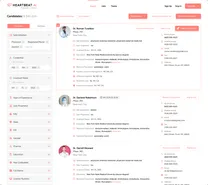
Heartbeat.ai maintains a surgeon contact database spanning general surgeons, cardiovascular surgeons, and other surgical specialists. Here’s what you can generally expect:
- Targeted reach: Filter by state or region so your outreach focuses on the markets that matter to you.
- Specialty filtering: Narrow by area of practice, such as trauma surgery, pediatric surgery, or cosmetic surgery, rather than emailing every surgeon regardless of fit.
- Layered contact data: Records typically include names, locations, and email addresses, with phone numbers included where permitted. Heartbeat maintains a large physician database; for current record counts, check Heartbeat’s data page directly, since these figures change over time.
- Compliance-minded sourcing: Data practices are built around data privacy requirements that apply to contact information handling.
Types of Data Included in a Surgeon Mailing List
- Surgeon’s name
- Location
- Contact numbers (work, cell, mobile)
- Email address
- Specialization
- Years of experience
- Sole proprietor status
- Licensed states
- License number
- Fax
- Address
 Accuracy & coverage of personal contact info were unrivaled by other platforms… this gives any healthcare recruiter a competitive advantage when engaging hard-to-reach healthcare providers.
Senior Growth Strategist






Benefits of Using Valid Surgeon Mailing Lists
A verified list changes the math on outreach in a few concrete ways:
- Increased reach: Fewer bounces mean more of your emails actually land in front of a real surgeon’s inbox.
- Improved response rates: Messages sent to correctly categorized specialists tend to get more replies than broad, unsegmented blasts.
- Better ROI: Money isn’t wasted on invalid or mismatched addresses, so cost per qualified contact drops.
- Stronger brand perception: Relevant, well-targeted outreach reads as professional rather than spammy, which matters when you’re trying to build long-term relationships with clinicians.
Surgeon Specialties Typically Represented
A surgeon-focused database usually spans a wide range of subspecialties, not just general surgery:
| Surgeon Specialty |
| Plastic Surgeons |
| General Surgeons |
| Neurosurgeons |
| Orthopedic Surgeons |
| Colorectal Surgeons |
| Perfusionists |
| Laser Surgeons |
| Podiatric Surgeons |
| Surgical Specialists |
| Pediatric Surgeons |
| Thoracic Surgeons |
| Transplant Surgeons |
| Trauma Surgeons |
| Vitreoretinal Surgeons |
| Vascular Surgeons |
| Plastic Surgery Specialists |
| LASIK Refractive Surgeons |
| Cardiothoracic Vascular Surgery Specialists |
| Oral and Maxillofacial Surgery Specialists |
Available Surgeons by State
Coverage generally breaks down by state, which matters if your outreach or recruiting effort is regional rather than national.
How Surgeon Contact Data Is Typically Compiled
Building an accurate surgeon list isn’t a matter of scraping a directory once and calling it done. A defensible process usually looks like this:
- Multi-source research: Data is pulled from a range of sources, including reputable directories and healthcare associations, rather than a single feed.
- Ongoing verification: Records get checked against current information so email addresses and phone numbers don’t go stale.
- Specialty tagging: Surgeons are categorized by subspecialty, since a plastic surgeon and a trauma surgeon respond to very different messaging.
- Location tagging: Practice location is attached to each record so regional targeting is actually possible.
- Privacy-conscious handling: Data collection and storage follows applicable privacy requirements to protect both the surgeon’s information and the sender’s compliance standing.
Why Choose Heartbeat.ai’s Surgeon Mailing List?

Accuracy as a priority
The goal is straightforward: emails should reach the right recipients, not bounce or land with the wrong specialist.
More than a name
Records go beyond a name field, pairing location and specialty data so you can actually segment your list before you send anything.
Precision targeting
Filtering by specialty and geography lets you build a list that matches your campaign instead of emailing every surgeon in the database.
Compliance-oriented
Data practices are structured around applicable privacy regulations, which matters both for deliverability and for staying on the right side of the law.
Specialty diversity
Coverage spans a range of surgical subspecialties, so whether you’re targeting orthopedic surgeons or transplant surgeons, the segmentation is usually available.
What to Consider When Getting a Surgeon Email List

Reliable sources
Data should come from trustworthy sources, such as licensing boards, healthcare associations, and established directories, rather than scraped or purchased lists of unknown origin.
Data verification
Ask how the provider verifies contact details and how often. A list that hasn’t been checked in a year is a liability, not an asset.
Update cadence
Surgeons change practices, states, and contact information more often than you’d expect. Confirm the refresh schedule before you commit budget to a list.
Privacy compliance
Commercial email to healthcare providers in the U.S. generally falls under the CAN-SPAM Act rather than HIPAA, since HIPAA governs patient health information, not B2B outreach to providers. Even so, CAN-SPAM requires accurate sender information, a clear opt-out mechanism, and honoring opt-outs within the required window.
Quality over quantity
A smaller, accurate list outperforms a bloated one full of dead addresses and duplicate records. Prioritize relevance over raw count.
Who Typically Uses a Surgeon Email List

Marketing agencies
Agencies working in healthcare use segmented surgeon data to tailor campaigns by specialty rather than sending one generic message to every surgeon on file.
Recruiters
Recruiters use the list to find candidates for surgical roles, particularly when searching for specialists in a specific region or subspecialty.
Surgeons themselves
Some surgeons use peer contact lists for networking, referrals, and professional collaboration.
Pharmaceutical companies
Pharma teams use surgeon contact data to share information on new treatments, clinical trials, or collaboration opportunities relevant to a given specialty.
Medical sales representatives
Sales reps use targeted lists to reach decision-makers directly instead of relying on cold calls or generic outreach.
Medical device manufacturers
Manufacturers use surgeon data to introduce new devices to the specialists most likely to adopt them, and to gather feedback from actual users.
How to Use a Surgeon Email List Effectively

Go direct
A verified list lets you reach surgeons without intermediaries, which speeds up the outreach cycle.
Lead with your value proposition
Surgeons are busy and get pitched constantly. Say clearly, early, what’s in it for them, whether that’s a product benefit, a career opportunity, or a research angle.
Segment before you send
Group your list by specialty and region before drafting your message. A single email that tries to speak to every type of surgeon usually speaks to none of them well.
Personalize where it counts
Use the surgeon’s name and reference their specialty. It signals you did homework rather than blasting a purchased list.
Keep it value-driven
Every message should answer “why is this relevant to me” from the recipient’s side, not just describe what you’re selling or recruiting for.
Limitations to Keep in Mind
- No list, however well maintained, is perfectly current. Physicians change practices and email addresses more often than static directories can track.
- Compliance obligations, including CAN-SPAM’s opt-out and sender-identification requirements, sit with the sender, not the data provider.
- A large record count doesn’t guarantee relevance. A tightly filtered subset usually outperforms an unfiltered mass list.
Conclusion
A surgeon email list is only as useful as the process behind it. Accurate sourcing, regular verification, and sensible segmentation matter more than raw contact volume. Whether you’re recruiting, marketing a device, or building research collaborations, treat the list as a starting point for targeted outreach, not a shortcut around doing the work of relevance and compliance.
FAQs
Can I customize the surgeon email list based on specific criteria?
Yes, most providers allow filtering by geography, specialty, and other relevant fields so you’re not working from one undifferentiated list.
How often is the surgeon contact list updated?
Update frequency varies by provider. Ask directly about refresh cadence before relying on a list for a time-sensitive campaign.
Can these lists be used for research or career networking, not just sales?
Yes. Surgeons and researchers sometimes use contact lists to identify potential collaborators, mentors, or peers in a given subspecialty, separate from any commercial outreach.